10 WhatsApp Lead Generation Strategies For Your Shopify Store

Copied to clipboard!

Getting traffic to your Shopify store does not guarantee that interested shoppers will convert.

Customers often drop off while comparing products, checking sizes, looking for delivery information, waiting for an out-of-stock item, evaluating prices or deciding whether a product is right for them. Others may arrive from an Instagram ad or campaign, show clear interest, and still leave before sharing any contact information.

The challenge is that these shoppers are not necessarily low-intent. In many cases, they simply need more information, reassurance or a timely reason to continue.

This is where WhatsApp lead generation for Shopify stores becomes valuable. Instead of letting that intent disappear when a shopper leaves the website, brands can use WhatsApp to capture interest at key decision points, understand what the customer is looking for and continue the buying journey beyond the store session.

The goal is not to add more contacts to a WhatsApp list. It is to identify where shoppers are showing intent, why they may be dropping off, and which WhatsApp interaction can help move them towards the next step.

Let’s look at the strategies Shopify brands can use to turn more of their existing traffic and marketing activity into qualified WhatsApp leads.

What Counts as a WhatsApp Lead for a Shopify Store?

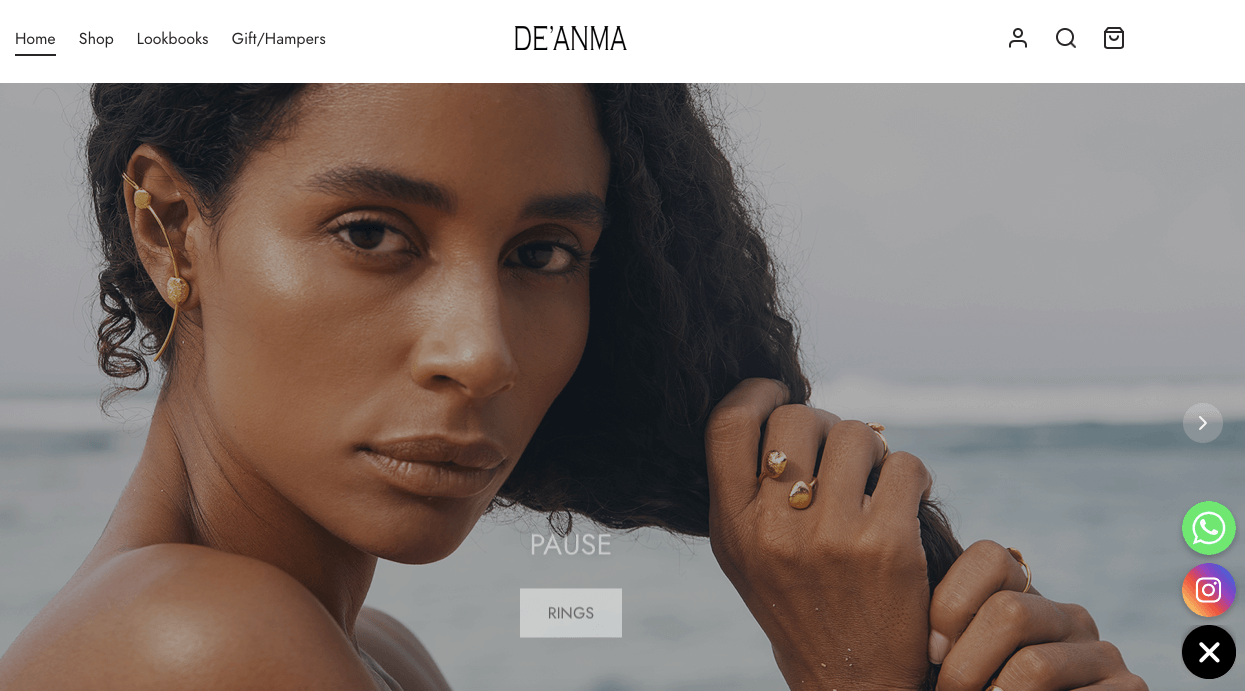
WhatsApp Widget Added on the Web page of DE'ANMA

A WhatsApp conversation is not automatically a useful ecommerce lead.

Someone who clicks “Chat with us” and immediately leaves gives you very little information. A shopper who tells you which product they are considering, their size, use case, or buying requirement gives you something actionable.

For a Shopify store, a useful WhatsApp lead is usually a shopper who has:

  • Shown interest in a product, collection or offer
  • Started or opted into a WhatsApp conversation
  • Shared enough information to understand what they may want
  • Given the business a relevant next action

That next action could be recommending a product, notifying them when an item is available, helping them choose a size, sharing an offer, or taking them back to checkout.

This distinction matters because your goal should not be to maximize the number of chats started.

It should be to capture more of the shoppers who have genuine purchase intent and move them closer to a buying decision.

According to Meta, lead quality in Click-to-WhatsApp campaigns should be measured by more than the number of conversations started. A high-quality lead is one that shows genuine interest and provides enough relevant information for the business to take the conversation forward. 

Match Your WhatsApp Lead Generation Strategy to Shopper Intent

Different customer behaviours require different lead-capture strategies.

Shopper behaviour Intent signal WhatsApp strategy
Lands from an Instagram or Facebook ad Interested in the advertised product/offer Click-to-WhatsApp ad
Browses a product and needs help Product consideration Contextual WhatsApp widget
Is about to leave the website Possible interest before drop-off Exit-intent WhatsApp popup
Engages with an Instagram post Social/product interest Comment or DM automation
Needs help deciding between products Purchase consideration Product recommendation chatbot
Finds an item out of stock Strong SKU-level intent Back-in-stock WhatsApp opt-in
Visits a product before launch Early purchase interest Product launch/waitlist campaign
Needs personalised recommendations Defined buying requirement WhatsApp Flow/chatbot
Interacts with packaging or a physical store Offline brand engagement WhatsApp QR code
Is referred by an existing customer Warm discovery WhatsApp referral journey

The key is to make the WhatsApp entry point relevant to what the shopper is already doing.

A customer viewing a product page should not see the same WhatsApp CTA as someone leaving the homepage.

10 WhatsApp Lead Generation Strategies For Ecommerce Stores

These strategies help turn intent across your website, ads, social media and offline touchpoints into qualified WhatsApp leads.

1. Contextual WhatsApp Widgets For Product-Page Visitors

A generic floating button saying “Chat with us” gives shoppers very little reason to click.

Instead, use the context of the page to make the conversation useful.

For example, on an apparel product page:

Need help with size or fit? Ask us on WhatsApp.

For skincare:

Not sure if this is right for your skin? Get a recommendation on WhatsApp.

For electronics:

Need help comparing models? Chat with a product expert.

The objective is not merely to make customer support more accessible. The widget becomes a lead-capture point at the exact moment the shopper is evaluating a purchase.

Once they start the conversation, avoid replying with another generic greeting.

Continue from the context that brought them there.

A fashion store might ask:

  • Which size do you usually wear?
  • What fit do you prefer?
  • Which colour are you considering?

A skincare business might ask:

  • What is your primary skin concern?
  • What is your skin type?
  • Are you looking for a single product or a routine?

The information collected makes the lead significantly more useful than simply knowing their phone number.

2. Convert Leaving Visitors With WhatsApp Pop-Ups

Not every visitor will actively open a chat widget.

A WhatsApp opt-in pop-up gives you another opportunity to capture shoppers before they leave.

The mistake is showing a pop-up immediately to every visitor with:

Enter your number to get updates.

There is little value in that exchange.

Instead, trigger the pop-up at a meaningful moment and give the shopper a specific reason to opt in.

For example:

Fashion:
Get 10% off your first order on WhatsApp.

Beauty:
Get personalised product recommendations on WhatsApp.

Food & beverage:
Unlock your first-order offer.

Home decor:
Save your offer and receive it on WhatsApp.

Timed and exit-intent popups are particularly useful because they allow shoppers to browse before interrupting the experience. QuickReply.ai's opt-in tools support both timed and exit-intent popups, along with website widgets and QR-based WhatsApp entry points. 

What can this look like in practice?

Agaro used a gamified website pop-up to convert website traffic into WhatsApp subscribers. In a 30-day period, the journey added 16,600+ new WhatsApp subscribers per month, generated 230 orders and attributed ₹4,56,360 in revenue, with a reported 36.61x ROI.

The lesson is not that every Shopify store needs a spin-the-wheel pop-up.

It is that a visitor is more likely to share their contact information when the exchange gives them immediate, relevant value.

3. Turn Meta Ad Clicks Into WhatsApp Leads

Click-to-WhatsApp ads can move shoppers from Facebook or Instagram directly into a WhatsApp conversation.

For ecommerce brands, the biggest opportunity is to make the conversation an extension of the advertisement.

Suppose your skincare ad says:

Struggling to build a routine for acne-prone skin? Get a personalised recommendation.

The WhatsApp conversation should not begin with:

Hello! How may we assist you today?

Instead, continue the exact promise made in the ad:

Let’s find the right routine for you. What best describes your skin?

The conversation can collect the customer's concern, skin type and budget before recommending relevant Shopify products.

The same approach can work across categories:

Fashion ad → occasion + style + size → product recommendations

Nutrition ad → goal + preference → suitable products

Furniture ad → room + dimensions + budget → suitable options

This makes the ad-to-chat journey one connected experience instead of treating the advertisement and WhatsApp chatbot as separate campaigns.

Meta reports that ads that click to WhatsApp optimised for leads generated 24% lower cost per lead on average than campaigns optimised for conversations in an experiment involving 116,000 campaigns across 43,000 businesses in November 2024.

4. Turn Instagram Engagement Into WhatsApp Leads

For many Shopify brands, especially in fashion, beauty, jewellery, food and lifestyle, product discovery often begins on Instagram before a shopper ever reaches the website. Comments, story replies and direct messages can therefore become valuable signals of purchase intent.

For example, a fashion brand could publish:

Comment “LINK” and we’ll send you the new collection.

Or a beauty brand could ask:

Comment “SHADE” and we’ll help you find your match.

With Instagram automation, keyword-based comments, story replies or direct messages can trigger an automated response. The initial interaction can happen on Instagram, while shoppers who need more information can be guided to WhatsApp to continue the conversation.

For example:

Instagram comment → automated DM → WhatsApp → shade questions → personalised recommendation

Or:

Story reply → automated DM → WhatsApp → product catalogue → purchase

The advantage of this approach is that the conversation already has context. If a shopper commented on a particular product, collection or offer, that information can be carried into the next interaction instead of asking them to explain their interest again.

This makes social engagement more than an awareness metric. It creates a structured path for moving interested shoppers from discovery to a more personalised conversation, where their preferences can be understood and the next purchase action can be recommended.

5. Use Product Recommendations as a Lead Magnet

“Subscribe to WhatsApp” is rarely a compelling proposition by itself.

A stronger approach is to give shoppers something useful in exchange for beginning the conversation.

For ecommerce, one of the most effective value exchanges is decision assistance.

For example:

Find your perfect foundation shade.

Build your skincare routine.

Find the right protein for your fitness goal.

Find your ideal mattress.

Get outfit recommendations for your next event.

Find the right gift in your budget.

A chatbot can ask a small number of questions and recommend suitable products.

The lead capture becomes a natural part of helping the customer rather than an isolated marketing form.

For example:

Question 1: What are you shopping for?
Question 2: What is your budget?
Question 3: Which style do you prefer?

Then:

Based on your answers, here are three options you may like.

The customer receives immediate value, while the brand gains useful preference data for both the current conversation and future personalisation.

Keep the experience short. A recommendation bot that asks twelve questions before offering anything useful recreates the same friction you were trying to remove.

6. Turn Out-of-Stock Products Into WhatsApp Waitlists

An out-of-stock product does not necessarily represent lost demand.

It can be a strong lead-generation opportunity.

Someone who reaches an unavailable product page has already told you exactly what they are interested in.

Instead of limiting the page to:

Out of stock

Offer:

Notify me on WhatsApp when this is back.

The opt-in gives you two useful pieces of information:

  1. A reachable WhatsApp contact
  2. Explicit interest in a particular product or SKU

When the item becomes available, send the shopper directly back to that product.

This strategy can work particularly well for:

  • Popular fashion sizes
  • Limited-edition products
  • Beauty products with frequent restocks
  • Fast-selling food items
  • Electronics
  • Collectibles
  • Seasonal inventory

You can also segment the captured contacts by the product they requested instead of creating one generic “back in stock” audience.

That means a shopper waiting for Product A receives Product A updates rather than unrelated promotional messages.

7. Build WhatsApp Waitlists Before Product Launches

You can use a similar strategy before a product is even available.

Instead of relying only on an email waitlist for a new launch, let customers opt into a WhatsApp launch list.

For example:

Join the WhatsApp waitlist for first access.

Get notified when the collection drops.

Get early access before the public launch.

Reserve your size before launch day.

This works because the shopper is voluntarily declaring interest in something specific.

The conversation can also collect additional information.

A fashion brand might ask what size the customer wants.

A beauty brand might ask which shade they are interested in.

A food brand might ask which flavour they want to try.

By launch day, you have more than a list of contacts. You have an audience segmented by what they intend to buy.

Pre-launch WhatsApp lists can therefore serve two purposes:

Demand capture before launch and targeted conversion once inventory becomes available.

8. Use WhatsApp Flows to Capture Structured Shopping Preferences

Some buying journeys need more information than a few quick-reply buttons can comfortably collect.

This is where WhatsApp Flows can help.

WhatsApp describes Flows as native, task-oriented experiences that allow businesses to collect information and complete structured interactions within WhatsApp rather than sending customers to another website or application. Lead generation is one of the use cases WhatsApp specifically identifies for Flows. 

For ecommerce, a Flow could collect:

  • Product category
  • Size
  • Preferred style
  • Budget range
  • Intended use
  • Delivery location
  • Colour preference
  • Desired quantity

For example, a gifting store could ask:

Who are you buying for?
Partner / Parent / Friend / Colleague

What is your budget?
Under ₹1,000 / ₹1,000–₹2,500 / ₹2,500+

What type of gift do you prefer?
Personalized / Food / Lifestyle / Gift set

The collected information can then determine which products or collections are shown next.

The rule remains the same: collect only the information required to provide a useful next step.

Do not turn a WhatsApp Flow into another lengthy lead form.

9. Turn Offline Touchpoints Into WhatsApp Leads With QR Codes

Not every Shopify customer journey begins on a website or social media platform. Shoppers may first discover a brand through a retail store, exhibition, product packaging, catalogue or even an order received through another channel.

QR codes can turn these offline interactions into measurable WhatsApp conversations.

For example, brands can place WhatsApp QR codes on:

  • Product packaging and inserts
  • Retail counters and product displays
  • Pop-up stores and exhibitions
  • Catalogues and brochures
  • Print advertisements
  • Event stalls and promotional material

The effectiveness of a QR code, however, depends largely on the reason shoppers are given to scan it.

Instead of a generic “Scan to chat with us”, connect the CTA to something the customer actually wants:

  • Scan to find your right size
  • Scan to join the new-launch waitlist
  • Scan to get personalised product recommendations
  • Scan to unlock an exclusive offer
  • Scan to get product usage tips
  • Scan to be notified when this product is back in stock

This turns the QR code from a simple contact shortcut into a clear value exchange.

Brands can also use different WhatsApp QR codes for different stores, events, products or campaigns. Each QR code can open WhatsApp with a specific pre-filled message, making it easier to identify where the shopper came from and what they are interested in.

For instance, a QR code at a retail store could open with:

Hi, I visited your Delhi store and would like to explore more colours in this collection.

Whereas a QR code placed inside product packaging could begin with:

Hi, I purchased this product and would like recommendations for what to try next.

This context helps brands continue the conversation more meaningfully instead of asking every shopper to explain why they reached out.

For Shopify brands with both online and offline customer touchpoints, QR-based WhatsApp lead generation can therefore help bring otherwise disconnected interactions into one conversational journey while capturing valuable information about the shopper's source and intent.

10. Turn Existing Customers Into a Referral Acquisition Channel

Existing customers can be one of the most valuable sources of new ecommerce leads because referrals come with something cold traffic does not: built-in trust.

Instead of treating referral campaigns only as discount-led promotions, Shopify brands can use them to bring new shoppers into a structured WhatsApp journey.

For example:

Give a friend ₹300 off their first order. You get ₹300 when they purchase.

The existing customer can share a referral link with friends or family. When a referred shopper enters WhatsApp, the conversation can be designed specifically for a first-time visitor rather than dropping them into a generic promotional flow.

The journey could look like this:

Existing customer shares referral → new shopper enters WhatsApp → first-time offer is identified → product interest is captured → relevant products are recommended → purchase

This also gives the brand useful context from the beginning, such as:

  • Which customer generated the referral
  • Which referral campaign or offer drove the visit
  • Whether the shopper is a new customer
  • Which product or category they are interested in

That context can be used to personalise the first interaction.

For example, instead of starting with:

How can we help you?

the conversation could continue with:

You’ve been referred by a friend and have ₹300 off your first order. What are you shopping for today?

This makes the referral journey feel connected to the reason the shopper arrived while also helping the brand understand their intent.

Referral-based WhatsApp lead generation can therefore do more than expand reach. It can turn recommendations from existing customers into identifiable, attributable conversations that can be nurtured toward a first purchase.

How to Qualify Shopify Leads Without Making WhatsApp Feel Like a Form

Once a shopper enters WhatsApp, you do not need to collect every possible detail about them. Lead qualification should focus only on the information required to understand their intent and determine the most relevant next step.

For most ecommerce journeys, this means answering three questions:

What is the shopper looking for?

What is preventing them from making a decision?

What information or assistance would help them move forward?

Some of these answers may already be available from the shopper's journey.

For example, if someone entered WhatsApp from a specific product page, there is little value in asking which product they are interested in. Instead, the conversation could ask something more relevant, such as:

Which size are you looking for?

Similarly, a shopper coming through a skincare campaign may only need to share their skin concern or product preference before receiving suitable recommendations.

The goal is to collect just enough information to make the conversation more relevant without turning WhatsApp into another lengthy form.

For more complex or high-value purchases, automated lead qualification and routing can collect the initial requirements before transferring the conversation to the appropriate sales or support representative along with the context already captured.

Nurture WhatsApp Leads Based on Their Intent

Once a lead has been captured and qualified, the information collected should shape the follow-up.

A shopper who joined a back-in-stock list should not receive the same journey as someone who asked for a product recommendation or entered through a Click-to-WhatsApp campaign.

For example:

Asked for a size recommendation → Share suitable products available in that size.

Joined a product-launch waitlist → Send early-access or launch communication for that collection.

Requested a restock notification → Notify them when the specific product becomes available.

Completed a product recommendation quiz → Follow up with products based on the preferences they shared.

Entered through a product-specific CTWA campaign → Continue the conversation around that product or offer.

This is where broadcasts and automated WhatsApp journeys become useful. Leads can be segmented based on their source, product interest and previous interactions so that follow-ups remain relevant to the reason they entered WhatsApp in the first place.

It is also important to separate lead generation from other ecommerce WhatsApp use cases. Abandoned checkout recovery, upselling & cross-selling and reorder campaigns can generate additional revenue, but they primarily operate later in the customer lifecycle rather than bringing new prospects into the funnel.

How to Measure WhatsApp Lead Generation for Ecommerce

The number of WhatsApp conversations started tells you how much interest a campaign generated, but it does not tell you whether those conversations became valuable ecommerce leads.

To understand performance, Shopify brands should track metrics across the complete journey from lead capture to purchase.

1. WhatsApp Leads Captured

Track how many new shoppers enter WhatsApp and where those leads originate.

Common sources may include:

  • Website popups
  • Product-page widgets
  • Click-to-WhatsApp ads
  • Instagram campaigns
  • QR codes
  • Product waitlists
  • Referral campaigns

Looking at lead volume by source helps identify which touchpoints are most effective at starting conversations.

2. Lead Capture Rate

Measure the percentage of shoppers who see a WhatsApp lead-generation opportunity and choose to engage with it.

Comparing capture rates across different CTAs, offers and placements can help identify which value propositions encourage more shoppers to opt in.

3. Qualified Lead Rate

Not every conversation represents the same level of purchase intent.

Track how many captured leads provide enough information or demonstrate enough interest to move to a meaningful next step, such as receiving a product recommendation, joining a waitlist or speaking with a sales representative.

This prevents teams from optimising campaigns purely for conversation volume.

4. Lead-to-Purchase Rate

Measure how many WhatsApp leads eventually complete a Shopify purchase.

This helps determine whether the conversations being generated are translating into actual customers rather than stopping after the initial interaction.

5. Cost per Qualified Lead

For paid acquisition campaigns, calculate:

Campaign spend ÷ Number of qualified leads generated

Cost per qualified lead provides a more useful view of acquisition efficiency than cost per conversation when only a portion of conversations develop into genuine buying opportunities.

6. Revenue by Lead Source

Finally, compare the revenue generated by leads captured through different sources, such as CTWA ads, website popups, social campaigns, QR codes or referral journeys.

Connecting conversation analytics with purchase and revenue data makes it easier to identify which acquisition channels, campaigns and WhatsApp journeys are producing the most valuable customers.

The goal is not simply to prove that WhatsApp contributes revenue. It is to understand which shopper behaviours, entry points and lead-generation strategies consistently produce high-intent leads and purchases.

Common WhatsApp Lead Generation Mistakes Shopify Stores Should Avoid

Even with the right acquisition channels, small gaps in the journey can reduce the quality of leads you generate.

1. Offering No Clear Reason to Start a Conversation

A CTA such as “Join us on WhatsApp” tells shoppers what to do, but not why they should do it.

Connect the opt-in with a clear benefit, such as receiving a product recommendation, joining a waitlist, getting a restock alert or accessing an offer.

2. Using Generic Entry Points Across the Store

The reason someone visits a homepage is different from the reason they spend several minutes on a specific product page.

Match the WhatsApp CTA to the shopper's context instead of displaying the same message throughout the store.

3. Losing Context Between Channels

If a shopper reaches WhatsApp from an advertisement, Instagram post or product page, the conversation should continue from that interaction.

Asking them to explain what they are interested in creates unnecessary friction and wastes information you already have.

4. Collecting More Information Than You Need

Lead qualification does not require a long questionnaire.

Ask only for information that helps recommend a product, resolve a buying concern or determine the appropriate next step.

5. Ignoring the Source of the Lead

A shopper who joins a product waitlist has different intent from someone who opts in for a first-order discount.

Preserving information about the source, product and campaign makes future segmentation and follow-up more relevant.

6. Evaluating Success Only by Conversation Volume

A campaign can generate hundreds of conversations without generating meaningful purchase intent.

Evaluate lead quality alongside metrics such as qualified lead rate, lead-to-purchase rate, acquisition cost and revenue.

7. Building the Entry Point Before the Follow-Up Journey

A successful opt-in is only the beginning.

Before launching a popup, advertisement, QR code or waitlist, determine what the shopper should receive next and how the journey should change based on their actions.

Bringing Your Shopify WhatsApp Lead Generation Strategy Together

WhatsApp lead generation works best when it is connected to moments where shoppers are already demonstrating interest.

That could mean helping a product-page visitor choose the right size, capturing demand for an unavailable product, continuing an Instagram interaction or giving a shopper a reason to join a new-launch waitlist.

The underlying process remains consistent:

Shopper shows intent → receives a relevant WhatsApp entry point → gets a reason to engage → shares useful context → moves towards the next purchase action

The technology behind the journey should make these steps easier rather than adding complexity. Features such as WhatsApp opt-in tools, automated conversations, customer segmentation and Shopify integrations can help businesses connect lead capture with the customer data and follow-up journeys already running across their store.

The objective is not to collect as many WhatsApp contacts as possible. It is to capture customer intent that might otherwise disappear when a shopper leaves the website, advertisement or social interaction, and create a relevant path for continuing that buying journey.

Turn 1 time visitor into repeat customer with WhatsApp marketing

Leverage the untapped growth potential of WhatsApp marketing to acquire and retain customers.

Frequently Asked Questions

How can Shopify stores generate leads through WhatsApp?

Shopify stores can generate WhatsApp leads through product-page widgets, website popups, Click-to-WhatsApp ads, social media interactions, QR codes, product waitlists, recommendation journeys and referral campaigns.

The most appropriate method depends on where shoppers are showing intent and what would give them a useful reason to begin a conversation.

Which Shopify visitors should I target for WhatsApp lead generation?

Prioritise visitors who demonstrate meaningful intent, such as repeatedly viewing a product, engaging with a product-specific campaign, requesting help choosing an item, checking an unavailable product or joining a launch waitlist.

These interactions generally provide more context than targeting every website visitor in the same way.

Can WhatsApp be used to capture leads from an ecommerce website?

Yes. Ecommerce websites can use contextual widgets, behavioural popups, product-page CTAs, waitlists and other opt-in experiences to move interested visitors into WhatsApp.

The entry point should ideally reflect the page, product or action that triggered the shopper's interest.

How can Click-to-WhatsApp ads generate better ecommerce leads?

Keep the WhatsApp conversation closely aligned with the advertisement.

If an ad promotes a particular product, collection or problem, begin the conversation around that same topic and collect only the information needed to help the shopper move forward.

What information should an ecommerce WhatsApp chatbot collect?

The chatbot should collect only information required to understand the customer's requirement or recommend the next action.

Depending on the category, this may include size, budget, product preference, intended use, skin concern, colour or delivery location.

How are WhatsApp leads different from WhatsApp subscribers?

A subscriber has opted in to receive communication, while a qualified lead has also demonstrated some level of relevant purchase intent.

For example, someone joining a general promotional list may be a subscriber, while someone requesting a restock alert for a specific product provides a much clearer buying signal.