Omnichannel Communication: What Is It and Why Is It Important?

Copied to clipboard!

Here’s the hard truth: customers don’t think in channels. They don’t care whether they’re contacting you through WhatsApp, Instagram, live chat, email, or a call center. To them, it’s one conversation with one brand, and they expect every interaction to feel connected, consistent, and personalized.

But for many businesses, it’s five different dashboards, three disconnected systems, and zero shared context.

A customer might start with an inbox chat on your website, follow up via social DM, and later call your support team, only to be treated like a brand-new lead each time. That’s not just inconvenient. It’s expensive. It increases resolution time, hurts customer satisfaction, and quietly pushes people toward competitors who offer smoother experiences.

This is where an omnichannel communication platform becomes essential.

An omnichannel communication platform enables businesses to unify customer interactions across all channels into a single, centralized system. Instead of treating each touchpoint as an isolated interaction, it creates a seamless communication journey where context, conversation history, and customer data move together across channels.

As businesses increasingly prioritize customer experience as a competitive differentiator, understanding what an omnichannel communication platform is and how it differs from a basic multi-channel setup is critical.

In this guide, we will explore what an omnichannel communication platform actually means, how it works, its benefits, and what you should consider when choosing one for your business.

What Is an Omnichannel Communication Platform?

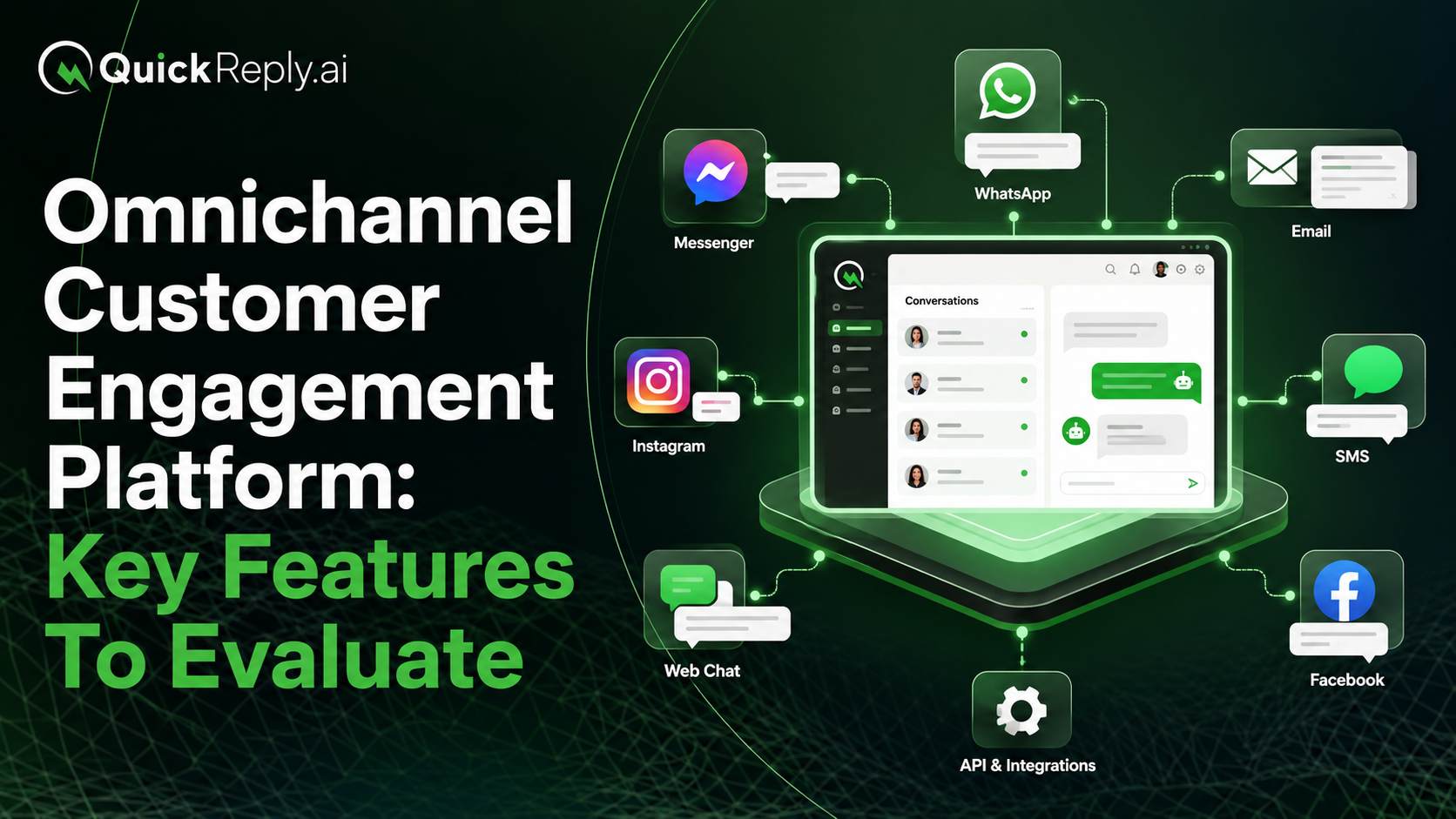
An omnichannel communication platform is a centralized system that enables businesses to manage customer interactions across multiple channels such as email, live chat, social media, messaging apps, SMS, and voice within a single, unified interface.

At its core, omnichannel communication is not just about being present on multiple platforms. It is about ensuring that every interaction is connected, contextual, and continuous.

Instead of treating each channel as a separate stream of communication, an omnichannel customer communication platform synchronizes conversations, customer data, and interaction history across all touchpoints. This allows businesses to deliver a consistent experience regardless of where the conversation begins or continues.

Breaking It Down Simply

To understand what omni-channel is in practical terms, consider this:

  • A customer starts a conversation via website live chat.
  • Later, they sent a follow-up message on WhatsApp.
  • The next day, they call your support team.

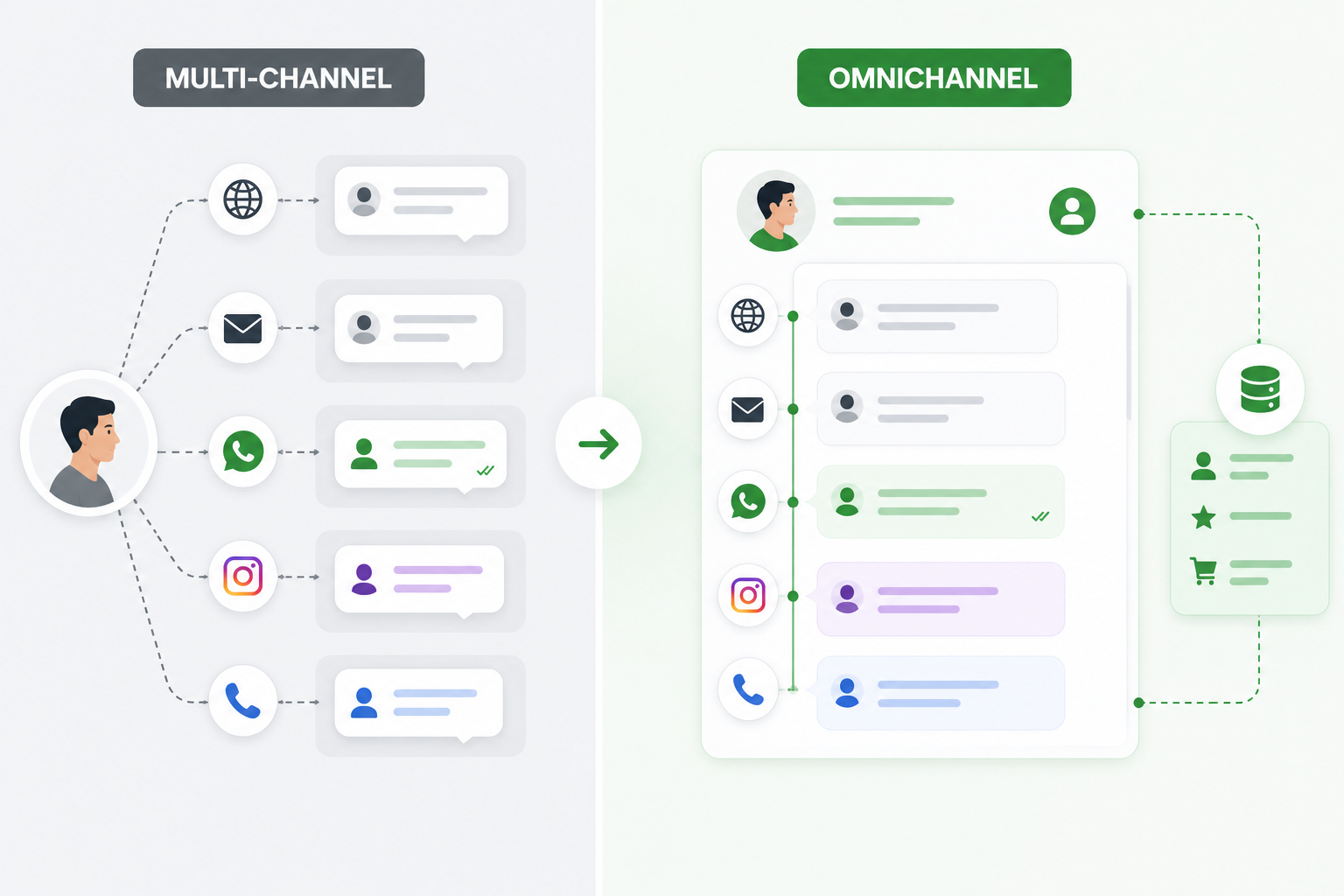
In a disconnected or multi-channel setup, these appear as three separate interactions.

In an omni-channel communication environment, they are part of one continuous conversation. The agent handling the call can see the complete history, previous inbox messages, chat transcripts, purchase data, and notes without the customer repeating information.

That continuity is what defines omnichannel communications.

Omnichannel vs Multi-Channel: What’s the Real Difference?

Multi-channel vs. Omni channel: differences explained through diagram

The terms multi-channel and omnichannel are often used interchangeably. However, they represent fundamentally different approaches to customer communication.

Multi-Channel Communication: Presence Across Platforms

A multi-channel approach means a business communicates with customers through multiple channels, such as:

  • Email
  • Website live chat
  • Social media
  • SMS
  • Voice support
  • WhatsApp

While this expands customer reach, each channel typically operates independently. Conversations are often managed in separate systems, and customer data may not be synchronized across platforms.

In short, the business is present on many platforms, but the experience is not necessarily connected.

Omnichannel Communication: Connected and Contextual

An omnichannel communication platform goes beyond presence. It connects every channel into a single, unified ecosystem. In an omni-channel communication model:

  • Conversations are merged into one thread per customer.
  • Customer data is shared across departments.
  • Transitions between channels are seamless.
  • Agents have full context regardless of the touchpoint.

In an omnichannel system, each interaction appears as part of one continuous journey, not separate tickets. This connected experience is what defines true omnichannel communications.

Comparison 

Aspect Multi-Channel Omnichannel
Channel Presence Multiple platforms Multiple integrated platforms
Data Sharing Limited or siloed Unified customer profile
Conversation History Separate per channel Single, continuous thread
Agent Experience Tool switching required Centralized inbox chat system
Customer Experience Fragmented Seamless and consistent

How an Omnichannel Communication Platform Works

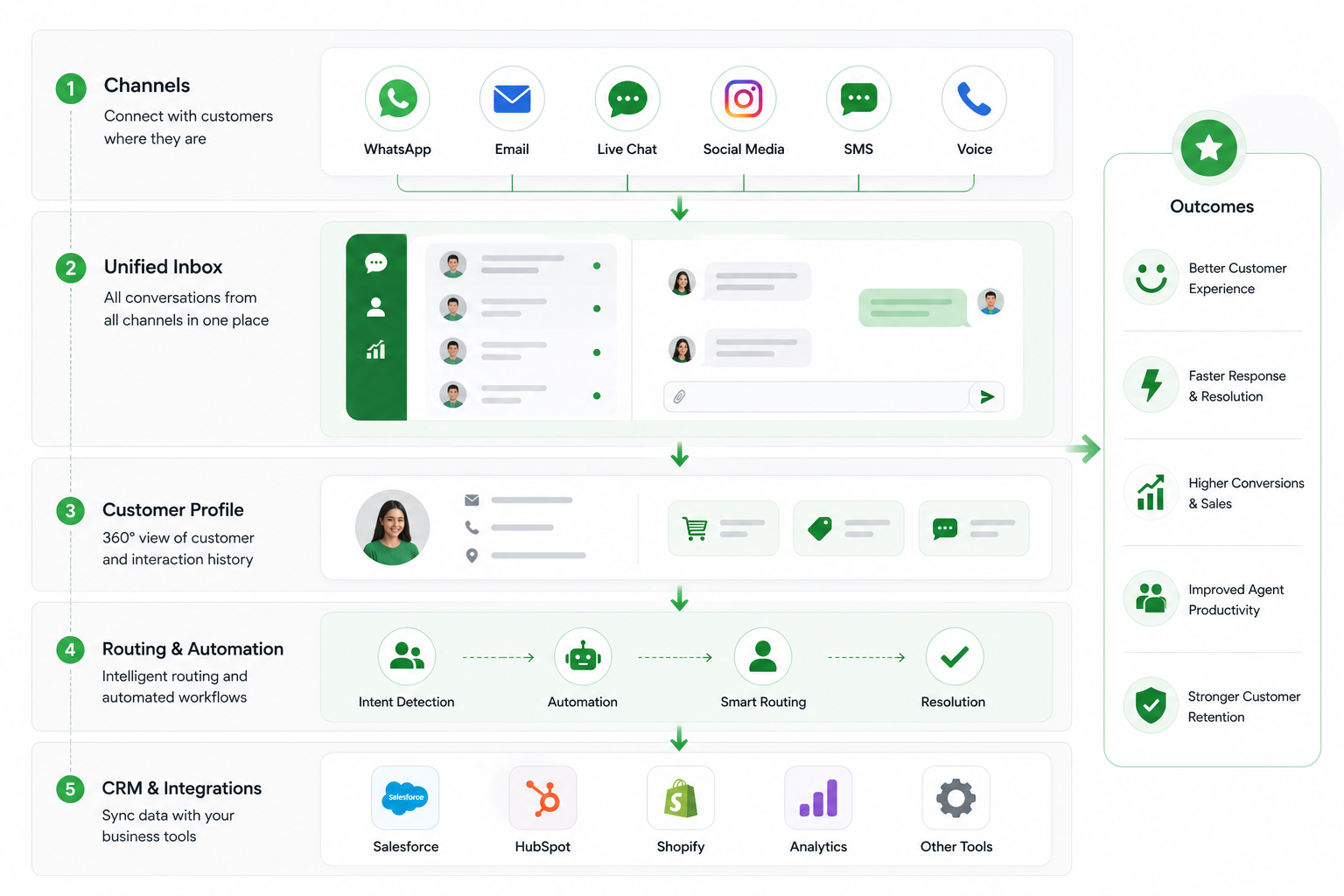
Working principal of Omnichannel communication platform explained

An omnichannel communication platform works by integrating multiple customer communication channels into a single, centralized system. Instead of operating separate tools for email, chat, social media, messaging apps, and voice, the platform connects them through one unified backend.

1. Channel Integration Layer

It integrates communication channels such as:

  • Website live chat
  • Email
  • WhatsApp and messaging apps
  • Social media DMs
  • SMS
  • Voice and call center systems

Each channel feeds conversations into the same system. This is what differentiates a basic multi-channel setup from a true omni-channel platform: the integration happens at the infrastructure level, not just the surface.

2. Unified Inbox System

Once channels are connected, all conversations flow into a centralized inbox chat interface. Instead of agents switching between multiple dashboards, they manage:

  • Every inbox message
  • Social conversations
  • Live chat threads
  • Voice interaction logs from one screen.

This unified inbox functionality ensures that all communication is visible in a single chronological thread, regardless of the channel used.

For example, if a customer moves from Instagram DM to email, the system merges those interactions under one customer profile rather than creating separate tickets.

3. Unified Customer Profile

A core feature of an omnichannel customer communication platform is the creation of a shared customer view. The platform consolidates:

  • Conversation history
  • Purchase data
  • Support tickets
  • Channel preferences
  • CRM information

This unified profile enables consistent responses across marketing, sales, and support teams. It is also what powers modern omnichannel customer service and omnichannel customer support strategies, as agents don’t just see messages; they see context.

4. Intelligent Routing & Workflow Automation

Behind the scenes, omnichannel software uses routing rules and automation to improve efficiency. This includes:

  • Automatically assigning conversations based on channel or department
  • Routing urgent issues to priority queues
  • Escalating issues within an omnichannel contact center
  • Triggering automated replies through an omnichannel chatbot

In a contact center omnichannel environment, this reduces average response time and improves resolution rates.

5. CRM & Sales Integration

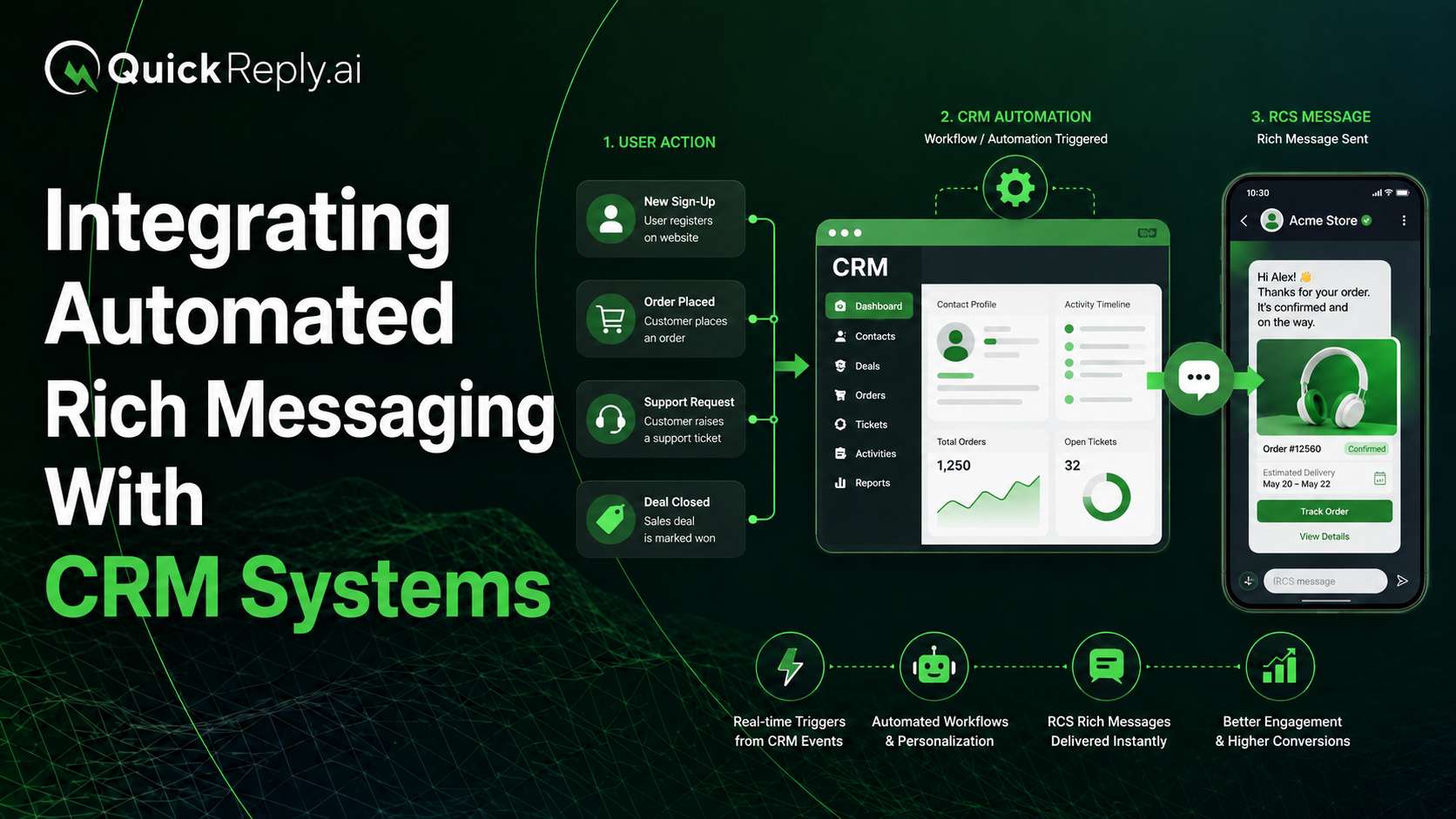
Modern omnichannel platforms often integrate with CRM systems, including setups like omnichannel Salesforce environments. This enables:

  • Sales teams to track leads across channels
  • Marketing teams to personalize outreach
  • Support teams to access customer lifecycle data

Rather than operating in silos, the platform acts as the communication bridge between departments.

6. Analytics & Performance Monitoring

An advanced omnichannel solution also provides consolidated reporting across all channels. Instead of analyzing chat performance separately from email or voice metrics, businesses can measure:

  • First response time
  • Resolution time
  • Channel effectiveness
  • Agent performance
  • Customer satisfaction

This unified reporting model is particularly important in omnichannel contact centres and omnichannel call centres where performance visibility directly impacts customer experience. Overall, it eliminates fragmentation and replaces it with structured, connected communication.

Benefits of Omnichannel Communication

Benefits of Omnichannel Communication

Implementing an omnichannel communication strategy is not simply about expanding channel presence. The real value lies in creating connected, consistent, and data-driven customer experiences. Here are the key benefits of omnichannel communication:

1. Seamless and Consistent Customer Experience

One of the most significant advantages of omnichannel communication is experience continuity.

Customers increasingly switch between channels depending on convenience and context. They may begin a conversation on live chat, follow up via messaging apps, and later contact an omnichannel call center.

An integrated omnichannel platform ensures:

  • Conversations remain connected
  • Context follows the customer
  • Messaging remains consistent across departments
  • No repeated explanations are required

2. Higher Customer Satisfaction and Loyalty

When customers can engage on their preferred channels without friction, satisfaction improves naturally. An omnichannel customer communication platform enables:

  • Faster resolution times
  • Personalized responses based on interaction history
  • Unified service across marketing, sales, and support

Improved experience directly influences customer satisfaction metrics and long-term loyalty. Customers are significantly more likely to remain engaged with brands that offer convenient, accessible communication options.

3. Increased Operational Efficiency

A centralized omnichannel solution streamlines workflows by consolidating inbox messages, automating routing, and enabling unified reporting. In a contact center omnichannel environment, this translates into:

  • Reduced average handling time
  • Faster first response
  • Higher first-contact resolution rates

Automation, including omnichannel chatbot capabilities, further reduces workload by handling repetitive queries and routing complex issues to human agents. This results in better resource utilization without compromising service quality.

4. Improved Data Visibility and Insights

Omnichannel communication centralizes customer interaction data across all channels. This unified data layer allows organizations to:

  • Understand customer preferences
  • Identify high-performing channels
  • Track engagement patterns
  • Optimize staffing and workflow allocation
  • Improve campaign targeting within an omnichannel marketing platform

Instead of analyzing isolated metrics, decision-makers gain a holistic view of customer engagement.

5. Higher Conversion Rates and Revenue Growth

An omnichannel approach supports revenue generation at multiple stages of the customer journey. With connected data and contextual visibility, businesses can:

  • Identify high-intent prospects
  • Trigger personalized follow-ups
  • Recover abandoned interactions
  • Upsell and cross-sell based on prior engagement
  • Align sales conversations with marketing campaigns

When integrated with CRM systems, including omni-channel Salesforce setups, sales teams can act on complete customer journeys rather than isolated touchpoints.

6. Reduced Customer Churn

Fragmented experiences increase frustration, and frustration leads to churn. Omnichannel communication minimizes friction by:

  • Preserving conversation history
  • Eliminating repetitive information requests
  • Providing faster support resolution
  • Delivering consistent brand messaging

Higher engagement and smoother interactions strengthen retention, particularly for subscription-based or relationship-driven businesses.

7. Scalability for Growth

As businesses expand into new markets, add new communication channels, or scale support operations, fragmented systems become increasingly difficult to manage.

A scalable omnichannel communication infrastructure allows organizations to:

  • Add new channels without disruption
  • Expand contact center operations
  • Maintain consistent service standards
  • Support regional growth strategies

Rather than repeatedly integrating new tools, the business grows on top of a stable communication backbone.

Industrial Use Case (Omnichannel Communication Platform)

While nearly every customer-facing organization can benefit from omnichannel communications, certain industries experience a disproportionately high impact due to complex customer journeys, high interaction volumes, and multi-department coordination requirements.

Ecommerce & Retail

E-commerce businesses operate in one of the most fragmented communication environments. A customer might discover a product through social media, ask a question via website chat, compare prices on mobile, complete a purchase on desktop, and later request support through a messaging app.

Without an integrated system, these interactions remain disconnected. Marketing sees one version of the customer, support sees another, and sales often sees none. An omnichannel communication platform unifies this journey. 

For example, if a customer abandons their cart after asking a product question on chat, the system can trigger a contextual follow-up message rather than sending a generic promotional email. Post-purchase support teams can instantly access order history and previous conversations without asking the customer to repeat information.

For retail brands scaling internationally, especially those running paid acquisition campaigns, this continuity directly influences conversion rates, repeat purchases, and customer lifetime value. Here, omnichannel communication becomes a revenue driver rather than just a support upgrade.

SaaS & Technology Companies

SaaS companies manage ongoing customer relationships that span months or years. The customer journey typically includes marketing engagement, sales qualification, onboarding, feature support, renewal discussions, and potential upselling.

In many organizations, these stages are handled by separate teams using different tools. As a result, valuable context is lost between handoffs. An omnichannel customer communication platform centralizes these touchpoints. 

For example, when a customer raises a technical issue during onboarding, the support team can immediately see the original sales conversation, product configuration details, and onboarding notes. Similarly, renewal teams can review prior support interactions before engaging in contract discussions.

For growing SaaS businesses, especially those operating subscription models, a connected omnichannel contact center improves lifecycle visibility and reduces churn by ensuring consistent engagement across departments.

Banking, Financial Services & Insurance (BFSI)

Financial institutions manage highly sensitive customer interactions that demand both security and precision. Customers may initiate conversations through mobile banking apps, email, messaging platforms, or traditional call centers, often within the same issue resolution process.

In a fragmented environment, this creates compliance risks and operational inefficiencies. An omnichannel contact centre enables secure, traceable, and continuous communication across all channels. 

For instance, if a customer reports a transaction issue via chat and later calls the support line, the agent can immediately access the full conversation history and relevant documentation. This reduces resolution time while maintaining audit trails and regulatory transparency. In heavily regulated industries, omnichannel communication enhances both customer experience and operational compliance.

Healthcare

Healthcare providers manage appointment scheduling, follow-ups, billing questions, prescription inquiries, and patient support across multiple channels. Patients increasingly expect the same convenience from healthcare providers that they receive from retail or technology brands.

An integrated omnichannel communication system allows healthcare organizations to centralize patient interactions. For example, a patient who books an appointment online and later messages about a billing clarification should not be treated as two separate cases.

Unified communication records reduce administrative friction, accelerate response times, and ensure continuity of care-related information. In regulated healthcare environments, maintaining centralized documentation across channels also improves accountability and service quality.

Real Estate & Property Management

Real estate inquiries often originate from multiple digital sources, such as property listing platforms, social media ads, messaging apps, and direct website forms. Agents must respond quickly to secure viewings and convert leads.

Without an omnichannel platform, inquiries may be missed or duplicated, especially when managed across disconnected inboxes.

With an integrated system, every inquiry is consolidated into a centralized view. Agents can track lead progression, maintain conversation history, and coordinate follow-ups in real time. For property management firms handling ongoing tenant communication, this ensures consistent support and reduces operational inefficiencies.

In high-value transaction environments like real estate, responsiveness directly impacts deal closure rates.

Omnichannel Communication Strategy You Should Adopt in 2026

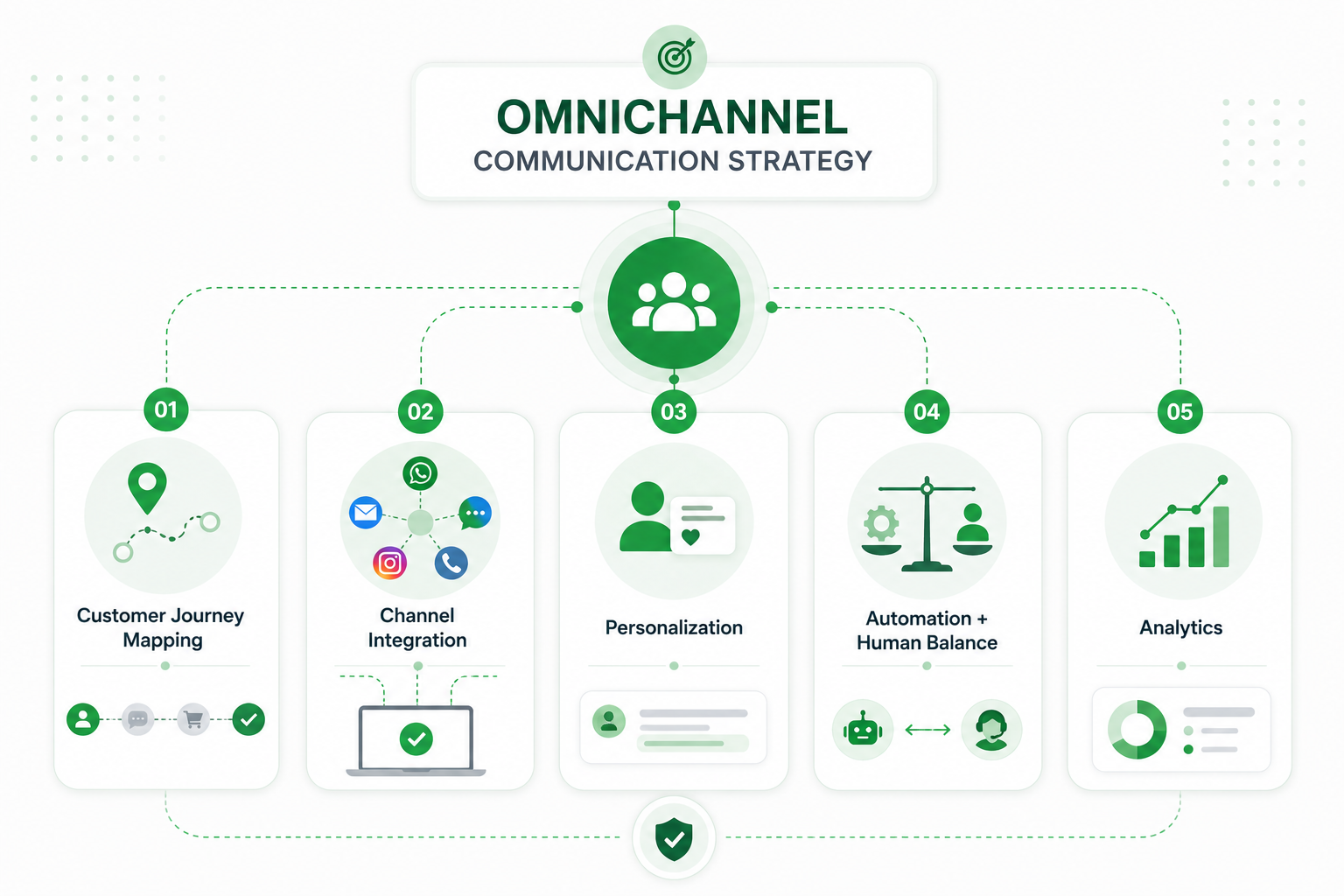
Omnichannel Communication Strategy

An omnichannel communication strategy is not about adding more channels; it is about orchestrating them into a single, connected system that delivers consistent, contextual, and measurable customer experiences. Below are the foundational pillars of a high-performing omnichannel communication strategy you should adopt in 2026:

1. Start with a Customer-Centric Journey Framework

Every effective strategy begins with visibility into the customer lifecycle. Map how customers discover your brand, engage with marketing, convert, and seek support. Identify friction points, repeated information requests, delayed responses, disconnected conversations, and prioritize integration at those touchpoints.

Instead of optimizing channels individually, design journeys that move fluidly across them. For example, a customer who clicks a paid ad, chats on your website, and later continues the conversation via a messaging app such as WhatsApp should experience continuity and not repetition. A robust omnichannel communication platform ensures context travels with the customer.

2. Deep Channel Integration, Not Surface-Level Presence

Many companies operate across email, live chat, social media, and messaging apps. Few integrate them meaningfully.

A strategic omnichannel setup connects all communication streams into a centralized system. This includes unified inboxes, shared customer profiles, conversation history synchronization, and automated routing. The objective is simple: customers should be able to switch channels without restarting the interaction.

Integration also extends to backend systems, CRM, marketing automation, helpdesk software, and ecommerce platforms, so communication aligns with real-time customer data such as order status, subscription tier, or past support history.

3. Consistent Brand Voice Across Touchpoints

Inconsistent communication erodes trust. An omnichannel communication strategy establishes standardized messaging frameworks, response guidelines, and tone-of-voice documentation that apply across marketing, sales, and support teams.

Whether a customer receives an email campaign, a chatbot response, or a support follow-up, the experience should feel cohesive. This alignment strengthens brand perception and reduces confusion during high-stakes interactions such as billing issues or product returns.

4. Data-Driven Personalization at Scale

Personalization is no longer optional; it is expected. However, personalization without centralized data leads to fragmented messaging.

An omnichannel communication platform enables businesses to leverage unified customer data to trigger contextual messages. For example:

  • Sending cart recovery messages via the customer’s preferred channel, such as WhatsApp, Instagram, RCS, through AI-powered platforms like QuickReply.ai
  • Triggering onboarding sequences based on product usage behavior
  • Prioritizing support tickets from high-value accounts

When personalization is powered by behavioral data rather than assumptions, engagement and conversion rates improve significantly.

5. Real-Time Responsiveness and Intelligent Automation

Speed directly impacts customer satisfaction. A modern omnichannel strategy combines automation with human oversight to maintain responsiveness without sacrificing quality.

This includes:

  • Automated message routing to the appropriate department
  • AI-powered chatbots for first-level query resolution
  • Priority escalation workflows
  • SLA tracking across all communication channels

Automation should enhance efficiency while preserving the option for seamless human handover when complexity increases.

6. Cross-Channel Analytics and Performance Visibility

Measurement defines maturity. An effective omnichannel communication strategy incorporates cross-channel analytics that track response times, resolution rates, customer satisfaction, engagement metrics, and revenue attribution across all touchpoints.

Instead of evaluating email, chat, and social performance separately, leadership gains a consolidated view of customer communication health. This enables faster optimization and more informed strategic decisions.

Conclusion

Omnichannel communication is no longer a competitive advantage; it has turned into an operational infrastructure. As customer journeys grow more fragmented across messaging apps, social platforms, websites, and support channels, businesses that continue operating in silos will risk longer resolution times, inconsistent messaging, and lost revenue opportunities.

An effective omnichannel communication platform eliminates this fragmentation by unifying conversations, customer data, and workflows into a single, connected ecosystem. It empowers marketing, sales, and support teams to operate with full context, improve operational efficiency, and deliver seamless customer experiences that directly impact retention and growth.

Turn 1 time visitor into repeat customer with WhatsApp marketing

Leverage the untapped growth potential of WhatsApp marketing to acquire and retain customers.

Frequently Asked Questions

What is the difference between multi-channel and omnichannel communication?

While both involve using multiple platforms, multi-channel treats each channel (like email or WhatsApp) as a separate silo with its own conversation history. In contrast, omnichannel communication integrates all channels into a single system, ensuring that the context and history follow the customer across every touchpoint for a seamless experience.

Why is an omnichannel communication platform important for e-commerce?

In e-commerce, customers often switch between social media, website chat, and messaging apps before making a purchase. An omnichannel platform unifies these interactions, allowing your team to recover abandoned carts via WhatsApp or answer product queries with full knowledge of the customer's browsing history, leading to higher conversion rates.

Does an omnichannel strategy require a large support team?

Not necessarily. In fact, an omnichannel communication strategy often increases operational efficiency. By centralizing all messages into a unified inbox and using intelligent routing or AI chatbots, a smaller team can manage higher volumes of queries more effectively than they could by switching between multiple disjointed apps.

Can I integrate my existing CRM with an omnichannel platform?

Modern omnichannel platforms are designed to bridge the gap between communication and data. By connecting with CRMs like Salesforce or HubSpot, your sales and support teams gain a "360-degree view" of the customer, ensuring every interaction is personalized and informed by past purchase data.

How does omnichannel communication improve customer loyalty?

Friction is the biggest enemy of loyalty. When customers have to repeat their issue every time they switch from a chat widget to a phone call, satisfaction drops. Omnichannel communication removes this friction by preserving conversation history, making the customer feel known and valued, which directly reduces churn.

What is an omnichannel chatbot and how does it work?

An omnichannel chatbot is an AI-powered assistant that operates across all your integrated channels (WhatsApp, Instagram, Web Chat, etc.). Unlike a standard bot, it accesses a unified database, meaning it can provide consistent answers and recognize a returning customer regardless of which platform they use to reach out.