.jpeg)


Copied to clipboard!
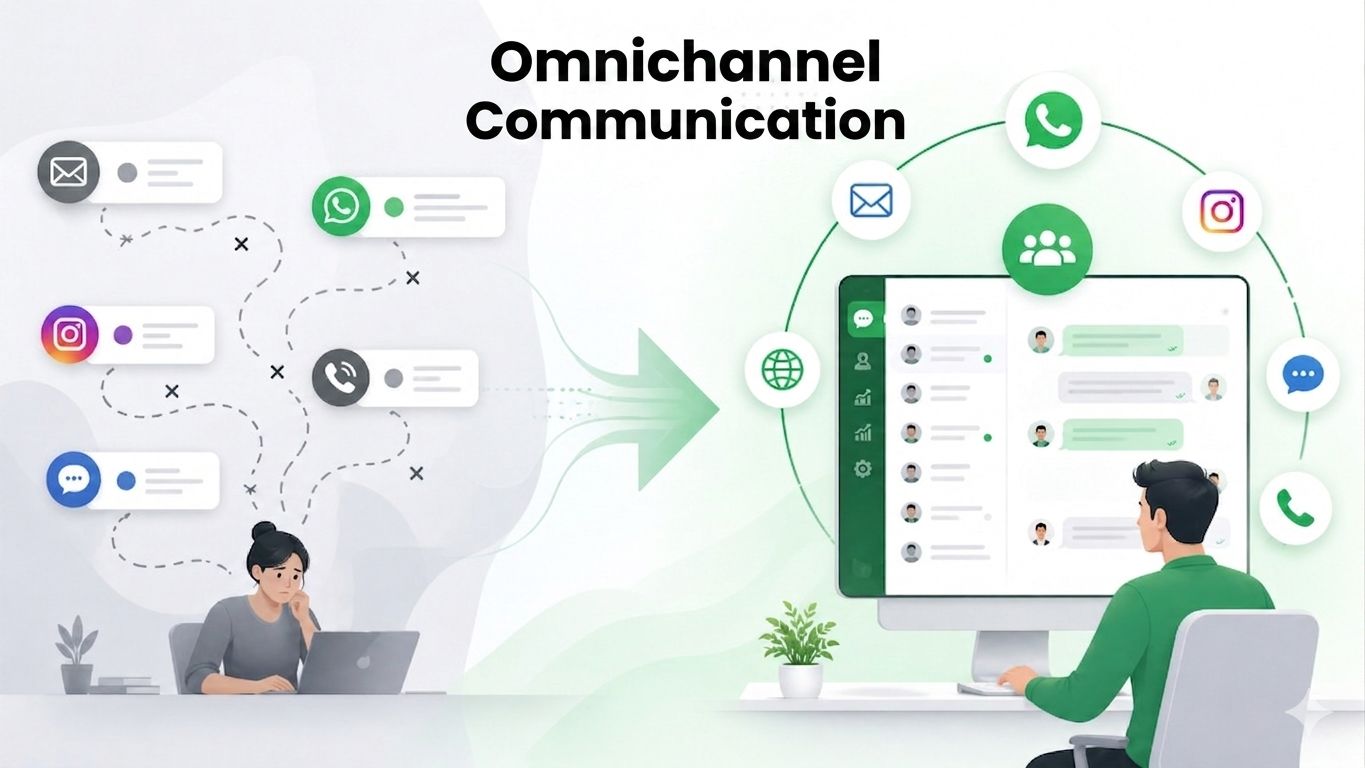
Let me paint a picture you probably know too well: a customer sends you a DM on Instagram, follows up on WhatsApp an hour later, and then fires off an email asking why nobody's gotten back to them. Sound familiar?
It's 2026, and customers genuinely don't care which channel they're reaching out on. They just want a fast answer. But on the business side? Managing conversations scattered across five or six platforms is an absolute mess. Messages slip through the cracks, response times balloon, and your team burns out from switching between tabs all day.
This is the exact problem a unified messaging platform solves.
Rather than bouncing between apps, a unified messaging platform for business consolidates every customer conversation, WhatsApp, Instagram, Facebook Messenger, live chat, SMS, you name it, into one single dashboard.
In this post, I'm sharing five tools that do this exceptionally well in 2026. Whether you're running a D2C brand, managing social media for clients, or scaling an ecommerce operation, there's something here for you.
Let's dive in.
Before we get to the tools, let's talk about why this matters more than ever.
Customer expectations have shifted dramatically. People expect near-instant responses regardless of which channel they use. And when you multiply that expectation across WhatsApp, Instagram, your website chat, Facebook Messenger, and maybe Telegram or SMS, you're asking your team to perform miracles without a centralized system.
Modern unified messaging platforms come with automation tools that give agents the full picture of each customer's journey, including previous interactions, order history, and preferences, so agents can offer quick resolutions without asking customers to repeat themselves.
Here's what a unified messaging platform actually solves:
If you're serious about customer experience, you need a single place to manage all your messages.

Social Champ’s Social Inbox
Best for: Brands that need to unify social media messaging alongside content management
If a significant chunk of your customer communication happens through social media DMs, comments, and mentions, Social Champ should be at the top of your list. While it's widely known as a social media management platform, its social media inbox management tool is a genuine game-changer for teams drowning in social messages.
Here's the thing most people miss: customer conversations don't just happen in DMs. They happen in comment sections, in tagged posts, in replies to stories. Most messaging-only platforms completely miss these public interactions. Social Champ doesn't.
It pulls messages, comments, and mentions from Facebook, Instagram, X, LinkedIn, and Google Business Profile into a single unified inbox. So you're not just managing private conversations, you're catching every public comment and mention that needs a response too.
Key Features:
Why it stands out: For brands where social media is the primary customer touchpoint, such as restaurants, local businesses, agencies, and personal brands, having messaging and content management in one tool eliminates the need to pay for two separate platforms. You schedule content, monitor conversations, and respond to customers without ever leaving the dashboard. That's efficiency you can actually feel.

QuickReply.ai’s Landing Page
Best for: Ecommerce brands and Shopify stores that rely heavily on WhatsApp
QuickReply.ai has built a strong reputation as a WhatsApp-first messaging platform, but calling it "just a WhatsApp tool" doesn't do it justice. Their omnichannel inbox brings WhatsApp, Instagram, Facebook Messenger, and web chat conversations into one clean, intuitive interface.
What really sets QuickReply apart is how deeply it integrates with ecommerce workflows. If you're running a Shopify store, it syncs your products, inventory, and customer data automatically. That means your support agents can view order history, send personalized product recommendations, and even recover abandoned carts, all from the same inbox where they're handling customer queries.
Key Features:
Why it stands out: The combination of conversational commerce and customer support in one platform is incredibly powerful. You're not just answering questions, you're actively driving revenue from the same inbox. For ecommerce businesses, that dual purpose makes QuickReply.ai one of the smartest investments you can make.
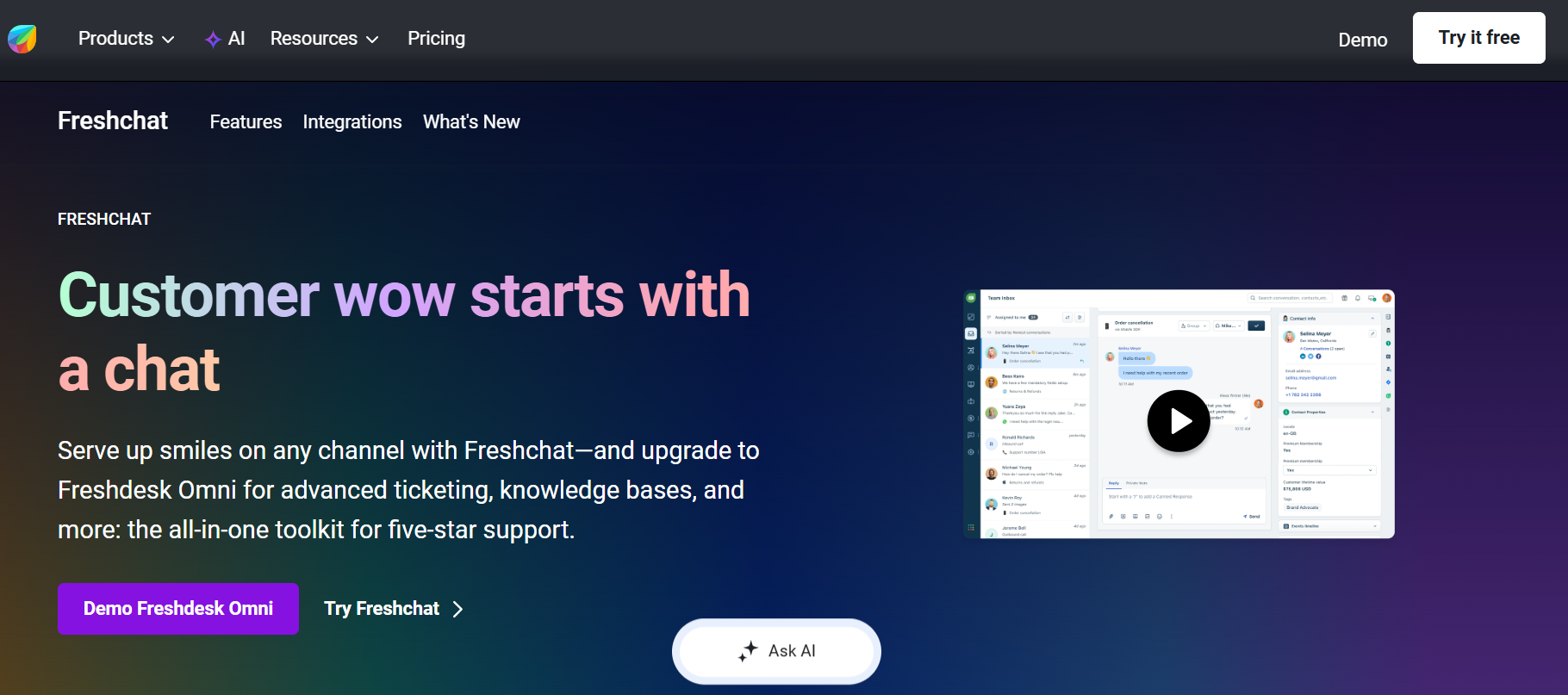
Freshchat’s Landing Page
Best for: Growing teams that need a balance of automation and live agent support
Freshchat is part of the broader Freshworks ecosystem, which makes it a natural pick if you're already using Freshdesk or Freshsales. It supports messaging across WhatsApp, Apple Business Chat, Facebook Messenger, LINE, and your website.
The platform invests heavily in AI-powered bots that handle routine queries, qualify leads, and seamlessly hand off to agents when needed. Their "IntelliAssign" feature automatically routes conversations to the right agent based on skill level and current workload, which is a lifesaver when your team handles hundreds of chats daily.
Key Features:
Why it stands out: If you want enterprise-grade capabilities without enterprise-grade complexity, Freshchat hits that sweet spot perfectly. The learning curve is gentle, the interface is clean, and the free tier is generous enough for small teams to get started without financial commitment.

Respond.io’s Landing Page
Best for: Businesses managing high-volume conversations across many channels globally
Respond.io positions itself as the go-to business messaging platform for marketing, sales, and support teams alike. It unifies all customer touchpoints and CRMs in a team inbox with AI Agents and native lead management so conversations never break, even when customers switch channels .
What makes Respond.io particularly interesting is its workflow automation engine. You can build fairly complex routing logic, like assigning VIP customers to senior agents, or auto-tagging conversations based on keywords, without writing a single line of code.
Key Features:
Why it stands out: The sheer number of channels supported makes it ideal for businesses with a global customer base. If your customers are on WhatsApp in India, LINE in Thailand, and Messenger in the US, Respond.io handles that complexity without breaking a sweat.
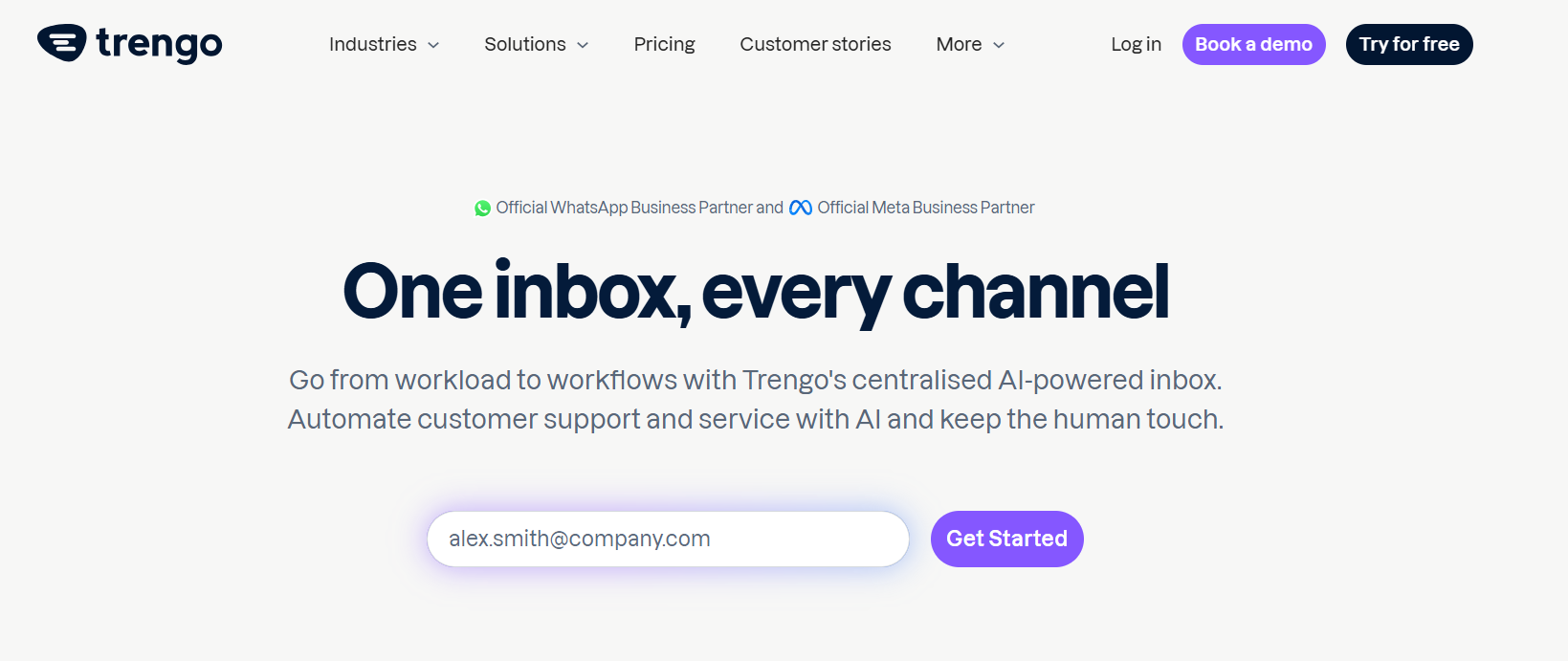
Trengo’s Landing Page
Best for: Mid-size teams that want a collaborative inbox with multichannel support
Trengo takes a team-first approach to unified messaging. Think of it as a shared inbox on steroids; it pulls in messages from WhatsApp, email, Instagram, Facebook, Telegram, Google Business Messages, and live chat, then lets your entire team collaborate on responses.
I find Trengo particularly useful for businesses where multiple departments (sales, support, operations) need visibility into customer conversations. You can create separate inboxes for different teams while still maintaining a bird's-eye view of everything happening across the organization.
Key Features:
Why it stands out: The collaboration features are genuinely top-notch. If your bottleneck isn't just receiving messages but coordinating internally about who handles what, Trengo deserves a serious look.
With five strong options on the table, how do you pick the right one? Here are the questions I'd ask myself:
If most conversations happen on social media, DMs, comments, and mentions, a platform like Social Champ that captures all of those touchpoints will serve you better than a tool focused only on private messaging. If you're WhatsApp-heavy and running ecommerce, QuickReply.ai is purpose-built for that.
Solo founders and small teams need simplicity; you don't want to spend three weeks configuring workflows. Larger teams need routing, permissions, and collaboration features to avoid stepping on each other's toes.
Some businesses just need one inbox to see everything clearly. Others need bots handling first responses, routing logic, and triggered follow-ups. Know which camp you're in before you commit.
These platforms range from free tiers to several hundred dollars per month. Be realistic about what you can afford and what ROI you expect. A good unified messaging platform should save you money through faster response times and better conversion rates, but only if you actually use the features you're paying for.
The days of managing customer messages across five different browser tabs are over, or at least, they should be. A unified messaging platform isn't a luxury in 2026. It's table stakes for any business that wants to deliver fast, personalized, and consistent communication.
Whether you go with a social-first solution like Social Champ, a commerce-focused platform like QuickReply.ai, or a high-volume conversation manager like Respond.io, the important thing is that you're centralizing your conversations somewhere.
Your customers don't think in channels. They just want a quick reply. Make sure you're set up to give them one, every single time

Tool and strategies modern teams need to help their companies grow.
Leverage the untapped growth potential of WhatsApp marketing to acquire and retain customers.