





%201.svg)





The brand that turns wellness concerns into trusted care
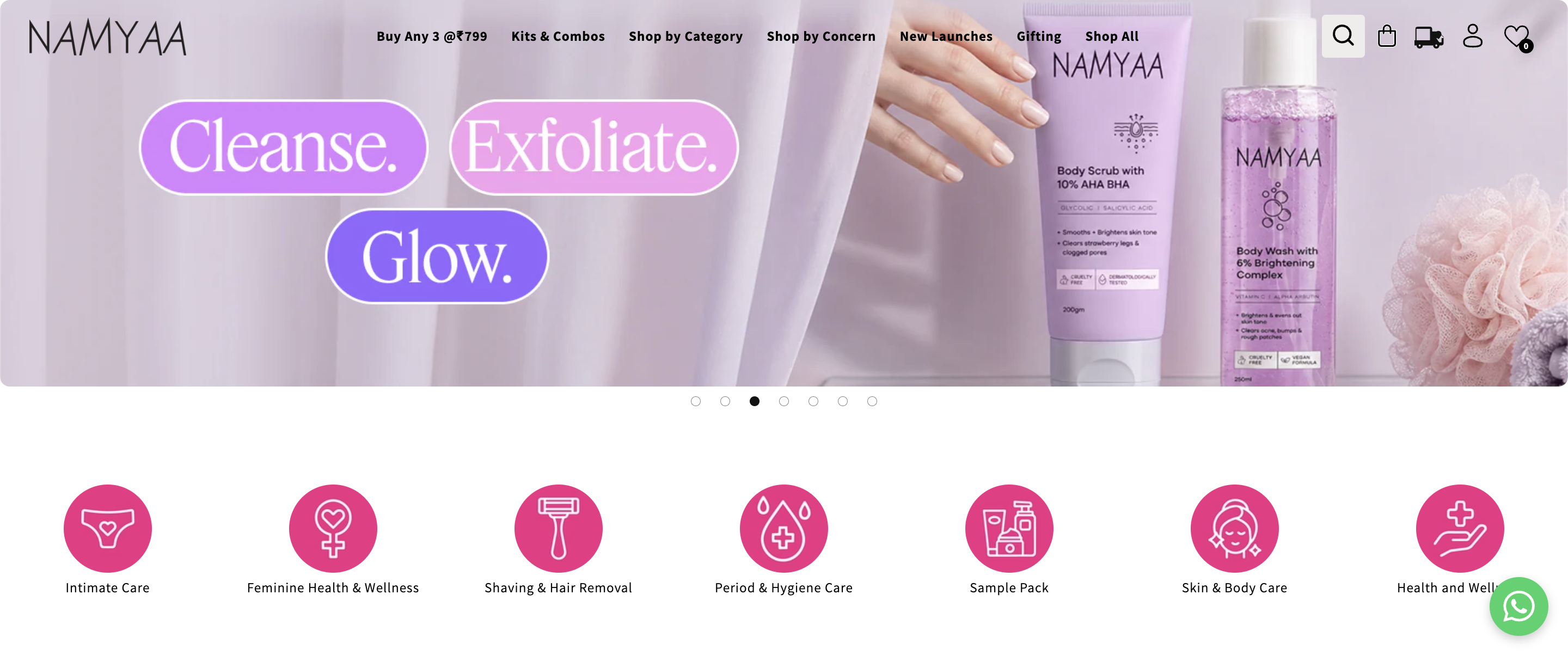
Namyaa is an India-based women's wellness brand built around a category most marketers tiptoe around: intimate care, menstrual health, and hormonal wellness. Founded by Karan Gupta, the brand sells everything from intimate washes and hygiene products to Ayurvedic formulations for concerns like PCOD, PCOS, and irregular periods.
But Namyaa does more than sell products. It creates a safe space for women to act on concerns they may not always discuss openly. Its messaging is not loud, pushy, or fear-led. It is calm, direct, and reassuring. The brand speaks to women with the kind of sensitivity this category demands: acknowledging the problem, reducing hesitation, and making the next step feel private, safe, and trustworthy.
That emotional trust is also the reason its WhatsApp recovery works the way it does.
Why a reminder was never going to be enough
In most categories, a shopper abandons because they got distracted. In Namyaa's category, they often abandon because they are unsure.
“Will this actually help my PCOD? Is it safe to use? Is it discreet? Is this normal? Can I trust this brand with something so personal?”
A message that says “you left something behind” does very little for someone carrying that kind of hesitation. The shopper does not need a nudge. She needs reassurance.
So Namyaa stopped sending reminders and started sending answers.
Instead of treating abandonment like a missed transaction, the brand treated it like a moment of doubt. And that changed the role of the message completely.
A different message for every product, not a different system
Every product Namyaa sells carries its own recovery message and its own image. The copy is written for that specific product. It educates the shopper on what the product does, names the concern that most likely stalled the purchase, and addresses it in the same message.
Someone who left a PCOD care kit in their cart does not get the same note as someone who left an intimate wash. Each gets content written for the hesitation behind that particular product.
That is the entire idea. The personalization lives in the message, not in a maze of rules and conditions.
More importantly, the message feels emotionally aware. It does not just say “complete your purchase.” It helps the shopper feel understood. It meets her at the exact point where uncertainty may have entered and gives her a reason to trust the next step.
One approach, running across all three drop-off points
Shoppers leave at different moments, and each moment means something different. Namyaa runs the same product-specific logic across all three.
No stage is left unattended, and none of it needs its own playbook. The same product-specific message runs wherever the shopper happened to drop off.
Why this works where generic recovery doesn't
A reminder asks the shopper to act. An educational message gives them a reason to.
In a category built on trust, privacy, and personal care, the message has to do more than recover a cart. It has to reduce discomfort, answer the unspoken question, and make the customer feel safe enough to continue
That is why Namyaa's replies run high. People write back when a message reads like help, not pressure.
What the approach returned
The figures below come from one recovery campaign for a PCOD care product, run on QuickReply.ai.
Recovering 333 orders by just spending ₹3,283 each is the kind of result that only holds when the message is relevant enough to convert without leaning on heavy discounts. 283 of those shoppers replied, which is what a genuinely useful message earns in a category where people have real questions.
Why the simple part is the part that scales
The reason this approach keeps working is that it stays light to run. QuickReply.ai handles the orchestration, who gets which message, at which stage, for which product, so Namyaa's only real job is to write one good, product-specific message and pair it with the right image. Add a product, write its message once, and recovery for it runs across browse, cart, and checkout on its own.
Namyaa did not build a complicated system to earn a 105x return. They wrote for the customer, named the doubt the product page left open, and let QuickReply.ai run it across every product and every stage of abandonment.
Every product Namyaa sells carries its own recovery message and its own image. The copy is written for that specific product. It educates the shopper on what the product does, names the concern that most likely stalled the purchase, and addresses it in the same message.
Someone who left a PCOD care kit in their cart does not get the same note as someone who left an intimate wash. Each gets content written for the hesitation behind that particular product.
That is the entire idea. The personalization lives in the message, not in a maze of rules and conditions.
More importantly, the message feels emotionally aware. It does not just say “complete your purchase.” It helps the shopper feel understood. It meets her at the exact point where uncertainty may have entered and gives her a reason to trust the next step.