




%201.svg)





The brand bringing a premium ritual online
Estuary is a premium blending water and mixer brand built for customers who care about how their drink is served, mixed, and experienced.
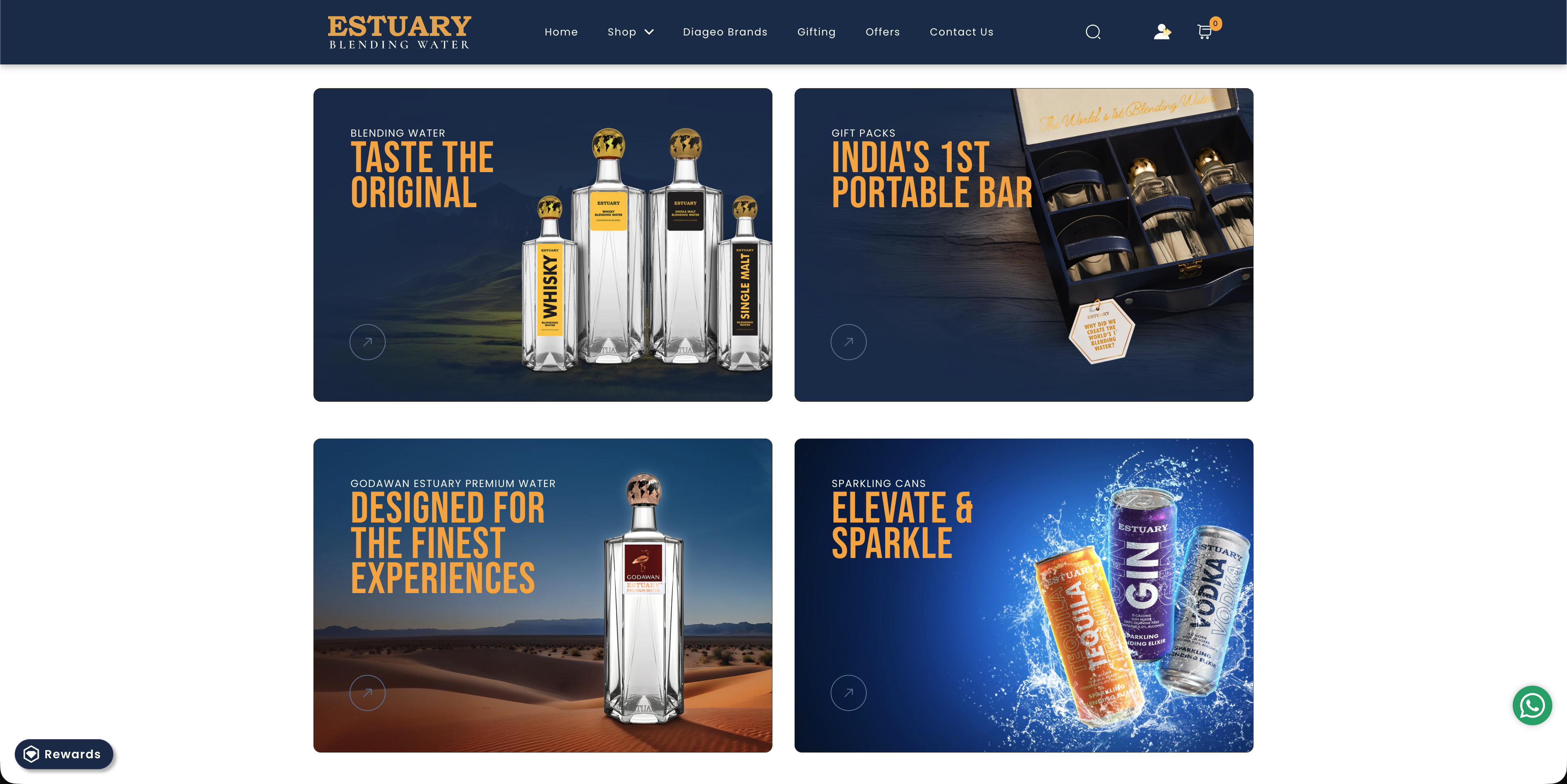
Its catalog spans blending water, soda water, sparkling mixers, gifting packs, and premium collaborations. This is not a category where shoppers always buy like they would buy a routine grocery item. A customer may discover the product, explore the idea, understand the use case, compare packs, and then decide whether it fits their bar, gifting plan, or hosting occasion.
That makes first-party engagement extremely important.
For Estuary, the goal was not just to bring people to the website. The bigger opportunity was to turn those website visitors into reachable prospects, move them into a more personal channel, and nurture them toward purchase.
Website attention was valuable, but easy to lose
A visitor landing on Estuary’s website may already be interested. They might be exploring premium mixers, looking for gifting options, checking offers, or discovering the concept of blending water for the first time.
But website attention is fragile.
A visitor can browse, leave, and never return. Even if they are interested, Estuary may not get another chance to speak to them unless they place an order or share their contact details.
That is where a simple website popup became a much bigger growth lever.
Instead of treating the popup as a one-time lead capture tool, Estuary used it as the starting point of a WhatsApp conversation.
The QuickReply.ai approach: Turn the popup into a WhatsApp entry point
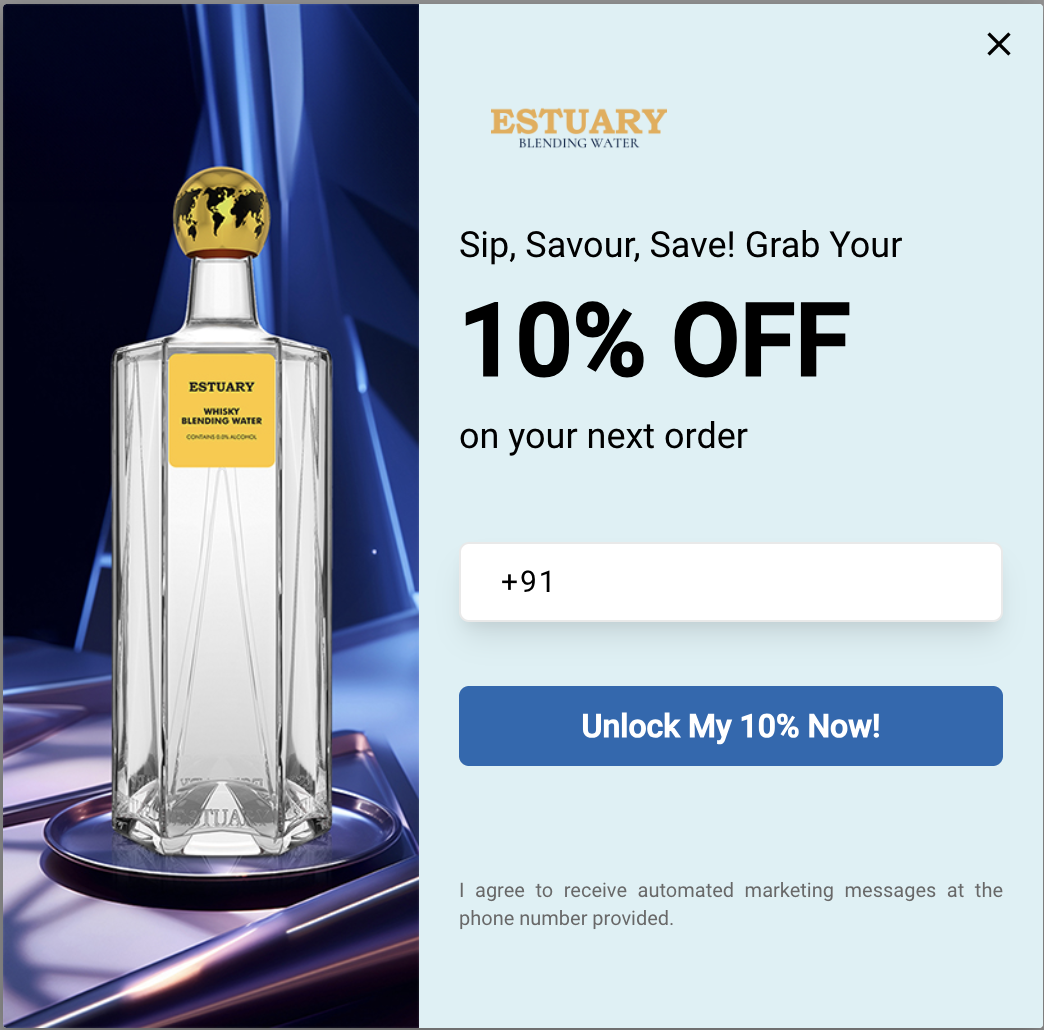
QuickReply.ai helped Estuary set up a welcome popup opt-in on its website.
When visitors engaged with the popup, they were directed into Estuary’s WhatsApp chat. From there, the brand could continue the conversation in a channel that felt faster, more personal, and easier to act on than email or retargeting alone.
This changed the role of the popup.
It was no longer just a box asking for a phone number. It became the first step in a guided buying journey.
A visitor could move from website discovery to WhatsApp engagement in a few clicks. Once inside WhatsApp, Estuary could nurture them with relevant messages, offers, product education, and purchase prompts.
Welcome opt-in followed by a WhatsApp nurturing flow
The journey worked in three simple steps.
First, the visitor saw the welcome popup on Estuary’s website.
Second, the opt-in led the visitor into the brand’s WhatsApp chat, where the interaction felt more immediate and direct.
Third, QuickReply.ai helped Estuary continue the engagement through a nurturing flow designed to move interested visitors closer to purchase.
This approach worked because it matched the customer’s stage of awareness.
Some visitors may already know what they want. They only need a clear next step. Others may need more context around what blending water is, how to use it, which product to pick, or what offer is available.
The WhatsApp journey gave Estuary a way to keep that conversation going after the website visit.
Why this worked better than a passive popup
Most website popups stop at opt-in.
A visitor submits a phone number or email, and then the brand hopes the next message gets noticed.
Estuary’s journey was stronger because the popup immediately opened a conversational path. The customer was not just added to a list. They were taken to WhatsApp, where Estuary could guide the next step while intent was still fresh.
That matters for a premium product category.
A customer who is buying blending water, mixers, or gifting packs may need a little more context before placing the order. WhatsApp made that context easy to deliver. It also made the purchase journey feel less like a broadcast and more like a brand-led recommendation.
What the campaign returned
The welcome popup opt-in campaign delivered strong results for Estuary on QuickReply.ai.
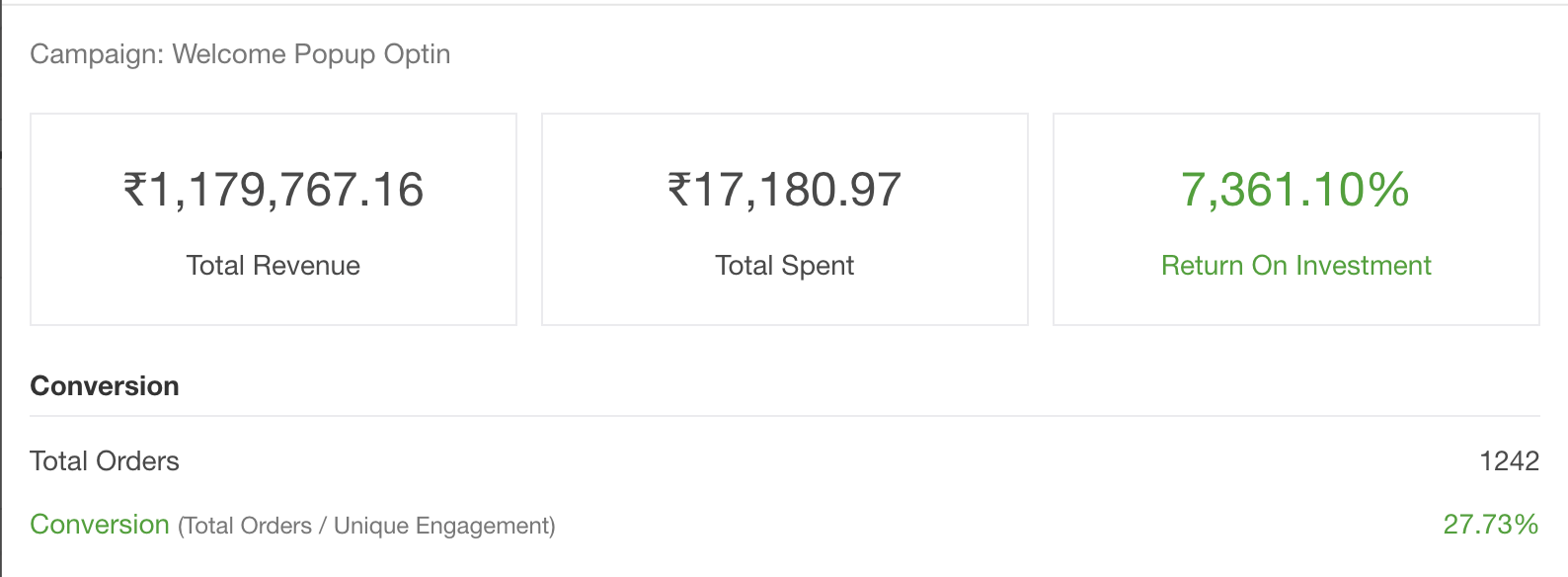
That means more than one in four engaged users converted into an order after entering the journey.
Why the numbers matter
The result is strong because the popup did not work in isolation.
The performance came from combining three things:
- A high-intent website moment
- A direct WhatsApp opt-in
- A nurturing flow that continued the conversation after the first click
This made the campaign more powerful than a normal lead capture popup.
The popup captured attention. WhatsApp kept the attention alive. The nurture flow converted that attention into orders.
For Estuary, this created a repeatable acquisition and conversion engine: every new website visitor had a chance to become a WhatsApp contact, every WhatsApp contact could be nurtured, and every conversation could move closer to purchase.
The takeaway
Estuary did not use WhatsApp only as a post-purchase or support channel.
It used WhatsApp much earlier in the customer journey, right at the moment a visitor showed interest on the website.
With QuickReply.ai, the brand turned a welcome popup into a revenue-generating WhatsApp journey. The popup brought visitors into chat. The nurture flow helped them understand, engage, and buy.
The result was ₹11.79L in revenue, 1,242 orders, and a 7,361% ROI.
For Estuary, the lesson was clear: when a popup leads to a real conversation, it can do much more than capture leads. It can become a serious revenue channel.