How many customers decided to cancel before you even knew they were unhappy?
No complaint. No warning. Just three missed logins, a mental note to find something better, and a non-renewal that showed up like a surprise, even though it was not.
That silent exit is how most SaaS churn happens. By the time the cancellation lands, the decision was made weeks ago.
Conversational AI was built exactly for this gap. Not as a support shortcut, but as a live retention layer that catches what human teams miss and acts before the window closes.
Retail can afford to lose a customer and replace them. SaaS cannot.
When someone churns, they take everything with them:
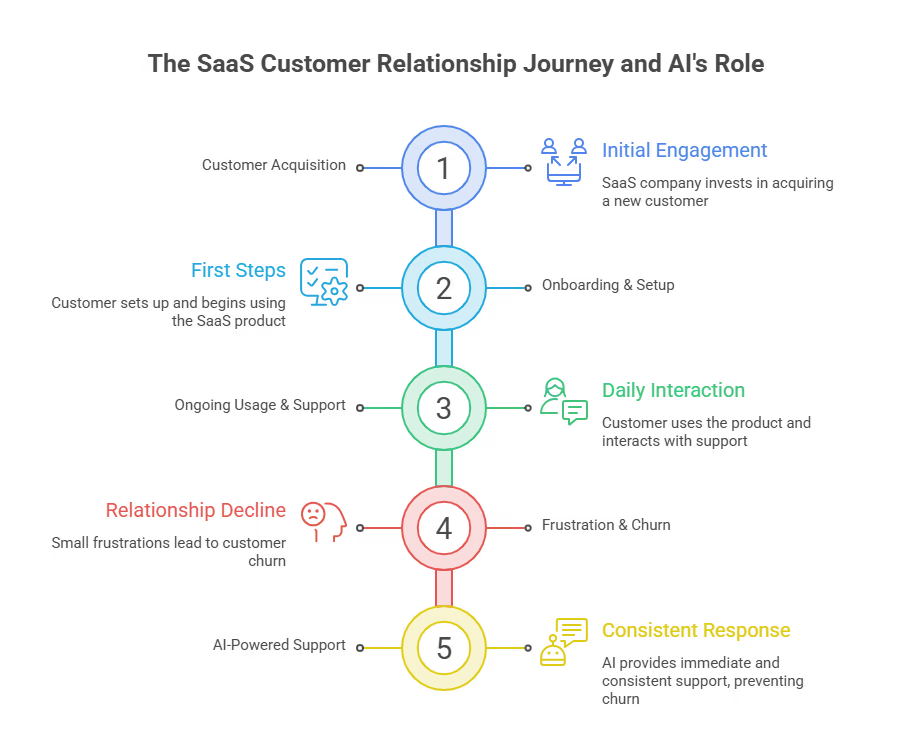
The relationship between a SaaS company and its customer is not a transaction. It is an ongoing conversation that either deepens or dies, usually one small frustration at a time.
For top-tier accounts, human teams manage this well. Everyone else gets a drip sequence and a help center link. Conversational AI fills that gap without adding headcount.
According to Salesforce's State of Service report, 83% of customers expect an immediate response when they reach out. Across time zones and Sunday afternoons, no human team delivers that consistently. That is just math.

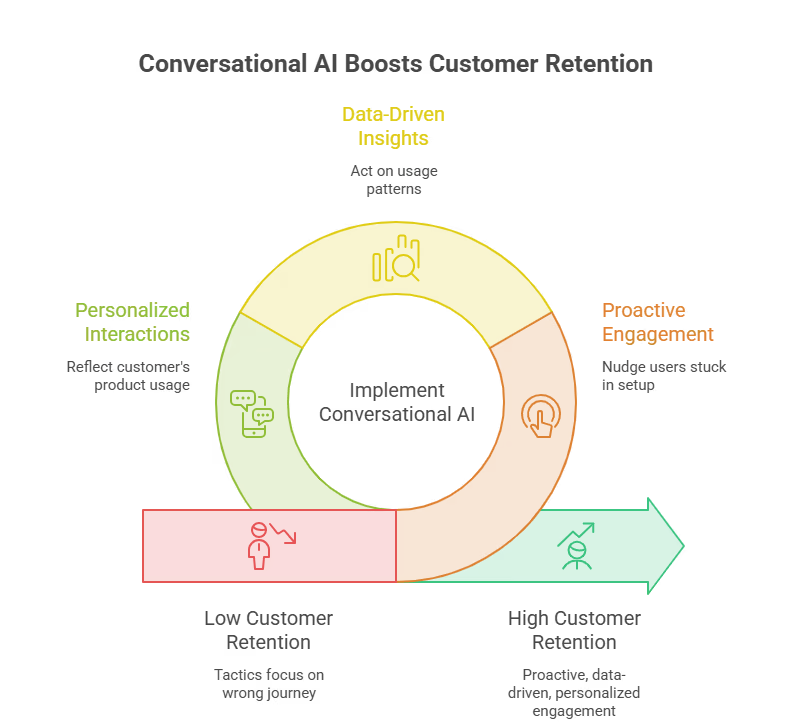
The majority of retention tactics concentrate on the incorrect end of the client journey. Long before any renewal discussion begins, the real work is being done.
Renewal conversations are decided in the first month. Not at month eleven.
New users form opinions while still learning the product. A confusing setup flow, a missing feature, and an unanswered question. None of these alone kills a subscription.
Marketing is not the only application for first impressions. Every interaction a customer has, from the initial login screen to the onboarding process, influences their decision to stay or go. The same idea that guides smart website design company firms also applies here: users won't give an experience another try if it seems unclear at first.
A user stuck on the same setup screen gets a nudge right then, while the intent to fix it still exists. Fixed email sequences never catch that moment.

Every SaaS platform is sitting on signals most teams barely read:
These patterns appear well before any cancellation does. Conversational AI acts the moment a threshold is crossed, not after a Friday report.
Top accounts get real attention. Everyone else got automation configured three years ago.
Conversational AI already carries what matters:
Every message reflects that reality. Not a mail-merge field with a first name.
Customer success is not a single moment. It is a series of conversations that either move the relationship forward or let it quietly fall apart. Conversational AI makes sure the right conversation happens at every stage.
A lot of tools carry the conversational AI label without earning it. Keyword-matching bots with a modern interface are still keyword-matching bots.
Capabilities worth looking for:
There is a substantial discrepancy between these capabilities and what the majority of tools actually accomplish. Teams may make better decisions about what they are actually purchasing versus what is being offered to them by staying up to date on conversational AI's evolution through product upgrades and feature releases.
Waiting for a customer to come back to the product before having a retention conversation is already losing ground.
Most conversational AI deployments underdeliver not because the technology failed but because the strategy behind it was thin from the start. These two things separate implementations that move numbers from those that just add noise.

No conversational AI tool figures out why customers leave on its own. That understanding has to come from the team first.
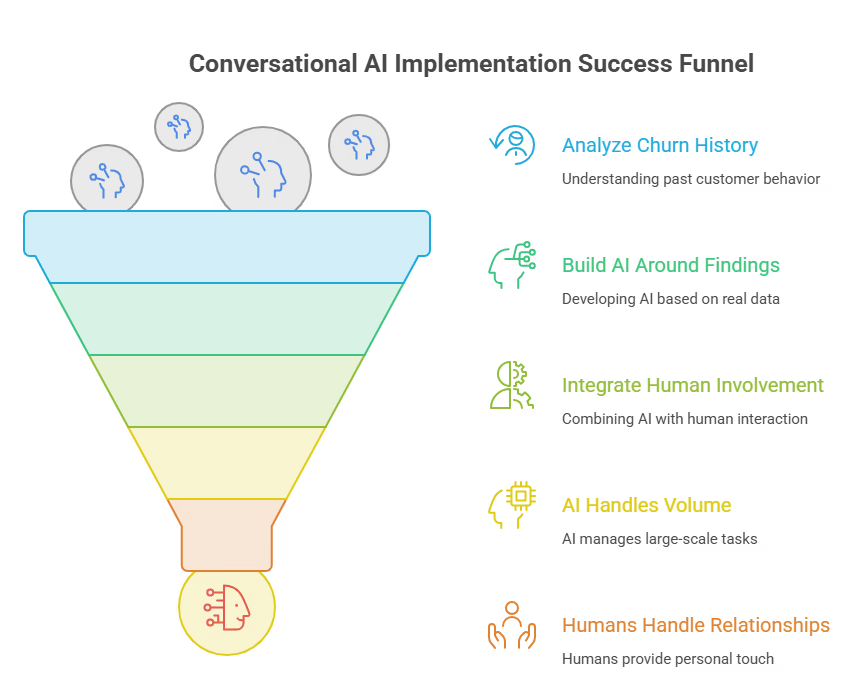
Before touching any platform, dig into what actually happened with lost accounts:
Build the AI around those findings. Not around what the platform demo suggested, not around what a competitor is doing, and not around assumptions about what customers probably need.
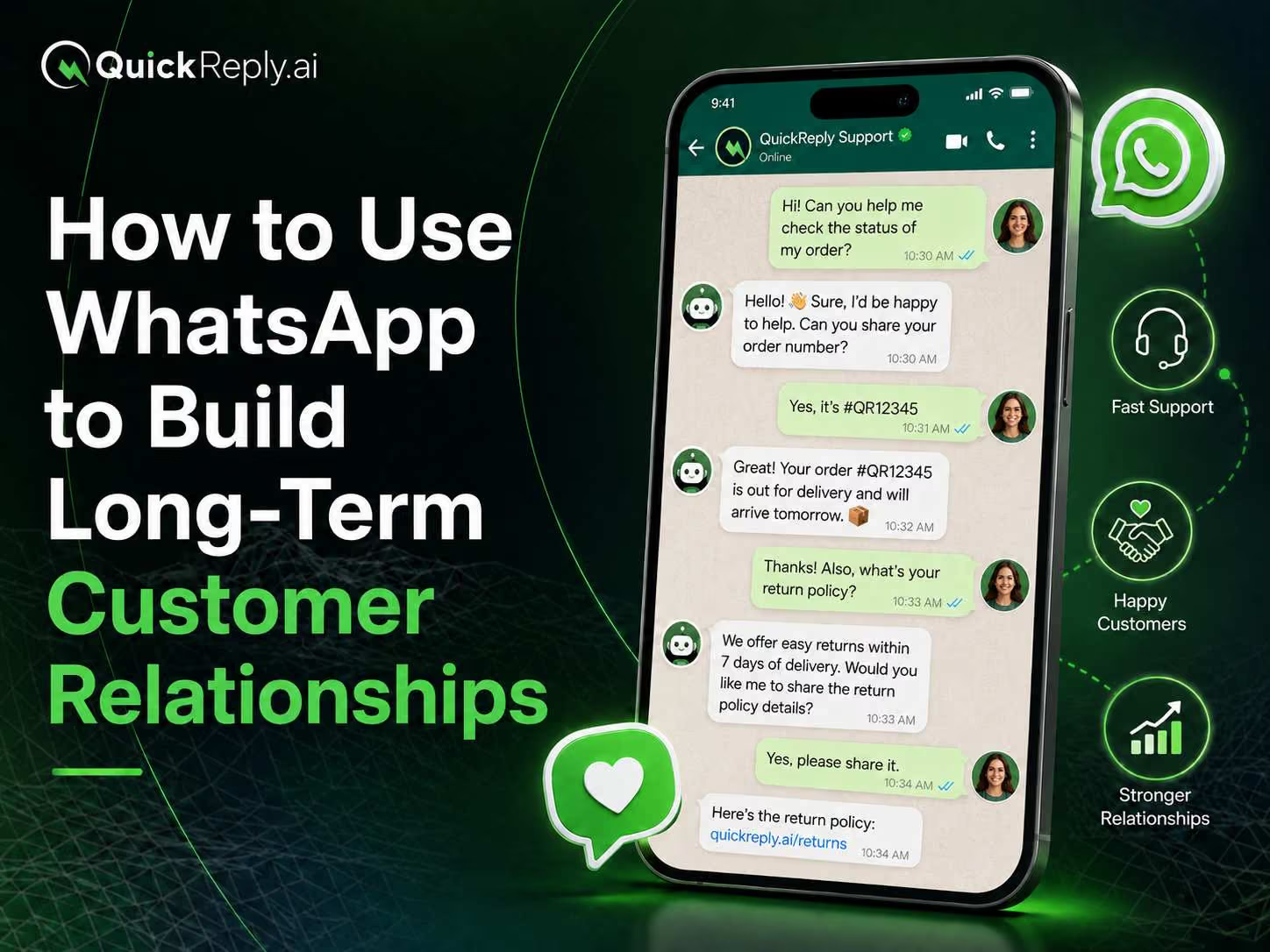
A longtime customer suddenly gone quiet needs a human conversation, not another automated sequence. Channels like WhatsApp campaigns work particularly well here because they meet customers on a platform they already check daily, making the outreach feel personal rather than automated. The AI's job in that situation is clear:
That combination consistently outperforms either approach working alone. AI handles the volume and the watching. Humans handle the relationship and the judgment calls that no automation should be making.
Numbers do not lie, but they do lag. Most retention metrics look bad on a dashboard weeks after the damage was already done. Conversational AI moves the intervention earlier, and that timing shift shows up across every metric that matters.
Customer retention was never really about technology. It was always about whether a customer felt understood and supported at the right moments.
Conversational AI does not change what good retention feels like. It changes who can deliver it and at what scale.
SaaS companies building this capability now are not running a feature experiment. They are changing how their revenue compounds.
Ready to see how conversational AI can work inside your customer success strategy? Explore QuickReply.ai and start turning customer signals into retention results.
Tool and strategies modern teams need to help their companies grow.
Leverage the untapped growth potential of WhatsApp marketing to acquire and retain customers.