How to Become a WhatsApp API Reseller with Low Initial Investment

Copied to clipboard!

Businesses no longer use WhatsApp only for casual customer conversations. They use it for lead generation, abandoned cart recovery, customer support, payment reminders, order updates, feedback collection, retention campaigns, and automated journeys.

That is why WhatsApp API reselling has become a practical opportunity for agencies, consultants, SaaS companies, IT service providers, CRM partners, and freelancers.

However, becoming a WhatsApp API reseller does not mean you need to build a messaging platform from scratch. That route requires engineering, infrastructure, compliance knowledge, onboarding systems, billing, customer support, and continuous product maintenance.

A smarter way to start with low initial investment is to partner with a white-label or reseller provider, package WhatsApp API services under your own brand, and focus on client acquisition, onboarding, and service delivery.

This guide explains how to become a WhatsApp API reseller with low initial investment, what business model to choose, how to price your services, how to get your first clients, and how to scale profitably.

What Does a WhatsApp API Reseller Do?

A WhatsApp API reseller helps businesses access and use WhatsApp Business API without forcing them to manage the technical and operational complexity themselves.

In simple terms, the reseller acts as a bridge between the WhatsApp API platform and the end business.

As a reseller, you may help clients with:

  • WhatsApp API onboarding
  • Business verification support
  • Phone number setup
  • Template creation and submission
  • Broadcast campaign setup
  • Chatbot setup
  • Customer support inbox configuration
  • Lead follow-up automation
  • Ecommerce automation
  • CRM or website integration
  • Reports and analytics
  • Monthly campaign management
  • Technical and functional support

The important point is this: you are not only selling WhatsApp API access. You are selling a business communication system.

That is where the opportunity lies.

Most business owners do not want to understand API documentation, message categories, template rules, chatbot flows, campaign segmentation, and delivery reports. They want someone to make WhatsApp work for their business.

A reseller can solve that problem.

Why WhatsApp API Reselling Can Be Started with Low Initial Investment

WhatsApp API reselling becomes a low-investment business only when you choose the right route.

There are three broad ways to enter this market.

1. Build Your Own WhatsApp API Platform

This is the most expensive route.

You need to build:

  • Client dashboard
  • Campaign builder
  • Chat inbox
  • Template manager
  • Chatbot builder
  • Automation workflows
  • Billing system
  • Analytics
  • API integrations
  • Support process
  • Infrastructure and security

This model is suitable for funded SaaS companies or technical teams with long-term product ambitions.

It is not the best starting point for someone who wants to enter the market with a low initial investment.

2. Use an API-First Provider and Build Your Own Layer

In this model, you use APIs from a provider and build your own customer-facing solution.

This gives flexibility but still needs technical resources. You may not need to build WhatsApp connectivity from scratch, but you still need to build the product layer, client experience, and support systems.

This works well for SaaS companies, CRMs, ERPs, and platforms that already have a technical team.

3. Partner with a Reseller or White-Label Provider

This is usually the best low-investment route.

You use an existing platform and sell WhatsApp API services to your clients. Depending on the provider, you may get:

  • Reseller dashboard
  • White-label branding
  • Client management
  • Campaign tools
  • Chatbot builder
  • Inbox
  • Automation workflows
  • Analytics
  • Support
  • Pricing flexibility

This allows you to start without heavy product development.

Low investment does not mean zero cost. You may still need to spend on platform access, branding, landing page, sales material, support, and customer onboarding. But compared to building your own platform, the upfront investment is much lower.

Who Should Become a WhatsApp API Reseller?

WhatsApp API reselling is a good fit for people or companies that already serve business clients or understand digital communication.

It is especially suitable for:

  • Digital marketing agencies
  • Performance marketing agencies
  • Ecommerce consultants
  • Shopify experts
  • Website development companies
  • CRM consultants
  • SaaS companies
  • IT service providers
  • Automation consultants
  • Freelancers serving SMBs
  • Lead generation agencies
  • Customer support solution providers

The business works best when you already have access to business owners or marketing teams.

For example, if you already build websites for local businesses, you can add WhatsApp automation as an upsell. If you already run ads for ecommerce brands, you can offer WhatsApp abandoned cart recovery and lead nurturing. If you work with coaching institutes, you can offer admission follow-up automation.

The easiest way to start is not by selling to everyone. It is by selling one clear WhatsApp use case to one clear segment.

Step 1: Choose the Right Reseller Model

Before you start, decide what type of reseller business you want to build.

Referral Model

In a referral model, you refer clients to a WhatsApp API provider and earn commission.

This is the easiest model to start with, but it gives the least control.

You may not control:

  • Pricing
  • Branding
  • Client relationship
  • Support experience
  • Renewal process
  • Product packaging

This model is suitable if you want a low-effort side revenue stream.

Reseller Model

In a reseller model, you sell the provider’s platform or services to your own clients and earn a margin.

You may handle:

  • Sales
  • Client onboarding
  • Setup
  • Training
  • First-level support
  • Monthly relationship

This model gives better revenue potential than referral because you can also charge for setup, service, and campaign management.

It is a good option for agencies and consultants.

White-Label Model

In a white-label model, you sell the platform under your own brand.

This is the strongest model if you want to build a long-term business because you can create your own brand identity and pricing structure.

A good white-label model should ideally allow you to:

  • Use your own brand
  • Manage your own clients
  • Set your own pricing
  • Offer multiple plans
  • Keep margin on subscriptions and services
  • Build recurring revenue

This model requires more responsibility, but it also gives better long-term business value.

Managed Service Model

This is often the most practical model for beginners.

Instead of only reselling software, you sell WhatsApp API as a managed service.

You help clients with:

  • Campaign planning
  • Template writing
  • Chatbot setup
  • Automation building
  • Monthly campaign execution
  • Reporting
  • Optimization

This allows you to earn more than just software margin.

For low initial investment, the best path is usually to start with a reseller or managed service model and move to full white-label once you have recurring clients.

Step 2: Pick a Profitable Niche

One of the biggest mistakes new resellers make is trying to sell WhatsApp API to every business.

That creates a weak pitch.

A better approach is to choose one niche and build your offer around that industry’s use cases.

Here are some strong niches to consider:

Niche WhatsApp API Use Cases
Ecommerce Abandoned cart recovery, COD confirmation, order updates, repeat purchase campaigns
Education Admission follow-ups, application reminders, fee reminders, webinar reminders
Healthcare Appointment reminders, report updates, patient follow-ups, feedback collection
Real Estate Lead qualification, site visit scheduling, project updates, broker follow-ups
Travel Booking confirmations, itinerary updates, payment reminders, support
Finance EMI reminders, document collection, lead nurturing, customer support
Retail Offers, loyalty campaigns, store visit reminders, feedback
Local Services Booking reminders, repeat customer offers, support queries

The more specific your niche, the easier your sales pitch becomes.

For example, instead of saying: “We provide WhatsApp API services.”

You can say: “We help coaching institutes automate admission follow-ups, fee reminders, class updates, and student support on WhatsApp.”

That is clearer and more valuable.

Step 3: Select the Right WhatsApp API Reseller Provider

Your provider will directly affect your pricing, support quality, delivery experience, client satisfaction, and margins.

Do not choose a provider only because it is cheap.

Choose a provider that can help you run a sustainable reseller business.

Before selecting a provider, check these points:

Requirement Why It Matters
Official WhatsApp API access Keeps client communication compliant and reliable
White-label or reseller option Lets you sell under your own model
Client management Helps you manage multiple customers
Pricing control Allows you to protect your margins
Campaign builder Helps you offer marketing services
Chatbot builder Lets you charge for automation
Team inbox Helps clients manage support conversations
Automation workflows Creates higher-value use cases
Analytics Helps you prove campaign performance
API access Useful for advanced integrations
Wallet or credit control Helps with client billing
Support Reduces your operational burden
Low commitment Keeps early-stage risk low

Ask these questions before signing up:

  • Is this a referral, reseller, or white-label model?
  • Can I sell under my own brand?
  • Can I set my own pricing?
  • Can I create and manage multiple clients?
  • Are Meta charges separate?
  • Is there any message markup?
  • What platform fee applies?
  • Is there a setup fee?
  • Is there a minimum monthly commitment?
  • Are campaigns, inbox, chatbot, and automation included?
  • Who handles onboarding support?
  • Who handles escalation?
  • Can clients migrate later if needed?

A low-cost provider with poor support can become expensive very quickly. If your client faces setup issues, template rejections, campaign failures, or delayed support, your reputation suffers.

Step 4: Understand WhatsApp API Costs Before Selling

To build a profitable reseller business, you need to understand the cost structure clearly.

The main cost layers are:

  • Meta WhatsApp message charges
  • Provider platform fee
  • White-label or reseller fee
  • Per-client account fee, if applicable
  • Message markup, if applicable
  • Setup and onboarding cost
  • Support cost
  • Template creation cost
  • Sales and marketing cost
  • GST and payment collection cost

Your profit is not simply what the client pays minus the platform fee.

Use this formula:

Reseller Profit = Client Revenue - Meta Message Charges - Provider Cost - Support Cost - Other Operating Cost

Here is a simple example:

Item Example Amount
Client pays you ₹7,500/month
Meta message cost ₹2,000
Provider/platform allocation ₹1,500
Support and operations cost ₹1,000
Gross margin ₹3,000
Gross margin percentage 40%

This is only an example. Actual margins depend on provider pricing, message volume, client plan, and support effort.

The key point is that you must track cost per client from day one.

Many resellers fail because they focus only on monthly revenue and ignore time spent on support, onboarding, template approval, and campaign setup.

Step 5: Create Service Packages

Do not sell only “WhatsApp API access.”

Most clients do not know how to use WhatsApp API properly. They need outcomes.

Create simple service packages around business goals.

Starter Setup Package

Best for small businesses starting with WhatsApp API.

Includes:

  • WhatsApp API onboarding
  • Basic dashboard setup
  • Team inbox setup
  • 3 to 5 message templates
  • One broadcast campaign setup
  • Basic training
  • Basic support

This package helps you charge a setup fee and recover onboarding effort.

Growth Automation Package

Best for businesses that want campaigns and automation.

Includes:

  • WhatsApp API setup
  • Broadcast campaigns
  • Customer segmentation
  • Chatbot setup
  • Lead follow-up or cart recovery automation
  • Monthly reports
  • Support

This package is suitable for ecommerce brands, education businesses, real estate companies, and clinics.

Managed WhatsApp Marketing Package

Best for clients who want done-for-you execution.

Includes:

  • Campaign strategy
  • Monthly campaign calendar
  • Template writing
  • Broadcast execution
  • Automation optimization
  • Reporting
  • Monthly consultation
  • Support

This package usually gives better margins because you are selling expertise, not only software.

Custom Integration Package

Best for advanced clients.

Includes:

  • CRM integration
  • Shopify integration
  • Website chatbot integration
  • API setup
  • Payment link flows
  • Lead routing
  • Custom automation

This package can be priced higher because it requires more skill and creates deeper value for the client.

Step 6: Build Minimum Sales Assets

You do not need a large website or expensive brand identity to start.

But you do need basic sales assets that make you look credible.

Start with:

  • Simple landing page
  • WhatsApp demo number
  • Demo chatbot or automation flow
  • One-page service brochure
  • Pricing sheet
  • Use-case deck
  • Sample campaign templates
  • Onboarding checklist
  • Sample performance report
  • Payment collection process

Your landing page should clearly explain:

  • What you offer
  • Who it is for
  • Key use cases
  • Features
  • Pricing or demo CTA
  • WhatsApp contact button
  • FAQs

Your demo should show practical flows, not generic features.

For example:

  • Lead capture flow for real estate
  • Abandoned cart recovery for ecommerce
  • Admission follow-up flow for education
  • Appointment reminder flow for clinics
  • Feedback flow for local businesses

A good demo makes selling much easier.

Step 7: Get Your First 5 to 10 Clients

Your first clients should ideally come from warm channels.

Start with people who already trust you.

Good sources include:

  • Existing agency clients
  • Website development clients
  • Shopify store owners
  • Local business owners
  • Coaching institutes
  • Clinics
  • Real estate brokers
  • Travel agents
  • Instagram sellers
  • CRM implementation clients
  • Business owners in your network

You can also partner with:

  • Website developers
  • Performance marketing agencies
  • SEO agencies
  • CRM consultants
  • Local IT companies
  • Freelancers

Step 8: Start with Done-for-You Services to Improve Margins

In the beginning, do not depend only on subscription margin.

Subscription margin may be small, especially if your client volume is low. But service revenue can make the business profitable early.

You can charge separately for:

  • WhatsApp API setup
  • Template creation
  • Chatbot setup
  • Automation setup
  • Campaign management
  • CRM integration
  • Staff training
  • Monthly reporting
  • Support package

For example, a client may not want to pay much only for dashboard access. But they may pay for a complete setup where you create their first campaigns, templates, and automation.

This is where your expertise matters.

The best resellers do not simply sell software. They help clients get business results from WhatsApp.

Step 9: Create a Repeatable Onboarding Process

A messy onboarding process will reduce your margins. 

Every extra call, repeated explanation, or manual setup eats into your profit. 

Create a standard onboarding checklist.

A simple onboarding flow can look like this:

  1. Collect client business details
  2. Understand their use case
  3. Confirm WhatsApp number requirements
  4. Set up WhatsApp API access
  5. Configure dashboard and users
  6. Create message templates
  7. Set up first campaign or automation
  8. Train the client’s team
  9. Monitor first campaign
  10. Share first performance report

You should also prepare standard documents:

  • Business detail collection form
  • Template requirement form
  • Client onboarding checklist
  • Campaign brief form
  • Support escalation process
  • Monthly report format

A repeatable process helps you onboard faster, reduce errors, and scale without adding too much support load.

Step 10: Track Margins from Day One

Revenue is not enough. You need to track margins.

For every client, track:

  • Monthly revenue
  • Message cost
  • Platform cost allocation
  • Support hours
  • Setup time
  • Campaign management time
  • Churn risk
  • Upsell opportunities
  • Gross margin

How Much Initial Investment Do You Need?

The answer depends on the route you choose.

If you build your own platform, the investment can be high because you need product development, infrastructure, support, security, and compliance.

If you start with a reseller or white-label provider, your initial investment can be much lower.

Your basic cost heads may include:

Cost Head Low-Investment Approach
Platform access Start with reseller or white-label provider
Website Build a simple landing page first
Sales assets Create a basic brochure, deck, and demo
Support Start founder-led or with a small team
Marketing Use warm outreach, referrals, and partnerships
Engineering Avoid custom development initially
Branding Start simple; improve after revenue starts
Client onboarding Use standard forms and checklists

The goal is to keep fixed costs low until you have recurring clients.

Do not over-invest in branding, website, paid ads, or custom technology before validating demand.

Start lean. Sell first. Improve later.

Common Mistakes New WhatsApp API Resellers Should Avoid

  1. Choosing a provider only because it is cheap: Low platform cost is useful, but it should not come at the cost of poor support, a weak dashboard, unclear billing, or limited features.
  2. Not understanding Meta charges: WhatsApp API cost depends on message category and destination country. If you do not understand this, you may undercharge clients.
  3. Not charging setup fees: Setup takes time. If you do not charge for onboarding, you may lose money when clients churn early.
  4. Selling to every industry: A generic pitch is harder to sell. Start with one or two niches and build repeatable use cases.
  5. Offering unlimited support: Unlimited support can destroy margins. Define what is included in each plan.
  6. Selling only API access: Clients need outcomes, not only API access. Offer campaigns, automation, chatbot setup, and reporting.
  7. Ignoring template approval and compliance: Poor templates can get rejected or affect campaign performance. Help clients write better templates.
  8. Not tracking client-level profitability: A reseller business can look profitable at the revenue level but lose money at the support level.
  9. Depending only on commission: Commission-only models may not create enough long-term control. Add setup fees, managed services, and recurring packages.
  10. Moving to white-label too early: White-label is valuable, but only when you have demand, support capacity, and a clear sales process.

When Should You Move from Reseller to White-Label?

A reseller model is a good way to start. But as you grow, white-label can give you better control.

You should consider moving to white-label when:

  • You have recurring clients
  • You want to build your own brand
  • You want to control pricing
  • You want to manage multiple clients from one place
  • You want better margins
  • You want to build a SaaS-like business
  • You have a support process
  • You can handle client onboarding regularly

White-label makes sense when you are no longer testing the market and want to build a serious business around WhatsApp automation.

Why QuickReply.ai Is a Strong Partner for WhatsApp API Resellers

If you want to become a WhatsApp API reseller with low initial investment, your choice of platform matters.

You need more than API access. You need a platform that helps you sell, onboard, support, and grow clients without building everything from scratch.

QuickReply.ai helps partners launch WhatsApp API services under their own brand with campaigns, chatbots, journeys, broadcasts, automation, and customer engagement tools.

With QuickReply.ai, you can offer your clients:

  • WhatsApp campaigns
  • Bulk broadcasts
  • Automated journeys
  • Chatbots
  • Customer support inbox
  • WhatsApp forms
  • Lead qualification flows
  • Ecommerce automation
  • Payment and action flows
  • CRM integrations
  • Analytics and reporting

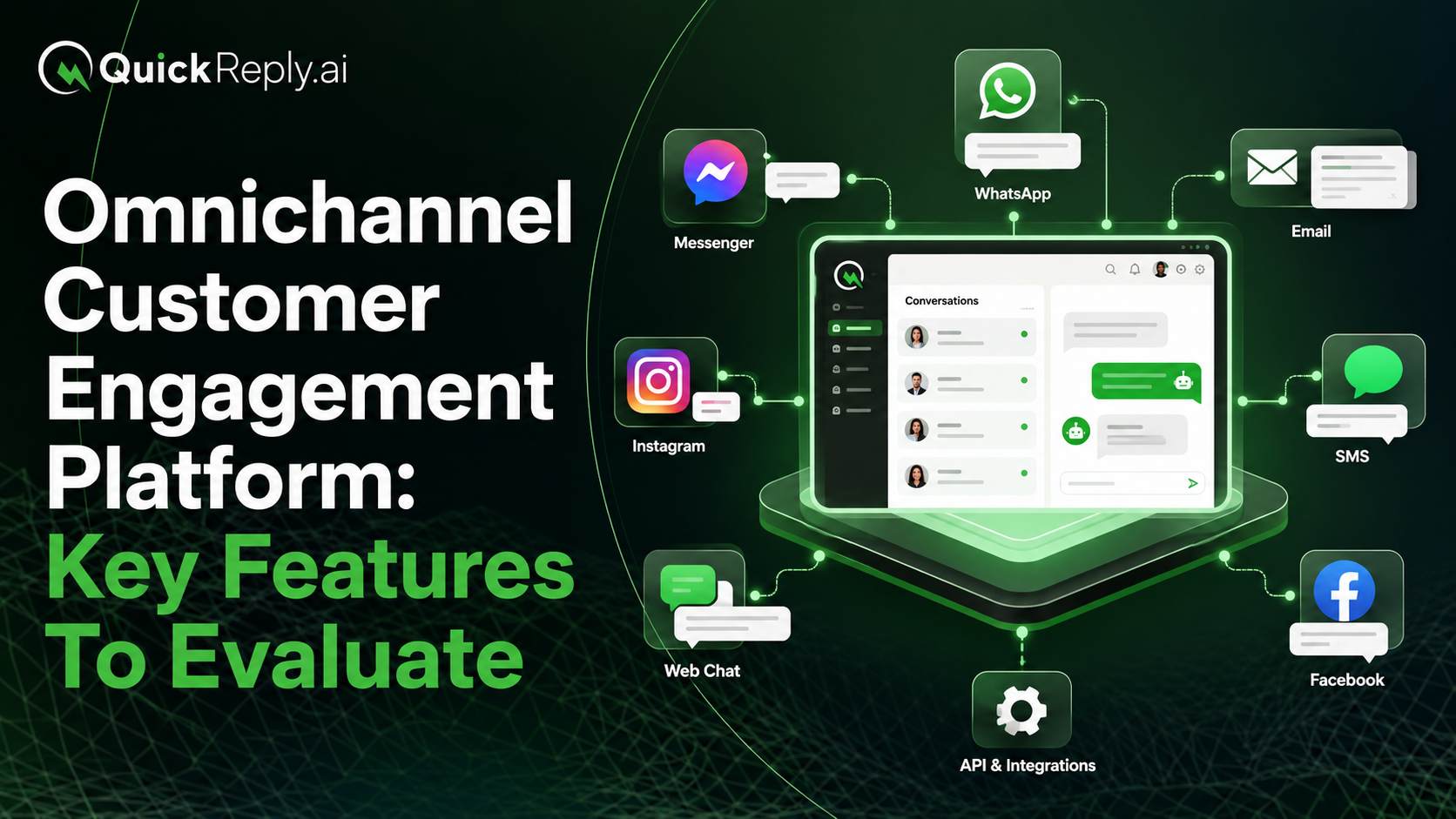
More importantly, QuickReply.ai is not limited to only WhatsApp. As customer communication becomes more channel-driven, businesses need more than one messaging option.

With QuickReply.ai, you can offer a wider suite of customer engagement services, including:

  • WhatsApp
  • RCS
  • Instagram
  • Messenger
  • Website chatbot

This gives you a stronger business advantage as a reseller.

Instead of selling only “WhatsApp API,” you can offer a complete conversational engagement suite to your customers. That helps you increase deal size, improve retention, and create more expansion opportunities.

For example:

  • An ecommerce brand may start with WhatsApp cart recovery and later add RCS campaigns.
  • A real estate business may start with WhatsApp lead follow-ups and later add website chatbot.
  • A service business may start with WhatsApp support and later add Instagram or Messenger automation.
  • A larger client may want omnichannel automation across WhatsApp, RCS, web chat, and social messaging.

This makes your reseller business more scalable.

QuickReply.ai also focuses on quality support, competitive partner rates, and partner-friendly growth. That is important because support quality directly affects your client experience and your ability to retain accounts.

As a reseller, you do not want to spend most of your time chasing backend support. You want a reliable platform partner that helps you resolve issues, onboard faster, and serve customers professionally.

That is where QuickReply.ai can help.

If your goal is to start lean, sell under your own brand, and grow into a full conversational automation business, QuickReply.ai gives you the platform depth and support structure to do it.

Turn 1 time visitor into repeat customer with WhatsApp marketing

Leverage the untapped growth potential of WhatsApp marketing to acquire and retain customers.

Frequently Asked Questions

Can I become a WhatsApp API reseller without building software?

Yes. You can become a WhatsApp API reseller by partnering with a reseller or white-label provider. This allows you to sell WhatsApp API services without building the complete technology platform yourself.

How much investment is needed to become a WhatsApp API reseller?

The investment depends on the model you choose. Building your own platform requires a high investment. Starting with a reseller or white-label provider requires much lower initial investment because the platform, infrastructure, and tools are already available.

Do I need technical knowledge to become a WhatsApp API reseller?

You do not need deep coding knowledge if you choose a ready reseller or white-label platform. However, you should understand WhatsApp API basics, message templates, campaign setup, automation workflows, and client onboarding.

Can I sell WhatsApp API under my own brand?

Yes, if your provider offers white-label branding. In a true white-label model, you can sell the platform or services under your own brand and may also control client pricing.

How do WhatsApp API resellers make money?

WhatsApp API resellers can earn through setup fees, monthly subscriptions, message usage margins, chatbot setup, automation setup, campaign management, integrations, training, and support packages.

What is the difference between a reseller and a white-label WhatsApp API provider?

A reseller usually sells or distributes another provider’s platform and earns margin or commission. A white-label provider allows you to sell the platform under your own brand with more pricing and client management control.