Top Platforms For AI-powered Customer Support in 2026

Copied to clipboard!

Looking for an AI-powered customer support platform that can manage conversations across multiple channels? You are on the right page.

Customers can contact your business through social media, email, website chat, WhatsApp, RCS, or phone call. Managing these conversations manually can slow response times, create repetitive work, and make it difficult to deliver consistent support. For the phone call channel specifically, background noise on either end can make even a well-staffed support line feel unprofessional — pairing it with noise suppression software keeps calls clear regardless of where an agent or customer is calling from.

AI-powered customer support platforms help by automating common queries, assisting agents, routing conversations, and bringing customer interactions into one workflow. WhatsApp and RCS deserve particular attention. 

WhatsApp is used by more than three billion people across over 180 countries, while RCS has crossed the one-billion-user mark. Businesses use these channels for customer support, service notifications, marketing, and authentication.

In this guide, we have compared 10 leading AI-powered customer support platforms based on their AI and chatbot capabilities, channel coverage, WhatsApp and RCS support, integrations, pricing, strengths, limitations, and ideal use cases.

By the end, you will know which platform best fits your customer support requirements.

Quick Comparison: Top AI-powered Customer Support Platforms

The best platform depends on the channels your customers use, the level of automation you need, and how much control your team wants over AI chatbots and support workflows. The table below compares each platform by its primary use case, supported channels, G2 rating, and available pricing plans.

Platform Best for Key channels G2 Rating Pricing plans
QuickReply.ai Businesses that want AI customer support, chatbot automation, and agent handover across WhatsApp, RCS, Instagram, Messenger, and website chatbots WhatsApp, RCS, SMS, Instagram, Messenger, and website chatbot 4.8/5 Starter from $39/month, Standard from $99/month, Plus from $199/month, and Enterprise with custom pricing.
Gorgias Ecommerce and Shopify brands that need order-aware customer support, automation, and conversational selling Email, live chat, WhatsApp, Instagram, Facebook, voice, and SMS 4.6/5 Starter from $40/month, Basic from $90/month, Pro from $550/month, Advanced from $1,430/month when billed annually, and Enterprise with custom pricing.
Freshdesk Omni by Freshworks Growing and enterprise support teams that need omnichannel ticketing, AI agents, routing, and workflow automation Email, web chat, WhatsApp, SMS, social media, and phone 4.4/5 Growth from $29 per agent/month, Pro from $79, and Enterprise from $119 when billed annually.
Tidio Small and mid-sized businesses that want to quickly deploy live chat, AI chatbots, and automated support flows Website live chat, email, WhatsApp, Instagram, and Messenger 4.6/5 Free plan available. Starter from $24.17/month, Growth from $49.17, Plus from $749, and Premium with custom pricing when billed annually.
Help Scout Small and growing support teams that want a simple shared inbox with AI assistance and human-focused customer service Email, live chat, WhatsApp, Instagram, Messenger, and help centre 4.4/5 Standard from $25 per user/month, Plus from $45, and Pro from $75.
Intercom SaaS and digital businesses that need AI-powered support across websites, mobile apps, email, and messaging channels Live chat, email, in-app messaging, WhatsApp, SMS, and phone 4.5/5 Essential from $19 per seat/month, Advanced from $85, and Expert from $132 when billed annually. Fin AI Agent starts at $0.99 per outcome.
Zendesk Mid-sized and enterprise teams that need scalable ticketing, complex workflows, voice support, and detailed reporting Email, live chat, web and mobile messaging, WhatsApp, social media, and voice 4.3/5 Support Team starts at $19 per agent/month, and Suite Team starts at $55. Suite Professional starts at $115, and Suite Enterprise + Copilot is available at custom pricing.
Zoho Desk Cost-conscious support teams and businesses already using the Zoho ecosystem Email, phone, live chat, WhatsApp, Instagram, Messenger, Telegram, WeChat, and LINE 4.4/5 Free plan available. Express from $7 per user/month, Standard from $14, Professional from $23, and Enterprise from $40 when billed annually.
Ada Enterprises that want to automate high-volume, multilingual customer service across digital and voice channels Web and in-app chat, email, voice, WhatsApp, SMS, Messenger, and Instagram 4.6/5 Custom, conversation-based pricing. Businesses must contact Ada for a tailored quote.
Botpress Technical and developer-led teams that want to build highly customised AI customer support agents Webchat, WhatsApp, Instagram, Messenger, email, voice, Slack, and Telegram 4.5/5 Free plan available. Plus from $150/month, Team from $750/month when billed annually, and Enterprise with custom pricing.

What is an AI-powered customer support platform?

An AI-powered customer support platform helps businesses automate customer conversations, assist support agents, and resolve queries across multiple channels from a single system.

These platforms use AI chatbots, knowledge bases, automated routing, response suggestions, and workflow automation to handle repetitive questions and speed up resolution. More advanced platforms can also identify customer intent, retrieve relevant information, trigger business actions, and transfer complex conversations to a human agent without losing context.

Unlike traditional helpdesk software, AI customer support platforms focus on both automation and agent productivity. They help businesses provide faster and more consistent support across channels such as email, website chat, WhatsApp, RCS, social media, SMS, and phone.

How did we choose the best AI customer support platforms

We evaluated each platform based on how effectively it helps businesses automate support, manage conversations across channels, and improve the overall customer experience.

The following factors were considered while shortlisting the platforms:

  • AI capabilities: We reviewed whether the platform offers AI chatbots, AI agents, response generation, conversation summaries, intent detection, and agent assistance.
  • Chatbot automation: We checked whether businesses can automate common queries, build structured support flows, train bots using knowledge bases, and trigger actions based on customer intent.
  • Omnichannel support: We looked at the number of customer-facing channels supported, including email, website chat, WhatsApp, RCS, Instagram, Messenger, SMS, and phone.
  • WhatsApp and RCS capabilities: We gave additional importance to platforms that support customer service, automated conversations, notifications, and live-agent handover on WhatsApp and RCS.
  • Unified inbox and agent handover: We assessed whether support teams can manage conversations from one inbox and take over chatbot conversations without losing customer history.
  • Integrations: We considered integrations with ecommerce platforms, CRMs, helpdesks, payment systems, logistics tools, and other business software.
  • Workflow automation: We reviewed features such as routing, escalation, follow-ups, ticket assignment, notifications, and automated support journeys.
  • Ease of use and implementation: We considered how easy the platform is to configure, train, manage, and scale without requiring extensive technical support.
  • Pricing and scalability: We compared available plans, usage limits, AI-related charges, and whether the platform can support growing conversation volumes.
  • User reviews and market reputation: We considered publicly available customer ratings, product feedback, and the platform’s suitability for different business use cases.

Which are the best AI-powered customer support platforms in 2026

The best AI-powered customer support platforms combine conversational AI, workflow automation, agent assistance, and multiple customer communication channels. However, each tool serves a different use case. Some are complete helpdesks, while others focus on messaging automation or custom AI agent development.

1. QuickReply.ai

QuickReply.ai

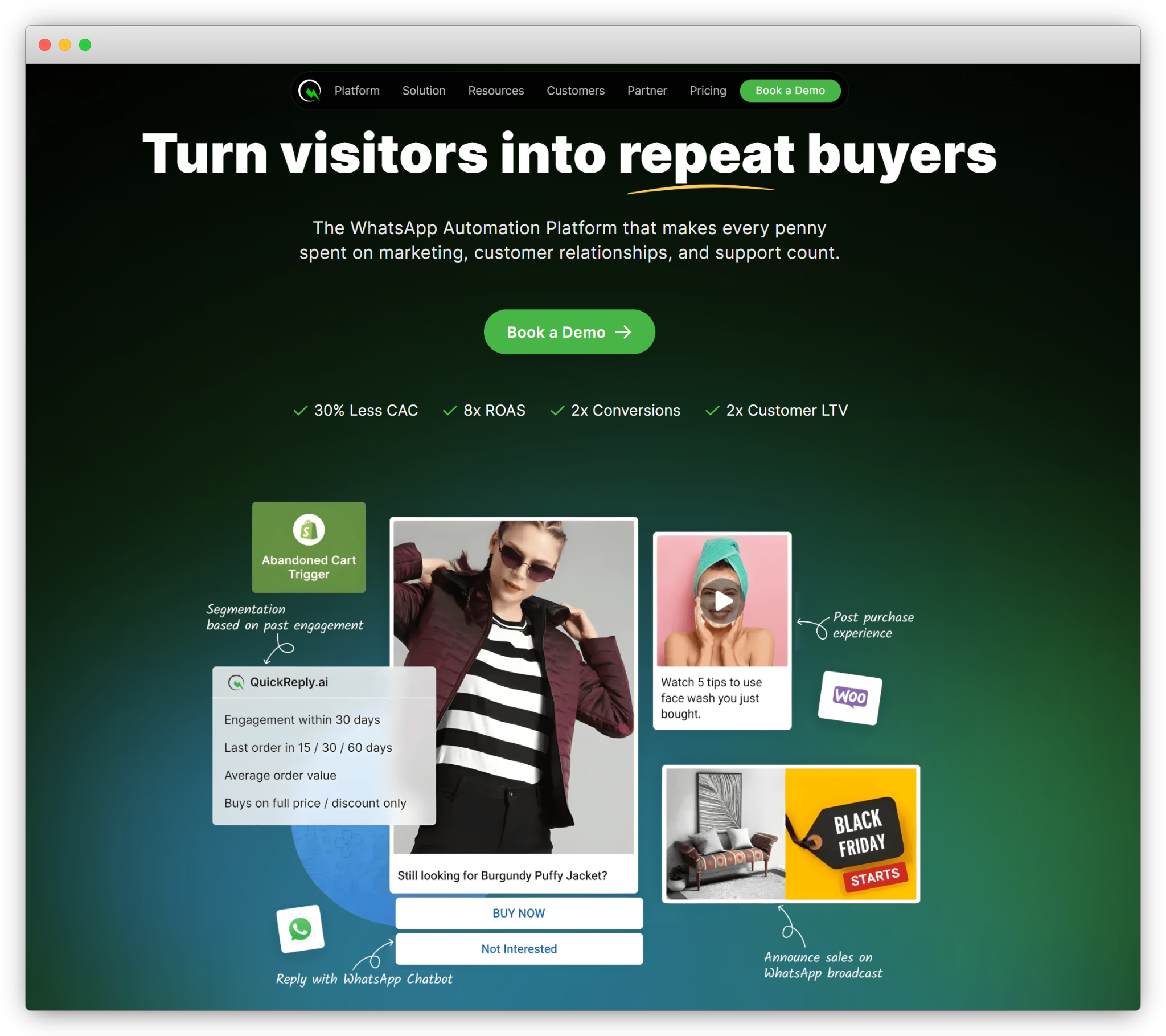
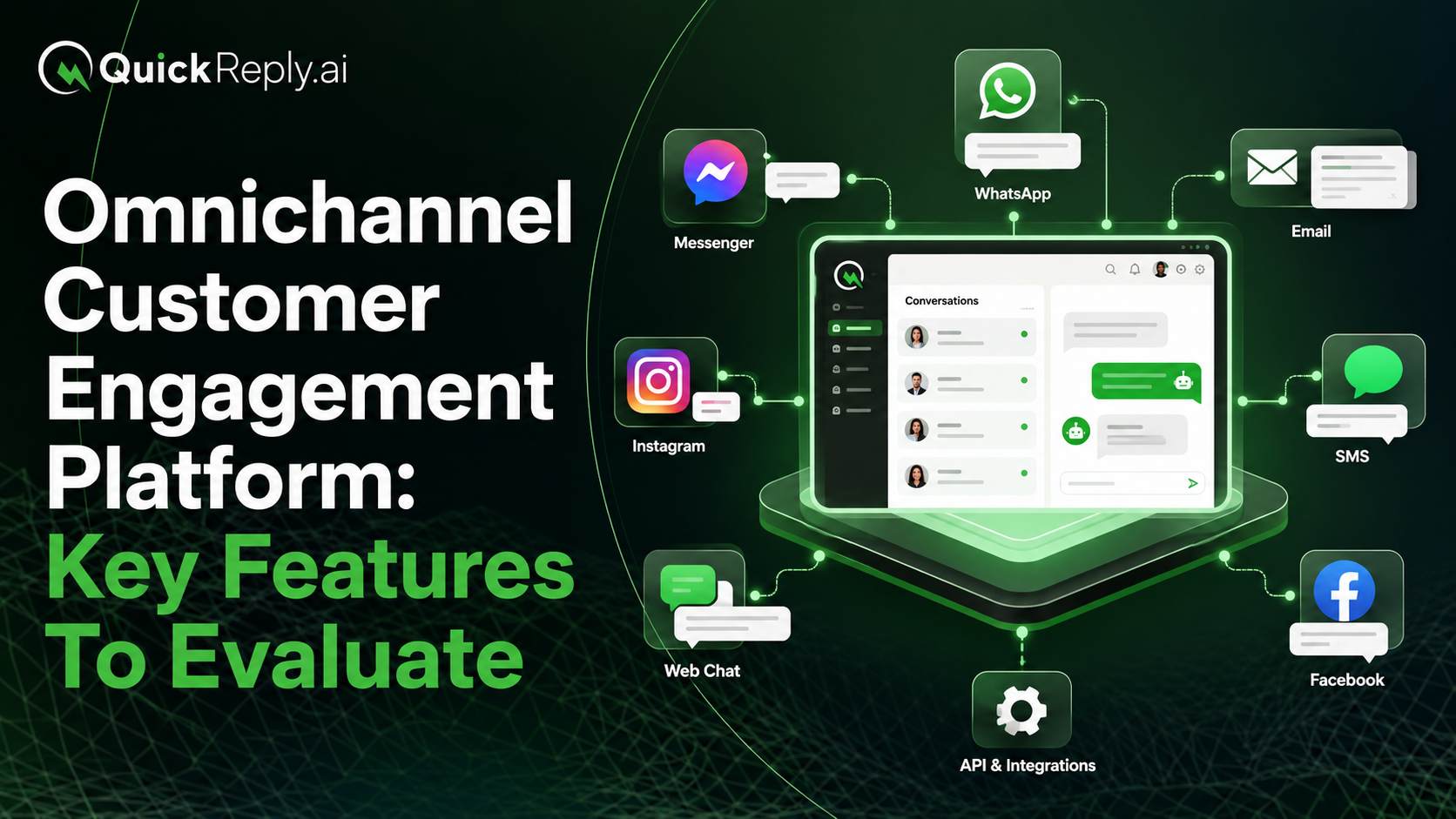
QuickReply.ai is an omnichannel customer engagement platform designed for businesses that want to automate customer support, service updates, and marketing conversations across messaging channels.

Teams can create GenAI and click-based chatbots to answer questions, qualify leads, collect information, send order updates, and transfer complex conversations to human agents through a shared inbox.

The platform is particularly useful for B2B and B2C businesses that use WhatsApp for both support and customer engagement. It also supports campaigns, automated journeys, segmentation, and integrations with Shopify, CRM, logistics, and payment systems.

Key features

  • Generative AI and click-based customer support chatbots
  • WhatsApp, RCS, and social media channels
  • Shared inbox with agent routing and chatbot handover
  • Automated customer journeys and drip campaigns
  • Shopify, CRM, payment, and third-party integrations
  • Customer segmentation and conversation analytics

Pros and cons

Pros Cons
Strong focus on WhatsApp, RCS, and messaging-led support Not designed as a traditional email-first ticketing system
Best tool for support, marketing, and service automation Advanced configurations may require onboarding support
Combines chatbots, campaigns, journeys, and live chat

Pricing

Plan Price
Starter From $39 per month
Standard From $99 per month
Plus From $199 per month
Enterprise Custom pricing

2. Gorgias

Gorgias

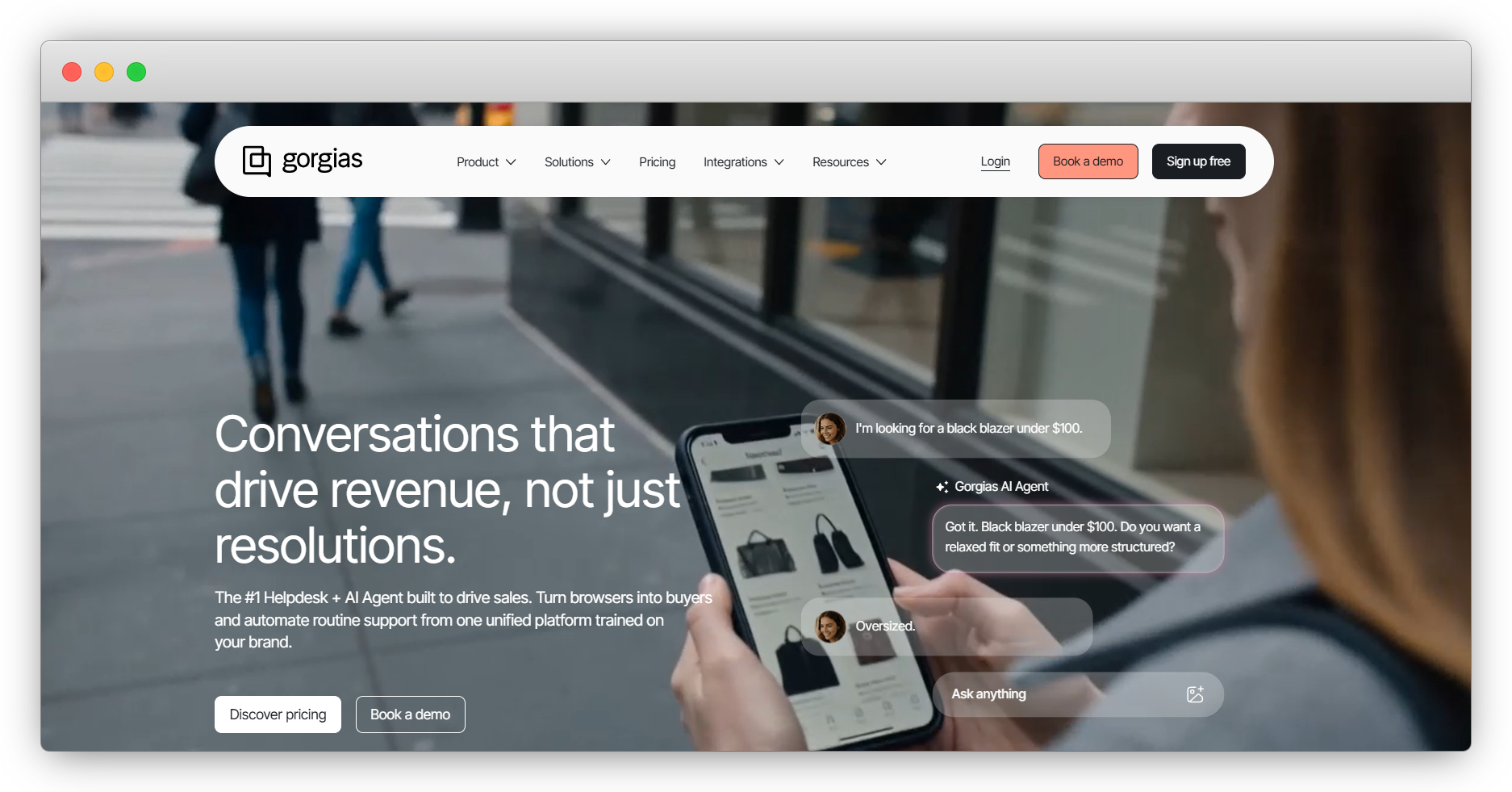
Gorgias is an ecommerce customer support platform built primarily for Shopify and online retail brands. It connects support conversations with order, customer, and product data, allowing agents and AI tools to resolve queries without repeatedly switching between systems.

Its AI Agent can answer pre-purchase and post-purchase questions and perform actions such as updating addresses, cancelling orders, and managing returns through connected ecommerce platforms.

Key features

  • Ecommerce-focused AI Agent
  • Unified inbox for email, live chat, social media, SMS, and WhatsApp
  • Shopify customer and order information inside conversations
  • Automated ticket categorisation, routing, and responses
  • Revenue and support performance reporting
  • Macros, rules, and self-service options

Pros and cons

Pros Cons
Deep Shopify and ecommerce integrations Less suitable for non-ecommerce support teams
Agents can perform order actions inside tickets Ticket-based costs can rise with support volume
Strong balance of support and conversational selling Some AI and communication features involve additional usage costs

Pricing

Plan Price
Starter $40 per month
Basic $90 per month
Pro $550 per month
Advanced $1,430 per month
Enterprise Custom pricing

Gorgias pricing is based primarily on billable ticket volume.

3. Freshdesk Omni by Freshworks

Freshdesk Omni

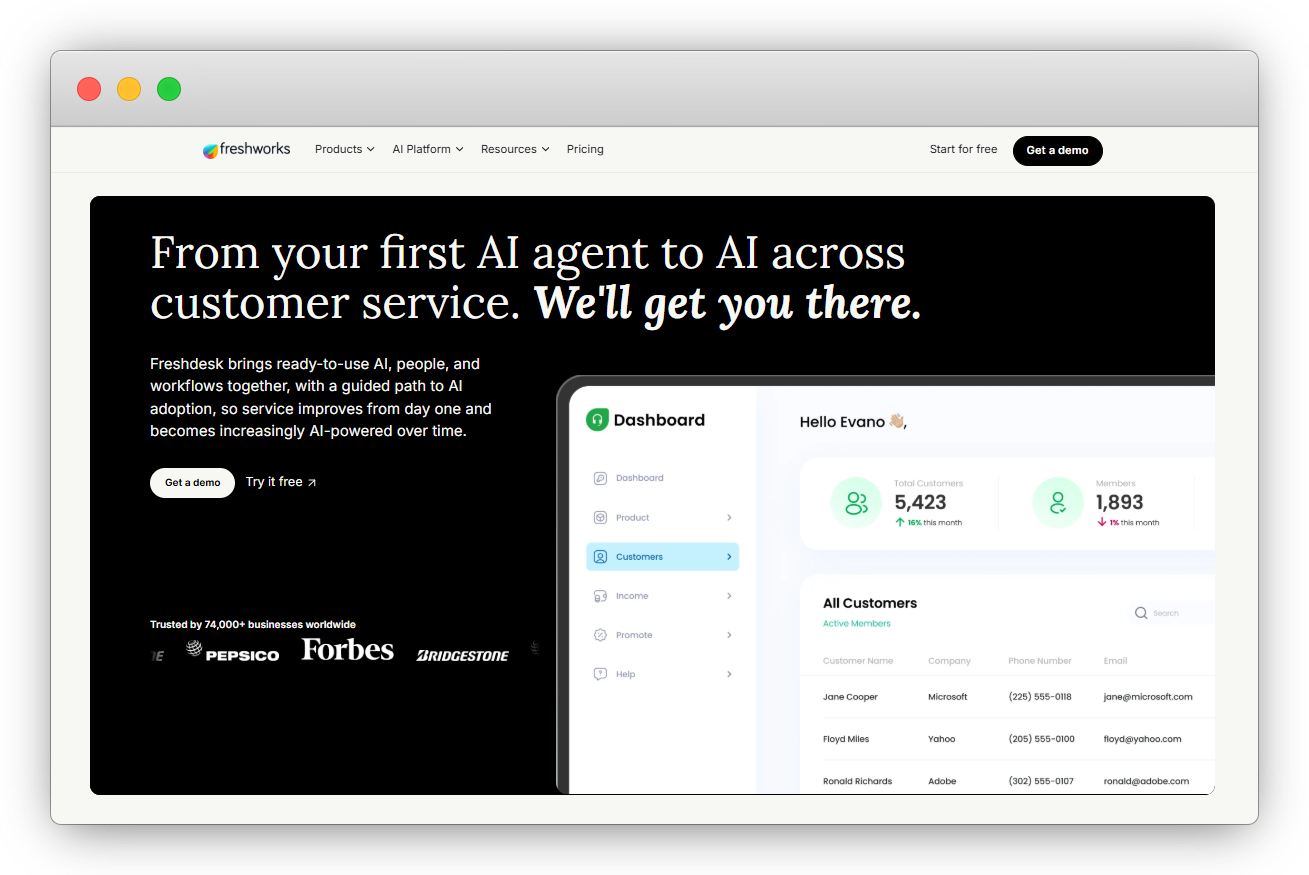
Freshdesk Omni is an omnichannel customer service platform that combines ticketing, digital messaging, workflow automation, and Freddy AI.

It helps support teams manage conversations from email, website chat, WhatsApp, SMS, and social media in one workspace. Freddy AI Agent handles customer questions, while Freddy AI Copilot assists human agents with summaries, suggested replies, and next steps.

Key features

  • Freddy AI Agent and AI Copilot
  • Omnichannel ticketing and messaging
  • Intelligent ticket routing and assignment
  • SLA management and escalation workflows
  • Knowledge base and customer self-service
  • Custom reporting and conversation analytics

Pros and cons

Pros Cons
Combines established ticketing with AI automation Pricing is charged per agent
Suitable for growing and enterprise support teams Copilot and extra AI sessions may cost more
Strong routing, SLA, and reporting capabilities Initial configuration can be complex for small teams

Pricing

Plan Price per agent per month
Growth $29
Pro $79
Enterprise $119

Plans are billed annually. Each paid account receives 500 trial Freddy AI Agent sessions once, after which additional sessions must be purchased.

4. Tidio

Tidio Lyro

Tidio is a customer service platform for small and growing businesses that want to combine website live chat, automation, ticketing, and an AI customer support agent.

Its Lyro AI Agent learns from approved business content and answers repetitive customer questions across supported messaging channels. Teams can also build rule-based Flows for lead capture, qualification, and support automation.

Key features

  • Lyro conversational AI agent
  • Website live chat and helpdesk
  • Visual chatbot and automation builder
  • Email, WhatsApp, Instagram, and Messenger support
  • Product recommendations and lead qualification
  • Contact profiles and customer satisfaction tracking

Pros and cons

Pros Cons
Easy to set up for smaller teams AI and automation quotas vary by plan
Combines live chat, bots, and ticket management Higher-volume plans become significantly more expensive
Free plan available for basic use Less suitable for complex enterprise service operations

Pricing

Plan Price
Free $0
Starter $24.17 per month
Growth From $49.17 per month
Plus From $749 per month
Premium Custom pricing

Prices shown are based on annual billing. Lyro AI conversation allowances and Flow limits are separate from standard support conversations.

5. Help Scout

Help Scout

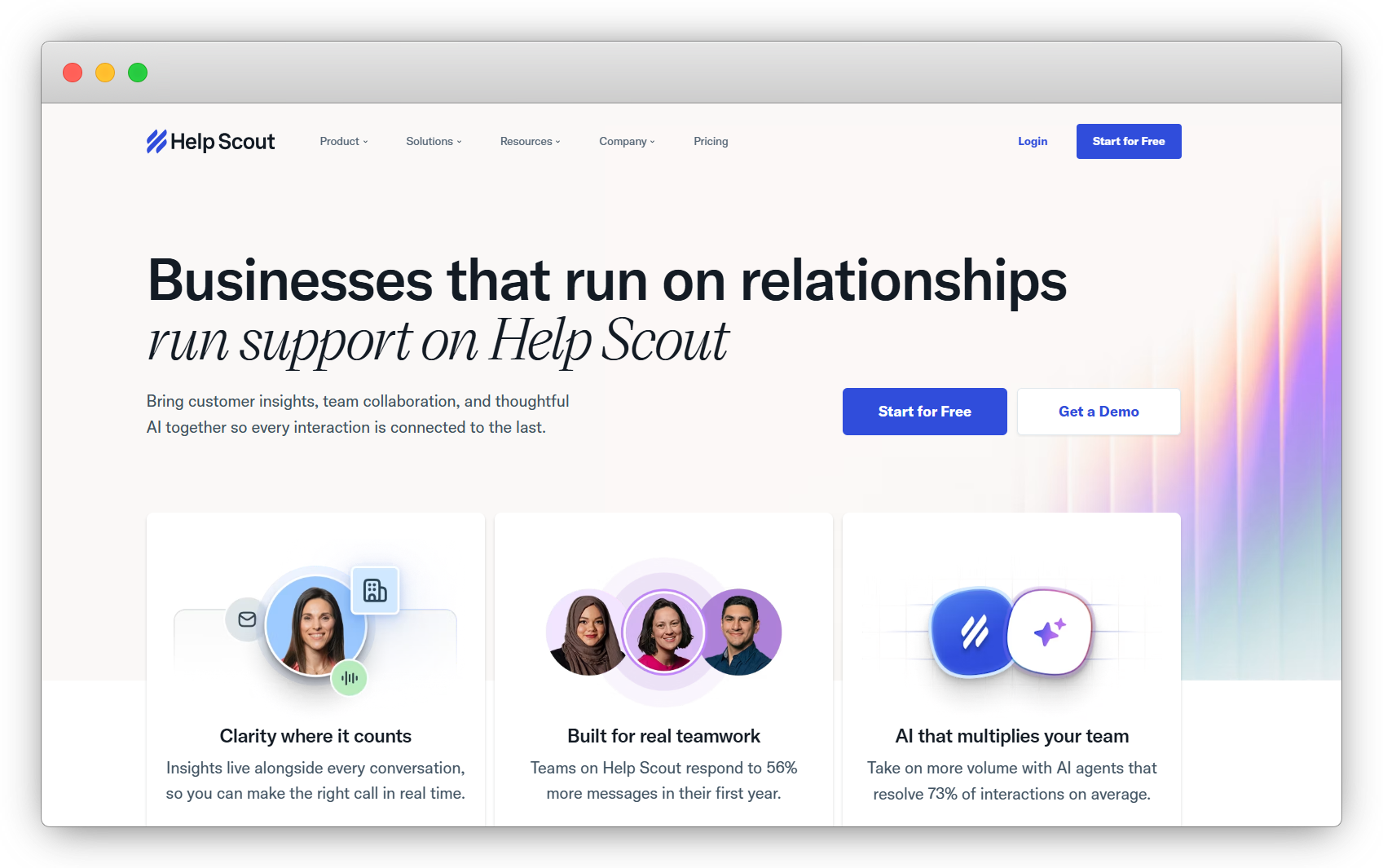
Help Scout is a customer support platform centred around a simple shared inbox, knowledge base, live chat, and customer-focused communication.

Its AI tools help agents summarise long conversations, draft responses, translate messages, and improve writing. AI Answers can also resolve common customer questions using approved help centre content.

Key features

  • Shared email and messaging inbox
  • AI summaries, drafts, and writing assistance
  • AI-powered self-service answers
  • Live chat and knowledge base
  • Customer profiles and conversation history
  • WhatsApp, Instagram, and Messenger connectivity

Pros and cons

Pros Cons
Clean interface with a low learning curve Fewer enterprise workforce management features
Suitable for small and growing support teams Advanced AI usage creates additional charges
Strong email and shared inbox experience Complex routing and customisation are more limited

Pricing

Plan Price per user per month
Standard $25
Plus $45
Pro $75

AI Resolutions cost $0.75 per successful resolution.  

6. Intercom

Intercom

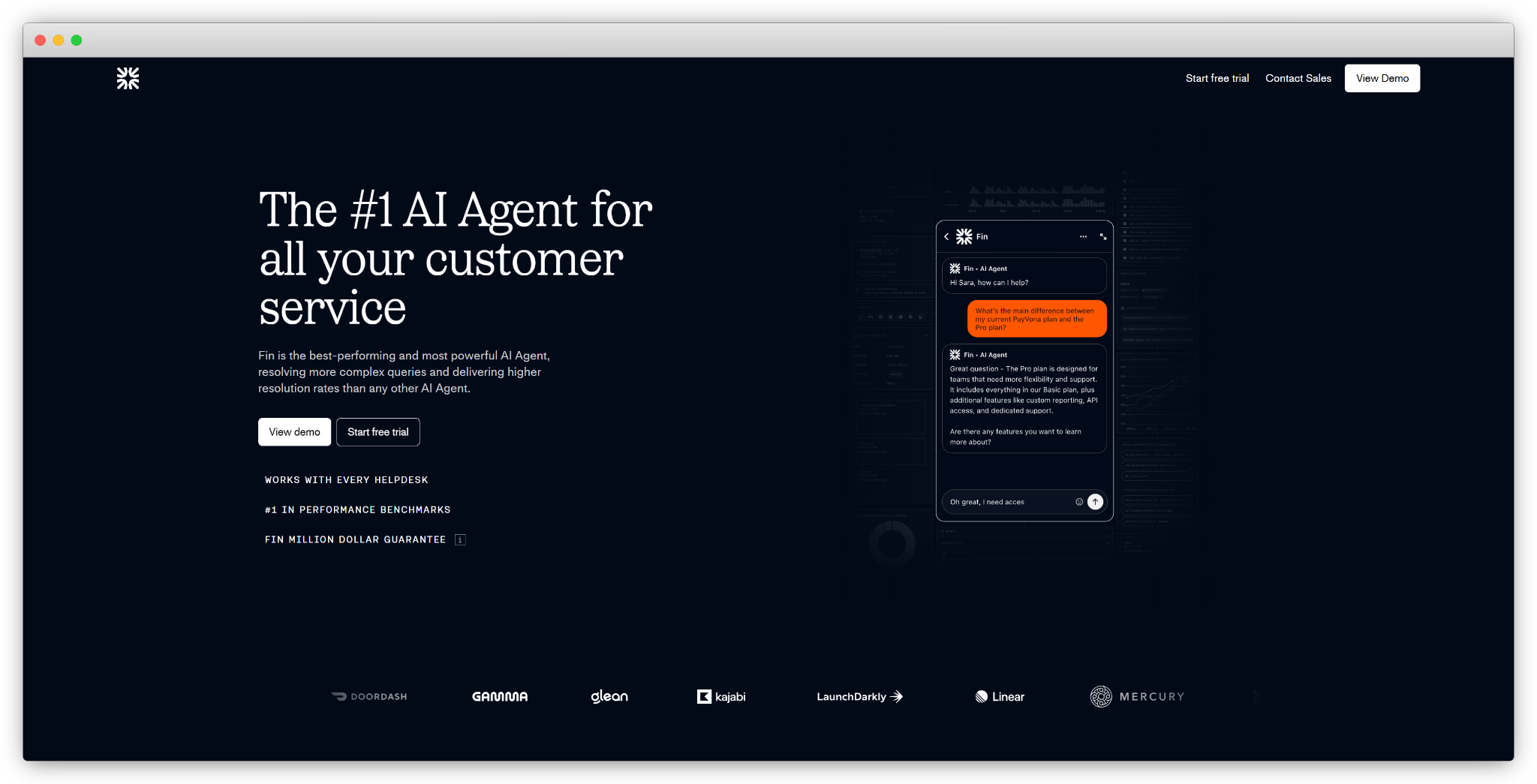
Intercom is an AI-first customer service platform widely used by SaaS companies, technology businesses, and digital product teams.

Its Fin AI Agent answers questions, follows support procedures, takes actions through connected systems, and transfers unresolved conversations to agents. Intercom also combines ticketing, live chat, email, in-app communication, WhatsApp, social messaging, SMS, and phone support.

Key features

  • Fin AI Agent
  • Omnichannel helpdesk and shared inbox
  • Website and in-app customer messaging
  • Ticketing, routing, and workflow automation
  • Knowledge management and self-service
  • AI reporting and conversation analysis

Pros and cons

Pros Cons
Strong AI capabilities for SaaS support Fin is charged separately per outcome
Supports in-app and website conversations well Overall costs can rise through seats and usage charges
Combines proactive and reactive customer communication Can be complex for teams needing only basic support

Pricing

Plan Price per seat per month
Essential $19 per seat/month
Advanced $85 per seat/month
Expert $132 per seat/month

Fin AI Agent costs $0.99 per resolved outcome. WhatsApp, SMS, phone, and outbound messaging may carry separate usage charges.

7. Zendesk

GenAI Tool: Zendesk

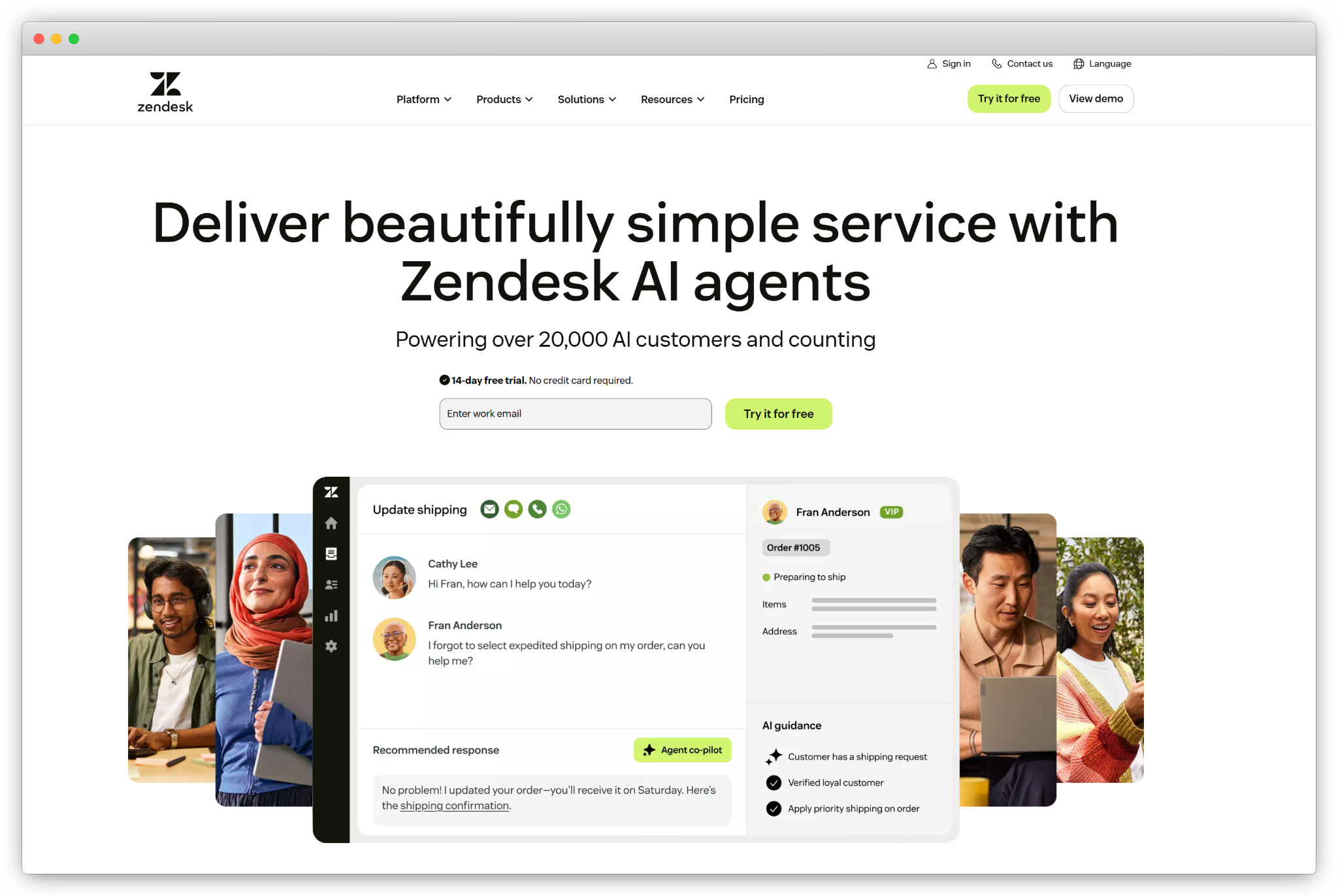
Zendesk is an enterprise-grade customer service platform that combines ticketing, AI agents, messaging, live chat, voice, routing, knowledge management, and workforce tools.

It is suitable for large support teams that require structured processes, SLA controls, custom reporting, and multiple departments. Zendesk AI agents can answer questions and automate resolutions, while Copilot assists human agents during more complex interactions.

Key features

  • AI agents and agent Copilot
  • Ticketing and omnichannel messaging
  • WhatsApp, social, web, mobile, and voice support
  • Knowledge base and self-service
  • SLA management and skills-based routing
  • Custom analytics and workforce management

Pros and cons

Pros Cons
Highly scalable for complex support operations Can be expensive for large agent teams
Extensive routing, analytics, and governance controls Several advanced features require paid add-ons
Broad integration and application ecosystem Implementation and administration may require specialists

Pricing

Plan Price per agent per month
Support Team $19
Suite Team $55
Suite Professional $115
Suite Enterprise + Copilot Talk to Sales

Prices reflect annual billing. Copilot is available as an add-on at $50 per agent per month on eligible plans.

8. Zoho Desk

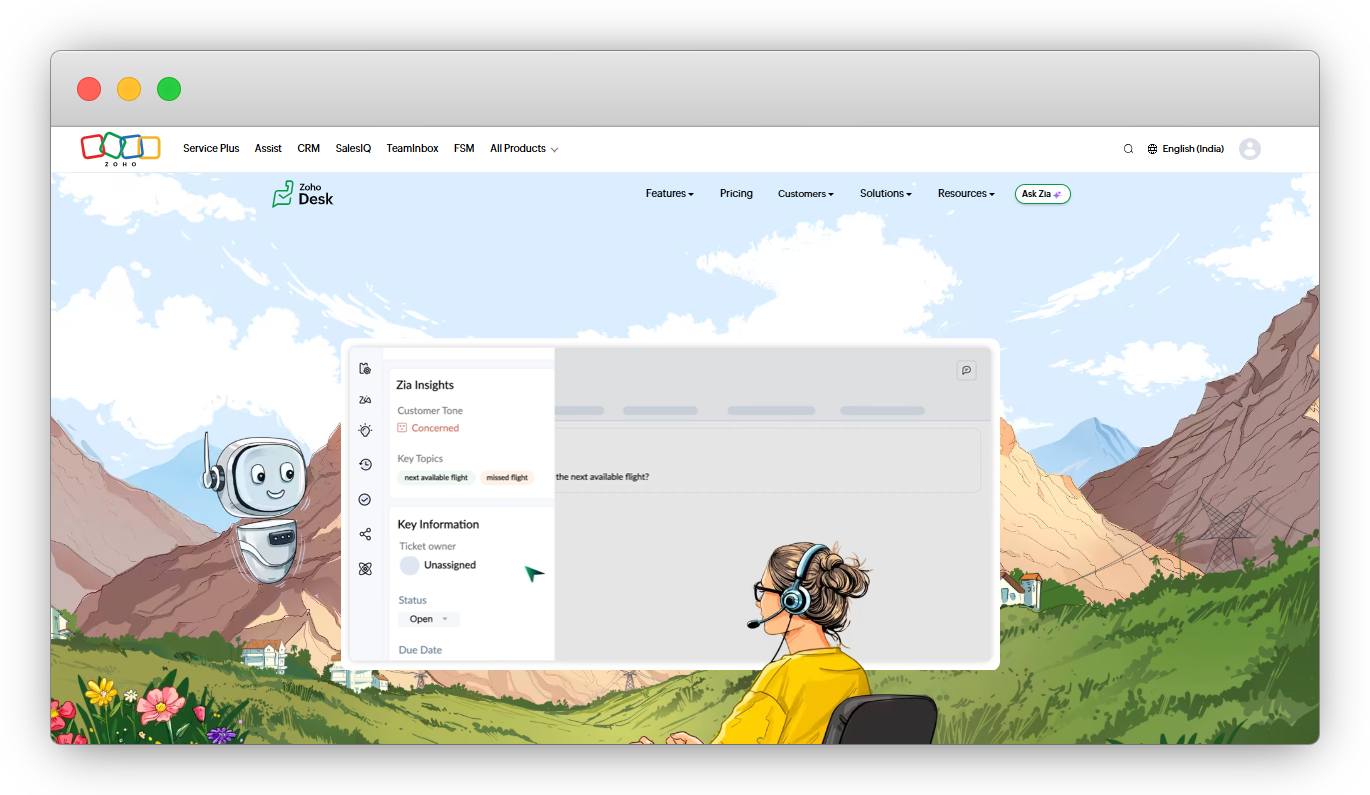
Zoho Desk is an affordable omnichannel helpdesk for businesses that want ticketing, automation, AI assistance, and customer self-service within the wider Zoho ecosystem.

Its Zia AI assistant can summarise tickets, detect sentiment and intent, generate responses, and retrieve answers from a knowledge base. The platform supports email, phone, live chat, WhatsApp, Instagram, Messenger, and several regional messaging platforms.

Key features

  • Zia AI assistant
  • Multichannel ticket management
  • Workflow rules, SLAs, and Blueprints
  • Knowledge base and customer portals
  • Sentiment and intent analysis
  • Integrations with Zoho CRM and other Zoho applications

Pros and cons

Pros Cons
Competitive pricing and free edition Some AI and messaging features require higher plans
Strong fit for existing Zoho customers Interface and configuration can feel complex
Wide range of support channels Third-party integrations are less extensive than some enterprise competitors

Pricing

Plan Price per user per month
Free $0
Express $7
Standard $14
Professional $23
Enterprise $40

Paid plan pricing can vary by region and billing cycle.

9. Ada

Ada's Customer Experience Platform

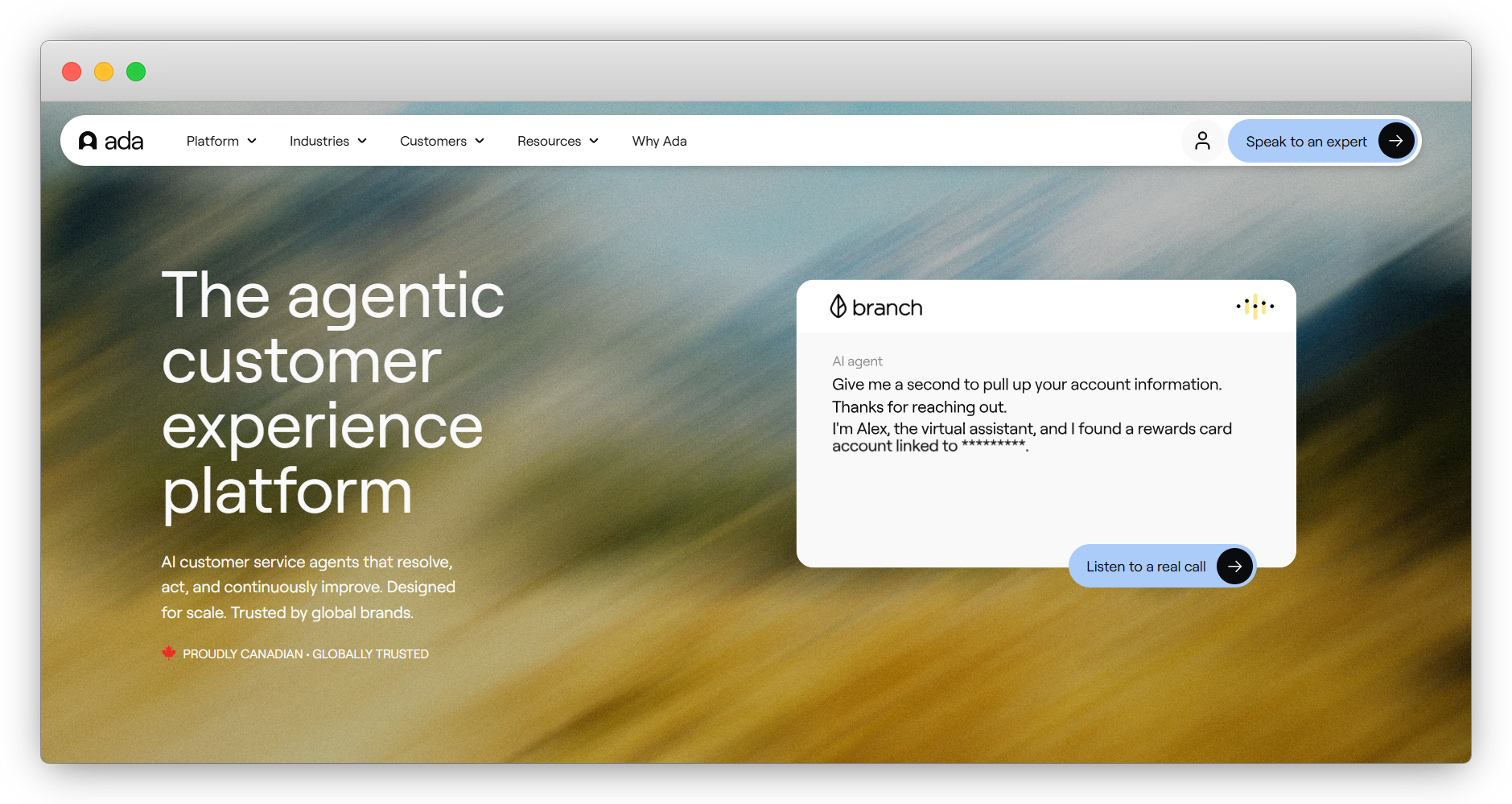
Ada is an enterprise AI customer service platform focused on autonomous support rather than traditional ticket management. Its AI agents can operate across chat, email, voice, WhatsApp, SMS, Instagram, Messenger, in-app messaging, and custom channels using one shared reasoning system.

Unlike a traditional helpdesk, Ada focuses on autonomous resolution. Its AI agents understand intent, access customer and business data, follow operational procedures, complete multi-step actions, and transfer conversations to human teams when required.

Key features

  • Enterprise AI agents for messaging, email, and voice
  • WhatsApp, SMS, Instagram, Messenger, web, and mobile support
  • Multilingual conversations across 60 languages
  • Playbooks for complex support procedures
  • Human handover with conversation context
  • Performance analytics, testing, and AI coaching

Pros and cons

Pros Cons
Built for enterprise-scale automation No public entry-level pricing
One AI reasoning layer across several channels May be excessive for smaller support teams
Strong multilingual and workflow capabilities Requires structured implementation and ongoing management

Pricing

Plan Price
Enterprise platform Custom conversation-based pricing

Ada charges based on the number of conversations handled by its AI agents. Businesses must contact its sales team for a quote.

10. Botpress

Botpress

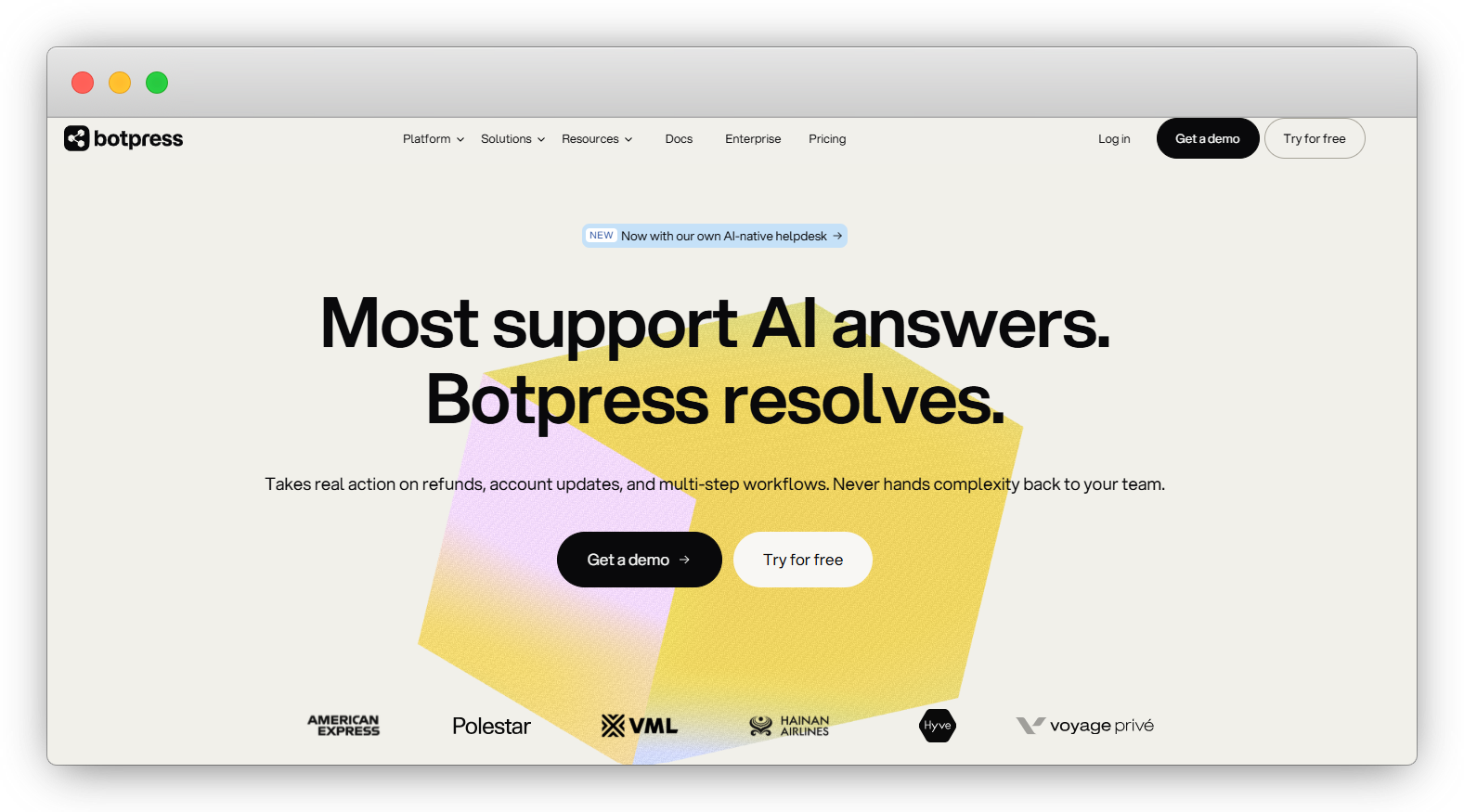
Botpress is an AI agent development platform for businesses that need more control over chatbot logic, integrations, models, and automated actions. It provides a visual builder, developer toolkit, knowledge bases, analytics, and deployment options for website chat, WhatsApp, Messenger, Instagram, Slack, Telegram, and other channels.

Unlike a standard helpdesk, Botpress allows technical teams to build highly customised support agents that connect with APIs and internal business systems. It also offers Botpress Desk for teams that want a support workspace alongside their AI agents.

Key features

  • Visual AI agent builder and developer toolkit
  • Knowledge bases and retrieval-augmented generation
  • Custom API actions and integrations
  • Website and social messaging deployment
  • Analytics, conversation testing, and logs
  • Botpress Desk and branded help centre options

Pros and cons

Pros Cons
High level of control and customisation Requires more technical ownership
Suitable for complex and specialised AI agents Not a traditional plug-and-play helpdesk
Includes visual and code-based development options Usage-based costs can be harder to estimate

Pricing

Plan Annual Plan Price
Free $0
Plus $150 per month
Team $750 per month
Enterprise Custom pricing

The Plus plan includes 250 conversations per month, while Team includes 1,500. Additional conversation packs are billed separately.

The best AI-powered customer support platform depends on where your customers contact you, the complexity of your support workflows, and whether you need a complete helpdesk or a messaging-focused automation platform. 

Turn customer conversations into faster resolutions with QuickReply.ai

Choosing a customer support platform is not only about adding another chatbot. It is about reducing the effort required to resolve each customer query while giving support teams better control over conversations.

QuickReply.ai helps businesses automate routine interactions, route customers to the right journey, and give agents the context they need when human intervention is required. This allows support teams to spend less time answering repetitive questions and more time handling cases that require judgement, reassurance, or personalised assistance.

Its messaging-first approach is especially relevant for businesses whose customers already prefer conversational channels over traditional support forms and email tickets. Support, service updates, follow-ups, and customer engagement can continue within the same communication environment instead of being split across disconnected tools.

QuickReply.ai is therefore well-suited to businesses looking for a customer support solution that combines automation with human assistance and turns everyday customer conversations into faster, more consistent resolutions.

Ready to improve how your business manages customer conversations? Explore QuickReply.ai and see how messaging-led automation can support your customer service operations.

Turn 1 time visitor into repeat customer with WhatsApp marketing

Leverage the untapped growth potential of WhatsApp marketing to acquire and retain customers.

Frequently Asked Questions

What is the best AI-powered customer support platform

The best AI-powered customer support platform depends on your channels, support volume, integrations, and automation requirements.

QuickReply.ai is suitable for businesses prioritising omnichannel customer journeys. Gorgias is designed for ecommerce helpdesk operations, while Zendesk and Freshdesk are better suited to businesses requiring traditional ticketing and structured support workflows. Ada and Botpress are useful for companies that want more customised AI agents.

Which customer support platforms support WhatsApp

QuickReply.ai, Gorgias, Freshdesk, Tidio, Help Scout, Intercom, Zendesk, Zoho Desk, Ada, and Botpress offer some form of WhatsApp support.

However, the depth of support differs. Some platforms primarily bring WhatsApp messages into a ticketing inbox, while others allow businesses to deploy chatbots, automate customer journeys, send approved notifications, route conversations, and transfer chats to agents.

Businesses should therefore evaluate WhatsApp automation capabilities rather than checking only whether WhatsApp appears in a platform’s channel list.

Which AI customer support platform supports RCS

QuickReply.ai supports customer communication and automation across RCS alongside WhatsApp, SMS, Instagram, Messenger, and website chat. Its RCS capabilities can be used for rich messages, service notifications, customer follow-ups, campaigns, and interactive communication.

What is the difference between multichannel and omnichannel customer support

Multichannel customer support allows a business to provide service through several channels, while omnichannel support connects those channels and customer conversations.

In a multichannel setup, email, WhatsApp, website chat, and social media may operate separately. In an omnichannel setup, agents can access relevant conversation history and customer context from a connected workspace.

This reduces repeated questions and helps businesses provide a more consistent support experience.

Can one AI chatbot work across WhatsApp and website chat

Yes, some platforms allow businesses to deploy AI chatbots across WhatsApp and website chat from the same system.

QuickReply.ai supports GenAI and click-based chatbots across WhatsApp, RCS, Instagram, Messenger, and websites. This helps businesses maintain more consistent support flows while adapting the customer experience to each channel.