


%201.svg)


Copied to clipboard!
What is an RCS message?
An RCS message is a rich text message that can include images, videos, read receipts, buttons, carousels, and branded business profiles. It is designed to improve the traditional SMS experience.
For years, SMS has been the default channel for fast business communication. Brands use it to send OTPs, delivery updates, appointment reminders, payment alerts, and promotional messages. It is simple, widely supported, and works on almost every mobile phone.
But customer expectations have changed.
People are now used to rich, visual, and interactive conversations on apps like WhatsApp, Instagram, and Messenger. A plain text SMS with a short link often feels limited, especially when a business wants to show products, share offers, build trust, or guide customers toward an action. Also, RCS allows businesses to have two-way communication, unlike SMS, which is a one-way communication channel.
That is where RCS messaging comes in.
An RCS message is a richer version of a traditional text message. An RCS text message can include high-resolution images, videos, buttons, read receipts, typing indicators, branded sender profiles, and interactive experiences inside the phone’s default messaging app. Google describes RCS as an upgraded messaging experience that works over mobile data or Wi-Fi and supports features like high-resolution media, read receipts, and typing indicators.
For businesses, RCS messaging is best understood as the modern evolution of SMS for customer engagement, broadcast communication, and branded messaging.
RCS stands for Rich Communication Services. In simple terms, RCS messaging upgrades basic SMS into a richer messaging experience. Instead of sending only plain text, businesses and users can send messages that feel closer to an app-like conversation.
It can include media, buttons, branding, and interactive actions, while still appearing inside the user’s native messaging inbox.
For example, instead of sending an SMS like:
Your order has shipped. Track here: bit.ly/xyz
A business can send an RCS message with:
This makes the message more useful, more trustworthy, and easier to act on.
RCS was developed because SMS was built for a much simpler communication era. SMS is reliable, but it was not designed for modern customer engagement, visual marketing, or conversational commerce.
A standard SMS segment is commonly limited to 160 characters per message, and emojis get split into special characters, which is one of the reasons brands find it difficult to deliver marketing messages at once and often depend on short links and compressed copies.
RCS improves this experience by allowing businesses to communicate with richer context, multimedia options, and interactive actions. More importantly, it lets customers engage with the brand directly instead of receiving a one-way information blast like SMS. This brings RCS closer to modern conversational messaging channels like WhatsApp, Instagram, and Messenger, where customers can click, reply, explore, and continue the conversation naturally.
RCS messaging works through supported messaging apps, mobile networks, and internet connectivity.
On Android, RCS is commonly experienced through Google Messages. Google explains that RCS chats are sent over Wi-Fi or mobile data and work when the recipients have RCS enabled. When RCS is unavailable, Google Messages can still send messages as SMS or MMS.
On iPhone, Apple supports RCS messaging on iOS 18 and above, but it also depends on whether the user’s mobile network provider supports RCS on iPhone. Apple states that RCS messages can be sent over Wi-Fi or mobile data and can support high-resolution photos, videos, links, delivery receipts, read receipts, and typing indicators.
For Apple users, the important thing to note is that RCS works inside their existing message app, which is also used for iMessage. Users do not need to install a separate app to receive or interact with RCS messages.
In simple business terms, RCS needs three things:
If these conditions are not met, the message may fall back to SMS or MMS, depending on the provider and setup.
That fallback is important. RCS is powerful, but it is not yet universally available in every country, device, carrier, and inbox. Smart businesses should treat RCS as an upgrade to SMS, not an instant replacement for SMS.
The difference between RCS message vs SMS is mainly about richness, branding, interactivity, and customer experience. SMS is text-first. RCS is experience-first.
For example, an SMS broadcast for a fashion sale might say:
Flat 30% off today. Shop now: example.com/sale
An RCS broadcast can show a branded message with product images, a carousel of bestsellers, “Shop Women,” “Shop Men,” and “View Offers” buttons.
The second experience reduces friction. Customers do not need to guess what the link contains. They can see the offer, trust the sender, and act faster.
RCS allows brands to send richer content directly inside the messaging inbox. This can include images, videos, PDFs, and rich cards. According to Google’s RCS for Business documentation, a single message request can include text, rich cards, media, PDF files, suggested replies, and suggested actions.
This is useful for marketing campaigns such as:
Trust is a major factor in SMS. Many users receive spam, fraudulent links, and messages from unknown senders, and they refrain from clicking on any links shared due to obvious reasons.
RCS helps businesses build trust through verified sender profiles. It allows you to display a verified status and badge in RCS chats.
For customers, this means the message looks more official. For brands, it means stronger recognition and lower hesitation.
RCS can include suggested replies and suggested actions.
For example:
This is especially useful in broadcast communication because the message does not just inform the customer. It guides the next action.
RCS rich cards can combine image, text, and action buttons in one message. It supports rich card carousels, which allow users to browse multiple options inside one message.
A business can use carousels to show:
RCS can provide better engagement visibility than SMS, depending on user settings and provider support.
For marketers, this helps answer questions like:
This makes RCS more useful for campaign optimization.
An RCS message does not need to look like an unknown text from a random sender. It can carry brand identity, visual context, and verified trust cues. For businesses, this changes the inbox from a basic notification channel into a customer engagement channel.
RCS works best when the message needs more than plain text.
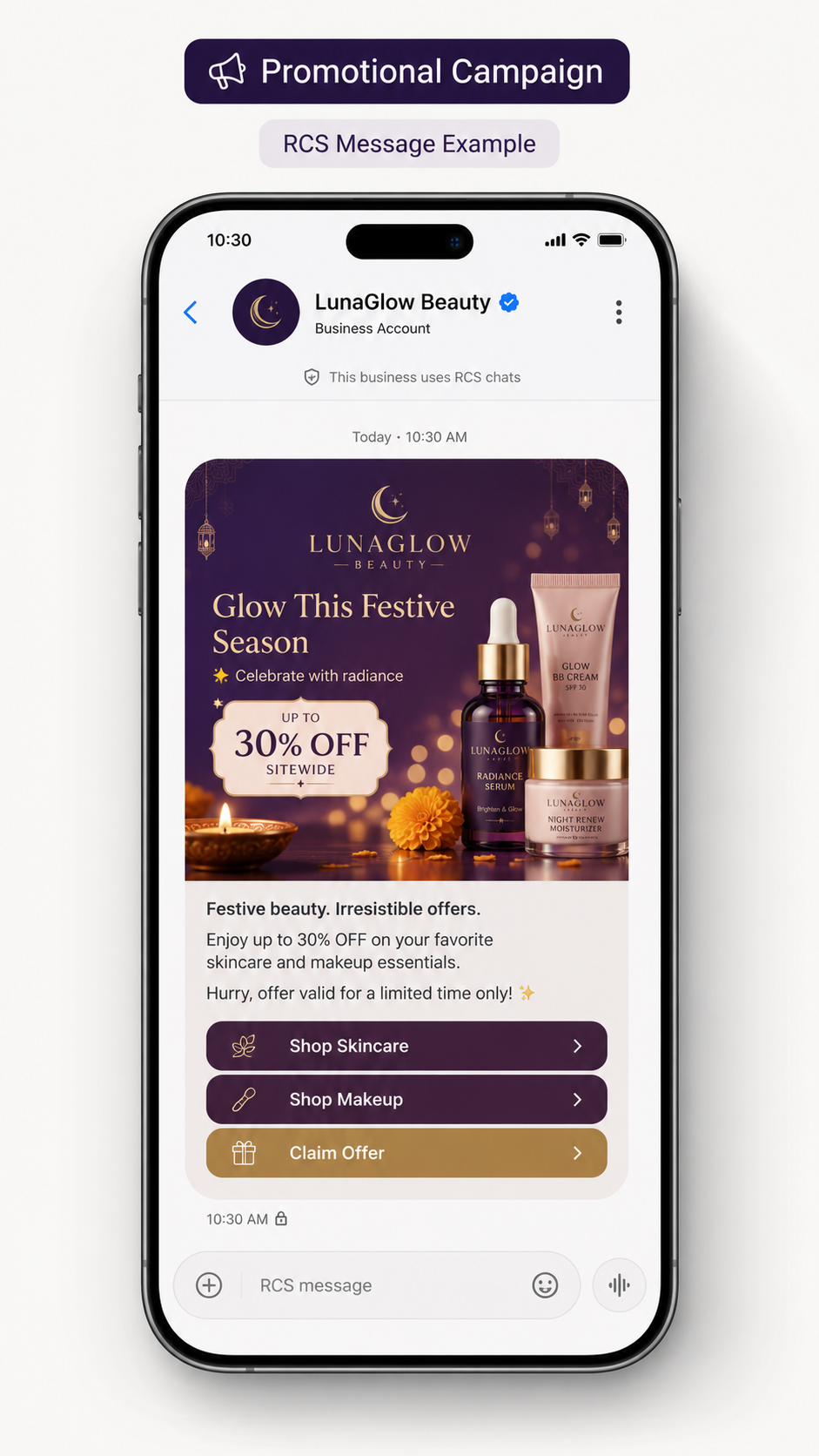
RCS is useful for campaigns where visuals matter.
Example: A beauty brand can send a festive sale broadcast with product images, offer details, and buttons like “Shop Skincare,” “Shop Makeup,” and “Claim Offer.”
Instead of sending a plain discount code, brands can send a countdown-style message with a visual banner design and CTA.
Example: “Mega Sale ends tonight” with product cards and a “Shop Now” button.
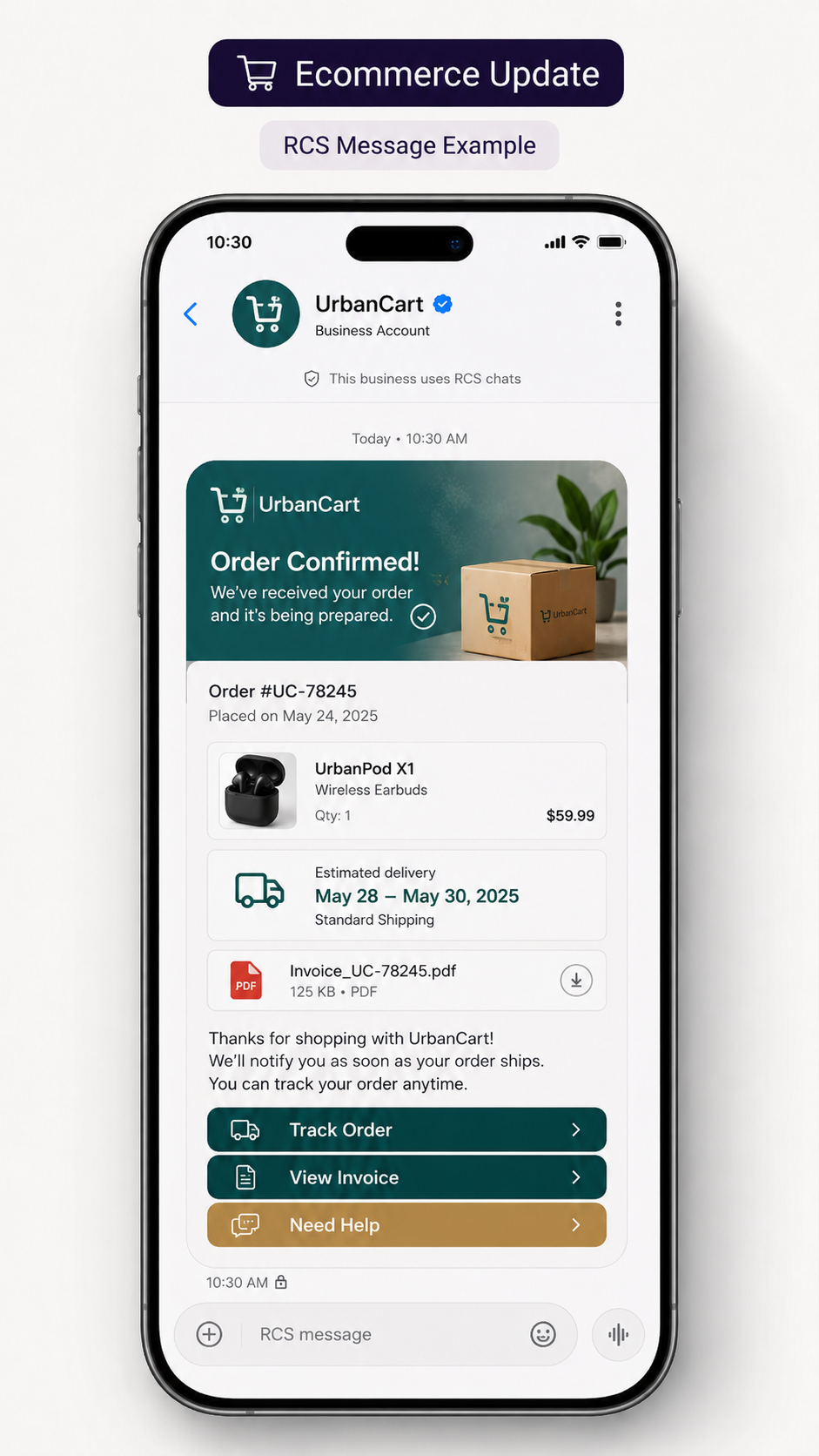
RCS can make order communication more helpful.
Example: A customer receives an order update with product image, delivery status, invoice PDF, and “Track Order” button.
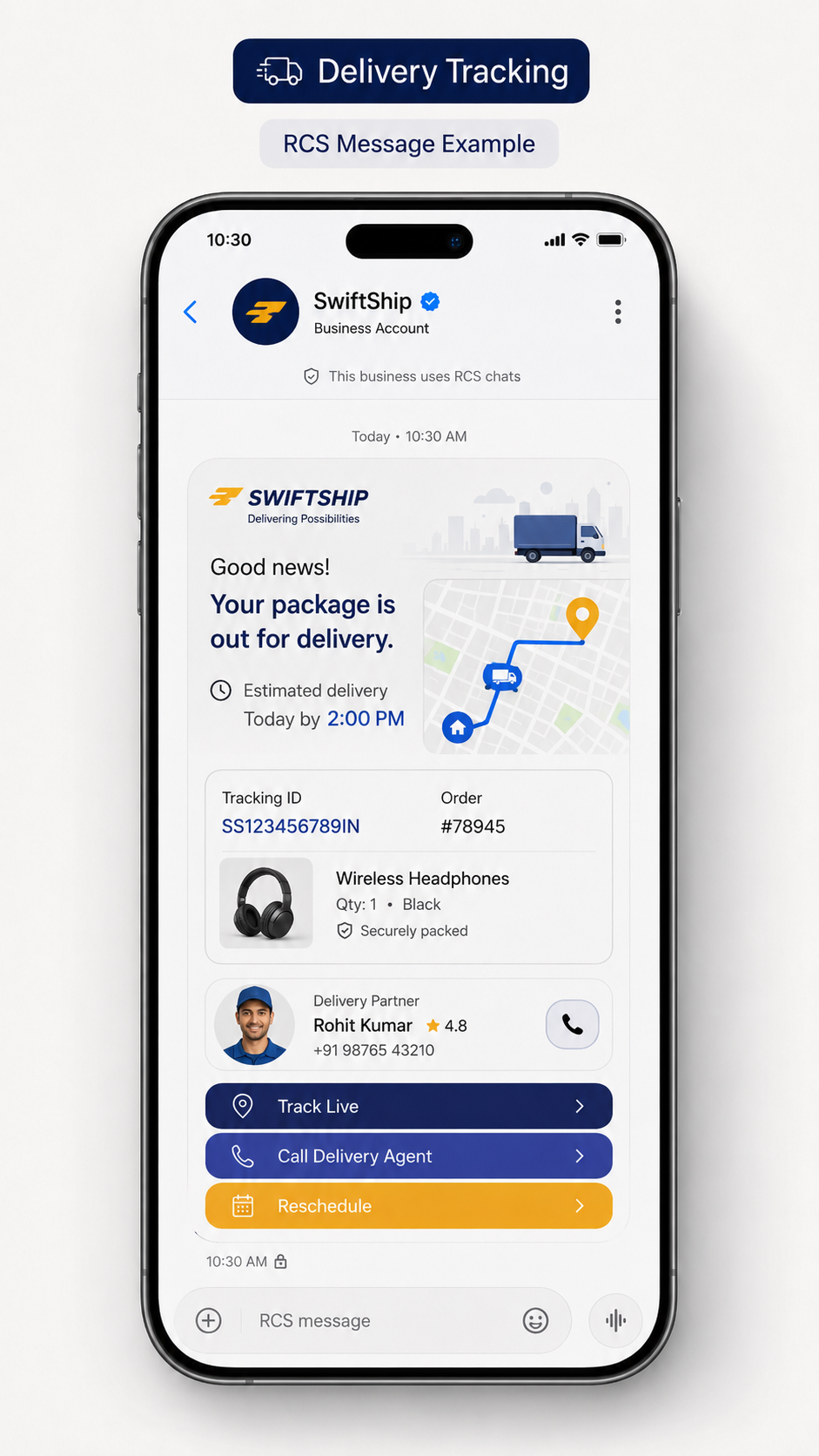
Logistics and ecommerce brands can use RCS to make shipment updates easier to follow.
Example: “Your package is out for delivery” with a map link, delivery partner details, and “Call Delivery Agent” button.
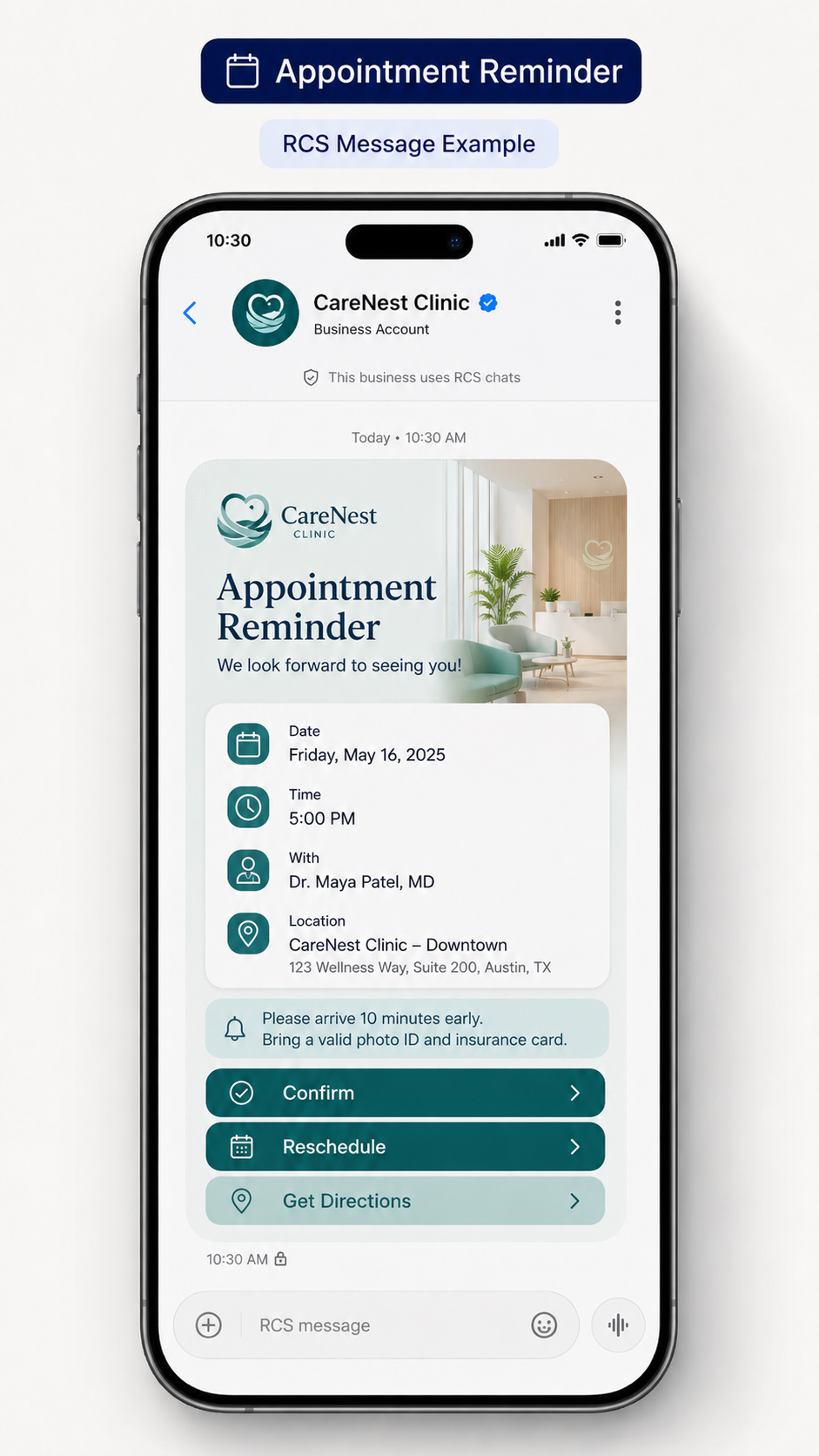
Healthcare, education, salons, real estate, and service businesses can use RCS for appointment reminders.
Example: “Your consultation is scheduled for 5 PM” with “Confirm,” “Reschedule,” and “Get Directions” buttons.
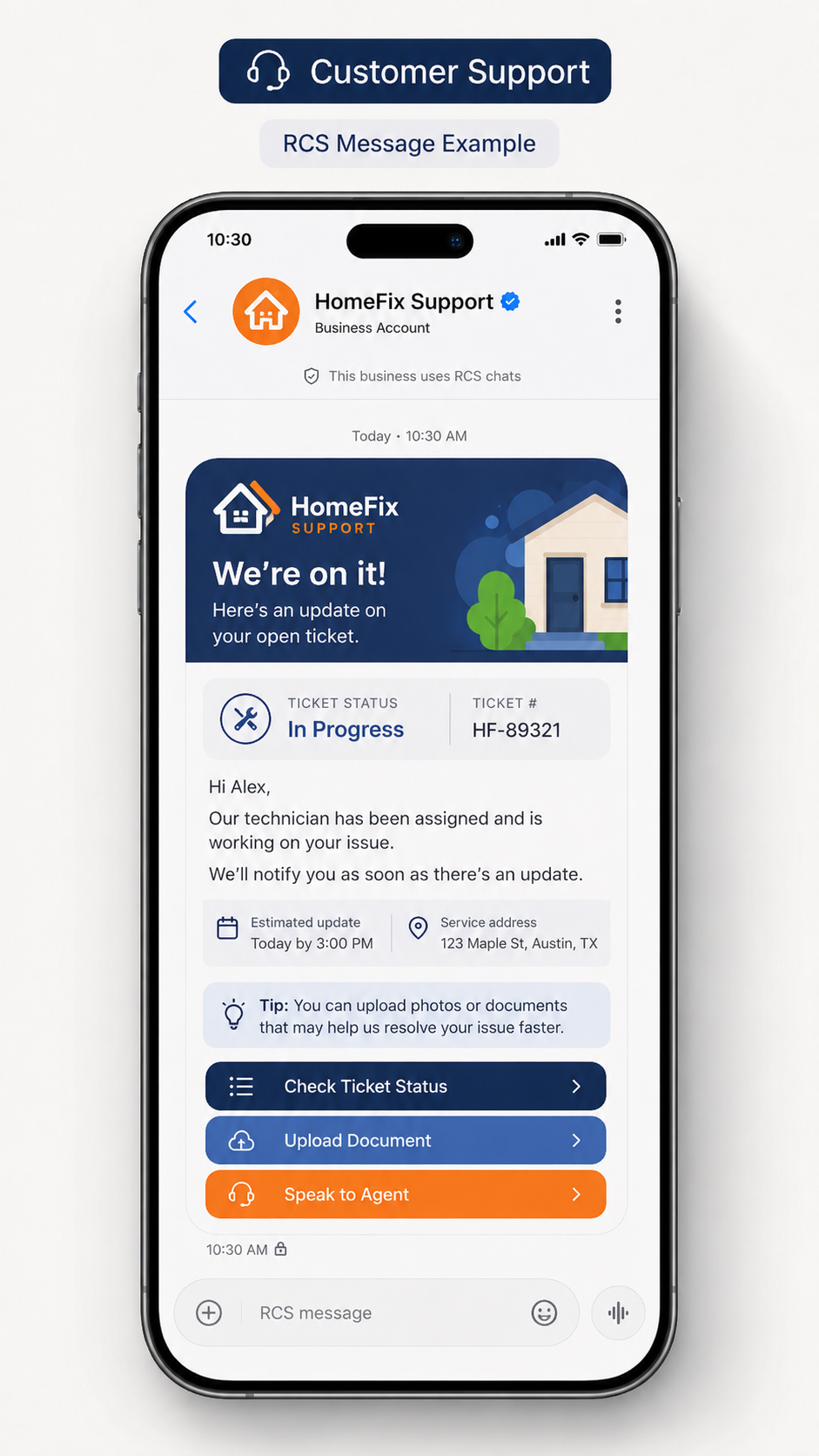
RCS can reduce unnecessary support calls by giving customers easy self-serve actions.
Example: A customer receives a support update with “Check Ticket Status,” “Upload Document,” and “Speak to Agent.”
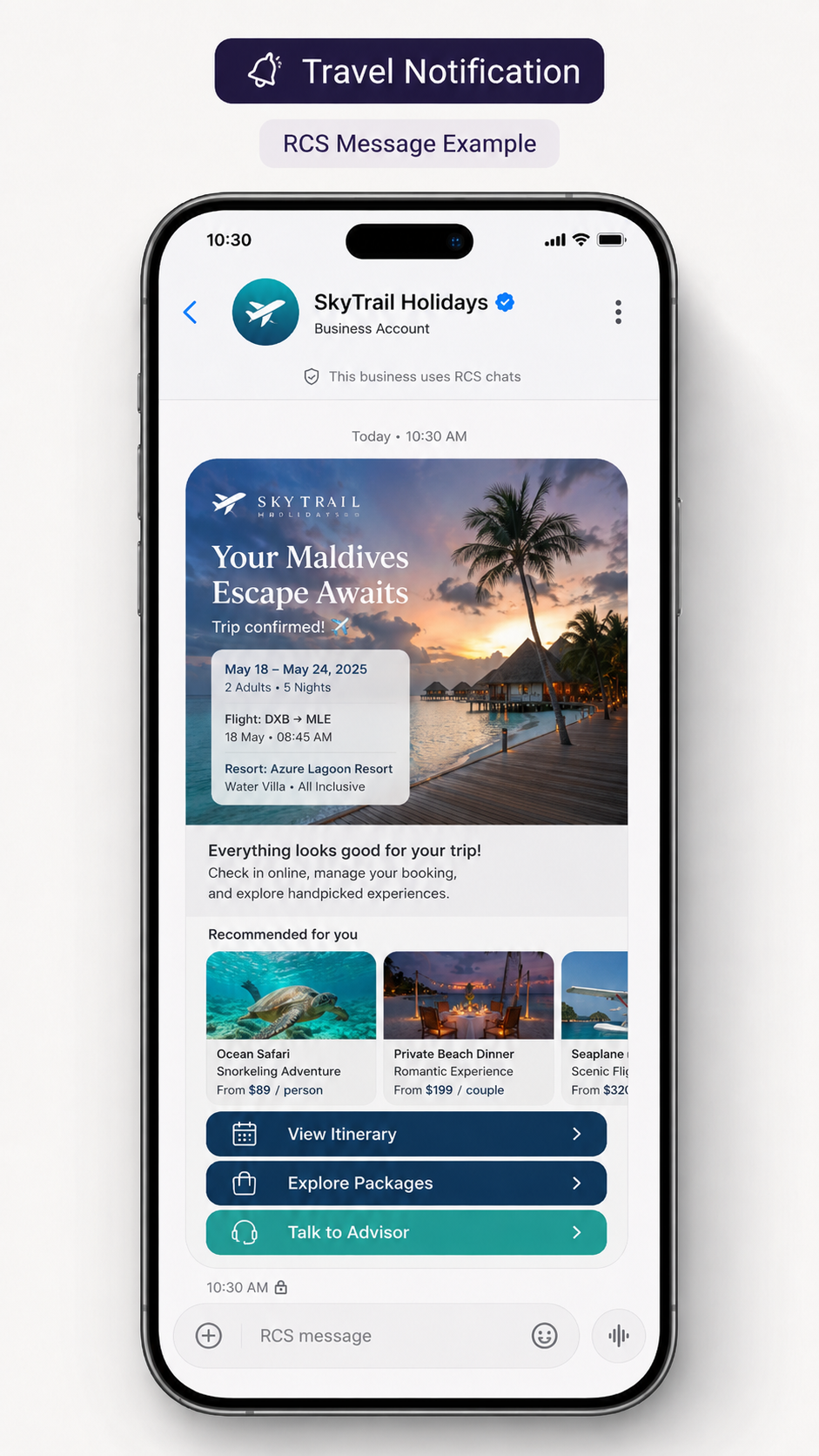
Travel companies can send itineraries, hotel details, flight updates, and package recommendations in a richer format.
Example: A travel brand sends a carousel of holiday packages based on the customer’s interest.
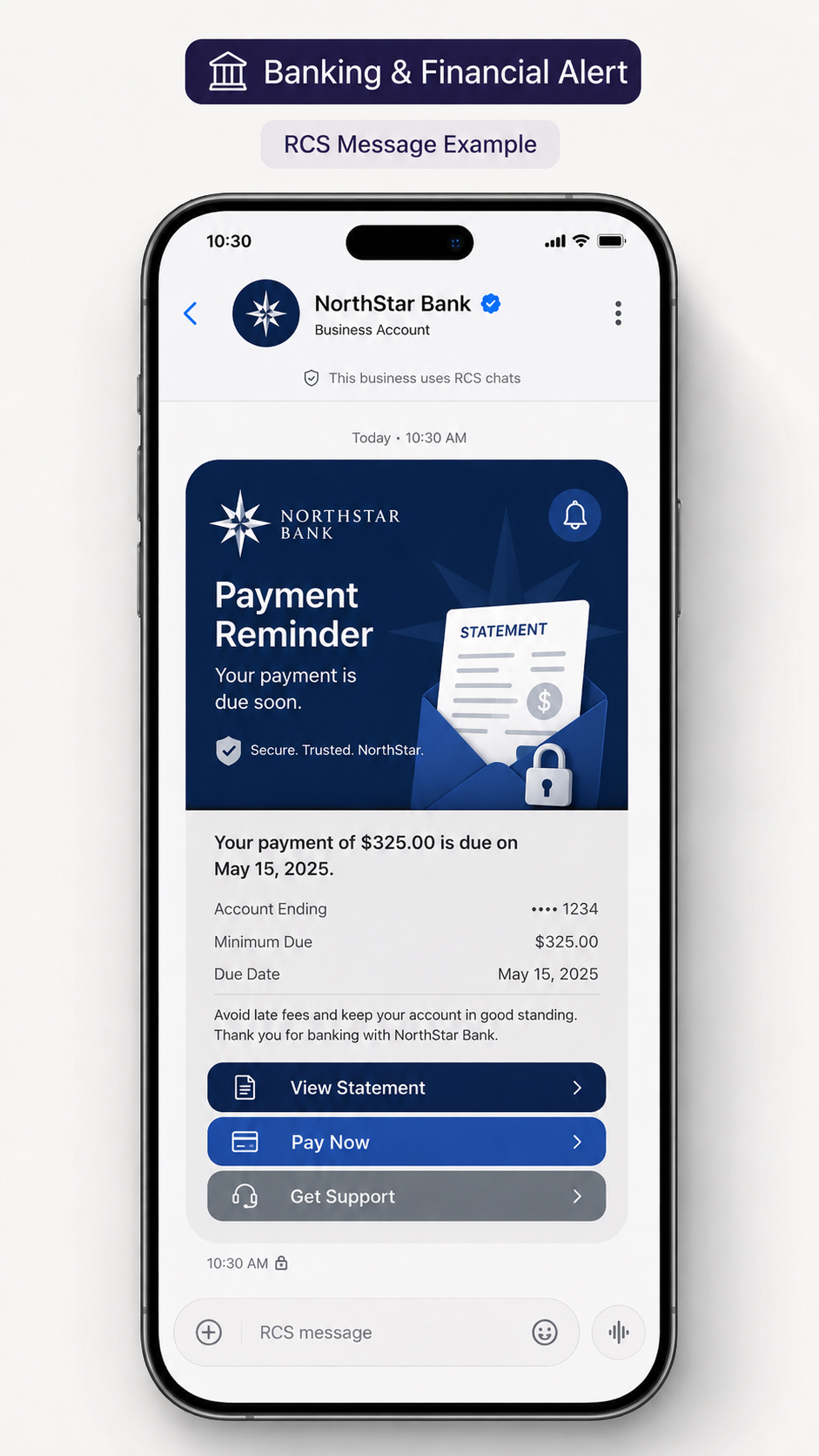
Banks and fintech brands can use RCS for trusted alerts, payment reminders, and document-based communication, subject to compliance and regional rules.
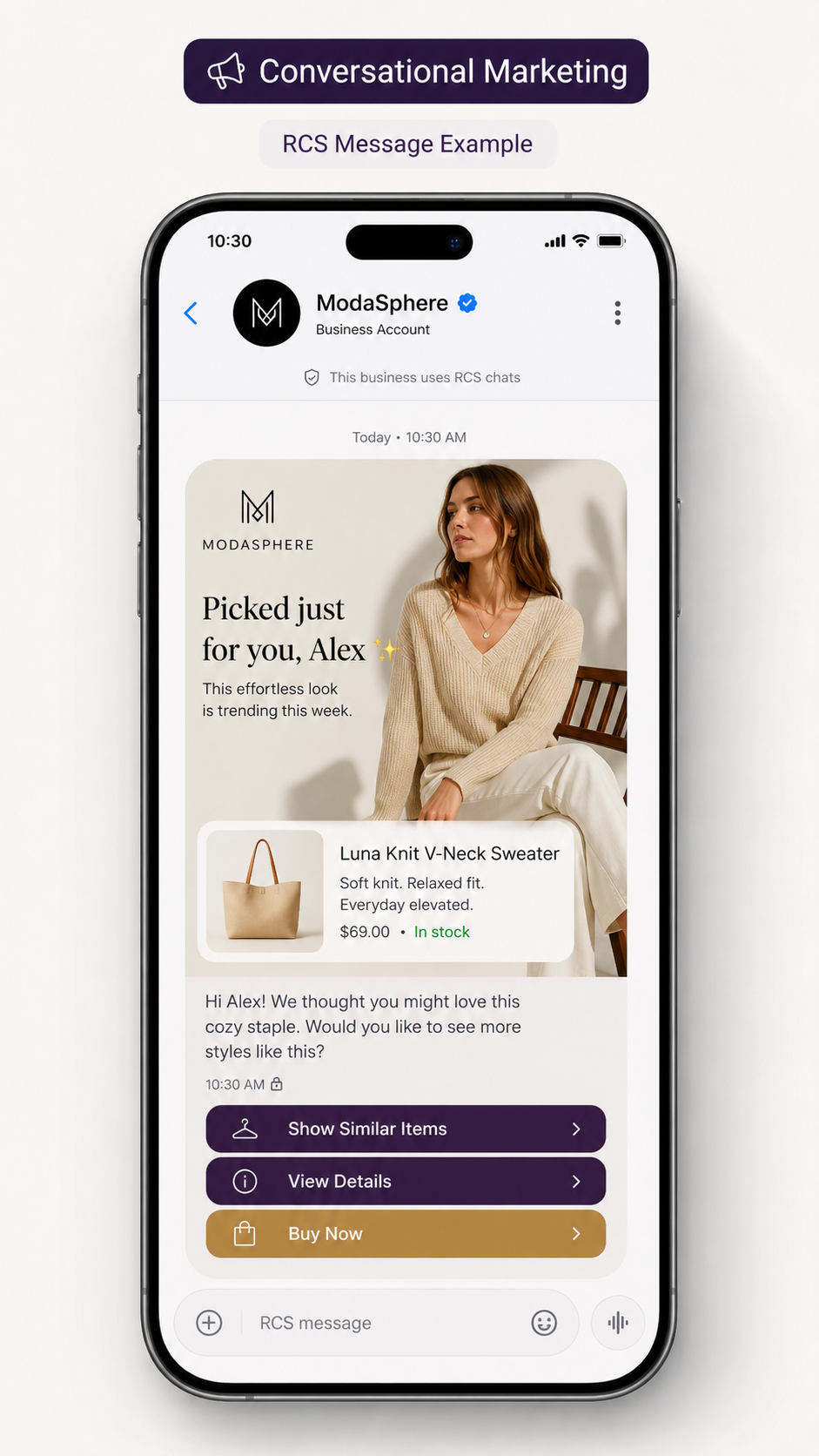
RCS can also support two-way interactions through buttons and suggested replies.
Example: A customer receives a product recommendation and taps “Show similar items,” creating a guided buying journey inside the messaging app.
SMS is still important. Here are times when SMS could be a better option for businesses:
For example, OTPs, emergency alerts, and critical account notifications may still depend heavily on SMS because of its reach and reliability.
Note: A strong business messaging strategy does not need to choose only one. It can use RCS for richer engagement and SMS as a fallback for reach.
This turns a broadcast into a guided conversation.
The richer the message and the clearer the customer response, the more useful personalization becomes.
RCS is clearly a great communication platform for businesses, but it also has some limitations mentioned below:
RCS is becoming more important because brands want richer, more trusted, and more measurable messaging experiences. The future of RCS will evolve more over time:
RCS messaging is growing, but it will not fully replace SMS immediately. SMS will continue to play a role in reach, fallback, and critical alerts. RCS will become more valuable where businesses need richer engagement, branding, and interactivity. This focus on rich engagement mirrors how professional letterheads consolidate a brand identity into a clean and recognizable visual space.
RCS messaging is not here to replace SMS overnight. It is here to give businesses a richer, more branded, and more interactive way to communicate with customers.
SMS still works well for reach. RCS works better when brands want richer engagement through images, buttons, carousels, verified sender profiles, and more actionable messaging experiences. Together, they create a stronger communication layer for broadcasts, alerts, promotions, reminders, and customer engagement.
For modern businesses, the bigger opportunity is not just choosing between RCS vs SMS. It is about using the right channel for the right customer at the right moment.
This is where platforms like QuickReply.ai help businesses manage customer communication across channels like WhatsApp, RCS, SMS, Instagram, Messenger, and more from one place. Brands can create segmented campaigns, automate follow-ups, personalize messages, and use channel fallback intelligently.
For example, a business can run a WhatsApp campaign and use RCS or SMS fallback for customers who do not receive or engage with the first message. Similarly, RCS can be used for rich, visual campaigns, while SMS can support fallback delivery where RCS is not available.
The result is simple: businesses can reach more customers, improve engagement, reduce missed communication, and run marketing campaigns more effectively across the channels their customers already use.
RCS messaging is one important step in this shift. But the real future is omnichannel customer engagement, where WhatsApp, RCS, SMS, Instagram, and other messaging channels work together to create better customer journeys.

Tool and strategies modern teams need to help their companies grow.
Leverage the untapped growth potential of WhatsApp marketing to acquire and retain customers.
An RCS message is a rich text message that can include images, videos, read receipts, buttons, carousels, and branded business profiles. It is designed to improve the traditional SMS experience.
RCS is better than SMS for rich engagement, branding, interactive campaigns, and visual communication. However, SMS is still better for universal reach, fallback, and simple urgent messages like OTPs.
Yes, RCS works on supported iPhones, but it depends on iOS version, carrier support, and user settings. Apple says RCS requires iOS 18 and a mobile data plan from a network provider that supports RCS messaging on iPhone.
For regular users, RCS messages usually use Wi-Fi or mobile data, but network provider fees may apply depending on the user’s plan and carrier. For businesses, RCS campaign pricing depends on the messaging provider, country, and message type.
SMS is mainly plain text. RCS supports rich media, buttons, read receipts, verified sender profiles, and interactive experiences. SMS has wider compatibility, while RCS offers a better customer experience where supported.
Yes, businesses can use RCS for broadcast campaigns, promotional messages, transactional updates, customer support flows, and alerts, where RCS Business Messaging is supported by the provider and region.
RCS can offer stronger trust experiences than SMS through verified business profiles. Security features can vary by device, app, carrier, and message type, so businesses should confirm security and compliance details with their RCS provider.
Companies are using RCS messaging because it helps them send branded, visual, interactive, and measurable communication. It is useful for promotions, order updates, reminders, customer support, and conversational marketing.