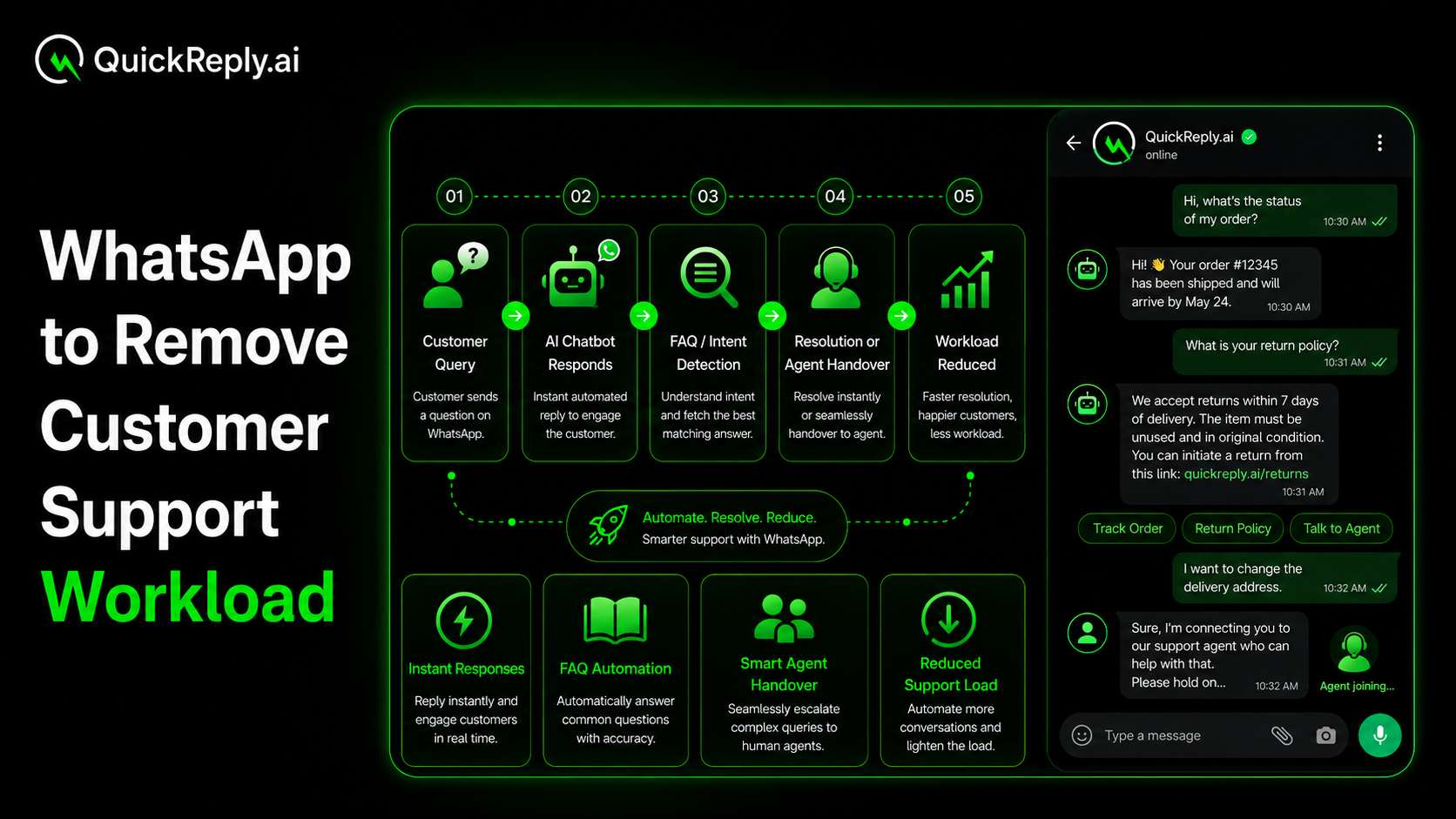
How Teams Are Using AI on WhatsApp to Reduce Support Workload

Copied to clipboard!

If you sit within earshot of a customer support team long enough, you’ll start noticing the same questions popping up again and again.

“Has my request been approved yet?”
“Can I change my appointment?”
“What’s happening next?”
“Where’s my order?”

On their own, these requests only take a minute or two to handle. But across hundreds of conversations, they can quickly overwhelm a support queue.

This is where AI on WhatsApp fits naturally into the support process.

Teams are using it to answer common questions, share updates, and keep conversations moving. It’s giving support agents more time for the situations where expertise and human judgment make the difference.

Let’s take a closer look at how teams are using AI on WhatsApp to reduce support workload.

Highlights

  • Many support teams spend more time answering routine questions than solving complex problems.
  • Businesses are using AI on WhatsApp to automate FAQ responses, manage appointments, qualify leads, and send updates.
  • Smart triage helps customers reach the right team faster and reduces repetitive work.
  • WhatsApp automation can provide 24/7 support without requiring round-the-clock staffing.
  • The biggest gains often come from automating simple, high-volume tasks.

Why support teams need a more scalable way to work

Customer support has become a balancing act.

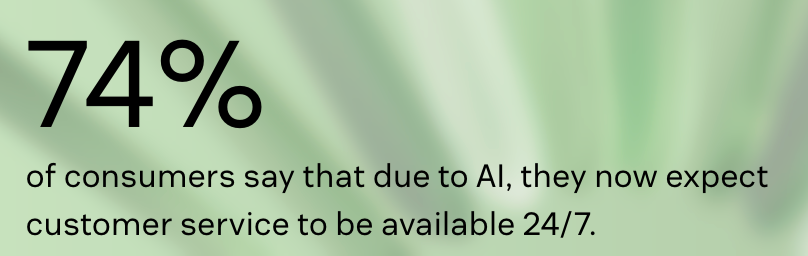
Customers expect fast answers, personalized service, and immediate responses. In fact, Zendesk’s CX Trends 2026 Report found that 74% of consumers expect customer service to be available 24/7.

Statistics show the percentage of consumers that expect 24/7 customer service.
Number of Consumers that Expect 24/7 Service

But here’s the interesting part.

Most support requests aren’t especially complicated. Support teams are simply dealing with a huge volume of conversations.

Spend a few minutes scrolling through a support inbox, and you’ll see the same recurring themes. Order updates. Appointment changes. Account questions. Delivery tracking. Status checks.

Important questions? Absolutely.

Questions that require a skilled support agent to write a unique response every time? Not usually.

For years, the answer was simple: hire more people. 

But support leaders know how that goes. Recruiting is expensive. Training takes time. And new agents need support before they’re ready to support customers independently.

The alternative is asking existing teams to take on more work. But this often creates longer queues and more pressure on already busy agents.

So businesses started looking for another way: AI and automation.

And customers seem comfortable with that shift. 

According to CSG’s 2026 State of the Customer Experience Report, 46% of consumers interpret AI-assisted support as an effort to operate more efficiently. However, 54% feel that being routed to AI means the brand does not care about them.

Statistics show the number of consumers who believe AI agents are a brand’s way of creating more efficient support.
Number of Consumers that Think Brands Streamline Service with AI Agents

Support teams are seeing the upsides, too.

AI is helping agents respond faster, support more customers, and stay available in multiple languages. According to Intercom’s 2026 Customer Service Transformation Report, 77% of support teams say AI is meeting or exceeding expectations.

Which raises an interesting question: What exactly are support teams handing over to AI on WhatsApp?

Let’s explore. 👇

6 ways teams use AI on WhatsApp to reduce support workload

Here are some examples of how teams can use AI on WhatsApp to reduce support:

1. Answering common questions before they reach an agent

Think of AI on WhatsApp as the kind of concierge you’d find in a luxury hotel. 

It answers questions, provides updates, and points people in the right direction. It makes sure guests get what they need quickly. 

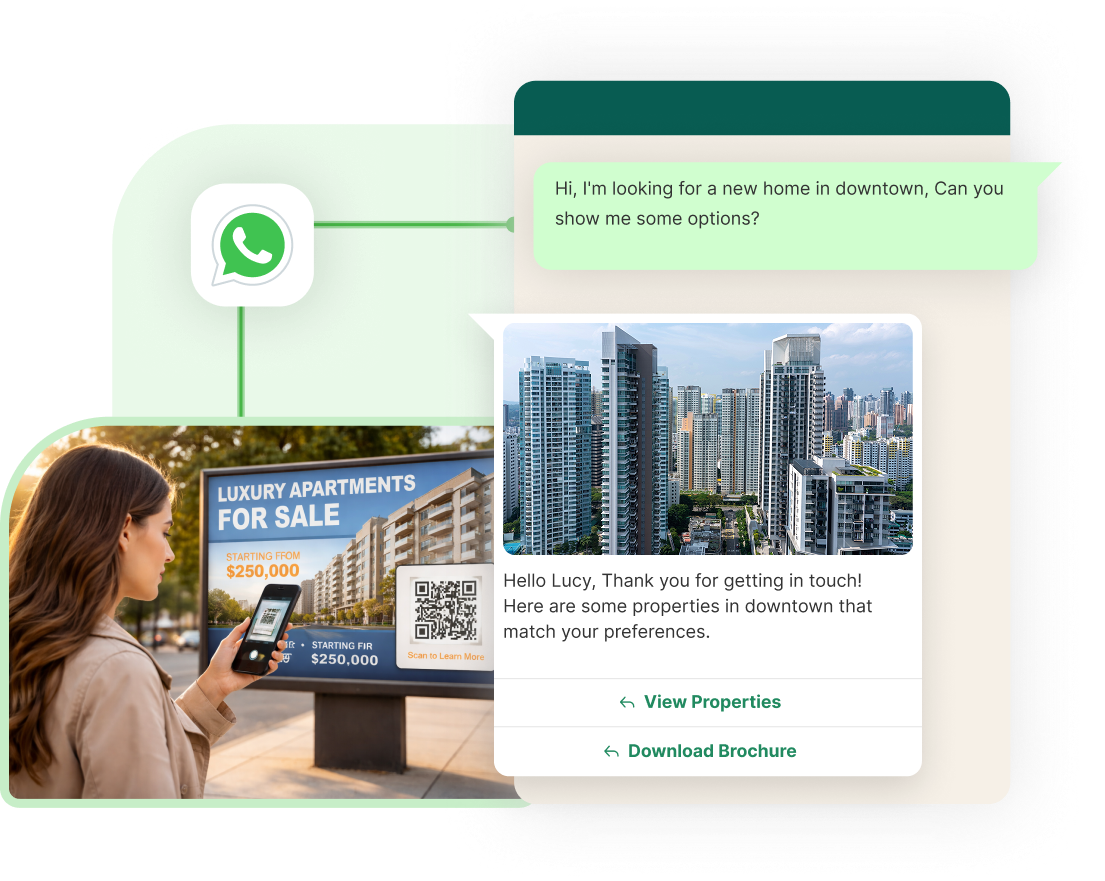
Automated WhatsApp support shows a bot reply to a real estate query.
WhatsApp Chatbot answerig customer queries

Customers no longer need to join a support queue. They can instantly check delivery dates, project milestones, approval status, or appointment details through WhatsApp. 

This is especially valuable for businesses managing long projects.

Take solar installations, for instance.

Customers naturally want updates as projects move through each stage.

The problem? Those updates often land on a project manager’s desk. 

Before long, skilled project managers are spending their day answering the same questions instead of moving projects forward.

Automated status updates remove that bottleneck.

It can pull live updates from the company’s solar project management system and share them instantly with customers. Customers stay informed, and project managers get more time back for the work that needs their expertise.

2. Collecting customer information before a conversation starts

Some of the biggest support bottlenecks happen before a real conversation even begins.

A customer reaches out. The first ten minutes are spent gathering information. Names, account details, requirements, timelines, budgets.

AI on WhatsApp handles that automatically.

It can collect intake forms, confirm details, and route inquiries before staff members get involved.

This works especially well in healthcare, where most of the administrative work traditionally handled by medical receptionists can be done via WhatsApp.

screenshot shows the data of AAYNA Clinic's patient booking with WhatsApp
AAYNA Clinic used WhatsApp automation to increase patient bookings

Take AAYNA Clinic, for example.

After AAYNA Clinic replaced traditional web forms with instant WhatsApp conversations, prospects could share details and ask questions immediately. The change reduced back-and-forth and manual administration while increasing conversions from 31% to 54%.

3. Managing appointment scheduling and reminders

Appointment scheduling sounds simple until you add confirmations, reminders, reschedules, and follow-ups.

Most of those tasks follow a predictable process, which makes confirmations, reminders, and rescheduling suitable for automation.

This is especially valuable in services like virtual HIV care, where AI can handle non-clinical questions, reminders, and next-step guidance. Sensitive requests, however, are routed to trained professionals.

V6Clinics is a good example of this in action.

Quote shows a positive testimonial about QuickReply by V6Clinics founder.
Quote About QuickReply.ai from V6Clinics Founder

By automating appointment bookings and reminders through WhatsApp, V6Clinics cut weekly administrative work from 13 hours to 4.5 hours. Staff now have more time to address sensitive patient care needs.

Similarly, for e-commerce brands looking to reduce workload, following an AI content optimization Shopify guide can automate tedious product description writing, freeing up time for high-level strategy. Staff now have more time to address sensitive patient care needs.

4. Routing complex issues to the right team faster

A customer has a billing question. Support sends it to finance. Finance needs more information. Twenty minutes later, the customer is still waiting.

That’s why many companies use AI on WhatsApp to triage incoming conversations and route them to the right team.

Here is the chatbot conversation with hair extension company Hair Originals.

Screenshot shows an example handoff conversation between a WhatsApp bot and a support agent.
WhatsApp Conversation with Hair Originals Automated Support

The conversation started with a product question, then the user mentioned an experience about an allergic reaction to an adhesive. The AI recognized that the user needs personalized advice and directed to the support team.

That’s exactly how AI should work. 

Customers get a smooth transition to a human specialist when the conversation requires expertise beyond a standard response.

5. Providing 24/7 support without expanding headcount

Growth often creates a support dilemma.

More customers bring more questions, more languages, and longer support hours. Before long, a customer service challenge starts looking like a staffing challenge.

AI on WhatsApp gives teams another option. 

Common questions can be answered instantly. Information can be collected automatically. Customers can get help whenever they need it, regardless of time zone, language, or business hours.

This is how Manav Rachna University handles international inquiries.

Screenshot shows an automated WhatsApp conversation with Manav Rachna University.
Manav Rachna University AI WhatsApp Bot

WhatsApp chatbots support students and parents 24/7. They also handle 89% of inquiries automatically. This has saved the school 713 man-hours, without agents having to work through the night.

6. Helping agents respond faster with AI-assisted replies

Not every conversation belongs to AI. Sometimes a human needs to step in.

That doesn’t mean customers expect an original literary masterpiece in response.

They want the right information fast.

Traditionally, that means searching through account records, previous conversations, and internal notes to find context first.

AI helps speed that process up. 

It can collect information upfront and surface relevant context quickly. It then suggests appropriate responses based on the situation. 

Agents still stay in control of the conversation. But they spend less time hunting for information and wording the perfect message.

Wrap up

The companies getting the most value from AI aren’t handing over their entire support operation.

They're looking to eliminate friction.

They focus on repetitive questions, appointment reminders, and administrative tasks that fill inboxes and calendars.

Start there.

Give your team fewer repetitive tasks and more time for the conversations where expertise, empathy, and problem-solving matter.

If you’re exploring ways to make that happen on WhatsApp, I highly recommend QuickReply.ai. It automates routine support tasks, integrates with the tools you already use, and creates a smoother experience for both customers and agents. Book a demo today.

Turn 1 time visitor into repeat customer with WhatsApp marketing

Leverage the untapped growth potential of WhatsApp marketing to acquire and retain customers.

Frequently Asked Questions

Can AI on WhatsApp replace human support agents?

Not completely, and that’s usually not the goal. Most businesses use AI to handle repetitive tasks and simple questions, freeing agents to focus on complex issues and customer relationships.

What types of support requests work best with AI?

FAQs, appointment reminders, account queries, lead qualification, and status checks are good starting points because they follow predictable processes.

How do I get started with AI on WhatsApp?

Start small. Look at the questions your team answers every day and automate those first. That’s often where you’ll see the quickest wins.