


%201.svg)


Copied to clipboard!
What is RCS messaging software?
RCS messaging software helps businesses send interactive messages with images, buttons, carousels, and automation features directly through mobile messaging apps.
Customer messaging is moving beyond static SMS and email campaigns.
Businesses now want messaging channels that can drive engagement, automate follow-ups, support conversations, and convert customers faster.
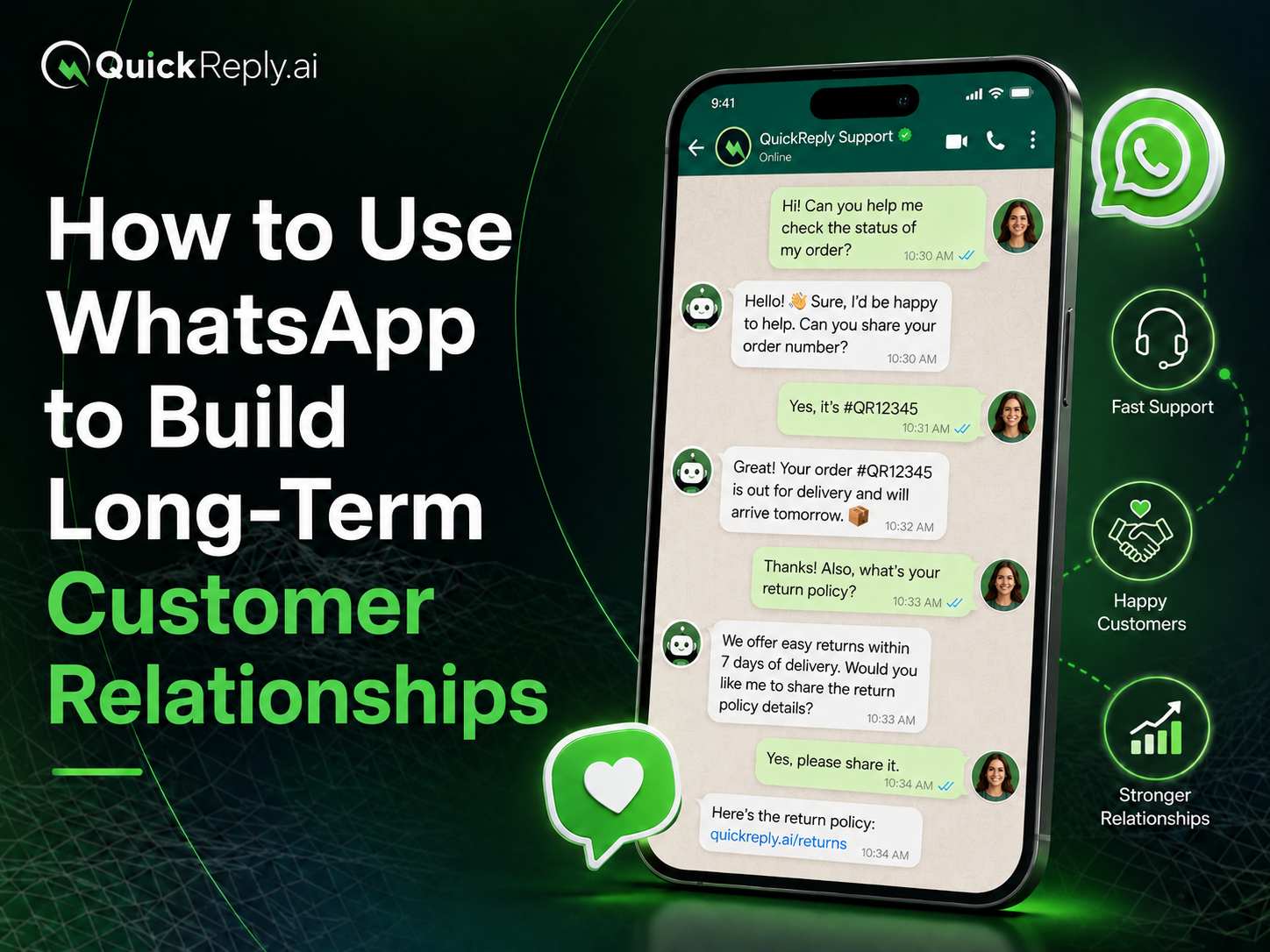
WhatsApp has already shown how powerful conversational messaging can be, but many brands also face limits around template approvals, promotional windows, message costs, and overdependence on one channel.
This is where RCS messaging becomes useful because it helps businesses send richer campaigns directly inside the customer’s default messaging app.
For businesses exploring RCS campaign automation, the goal is not just to send messages. The real goal is to automate customer journeys, personalize campaigns, improve engagement, recover lost sales, qualify leads, and manage conversations across channels.
That is why choosing the right RCS automation tool matters.
The right platform should help businesses create rich campaigns, trigger messages based on customer behavior, connect with existing tools, manage replies, and track campaign performance.
In this blog, we’ll compare the best automation tools for managing RCS campaigns in India and help you choose the right one for your business needs.
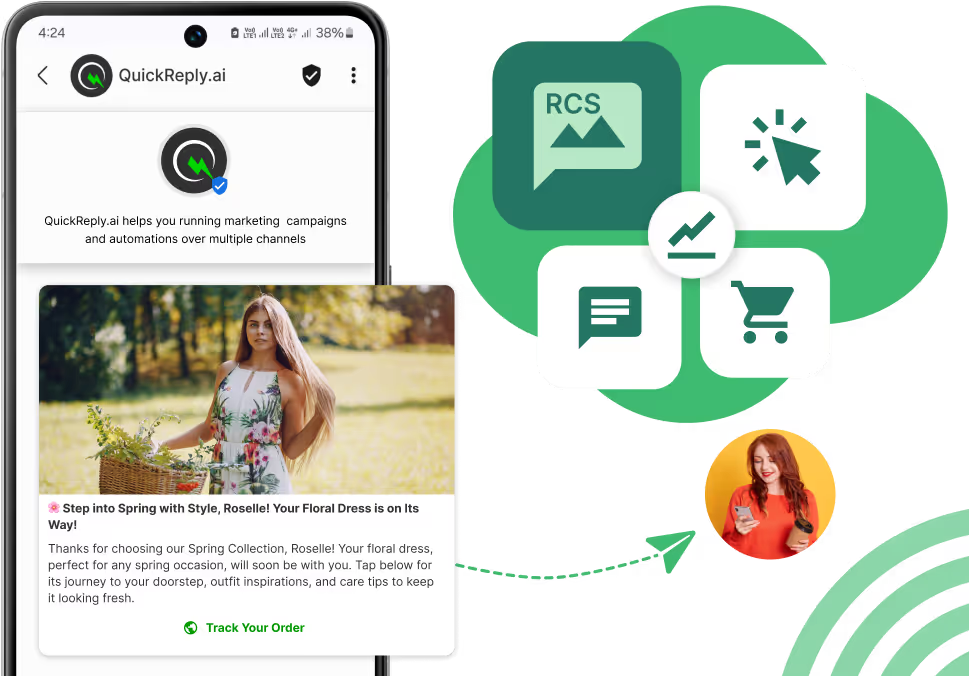
RCS is the next evolution of traditional SMS messaging. It transforms basic text messages into interactive, app-like conversations that allow businesses to engage customers with rich media, automation, and real-time interactions.
Unlike standard SMS, which is limited to plain text and links, RCS Messages support images, videos, carousels, buttons, suggested replies, branded business profiles, and conversational experiences directly inside the user’s default messaging app.
In simple terms, RCS brings the experience of apps like WhatsApp or iMessage to native mobile messaging.
For businesses, this opens up entirely new possibilities for customer engagement. Instead of sending static promotional texts, brands can create interactive RCS campaigns that feel more personal, conversational, and visually engaging.
For example, an ecommerce brand can:
This is one of the biggest reasons why RCS messaging software is gaining attention in India. Brands want the engagement quality of WhatsApp automation while still leveraging the massive reach of mobile messaging.
Another major advantage is verified business messaging. With RCS, businesses can display their brand name, logo, and verification badge directly in conversations. This improves customer trust and helps reduce spam-like experiences often associated with traditional SMS marketing.
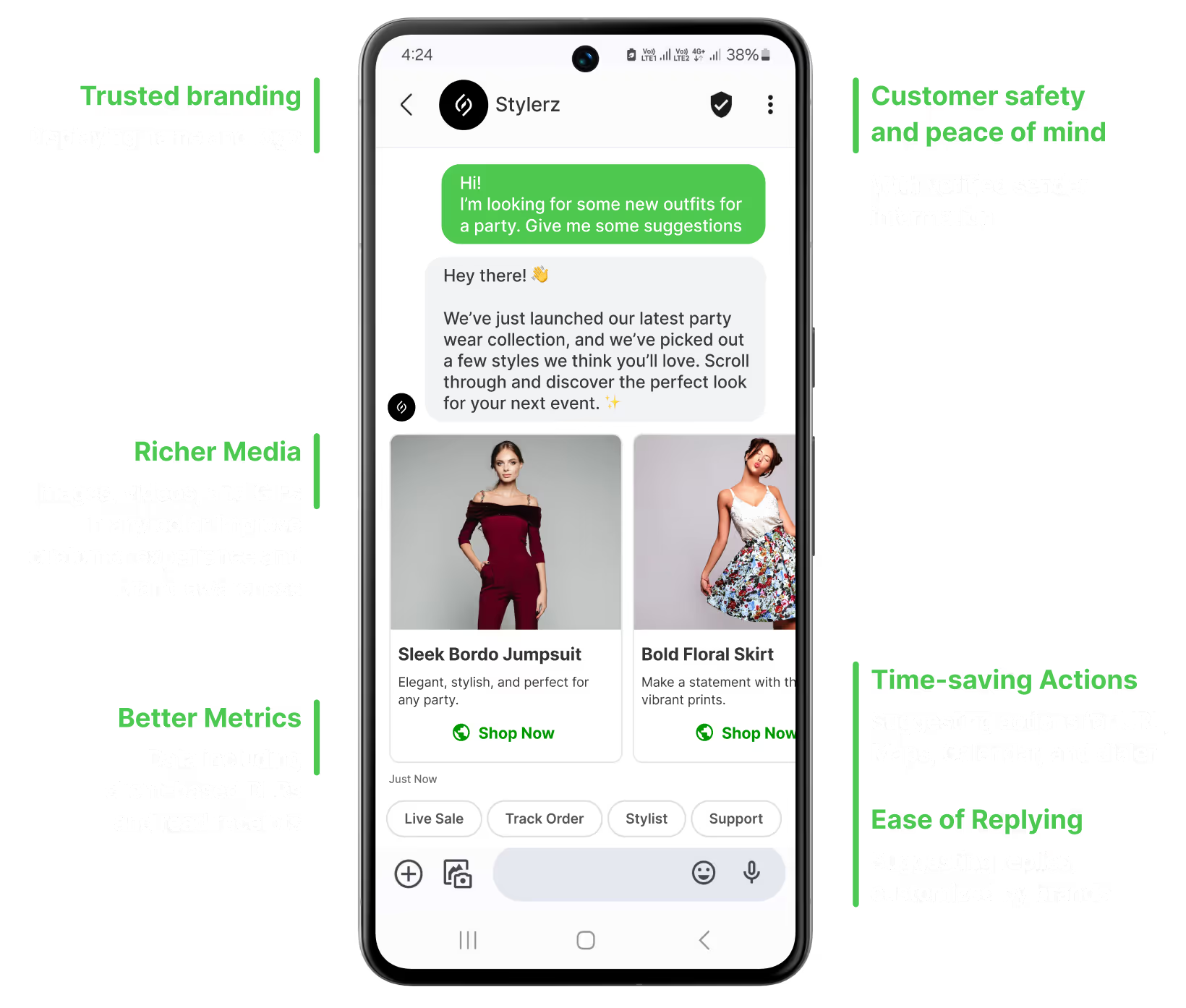
Businesses can send images, videos, GIFs, PDFs, and product cards instead of plain text messages.
Customers can take actions directly from the message using CTA buttons like:
RCS allows quick reply options that make conversations faster and more interactive.
Brands can display their official name, logo, and verification within messages.
Businesses can track message delivery, reads, clicks, and engagement more effectively than SMS.
RCS campaigns can be automated using AI chatbots and workflow automation, similar to WhatsApp automation journeys.
As customer expectations continue to evolve, businesses are increasingly adopting RCS campaigns to create more engaging and conversion-focused communication experiences.
For years, SMS has been one of the most widely used communication channels for businesses. It offers massive reach and works on almost every mobile device.
But modern users expect conversations to feel interactive, visual, and personalized, not just plain text alerts. That’s exactly where RCS messaging changes the experience.
One of the biggest reasons businesses are exploring RCS campaigns in India is that it delivers a customer experience that feels much closer to WhatsApp chats than traditional SMS.
Customers can browse products, click buttons, respond instantly, and continue conversations naturally, all within their native messaging app. This creates a smoother customer journey without requiring users to install another application.
For brands already leveraging WhatsApp automation, RCS messaging software can become an excellent complementary or alternative channel for customer engagement. It allows businesses to scale promotional messaging, automate customer interactions, and create richer campaigns while still leveraging mobile messaging reach.
Indian businesses are actively looking beyond traditional SMS marketing. At the same time, many brands are also trying to reduce complete dependency on WhatsApp for customer engagement.
That’s exactly why RCS messaging is gaining attention.
For D2C brands, fintech companies, travel platforms, retail businesses, banking, edtech, real estate, and other service based industry, RCS campaigns are becoming a powerful way to drive engagement, conversions, and customer communication at scale.
Here’s why more Indian businesses are exploring RCS messaging software and automation platforms.
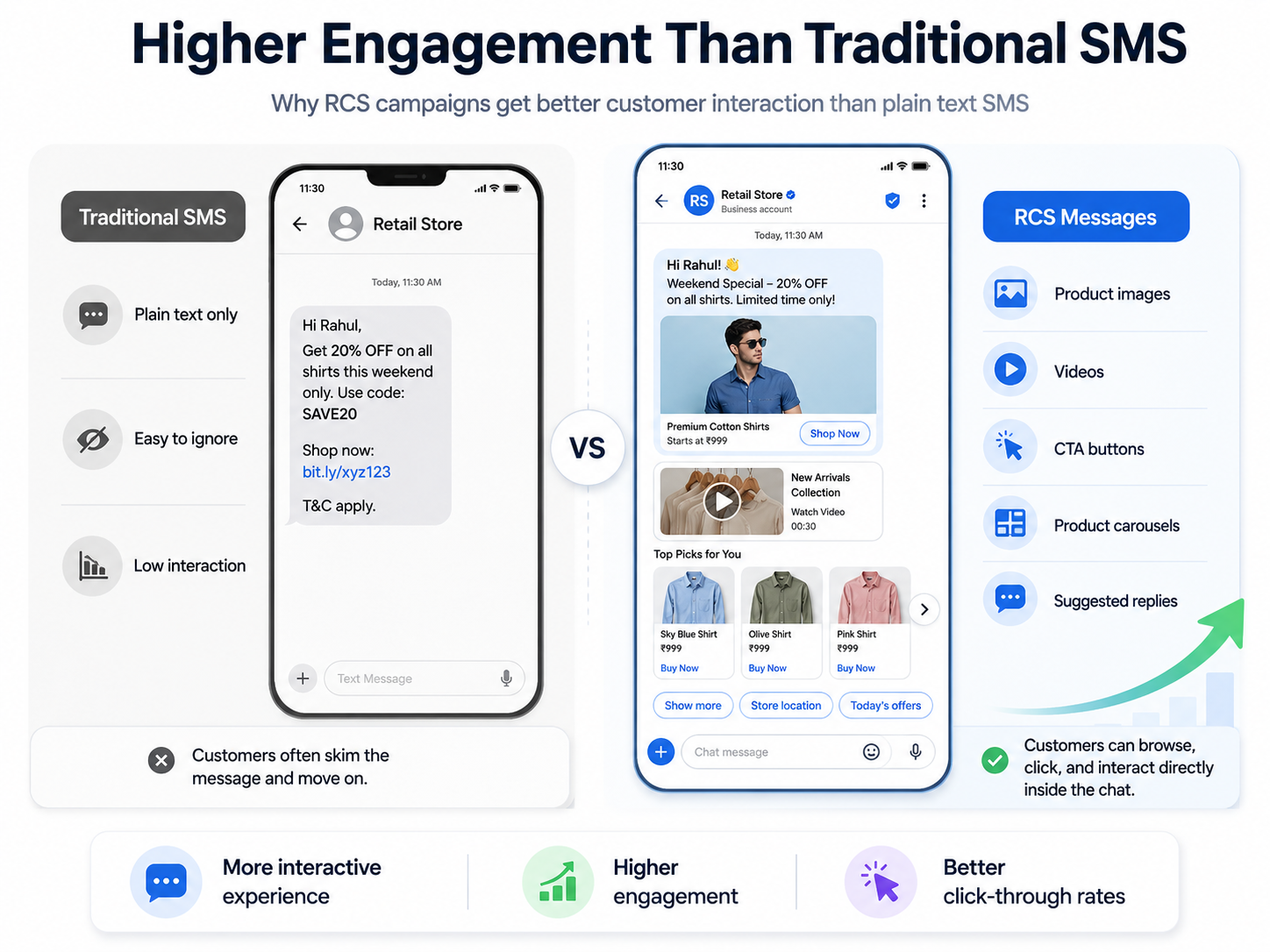
Plain text SMS campaigns are easy to ignore. Most customers simply skim the message and move on.
RCS Messages feel completely different. Businesses can add:
This makes campaigns far more interactive and visually engaging.
One of the biggest problems with SMS marketing in India is trust. Customers often cannot tell whether a message is genuine or spam.
RCS solves this by allowing businesses to display:
The experience feels similar to verified WhatsApp business accounts. Customers instantly recognize the brand and are more likely to interact with the message confidently.
For industries like banking, ecommerce, insurance, and fintech, this trust factor becomes extremely important.
Unlike WhatsApp or other messaging platforms, customers do not need to install another application to receive RCS Messages.
RCS works directly inside the default Google Messages app available on most Android smartphones. Since Android dominates the Indian smartphone market, businesses can reach a massive audience without asking customers to download anything new.
This removes friction completely and makes adoption much easier for both businesses and customers.
Many businesses love the engagement quality of WhatsApp automation, but they also want additional communication channels that offer similar conversational experiences.
RCS campaigns help bridge that gap. Customers can:
Instead of feeling like a promotional broadcast, RCS Messages feel more like real customer conversations.
For businesses focused on conversational commerce, this creates a much more engaging customer journey than traditional SMS marketing.
Traditional SMS offers very limited campaign visibility. Businesses usually only know whether the message was delivered.
With RCS messaging software, brands get access to deeper engagement insights, such as:
This helps businesses measure engagement more accurately and optimize campaigns based on customer behavior.
One major advantage of RCS campaigns is that businesses do not lose reach even if a customer’s device does not support RCS.
If RCS is unavailable, the message automatically falls back to standard SMS.
This allows businesses to maintain the reach of SMS while still delivering richer conversational experiences wherever RCS is supported.
For businesses running high-volume messaging campaigns, cost plays a major role in platform selection.
RCS messaging is increasingly being explored as a cost-efficient alternative for interactive customer engagement, especially when compared to app-based conversational channels.
Brands can run:
at scale while delivering a significantly richer customer experience than SMS.
As customer communication continues shifting toward conversational engagement, RCS is quickly emerging as one of the most promising messaging channels for businesses in India.
Choosing the right RCS messaging software depends on how your business plans to use conversational messaging. Some platforms are designed for ecommerce automation, while others focus more on developer APIs, enterprise communication infrastructure, or omnichannel engagement. Here are some of the best tools for managing RCS campaigns in India.
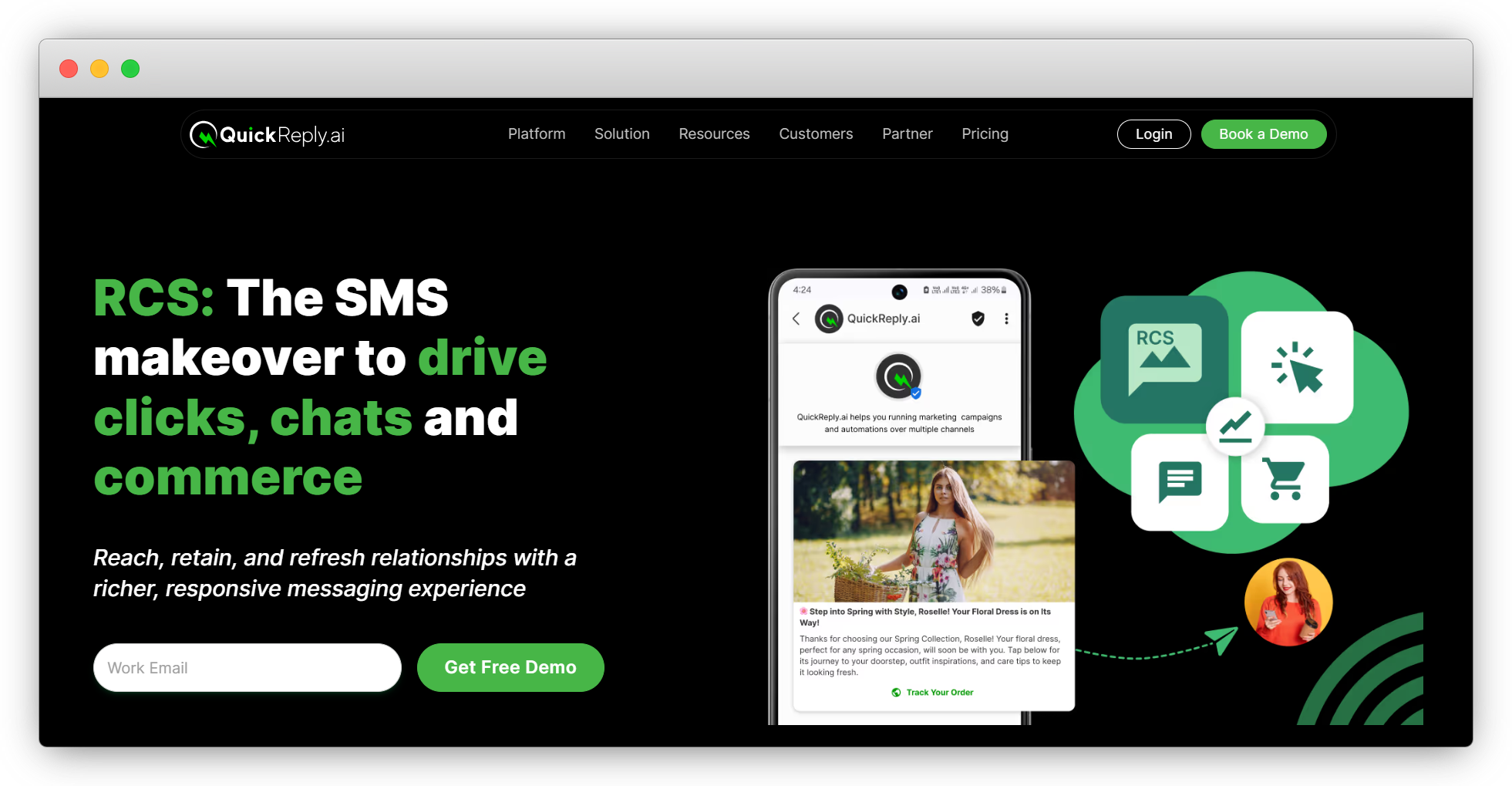
QuickReply.ai is an omnichannel platform popularly known for WhatsApp marketing automation, but the platform is also expanding into RCS messaging automation for real estate, banking, edtech, quick commerce, and D2C brands. The platform focuses heavily on conversational commerce, customer engagement automation, user journey, CRM, and Shopify integrations.
What makes QuickReply particularly interesting for RCS campaigns is its focus on creating WhatsApp-like conversational experiences directly within messaging channels. The platform positions RCS as a richer alternative to traditional SMS campaigns, especially for brands looking to improve engagement and conversions.
QuickReply’s RCS capabilities are designed around interactive customer journeys rather than simple text broadcasts. Businesses can create:
The platform also supports visual commerce experiences where customers can browse products directly within RCS conversations.
Automation and AI Capabilities
Automation is one of QuickReply’s strongest areas. The platform supports:
For Shopify brands, QuickReply also offers plug-and-play automation triggers for:
Omnichannel Support
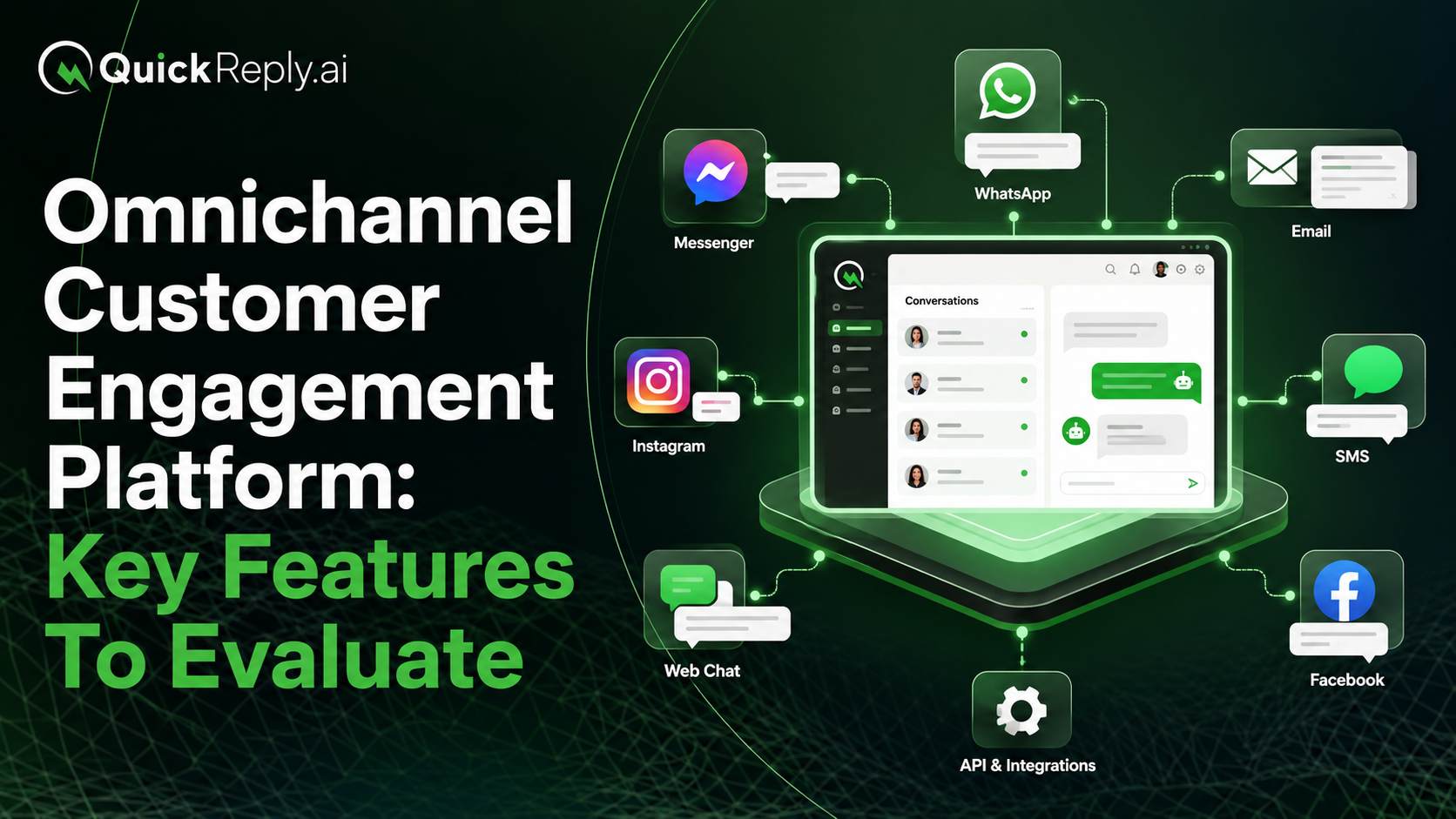
QuickReply focuses heavily on omnichannel customer engagement. Along with RCS messaging, businesses can manage:
Best For
QuickReply.ai is best suited for:
Pros
Limitations
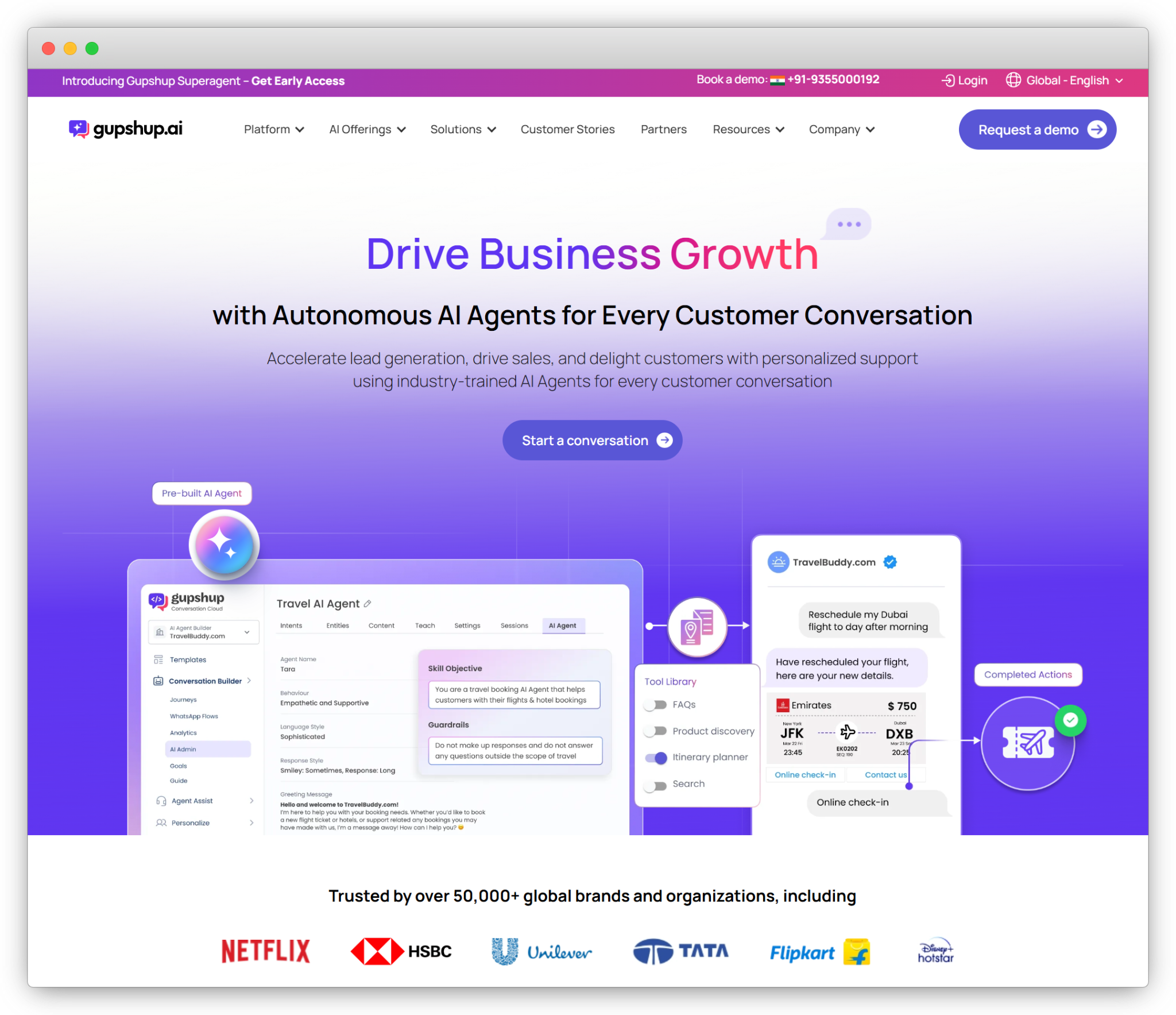
Gupshup is another conversational messaging platform in India, providing AI agents for customer conversations. It offers APIs and automation tools across multiple channels, including RCS, WhatsApp, SMS, and voice.
Automation Capabilities
Gupshup supports chatbot automation and conversational AI workflows for customer engagement and support use cases.
Best For
Pros
Limitations
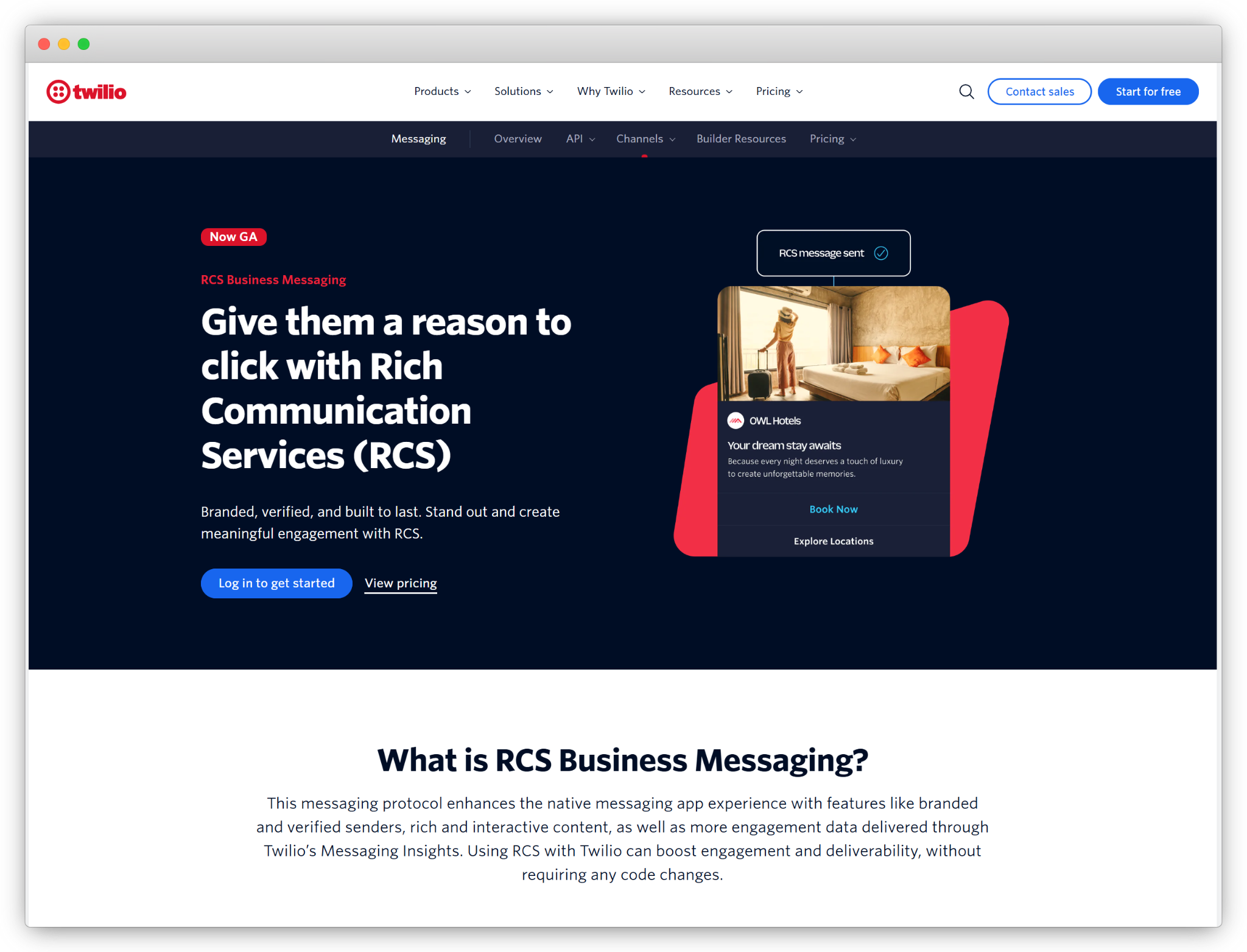
Twilio is a global cloud communication platform known for its developer-first APIs and programmable messaging infrastructure.
Automation Capabilities
Twilio allows businesses to build highly customized messaging workflows using APIs, customer data, and external integrations.
Best For
Pros
Limitations
Kaleyra is a cloud communication platform offering enterprise messaging solutions across SMS, RCS, WhatsApp, and voice.
Automation Capabilities
The platform supports automated customer communication workflows and omnichannel engagement.
Best For
Pros
Limitations
Infobip is a global omnichannel communication platform that supports RCS, WhatsApp, email, SMS, and voice engagement.
Automation Capabilities
Infobip offers workflow automation, chatbot capabilities, customer segmentation, and advanced omnichannel journeys.
Best For
Pros
Limitations
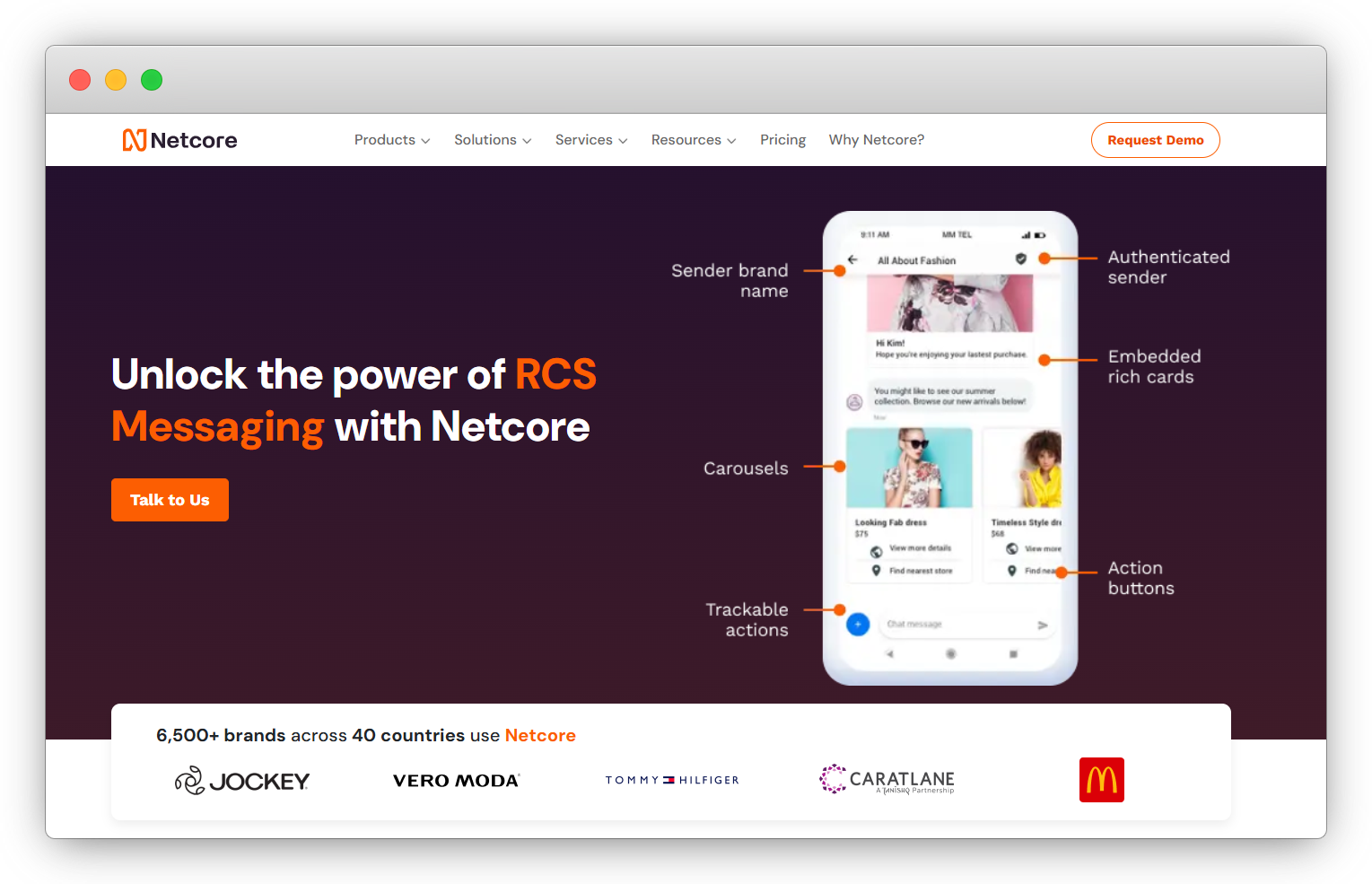
Netcore focuses heavily on customer engagement, personalization, and marketing automation across channels.
Automation Capabilities
Netcore enables businesses to automate personalized messaging journeys based on user behavior and engagement patterns.
Best For
Pros
Limitations
IMImobile, now Cisco, provides enterprise communication and customer engagement solutions across messaging channels, including RCS.
Automation Capabilities
The platform supports AI chatbots, workflow automation, and enterprise customer engagement journeys.
Best For
Pros
Limitations
Not all RCS messaging software platforms offer the same capabilities. Some tools focus only on message delivery, while others provide advanced automation, AI-driven conversations, customer segmentation, and omnichannel engagement features.
Here are the key features you should evaluate before selecting an RCS messaging software solution.
Modern customer communication requires more than just scheduled broadcasts; brands now need intelligent conversational journeys that respond to customer behavior in real-time. AI-powered automation helps businesses:
A strong workflow builder allows businesses to create automated customer journeys without depending heavily on developers. This feature is essential for scaling RCS campaigns because businesses often need multi-step workflows based on customer behavior and engagement.
A good campaign builder should support:
Workflow automation helps businesses create conversational experiences instead of isolated marketing messages.
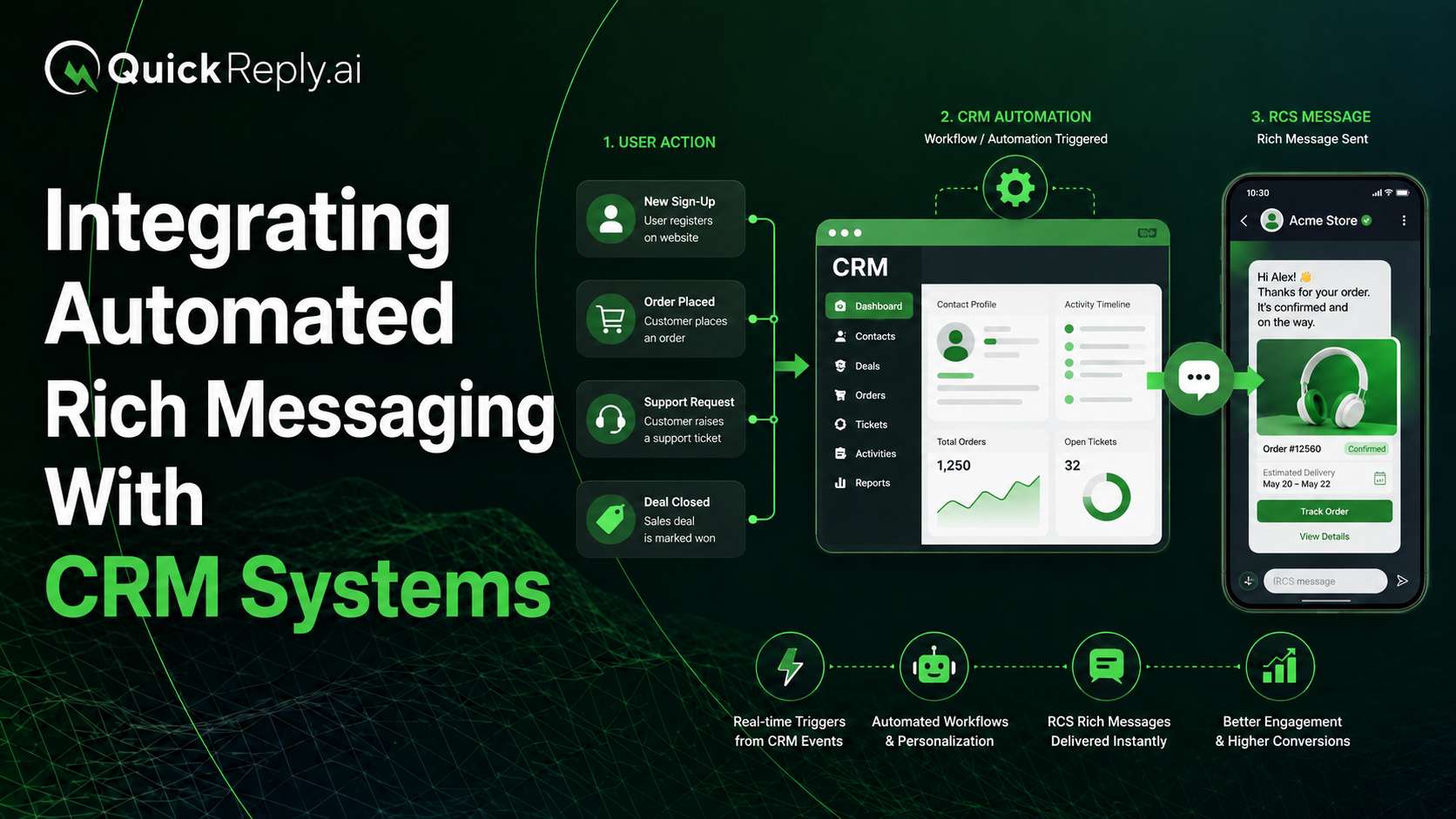
RCS campaigns become significantly more effective when connected with CRM systems and ecommerce platforms.
Integrations allow businesses to use customer data for personalization and automation. Without integrations, campaigns remain generic and difficult to scale effectively.
For ecommerce brands, integrations are especially important for automating post-purchase journeys, retention campaigns, and customer support workflows.
Mass messaging is becoming less effective. Customers now expect personalized communication that feels relevant to their interests and behavior. Customer segmentation allows businesses to divide audiences based on their purchase history, behaviour, location, interests, and lifetime value. This helps businesses send highly targeted RCS campaigns instead of generic promotional blasts.
As messaging volume grows, businesses need infrastructure that can support large-scale customer engagement reliably. Scalability becomes especially important for:
The right RCS messaging software depends on your business goals, technical requirements, and customer engagement strategy.
The best platform is the one that aligns with your customer engagement strategy and business growth goals.
RCS messaging is quickly becoming one of the most promising alternatives to traditional SMS marketing in India. It combines the reach of SMS with the conversational experience of platforms like WhatsApp, helping businesses create richer and more engaging customer interactions.
From interactive campaigns and AI-powered automation to verified business messaging and real-time analytics, RCS campaigns offer far more engagement potential than plain text SMS.
As more Indian businesses invest in conversational commerce and omnichannel engagement, choosing the right RCS messaging software will become increasingly important. Whether you're an ecommerce brand, enterprise business, or fast-growing D2C company, RCS can help you deliver more personalized and interactive customer experiences at scale.

Tool and strategies modern teams need to help their companies grow.
Leverage the untapped growth potential of WhatsApp marketing to acquire and retain customers.
RCS messaging software helps businesses send interactive messages with images, buttons, carousels, and automation features directly through mobile messaging apps.
SMS supports only plain text, while RCS supports rich media, verified branding, buttons, analytics, and conversational experiences.
Yes. RCS offers a conversational experience similar to WhatsApp, including interactive messages and automation workflows.
Yes. Most RCS platforms support automated workflows, AI chatbots, drip campaigns, and customer journey automation.
RCS works primarily on Android devices through Google Messages. If RCS is unavailable, messages usually fall back to SMS.
Ecommerce, retail, fintech, banking, travel, healthcare, and food delivery businesses benefit significantly from RCS campaigns.
For engagement and customer experience, yes. RCS provides richer interactions, better analytics, and more conversational customer journeys.
Some of the leading platforms include QuickReply.ai, Gupshup, Twilio, Infobip, Netcore, Kaleyra, and IMImobile.