Top Messaging CRM Tools With Omnichannel Automation Features For Indian Businesses

Copied to clipboard!

Customer communication in India has evolved.

A few years ago, most businesses managed customer conversations through phone calls, email, and sometimes SMS. Today, the same customer may discover a product on Instagram, ask a question on WhatsApp, receive an order update by SMS, and later get a reminder through email or RCS.

That is where messaging CRM tools become important.

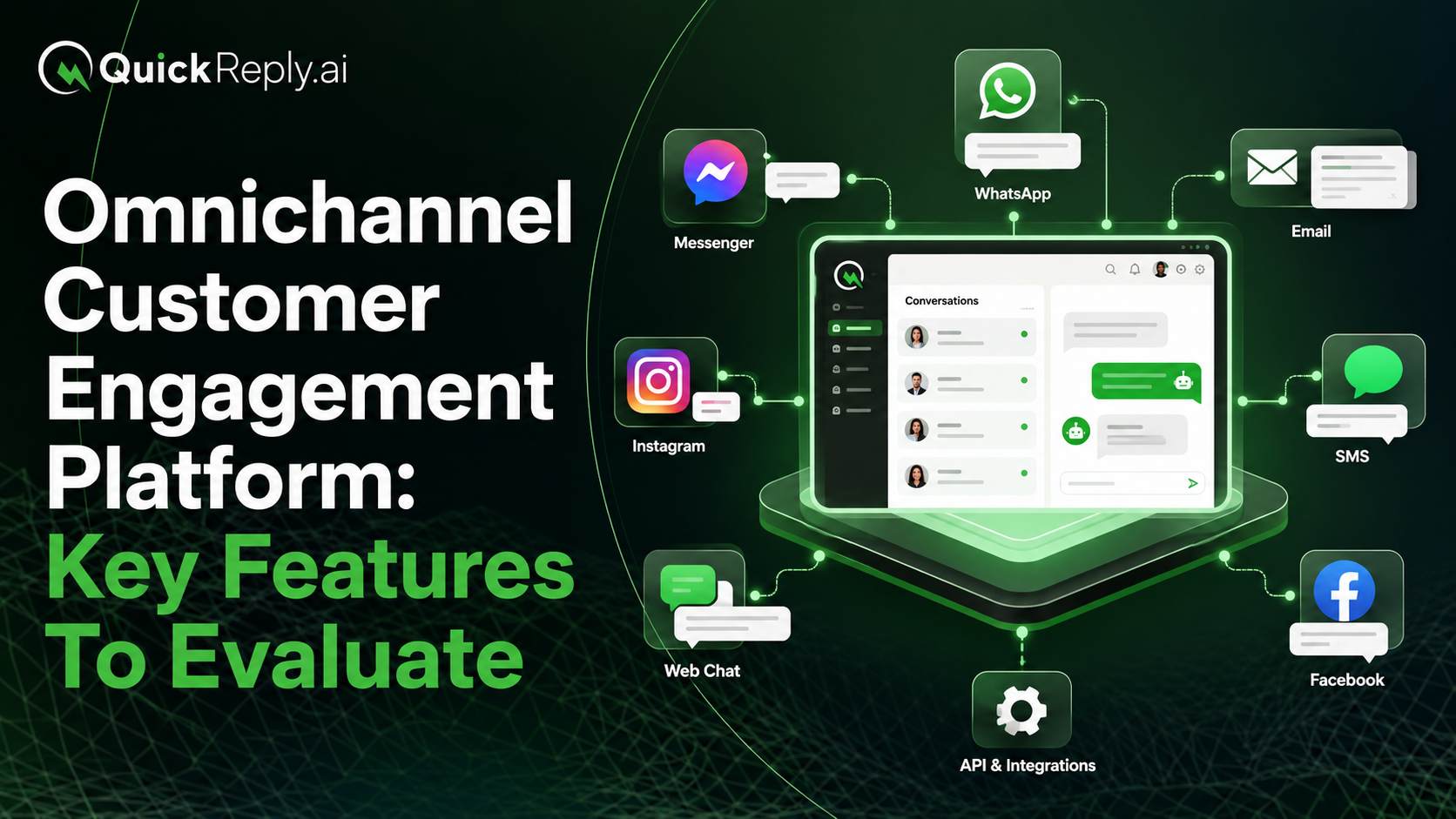
A messaging CRM helps businesses manage customer conversations, automate follow-ups, and send personalized messages across channels like WhatsApp, SMS, RCS, Instagram, Messenger, website chat, email, and sometimes AI voice support.

For Indian businesses, this is not just about using more channels. It is about reaching customers as quickly as possible. That’s why businesses now leverage channels their customers or potential customers already spend time in, reducing manual follow-ups, and making every conversation more useful.

In this blog, we will explore some of the top messaging CRM tools with omnichannel automation features for Indian businesses and will share a few tips with you for your next omnichannel automation journey.

What Is a Messaging CRM?

A messaging CRM is a customer relationship platform that helps businesses communicate with customers across multiple messaging channels.

A traditional CRM usually stores customer data such as name, phone number, email, lead status, purchase history, and notes. A messaging CRM goes one step further. It helps businesses use that data to send automated, contextual, and personalized messages.

For example, if a customer adds a product to the cart but does not complete the purchase, a messaging CRM can automatically send a WhatsApp reminder. If the WhatsApp message is not delivered, the business can follow up through RCS or Email. If the customer replies, the conversation can move to an agent's inbox.

A good messaging CRM usually includes:

  • Customer profiles
  • Segmentation
  • Multi-channel automation
  • Drip journeys
  • Chatbots
  • Team inbox
  • Agent handover
  • Lead routing
  • Revenue or campaign analytics
  • Integrations with ecommerce, enterprise CRM, payment, and support tools

In simple words, a CRM stores customer information. A messaging CRM helps you communicate with those customers automatically.

Why Messaging CRM Tools Matter More for Indian Businesses

India is one of the biggest customer messaging markets in the world. WhatsApp is deeply used for personal and business conversations. 

Instagram is a strong discovery and engagement channel. SMS still works well for OTPs, alerts, reminders, and transactional updates. 

RCS is also becoming more relevant for brands that want richer, app-like messaging inside the customer’s default inbox.

This makes omnichannel messaging automation especially useful for Indian businesses.

Think about a D2C skincare brand. A customer may first see a reel on Instagram, click a product link, browse the website, add a serum to the cart, and leave without buying. The brand can then send a WhatsApp cart reminder, follow up with product benefits, answer questions through a chatbot, and later send a repeat purchase nudge after 30 days.

Now think about an education business. A student may submit a lead form from a Meta ad. The business can automatically send course details on WhatsApp, send a reminder by SMS, notify a counsellor, and trigger another follow-up if the student does not respond.

Without automation, these follow-ups depend on sales or support teams doing everything manually. That usually leads to missed leads, delayed replies, and poor customer experience.

How We Selected These Messaging CRM Tools

We carefully handpicked these tools. Our focus here is not on generic CRM software but on the tools that help Indian businesses message customers across channels and automate those conversations.

Here are our main selection criteria:

  1. Channel Coverage: The tool should support or integrate with channels such as WhatsApp, SMS, RCS, Instagram, Messenger, email, website chat, push notifications, or voice.
  2. Automation Depth: A good tool should do more than send one-time broadcasts. It should support automated journeys, drip campaigns, chatbots, lead follow-ups, cart recovery, order updates, reminders, and customer re-engagement.
  3. India Fit: The tool should make sense for Indian businesses in terms of pricing, onboarding, local support, WhatsApp-first usage, mobile accessibility, and multilingual communication because Indian customers often prefer communication in their regional languages.
  4. CRM and Inbox Capabilities: The tool should help teams manage customer conversations, assign chats, add tags, view customer history, and move conversations from bot to human agents when required.
  5. Value for Money: Indian businesses are price sensitive. So the best tool is not always the most feature-heavy platform. It is the one that gives the right balance of automation, usability, and affordability.

Quick Comparison: Top Messaging CRM Tools

Tool Industry Types Key Channels Automation Strength
QuickReply.ai D2C and ecommerce, retail, education, healthcare, BFSI, fintech, startups, SMEs, and customer-first enterprises WhatsApp, RCS, Instagram, SMS, Messenger, and website chatbot Cart recovery, marketing campaigns, AI-powered chatbots, customer journey workflows, appointment booking, and Gen AI chatbot for common queries
Interakt Retail, ecommerce, education, local businesses, and Instagram-led businesses WhatsApp, Instagram, AI agents Campaigns, inbox, and chat automation
WATI Healthcare, education, retail, service businesses, and WhatsApp-first sales or support teams WhatsApp, Instagram, Messenger Team inbox, chatbot, and broadcasts
Zoko Shopify stores, ecommerce brands, fashion, beauty, accessories, and online retail WhatsApp, Shopify Commerce flows, cart recovery, and broadcasts
Picky Assist Service businesses, real estate, consultants, local businesses, and SMBs WhatsApp, Instagram, Messenger, email No-code workflows and follow-ups
Zoho CRM B2B services, MSMEs, sales-led companies, consulting, agencies, and traditional businesses Email, SMS, WhatsApp via integrations CRM workflows and sales automation
LeadSquared Education, healthcare, BFSI, real estate, insurance, and high-ticket services WhatsApp, SMS, email, calls Lead nurturing and sales follow-up
WebEngage Ecommerce, fintech, travel, edtech, retail, and mid-market consumer brands Email, SMS, WhatsApp, RCS, push Lifecycle marketing automation
MoEngage Apps, marketplaces, fintech, travel, OTT, ecommerce, and large B2C brands Push, email, SMS, WhatsApp, RCS Behaviour-based journey orchestration
Netcore Cloud Retail, ecommerce, BFSI, travel, consumer brands, and email-heavy businesses Email, SMS, WhatsApp, RCS, push Customer engagement and retention journeys

Top Messaging CRM Tools With Omnichannel Automation Features

1. QuickReply.ai

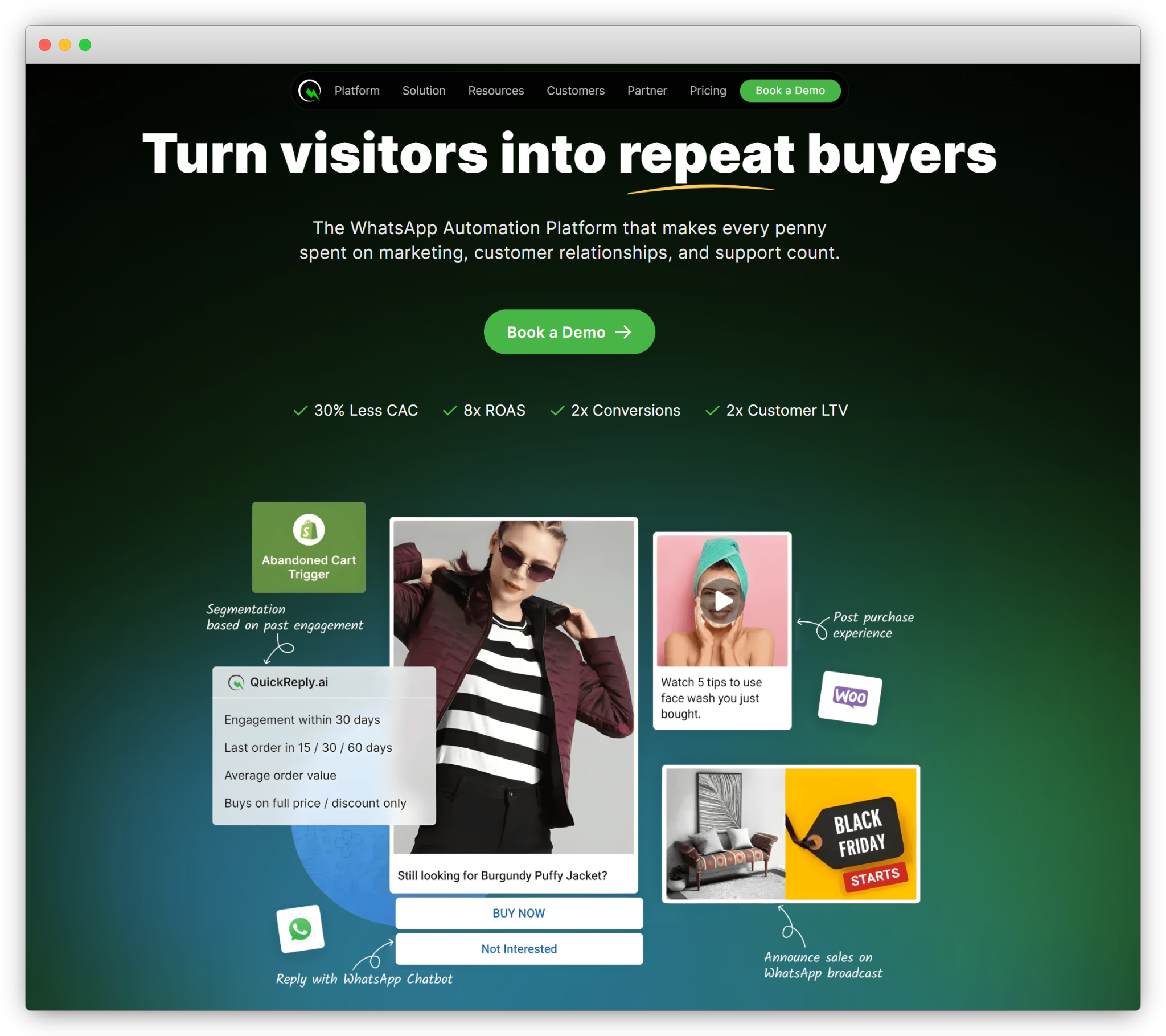
QuickReply.ai

QuickReply.ai is a strong fit for Indian D2C brands, startups, SMEs, and medium enterprises that want WhatsApp-first automation with additional channels for communication (RCS, SMS, Messenger, Instagram, and Website Chatbot).

It helps brands automate abandoned cart recovery, product browsing follow-ups, COD confirmation, appointment booking, customer support queries, bulk broadcasts, drip campaigns, and post-purchase journeys.

For example, if a customer adds a kurta to the cart but does not complete checkout, QuickReply.ai can send a personalized WhatsApp reminder. If the customer replies asking about size, the Gen AI chatbot can continue the same conversation. Later, the same customer can be added to a repeat purchase or cross-sell campaign.

Key strengths:

  • WhatsApp marketing automation
  • Shopify integration
  • Abandoned cart recovery
  • Broadcast campaigns
  • Drip journeys
  • Chatbots
  • Multi-agent inbox
  • Customer segmentation
  • Revenue tracking
  • Local language support

Best for: Shopify Integration, SMEs, Startups, Fintech, Banks, Edtech, and customer-first enterprises.

Possible limitation: If a business wants a full traditional CRM for sales pipeline management, it may need to use QuickReply.ai along with their existing CRMs, like Salesforce, Leadsquared, etc.

2. Interakt

Interakt

Interakt is a popular choice for small and mid-sized businesses that want WhatsApp and Instagram automation in one platform.

It helps businesses manage customer conversations, automate replies, run WhatsApp campaigns, capture leads, and use AI agents for sales or support. Its Instagram automation is also useful for businesses that get comments like “price?”, “details?”, or “how to order?” on posts and reels.

For example, a boutique can automatically reply to Instagram comments, move the conversation to DM, collect the customer’s phone number, and continue the buying journey on WhatsApp.

Key strengths:

  • WhatsApp automation
  • Instagram DM and comment automation
  • Omnichannel inbox
  • AI chatbots and AI agents
  • Lead capture
  • Campaign automation

Best for: SMBs, Instagram-led businesses, retail stores, education businesses, and service providers.

Possible limitation: Larger ecommerce brands may need deeper revenue attribution and more advanced ecommerce-specific journeys.

3. WATI

Wa

WATI is a WhatsApp-focused customer engagement platform for sales, support, and marketing teams.

It is useful for businesses where most customer conversations happen on WhatsApp. Teams can use a shared inbox, assign chats to agents, run broadcasts, create chatbots, and automate common customer queries.

For example, a healthcare clinic can use WATI to answer appointment queries, send reminders, and allow multiple staff members to manage WhatsApp conversations from one dashboard.

Key strengths:

  • WhatsApp Business API access
  • Shared team inbox
  • Broadcasts
  • Chatbots
  • Agent assignment
  • Basic automation workflows

Best for: Businesses that primarily need WhatsApp-based support and sales conversations.

Possible limitation: It may not be the best fit if the business needs deeper omnichannel lifecycle automation across email, push, RCS, and SMS.

4. Zoko

Zoko is built strongly around WhatsApp commerce, especially for Shopify businesses.

It allows ecommerce brands to use WhatsApp for product discovery, cart recovery, order updates, customer support, and broadcasts. For Shopify stores, this can be helpful because WhatsApp becomes part of the buying journey, not just a support channel.

For example, a customer can receive a cart reminder on WhatsApp, ask a product question, and complete the purchase with help from the same conversation.

Key strengths:

  • Shopify-focused WhatsApp automation
  • Product catalog sync
  • Cart recovery
  • WhatsApp broadcasts
  • Order notifications
  • Multi-agent inbox

Best for: Shopify stores and ecommerce brands that want WhatsApp commerce features.

Possible limitation: Businesses needing broader channels beyond WhatsApp may need additional tools.

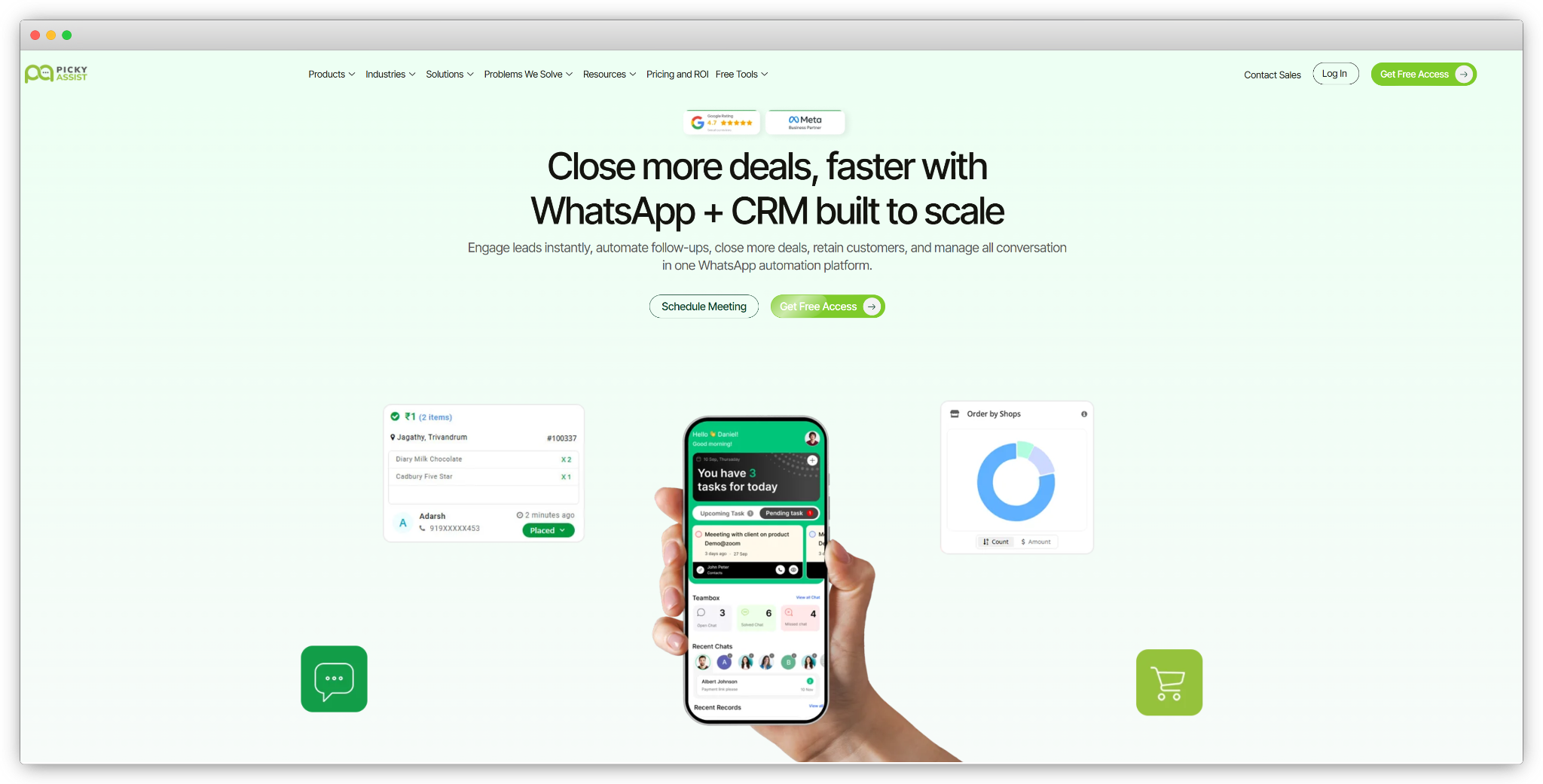
5. Picky Assist

Picky Assist

Picky Assist is a practical option for small businesses that want flexible automation across WhatsApp, Instagram, Messenger, and email.

It combines CRM, chatbot automation, workflows, and team collaboration. It can be useful for service businesses where leads come from different channels and need regular follow-ups.

For example, a real estate consultant can capture a lead, send property details on WhatsApp, follow up after two days, assign the lead to a sales executive, and keep the complete chat history in one place.

Key strengths:

  • WhatsApp CRM
  • Chatbots
  • Workflow automation
  • Shared inbox
  • CRM integrations
  • Email and messaging automation

Best for: SMBs, service businesses, consultants, real estate teams, and local businesses.

Possible limitation: Ecommerce brands may need to check whether the platform has enough depth for cart recovery, product-level segmentation, and revenue attribution.

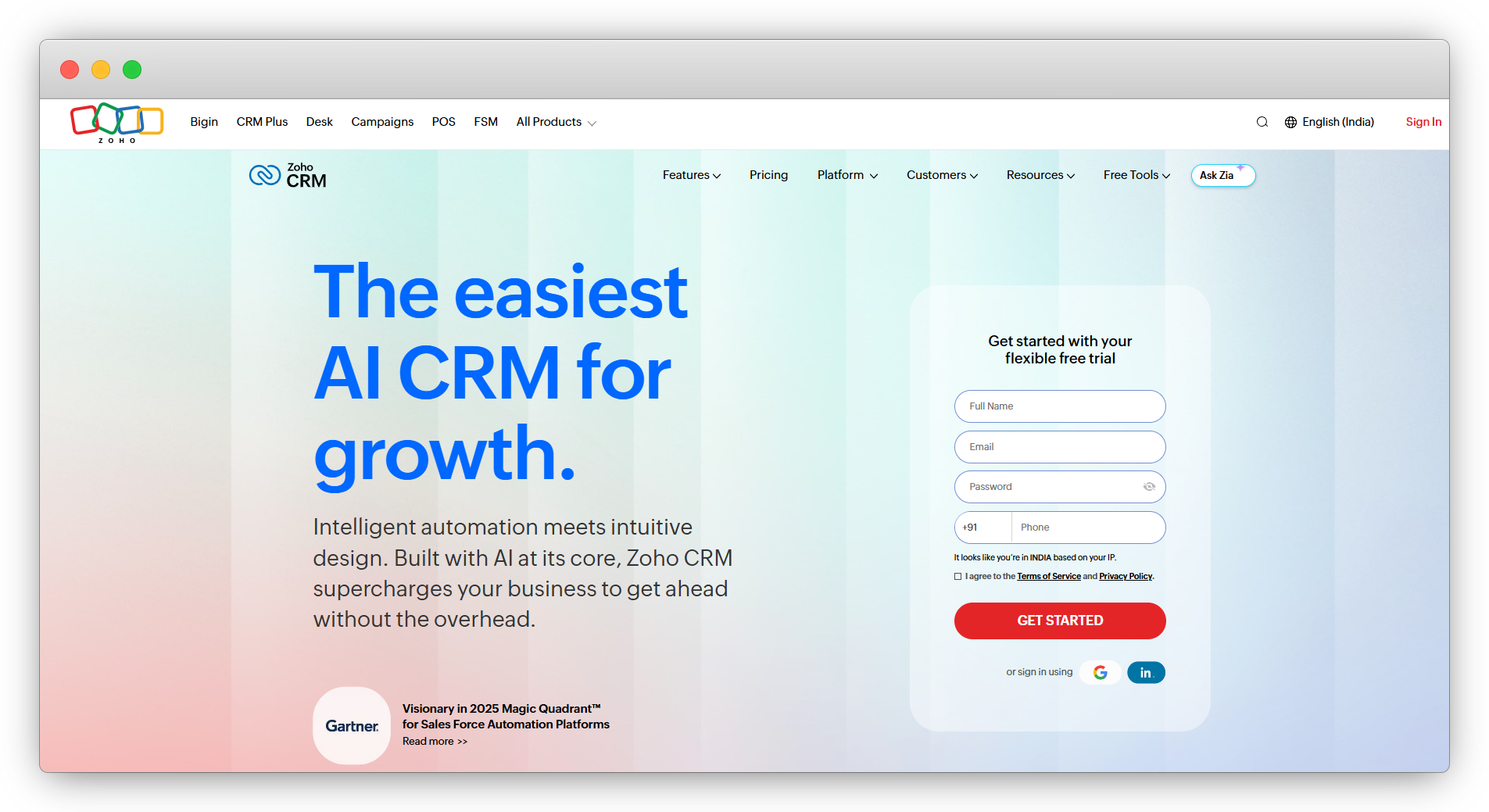
6. Zoho CRM and Zoho Marketing Automation

Zoho CRM

Zoho is another popular CRM ecosystem for Indian MSMEs.

It is a good choice for businesses that want CRM, lead management, sales pipeline tracking, email automation, and workflow automation at a reasonable cost. WhatsApp and SMS can usually be added through Zoho’s native capabilities or third-party integrations.

For example, a B2B services company can capture website leads in Zoho CRM, assign them to sales reps, send automated email follow-ups, and trigger WhatsApp or SMS reminders for high-intent leads.

Key strengths:

  • CRM and sales pipeline
  • Lead management
  • Workflow automation
  • Email marketing
  • WhatsApp and SMS through integrations
  • Affordable ecosystem

Best for: MSMEs, B2B companies, sales teams, and businesses that want CRM-first automation.

Possible limitation: Messaging automation may require setup, integrations, or additional tools depending on the use case.

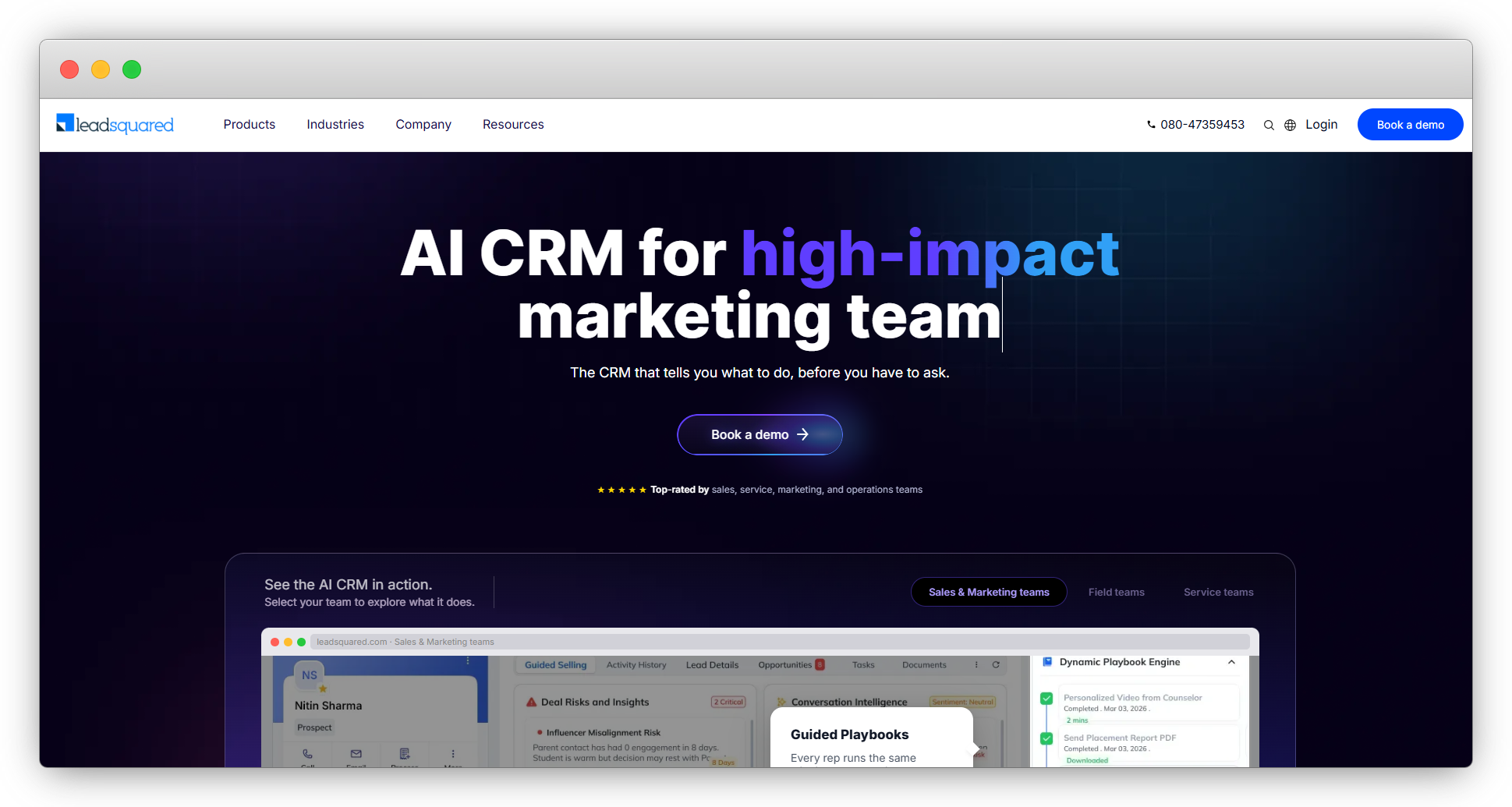
7. LeadSquared

LeadSquared

LeadSquared is a strong option for lead-heavy businesses in India, especially in education, healthcare, BFSI, real estate, and high-ticket services.

It helps businesses capture leads, score them, assign them to sales teams, and automate follow-ups through channels like WhatsApp, SMS, email, and calls.

For example, an education institute can capture leads from ads, send course details automatically, score leads based on engagement, and assign hot leads to counsellors.

Key strengths:

  • Lead capture
  • Lead scoring
  • Sales automation
  • WhatsApp, SMS, and email follow-ups
  • Field sales workflows
  • Call and counsellor workflows

Best for: Education, healthcare, BFSI, real estate, and businesses with large sales teams.

Possible limitation: It may be more than what a small ecommerce brand needs if the main requirement is WhatsApp marketing automation.

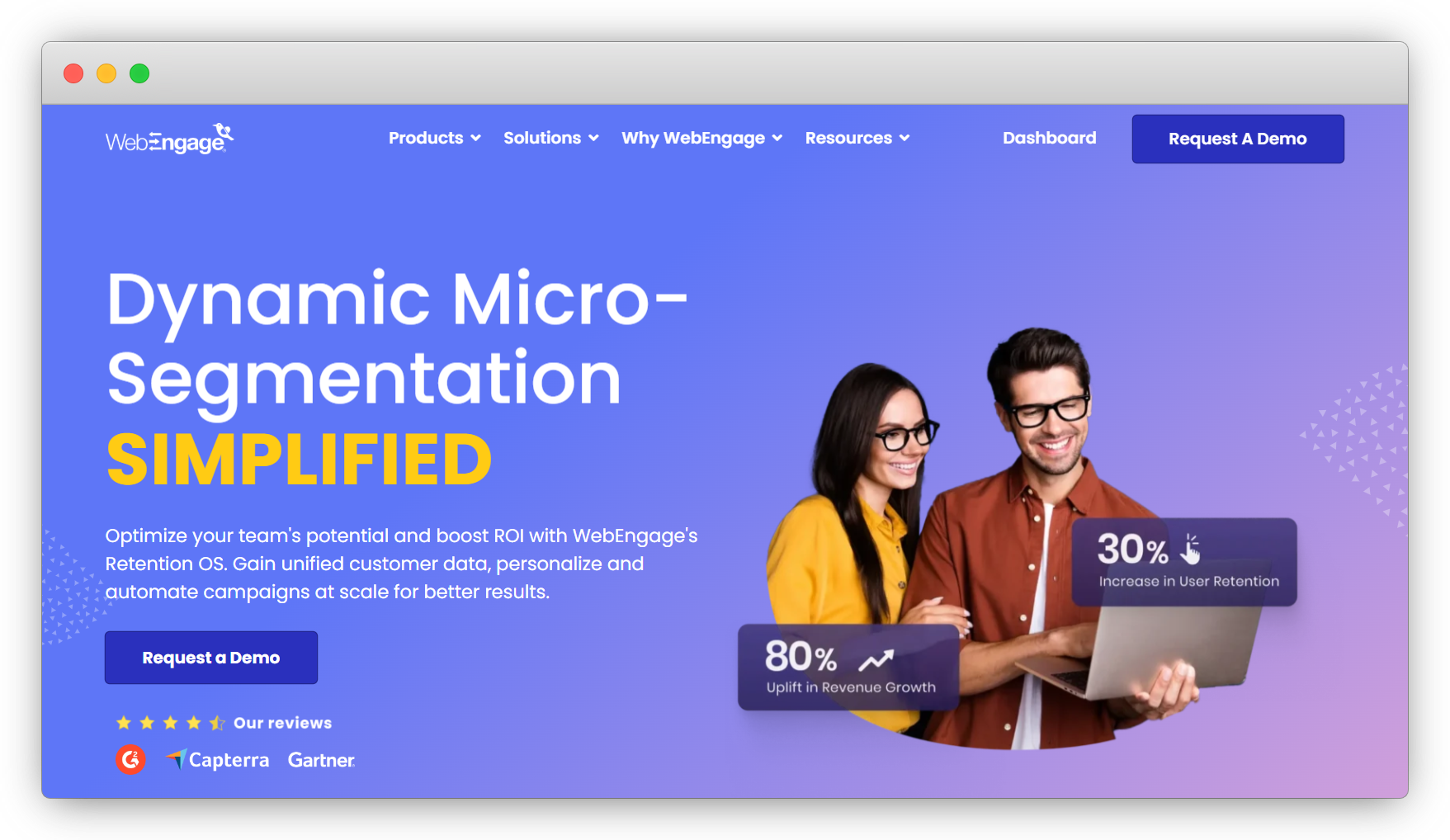
8. WebEngage

WebEngage is better suited for mid-market consumer brands that need lifecycle marketing across multiple channels.

It supports channels like email, SMS, WhatsApp, push notifications, web push, in-app messages, and RCS. Its strength lies in segmentation and journey orchestration.

For example, a fintech app can send onboarding emails, app push reminders, WhatsApp nudges, and reactivation campaigns based on user behavior.

Key strengths:

  • Omnichannel campaigns
  • Customer journey builder
  • Segmentation
  • Push notifications
  • Email, SMS, WhatsApp, RCS
  • Retention marketing

Best for: Consumer brands, fintech, ecommerce, travel, edtech, and app-based businesses.

Possible limitation: It may be expensive or complex for smaller businesses that only need WhatsApp and SMS automation.

9. MoEngage

MoEngage

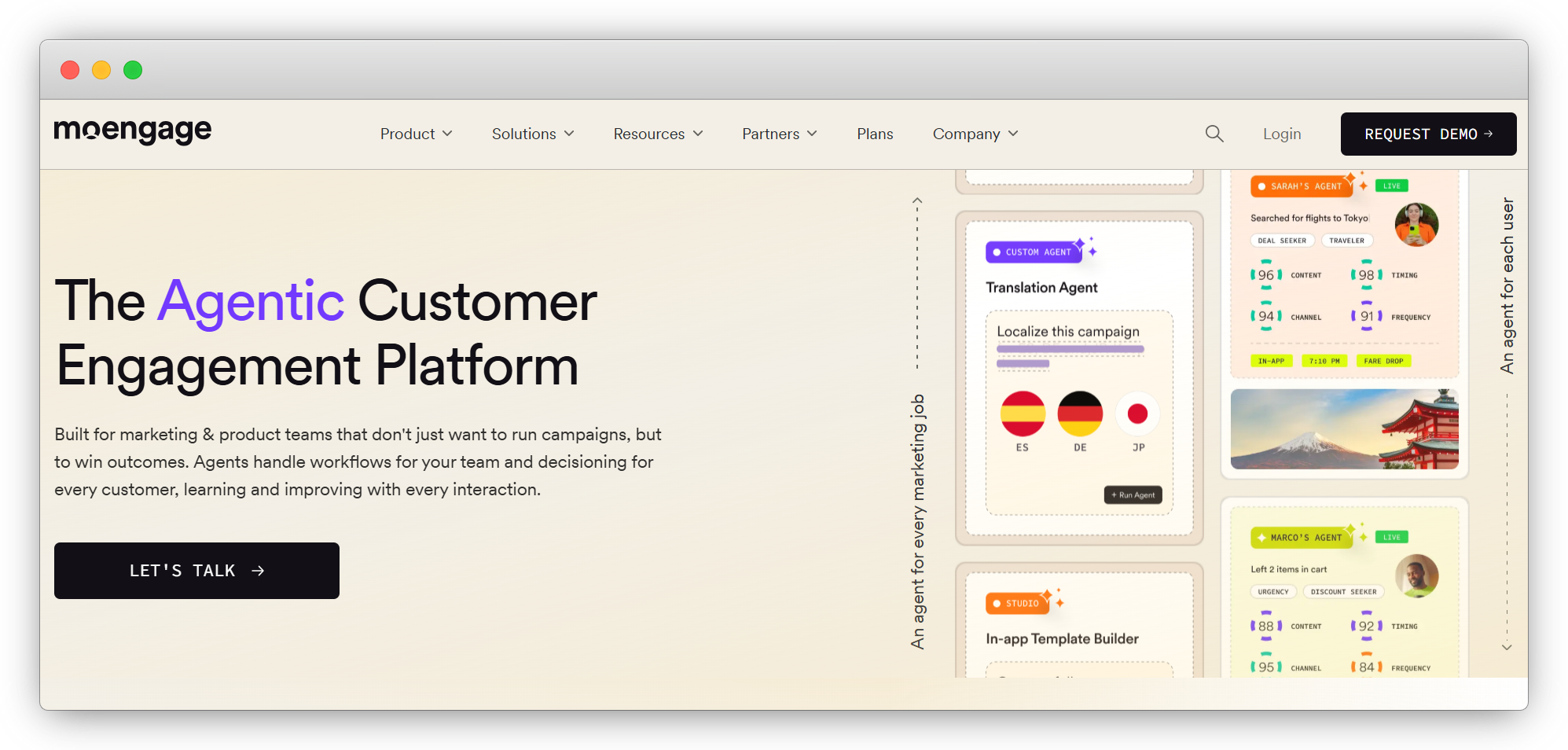
MoEngage is an enterprise-grade customer engagement platform for app-first and digital-first consumer businesses.

It is useful for brands that want to automate communication based on customer behavior across push, email, SMS, WhatsApp, RCS, in-app, and web channels.

For example, a travel app can send a push notification for a searched route, an email with offers, and a WhatsApp reminder if the user does not complete the booking.

Key strengths:

  • Behaviour-based journeys
  • Push and in-app messaging
  • Email, SMS, WhatsApp, RCS
  • AI-led segmentation
  • Customer analytics
  • Enterprise lifecycle automation

Best for: Large B2C brands, apps, marketplaces, fintech, travel, and OTT platforms.

Possible limitation: It may not be ideal for small businesses looking for a simple and affordable messaging CRM.

10. Netcore Cloud

Netcore Cloud

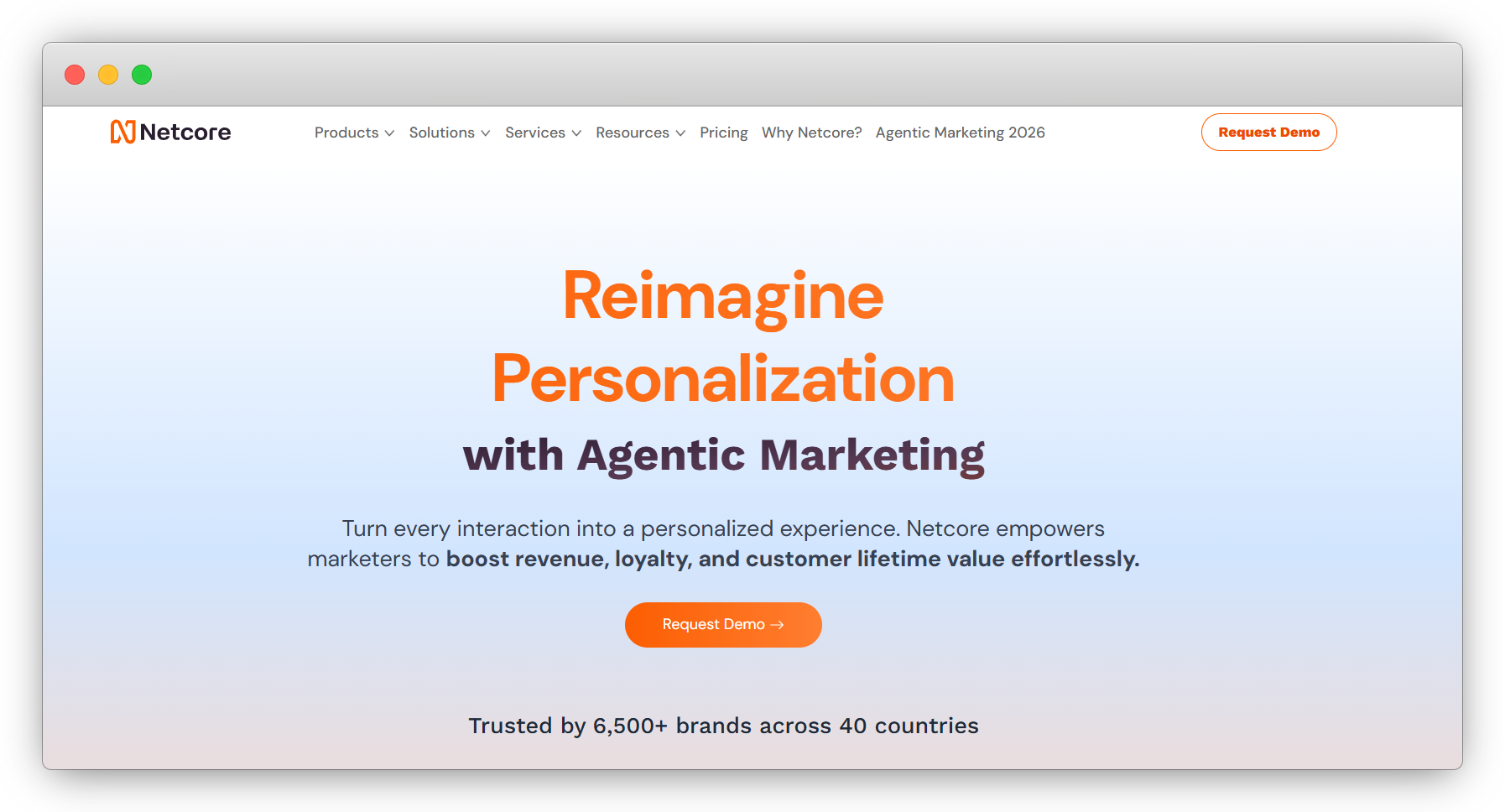
Netcore Cloud is a customer engagement platform with strong email, SMS, WhatsApp, RCS, push notification, and personalization capabilities.

It is useful for businesses that already run large-scale email or customer engagement campaigns and want to expand into omnichannel automation.

For example, an online fashion brand can send personalized product recommendations through email, follow up through WhatsApp, and use push notifications for app users.

Key strengths:

  • Email marketing
  • WhatsApp and SMS
  • RCS
  • App and web push
  • Journey orchestration
  • Personalization
  • Customer engagement analytics

Best for: Retail, ecommerce, BFSI, travel, and larger consumer brands.

Possible limitation: Smaller teams may find it more advanced than required if they only need basic WhatsApp automation.

Features You Should Check Before Buying

Before choosing a messaging CRM tool, you should check these points carefully:

  • Does it support WhatsApp Business API?
  • Can it automate journeys, not just send broadcasts?
  • Does it support two-way conversations?
  • Can human agents take over from AI chatbots?
  • Does it support local languages?
  • Are SMS, RCS, email, Instagram, and Messenger native or integration-based?
  • Does pricing increase with contacts, users, messages, or workflows?
  • Are message charges billed separately?
  • Does it integrate with Shopify, WooCommerce, Zoho, LeadSquared, Razorpay, or your existing CRM?
  • Can it track revenue, or only delivery and clicks?
  • Is it easy enough for a non-technical team to use?

This checklist is important because many tools look similar on the surface. The real difference appears when you check automation depth, channel reliability, support quality, and total cost.

Ready to Choose a Messaging CRM for Your Business?

Messaging CRM tools are becoming essential for Indian businesses because customers now expect fast, personalized, and convenient communication across multiple channels.

A Shopify brand may need WhatsApp cart recovery, product recommendations, COD confirmation, and revenue tracking. An education business may need lead nurturing, counsellor follow-ups, appointment booking, and multilingual support. A healthcare business may need appointment reminders, patient follow-ups, and AI-powered responses for common queries.

This is where QuickReply.ai becomes a reliable choice for Indian businesses looking for a messaging CRM with omnichannel automation capabilities.

QuickReply.ai helps businesses automate customer conversations across channels like WhatsApp, RCS, SMS, Instagram, Messenger, and website chatbots. It also offers Gen AI chatbot capabilities, shared inbox features, multilingual communication support, and integration capabilities with platforms like Shopify and other CRM or business systems.

So, if your business wants to reduce manual follow-ups, respond faster to customers, personalize conversations, and manage multi-channel communication from one place, QuickReply.ai is worth exploring.

Instead of using separate tools for campaigns, chatbots, team inbox, customer support, and automation, you can use QuickReply.ai to bring these customer messaging workflows together and create a smoother experience for both your team and your customers.

Turn 1 time visitor into repeat customer with WhatsApp marketing

Leverage the untapped growth potential of WhatsApp marketing to acquire and retain customers.

Frequently Asked Questions

What is a messaging CRM?

A messaging CRM is a customer communication platform that helps businesses manage and automate conversations across channels like WhatsApp, SMS, RCS, Instagram, Messenger, email, and website chat. Unlike a traditional CRM, it does not only store customer data. It also helps businesses use that data to send personalized and automated messages.

Why do Indian businesses need omnichannel automation?

Indian customers interact with businesses across many channels. A customer may discover a product on Instagram, ask a query on WhatsApp, receive an update by SMS, and later respond to an email or RCS message. Omnichannel automation helps businesses connect these touchpoints and avoid manual follow-ups.

What is the difference between CRM and messaging CRM?

A CRM stores and manages customer data. A messaging CRM uses that data to automate customer communication across channels like WhatsApp, SMS, email, Instagram, RCS, and chat.

Is WhatsApp enough for Indian businesses?

WhatsApp is very important in India, but it may not be enough for every use case. Businesses may also need SMS for alerts, email for detailed communication, Instagram for discovery, and RCS or push notifications for richer engagement.

Which channels should Indian businesses prioritize?

Most Indian businesses should start with WhatsApp, SMS, and email. Ecommerce and consumer brands should also consider Instagram, website chat, push notifications, and RCS, depending on their audience.

Are messaging CRM tools expensive?

Pricing varies widely. Indian businesses should check platform fees, user charges, message costs, automation limits, onboarding fees, and integration costs before choosing a tool.

Can messaging CRM tools help reduce manual follow-ups?

Yes. Messaging CRM tools can automate repetitive follow-ups such as abandoned cart reminders, lead nurturing, appointment reminders, payment reminders, order updates, feedback requests, and reactivation campaigns. This helps sales, marketing, and support teams save time.