Top 7 Platforms to Build WhatsApp Chatbots for Business in 2026

Copied to clipboard!

WhatsApp is no longer just a channel where customers ask, “Where is my order?”

Today, businesses use WhatsApp to qualify leads, answer product questions, recover abandoned carts, book appointments, send order updates, collect feedback, recommend products, and even run AI-powered conversations that feel much closer to talking to a real assistant.

That is why the question has also changed.

Earlier, businesses used to ask:

“Can I create a WhatsApp chatbot?”

Now, the better question is:

“Which WhatsApp chatbot platform is right for my business use case?”

Because not every WhatsApp chatbot builder is built the same way.

Some tools are great for simple menu-based flows. Some are better for customer support. Some are built for ecommerce automation. Some are better suited for enterprise-level conversational AI. And a few platforms bring rule-based automation, Gen AI, campaigns, CRM, analytics, and human handoff together.

In this blog, we will look at the top 7 platforms to build WhatsApp chatbots for business in 2026, what type of chatbots you can create with each one, and which tool is best suited for which business need.

Quick comparison of the top WhatsApp chatbot platforms

Platform Best for Types of WhatsApp chatbots you can build
QuickReply.ai D2C brands, ecommerce businesses, SMEs, edtech, healthcare clinics, salons, car dealerships, real estate businesses, and service-based businesses Rule-based bots, Gen AI bots, lead capture bots, product discovery bots, appointment booking bots, reminder bots, customer support bots, COD confirmation bots, feedback collection bots, and no-code chatbot flows
Wati Small and medium businesses, service education, healthcare, and local businesses No-code chatbot flows, support bots, lead capture bots, FAQ bots, sales inquiry bots, and multi-step automation flows
Interakt SMBs, ecommerce businesses, retail brands, service and sales-led businesses No-code chatbots, AI intent-based bots, FAQ bots, order update bots, sales assistance bots, and support handoff bots
AiSensy SMBs, education, healthcare, real estate, and local service businesses Drag-and-drop flow bots, lead qualification bots, product guidance bots, appointment booking bots, feedback collection bots, and campaign response bots
Zoko Shopify stores, ecommerce brands, D2C brands, and online retail businesses Shopify flows, COD confirmation bots, support bots, cart recovery bots, product/order-related workflows, and commerce automation
Manychat Creators, coaches, social-first brands, and small businesses Lead capture bots, WhatsApp automations, campaign bots, coupon delivery bots, FAQ bots, and social-to-WhatsApp flows
Gupshup Enterprises, large businesses, BFSI, travel, retail, telecom, and developer-led teams AI chatbots, conversational journeys, discovery assistants, support bots, booking lifecycle bots, transactional journey bots, and API-led custom bots

What is a WhatsApp chatbot?

A WhatsApp chatbot is an automated assistant that interacts with customers on WhatsApp.

It can reply to customer questions, guide users through predefined options, collect information, recommend products, share order updates, book appointments, qualify leads, or transfer the conversation to a human agent when needed.

For example, an ecommerce brand can use a WhatsApp chatbot like this:

Customer: I need a sunscreen for oily skin.
Bot: Sure. For oily skin, what matters most to you?

  • Matte finish/oil control
  • Acne-prone skin support
  • Lightweight daily-use sunscreen
  • Sunscreen that works under makeup
  • Talk to a skincare expert

That is a simple rule-based chatbot.

But a more advanced AI chatbot can handle something like:

Customer: I have oily skin and acne marks. I need something lightweight that won’t make my face greasy. What should I buy?

Instead of forcing the customer into fixed options, the AI chatbot can understand the intent, recommend the right product category, answer follow-up questions, and route the chat to a human agent if the query becomes complex or needs human intervention.

Types of WhatsApp Chatbots

Before choosing a platform, it is important to understand the two major types of WhatsApp chatbots.

1. Rule-based WhatsApp chatbot

A rule-based chatbot follows a predefined flow.

It works well when the customer journey is predictable.

For example:

  • Select your concern: Acne / Pigmentation / Hairfall / Dry skin
  • Select your budget: Below ₹500 / ₹500–₹1,000 / ₹1,000+
  • Do you want to speak to an expert? Yes / No

Rule-based chatbots are useful for:

  • Lead qualification
  • Appointment booking
  • Product quizzes
  • FAQs
  • COD confirmation
  • Order tracking
  • Feedback collection
  • Support routing

They are reliable because the business controls the conversation path.

2. Gen AI WhatsApp chatbot

A Gen AI chatbot can understand natural language and respond more flexibly.

It is useful when customers do not follow a fixed path.

For example:

Customer: I bought your vitamin C serum last month. Can I use it with retinol at night?

A Gen AI chatbot can understand the question, check the available knowledge base or configured instructions, and provide a more natural response.

Gen AI chatbots are useful for:

  • Product discovery
  • Customer support
  • Pre-sales conversations
  • Personalized recommendations
  • Complex FAQs
  • Lead nurturing
  • Reducing repetitive manual support

For most businesses, the ideal setup is not rule-based or AI. It is usually both.

Use rule-based flows where the journey needs structure, and use AI where customers may ask open-ended questions.

How to choose the right WhatsApp chatbot platform

Before we get into the list, here are the main things you should check.

1. Does it support both structured and AI-led conversations?

A good WhatsApp chatbot platform should let you build simple flows, but also support more intelligent automation when needed.

2. Does it support real business use cases?

A chatbot is not useful just because it replies fast. It should help with business outcomes like more leads, faster support, better cart recovery, more repeat purchases, or fewer manual queries.

3. Does it integrate with your existing tools?

For ecommerce, this means Shopify, WooCommerce, CRMs, helpdesks, payment tools, logistics tools, or internal systems.

For education or healthcare, it may mean CRM, appointment booking, payment, or lead management tools.

4. Can humans take over when needed?

A chatbot should not trap the customer in automation. If the query is sensitive, urgent, or high-intent, the conversation should move smoothly to a human agent.

5. Does it support WhatsApp campaigns and templates?

For business-initiated WhatsApp messages, approved templates are important. Meta defines templates as WhatsApp Business Account assets used in template messages through Cloud API or Marketing Messages API for WhatsApp.

6. Does it give analytics?

You should be able to see how many users entered the flow, where they dropped, which CTAs they clicked, and which chatbot journeys helped create leads, sales, or support resolutions.

Best 7 Platforms To Build WhatsApp Chatbot

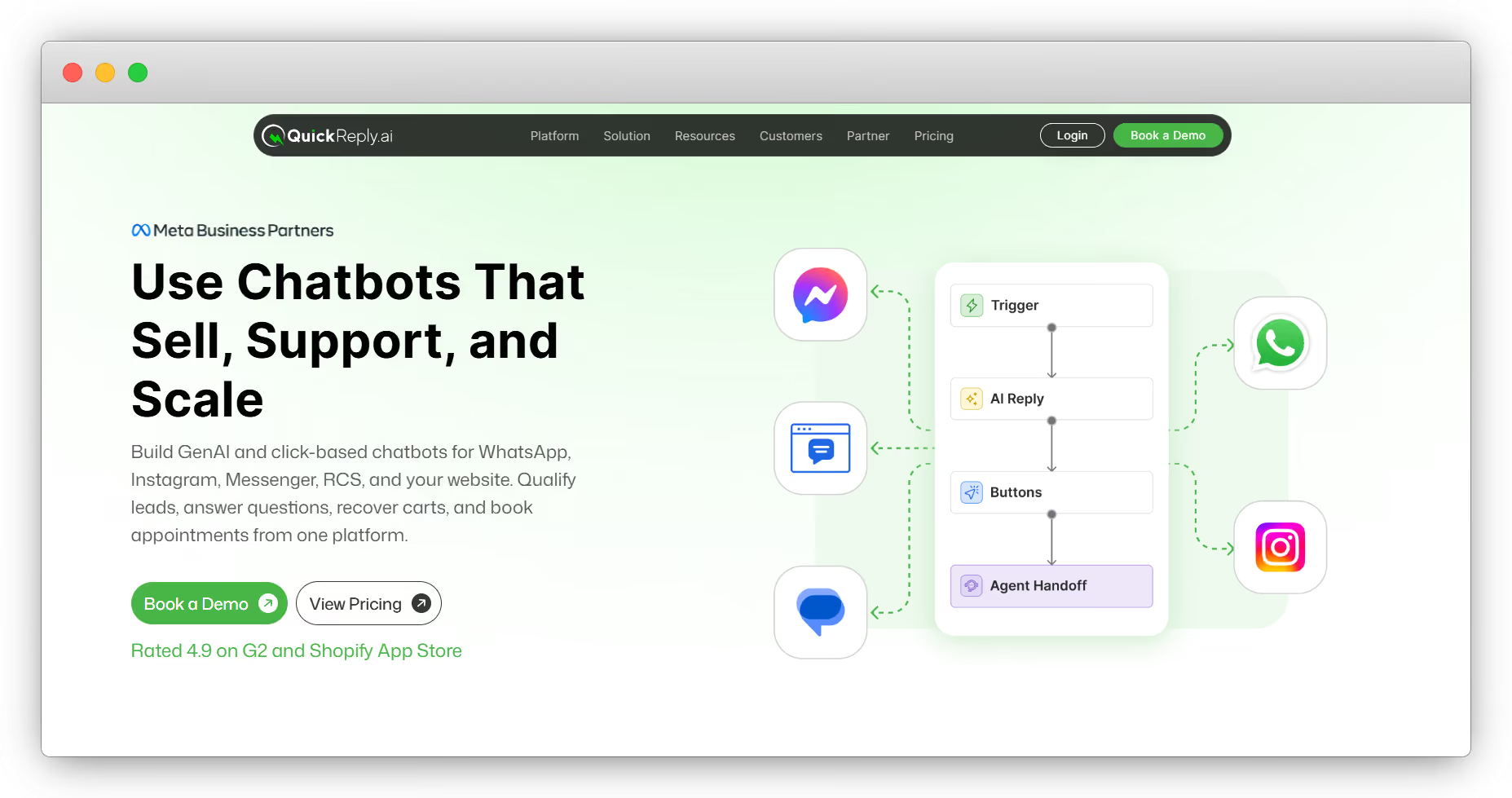
1. QuickReply.ai

WhatsApp Chatbot: Quickeply.ai

Best for: D2C brands, ecommerce businesses, SMEs, education businesses, healthcare clinics, salons, car dealerships, real estate businesses, service-based businesses, and growth-focused teams that want to automate WhatsApp conversations without coding.

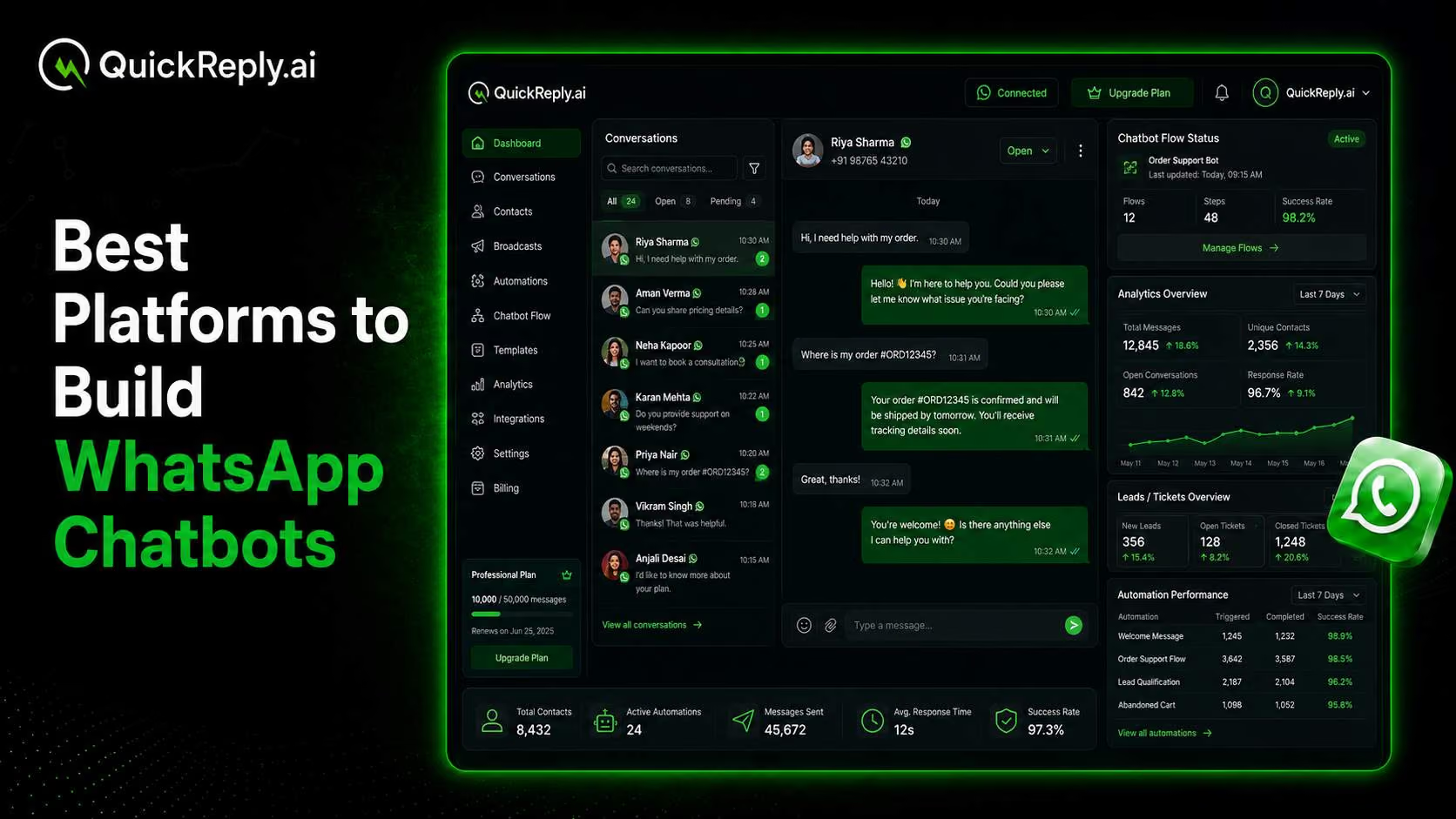
QuickReply.ai is built for businesses that want WhatsApp to become a serious channel for customer engagement, marketing, support, lead generation, and revenue growth.

It also supports omnichannel customer engagement across WhatsApp, RCS, Instagram, Messenger, SMS, and website chat, making it useful for businesses that want to manage conversations beyond just one channel.

It integrates with 80+ enterprise tools, including CRMs, ecommerce platforms, payment gateways, and automation tools such as Salesforce, HubSpot, Zapier, Razorpay, Shopify, and more.

This helps businesses connect chatbot journeys with their existing tech stack, so conversations, leads, payments, support queries, and customer data can move smoothly across systems.

With QuickReply.ai, businesses can create both:

  • Rule-based WhatsApp chatbots for structured customer journeys
  • Gen AI WhatsApp chatbots for natural, intent-based conversations

That really matters for service-based businesses because not every customer conversation follows the same path.

A rule-based chatbot is useful when you want to guide the customer through a clear journey. For example, a salon can create a simple appointment booking flow:

Bot: What would you like to book today?

  1. Haircut
  2. Hair spa
  3. Facial
  4. Talk to an expert

Similarly, a clinic can use a rule-based bot to collect patient details, preferred appointment date, department, and location before passing the lead to the front desk team.

But a Gen AI chatbot becomes useful when the customer types freely.

For example:

Customer: I have frizzy hair, and I want something that works in humid weather. What should I buy?

Or:

Customer: I want to book a service for my car, but I am not sure which package I need.

This is where QuickReply.ai becomes more powerful. The AI chatbot can understand the customer’s intent, answer common questions, recommend the next step, collect relevant details, and hand over the conversation to a human agent when required.

So instead of using WhatsApp only for basic FAQs, businesses can use QuickReply.ai to create chatbots for multiple journeys.

What type of WhatsApp chatbots can you create with QuickReply.ai?

With QuickReply.ai, businesses can create:

  • Rule-based WhatsApp chatbots
  • Gen AI-powered WhatsApp chatbots
  • Lead qualification chatbots
  • Lead capture bots
  • Product discovery chatbots
  • Appointment booking bots
  • Reminder bots
  • Customer support chatbots
  • WhatsApp form and survey bots
  • Feedback and review collection bots
  • Broadcast outreach and follow-up flows
  • Abandoned cart recovery bots
  • Browse abandonment recovery bots
  • COD confirmation bots
  • COD-to-prepaid conversion bots
  • Repeat purchase reminder bots
  • Gen AI-powered sales and support assistants

Example use case

Let’s say a skincare brand wants to increase product discovery on WhatsApp.

A customer clicks a WhatsApp ad and enters the chatbot.

The bot can ask:

What is your skin concern, followed by the actionable buttons:

  1. Acne
  2. Pigmentation
  3. Dryness
  4. Anti-aging

Then it can ask:

What is your skin type?

  1. Oily
  2. Dry
  3. Combination
  4. Sensitive

Based on the answers, the chatbot can recommend a relevant product, answer product-related questions using AI, share an offer, and trigger a follow-up message if the customer does not purchase.

Now take another example.

A car dealership can use QuickReply.ai to create a WhatsApp chatbot for test drive bookings.

The chatbot can ask:

Which car model are you interested in?

  1. Hatchback
  2. Sedan
  3. SUV
  4. Electric vehicle

Then it can collect the customer’s preferred location, date, time slot, and contact details. Once the lead is captured, the sales team can take over the conversation.

This is what makes WhatsApp chatbot automation useful across industries. It is not limited to ecommerce. It can work for any business where customers need quick answers, guided journeys, reminders, bookings, updates, or human support.

Why QuickReply.ai stands out

QuickReply.ai is a strong choice for businesses that do not want their WhatsApp chatbot to stop at basic FAQs.

It helps teams create both structured flows and AI-powered conversations, which means the chatbot can handle predictable journeys as well as open-ended customer queries.

For ecommerce brands, it can support cart recovery, browse recovery, COD confirmation, product discovery, and repeat purchase reminders.

For service-based businesses, it can help with lead capture, appointment booking, reminders, feedback collection, and customer support.

For sales and marketing teams, it can support WhatsApp broadcast outreach, follow-up journeys, customer segmentation, and lead nurturing.

That is why QuickReply.ai works well as a WhatsApp chatbot platform for businesses that want more than conversation management. It helps turn WhatsApp into a channel for engagement, automation, support, and growth.

2. Wati

WhatsApp Chatbot: Wati

Best for: SMBs that want no-code WhatsApp chatbot automation for sales, marketing, and support.

Wati is one of the well-known platforms in the WhatsApp Business API space. It is a good option for businesses that want to automate WhatsApp conversations without building everything from scratch.

Its chatbot builder is designed for no-code automation, and it supports use cases across marketing, support, and sales. Wati also supports complex chatbot flows, multiple interconnected chatbots, integrations, APIs, and multi-step automation.

What type of WhatsApp chatbots can you create with Wati?

You can create:

  • FAQ chatbots
  • Lead capture chatbots
  • Support routing bots
  • Sales inquiry bots
  • Marketing campaign response bots
  • Multi-step workflow bots
  • Customer journey automation bots

Example use case

An education company can use Wati to qualify course leads on WhatsApp.

The chatbot can ask:

Which course are you interested in?

  1. Data Science
  2. Digital Marketing
  3. Product Management
  4. UI/UX Design

Then it can ask for experience level, preferred batch timing, location, and budget.

Once the lead is qualified, it can pass the conversation to a counselor.

Where Wati fits well

Wati is useful for businesses that need a fairly simple way to create WhatsApp chatbot journeys and manage conversations at scale. It is especially helpful for SMBs that want chatbot automation, campaigns, team inbox, and integrations in one place.

3. Interakt

WhatsApp Chatbot: Interakt

Best for: Indian SMBs, ecommerce brands, WhatsApp CRM, support, and sales workflows.

Interakt is another popular WhatsApp-first platform, especially among businesses that want WhatsApp marketing, sales, support, and CRM-like conversation management.

Its chatbot capability supports automated customer interactions, from FAQs to order-related updates. Interakt also adds an AI layer that helps the chatbot understand intent, respond more naturally, and create workflows using website content.

What type of WhatsApp chatbots can you create with Interakt?

You can create:

  • FAQ chatbots
  • Lead qualification bots
  • Sales assistance bots
  • Order update bots
  • Support automation bots
  • AI intent-based routing bots
  • Human handoff workflows

Example use case

A home decor brand can use Interakt to handle common support questions. 

A customer may ask:

Do you deliver to Pune?

The bot can answer instantly.

Another customer may ask:

Can I return this product if the size does not fit my table?

The chatbot can identify this as a return policy query and respond with the relevant policy. If the customer still needs help, the chat can move to a support agent.

Where Interakt fits well

Interakt is a good choice for businesses that want WhatsApp automation along with a CRM-like workflow. It is useful when the team wants to collect customer information, automate standard responses, and route important chats to the right person.

4. AiSensy

WhatsApp Chatbot: AiSensy

Best for: lead generation, sales automation, support automation, product guidance, and campaign-led WhatsApp use cases.

AiSensy is known for WhatsApp marketing and automation, and its chatbot flow builder is focused on no-code creation.

Businesses can use their drag-and-drop flow builder to create WhatsApp chatbots for lead qualification, sales, support, and product guidance. It also supports elements like quick replies, lists, product cards, API calls, triggers, conditions, Click-to-WhatsApp ads, catalogues, WhatsApp Pay, and WhatsApp forms.

What type of WhatsApp chatbots can you create with AiSensy?

You can create:

  • Lead qualification bots
  • Product guidance bots
  • Support FAQ bots
  • Appointment booking bots
  • Feedback collection bots
  • Payment and order-related bots
  • Retargeting chatbot flows
  • Click-to-WhatsApp ad response bots

Example use case

A healthcare clinic can use AiSensy to create an appointment booking chatbot.

The bot can ask:

What do you need help with?

  1. Book appointment
  2. Talk to the doctor
  3. Check report status
  4. Know the consultation fee

If the user selects “Book appointment,” the chatbot can collect the patient’s name, preferred date, preferred time, and department.

Where AiSensy fits well

AiSensy works well for teams that want a visual chatbot builder and predictable automation flows. It is a practical option for lead generation, support, appointment booking, and campaign-based WhatsApp journeys.

5. Zoko

WhatsApp Chatbot: Zoko

Best for: Shopify brands and ecommerce businesses that want WhatsApp commerce.

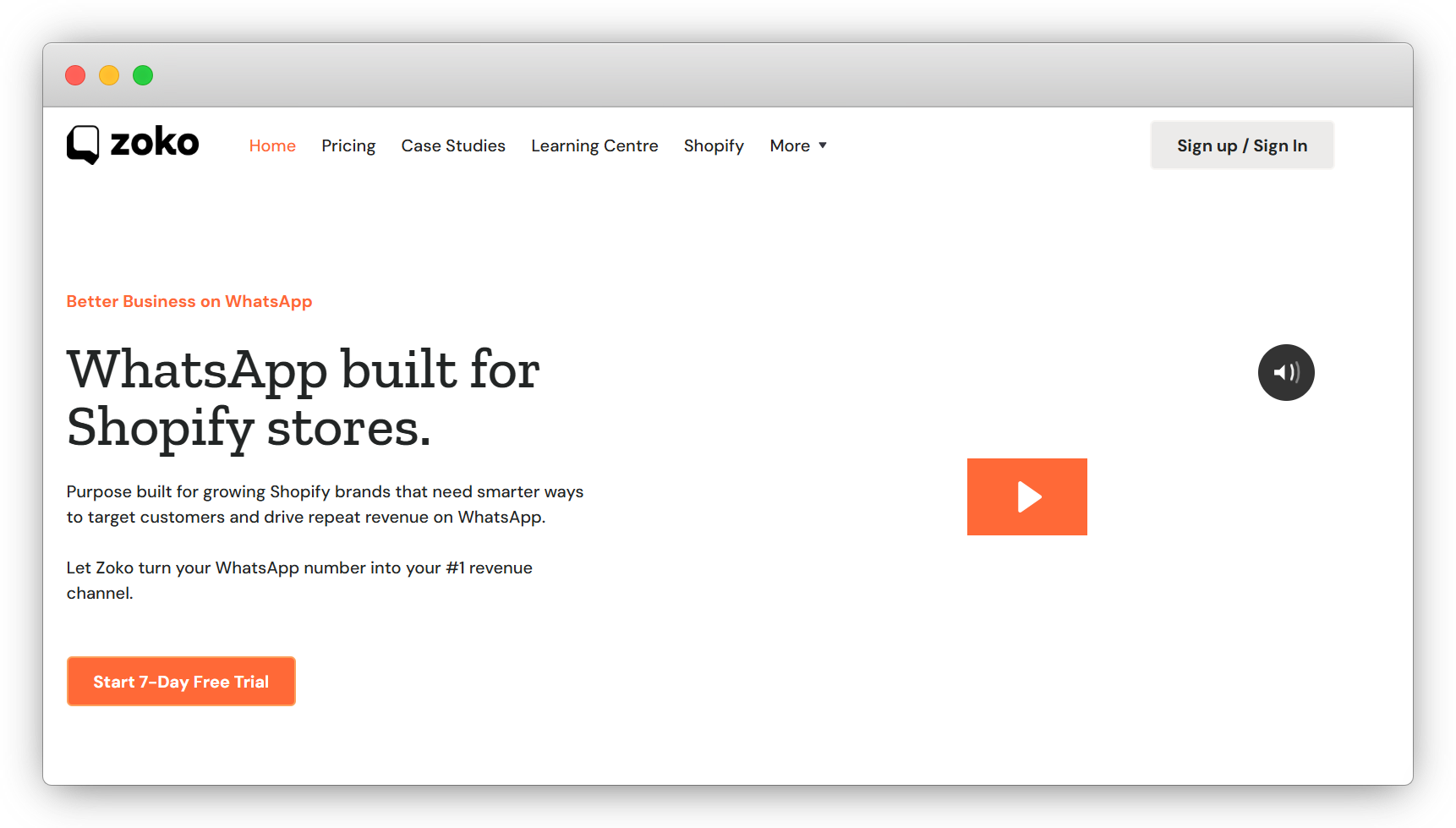
Zoko is strongly positioned for Shopify stores. It helps brands run sales, marketing, and support from one WhatsApp number, and its automation flows can connect with Shopify and other apps. The platform is especially relevant for Shopify merchants who want to use WhatsApp as a commerce and revenue channel.

What type of WhatsApp chatbots can you create with Zoko?

You can create:

  • Shopify automation flows
  • COD order confirmation bots
  • Support automation bots
  • Cart recovery flows
  • Product and order-related workflows
  • WhatsApp commerce journeys
  • Repeat purchase workflows

Example use case

A fashion brand can use Zoko to automate COD confirmation.

After a customer places a COD order, the WhatsApp bot can ask:

Please confirm your order:

  1. Yes, confirm my order
  2. I want to change my address
  3. I want to cancel
  4. Talk to support

This helps reduce fake or uncertain COD orders and gives customers a quick way to correct details before shipping.

Where Zoko fits well

Zoko is a good fit when the business is Shopify-first and wants WhatsApp to support sales, order communication, and support operations. It is more commerce-focused than generic chatbot platforms.

6. Manychat

WhatsApp Chatbot: Manychat

Best for: creators, social-first businesses, small brands, and teams that use Instagram, Messenger, TikTok, and WhatsApp together.

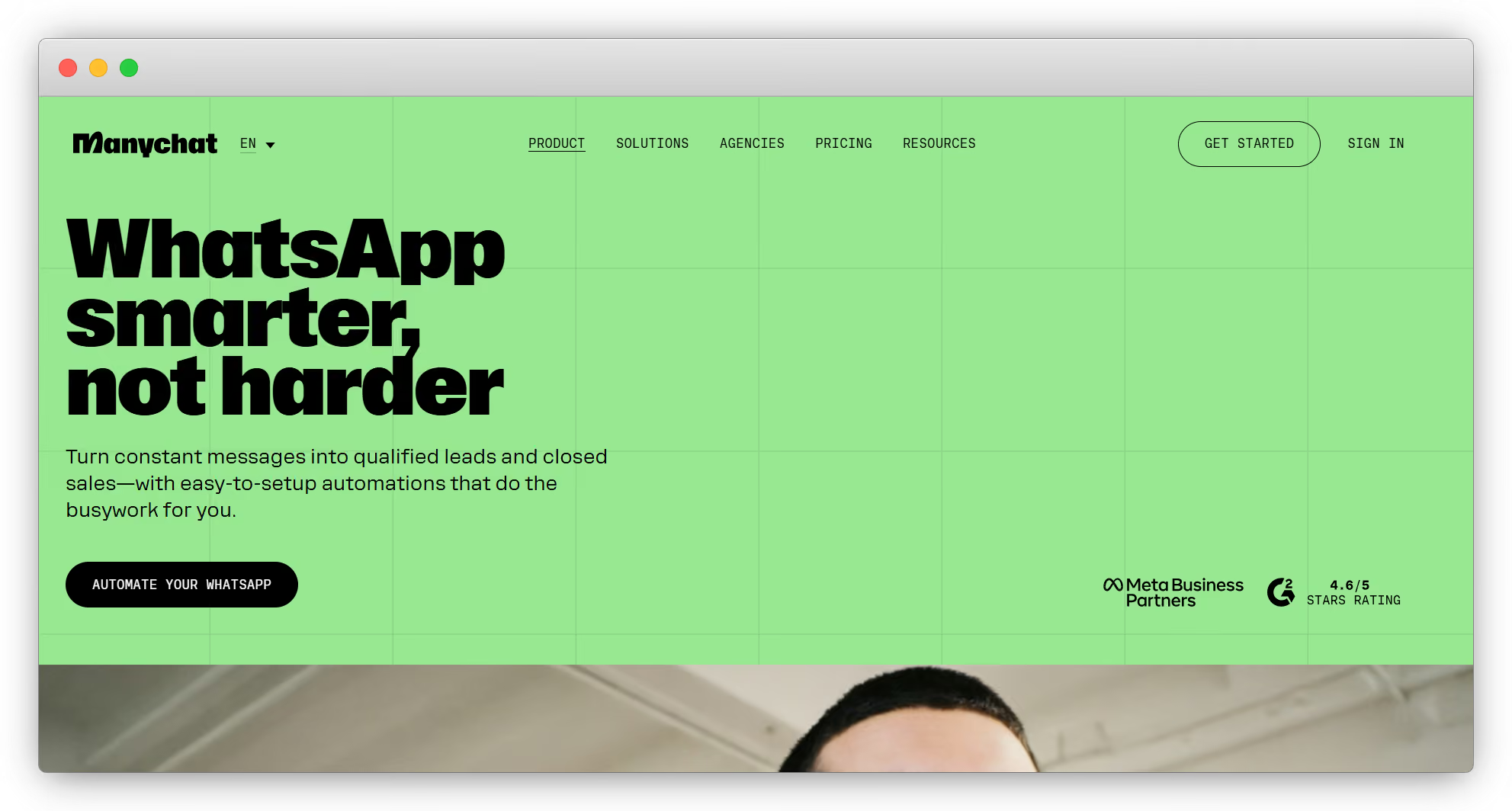
Manychat is a popular automation platform for social messaging. Its WhatsApp product focuses on turning customer messages into qualified leads and sales through easy-to-set-up automations. It also supports automation across channels like Instagram, WhatsApp, TikTok, and Messenger.

What type of WhatsApp chatbots can you create with Manychat?

You can create:

  • Lead capture bots
  • Coupon delivery bots
  • Social campaign bots
  • Basic WhatsApp automation flows
  • FAQ response bots
  • Instagram-to-WhatsApp journeys
  • Creator audience engagement flows

Example use case

A creator launches a new digital course on Instagram.

Users comment “INFO” on the Instagram post. The automation can move the conversation to WhatsApp, ask for the user’s interest area, share the course details, and send a payment or registration link.

Where Manychat fits well

Manychat works best when WhatsApp is part of a larger social media automation strategy. It is useful for creators, coaches, small businesses, and social-first brands that want lightweight automation across multiple messaging channels.

7. Gupshup

WhatsApp Chatbot: Gupshup

Best for: enterprises, large businesses, and developer-led teams that need conversational AI, custom journeys, APIs, and scalable messaging infrastructure.

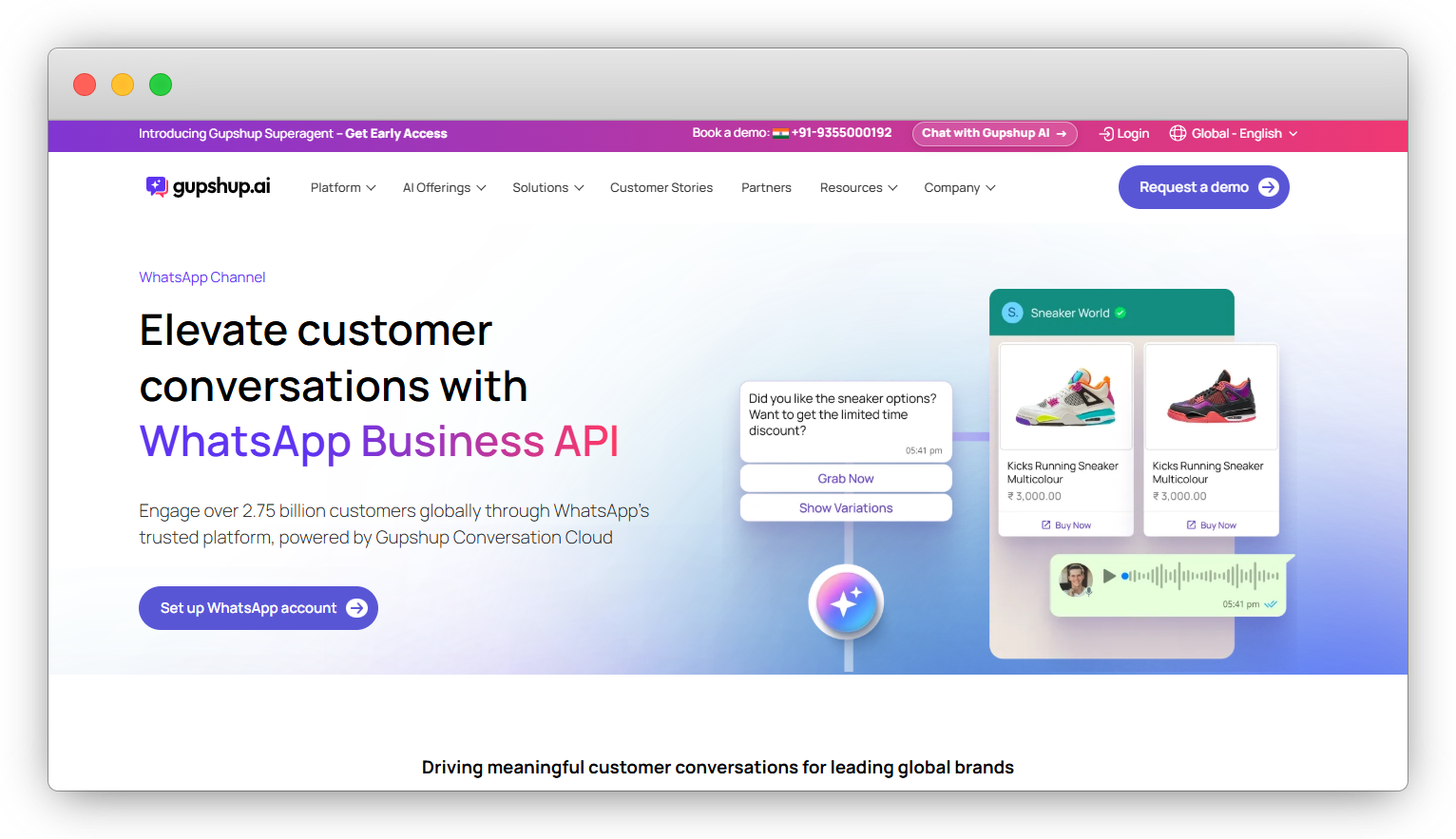
Gupshup is a strong option for larger businesses that want more flexibility and scale. It supports building, testing, and deploying AI chatbots and conversational journeys with a low-code builder. It is also used across industries for use cases like AI-powered discovery assistants, customer support, lifecycle journeys, and WhatsApp-based conversational experiences.

What type of WhatsApp chatbots can you create with Gupshup?

You can create:

  • Enterprise AI chatbots
  • Product discovery assistants
  • Customer support bots
  • Booking lifecycle bots
  • Transactional journey bots
  • Multi-channel conversational AI flows
  • API-led custom WhatsApp bots

Example use case

A travel company can use Gupshup to automate booking support.

A customer can ask:

Can I change my hotel booking date?

The AI chatbot can understand the query, check available options through connected systems, guide the customer through the next step, and escalate to an agent if required.

Where Gupshup fits well

Gupshup is better suited for enterprises and larger teams that need deeper customization, AI-led conversations, and integration flexibility. It may be more advanced than what a small business needs, but it is a serious option for companies building large-scale WhatsApp automation.

Best WhatsApp chatbot platform by use case

Here is a quick decision guide.

Use case Best-fit platforms
Ecommerce chatbot QuickReply.ai, Zoko
Abandoned cart recovery QuickReply.ai, Zoko
Product discovery QuickReply.ai, Zoko, Gupshup
Lead qualification QuickReply.ai, Wati, Interakt, AiSensy
Customer support automation QuickReply.ai, Wati, Interakt, Gupshup
Appointment booking QuickReply.ai, AiSensy, Interakt
WhatsApp broadcasts and campaigns QuickReply.ai, Wati, AiSensy
Social media automation Manychat
Enterprise conversational AI Gupshup
Shopify WhatsApp commerce QuickReply.ai, Zoko

Conclusion

A WhatsApp chatbot is no longer just a support shortcut.

For modern businesses, it can become a sales assistant, support executive, product guide, lead qualifier, cart recovery engine, and retention channel, all inside the app customers already use every day.

If you only need basic replies, many tools can do the job.

But if you want WhatsApp to actively contribute to revenue, customer experience, and lifecycle automation, you should choose a platform that supports more than simple FAQs.

For ecommerce and D2C brands, QuickReply.ai stands out because it supports both structured rule-based chatbot journeys and Gen AI-powered WhatsApp conversations across the full customer lifecycle, from lead capture and product discovery to abandoned cart recovery, support, feedback, and repeat purchases.

That is where WhatsApp chatbots are heading in 2026: not just answering questions, but helping businesses convert, support, and retain customers better.

Turn 1 time visitor into repeat customer with WhatsApp marketing

Leverage the untapped growth potential of WhatsApp marketing to acquire and retain customers.

Frequently Asked Questions

Can I build a WhatsApp chatbot without coding?

Yes. Many platforms now offer no-code or low-code WhatsApp chatbot builders. Tools like QuickReply.ai, Wati, Interakt, AiSensy, Zoko, and Manychat are designed to help teams create chatbot flows without heavy engineering effort.

What is better: a rule-based chatbot or an AI chatbot?

Both are useful.

A rule-based chatbot is better for predictable journeys like lead forms, FAQs, appointment booking, order tracking, and feedback collection.

An AI chatbot is better for open-ended questions, product discovery, personalized recommendations, and support queries where users may type in different ways.

The best setup is often a hybrid chatbot: structured flows for important business steps and AI for natural conversations.

Can WhatsApp chatbots help with sales?

Yes. WhatsApp chatbots can help qualify leads, recommend products, send offers, recover abandoned carts, collect preferences, and move customers closer to purchase.

For ecommerce brands, this is especially useful because WhatsApp conversations often happen closer to the buying moment.

Can WhatsApp chatbots replace human agents?

Not fully.

A good chatbot can reduce repetitive work and handle common queries, but human agents are still important for complex, emotional, high-value, or sensitive conversations.

The best approach is a chatbot plus a human handoff.

Can I use WhatsApp chatbots for abandoned cart recovery?

Yes. E-commerce-focused platforms like QuickReply.ai and Zoko are especially relevant for abandoned cart recovery because they can connect WhatsApp automation with customer and order activity.

A typical abandoned cart chatbot can remind customers about items left in the cart, answer product questions, share offers, and guide them back to checkout.

Can WhatsApp chatbots be used outside ecommerce?

Yes. WhatsApp chatbots are also useful in education, healthcare, real estate, travel, financial services, automotive, and local services.

For example:

  • Education: Qualify student leads and book counseling calls
  • Healthcare: book appointments and send reminders
  • Real estate: qualify buyers by budget and location
  • Travel: send booking updates and answer itinerary questions
  • Automotive: schedule test drives and service appointments

Do WhatsApp chatbots require WhatsApp Business API?

For advanced automation, multi-agent support, integrations, broadcasts, templates, and scalable chatbot journeys, businesses usually use the WhatsApp Business Platform/API through an approved or integrated provider.