Best Generative AI Tools for Enhancing Customer Service in 2026

Copied to clipboard!

Customer service in India is changing rapidly. What was once heavily dependent on large support teams, long call queues, and basic scripted chatbots is now evolving into a smarter, AI-driven support ecosystem. Today’s customers, especially in industries like ecommerce, quick commerce, banking, retail, and telecom, do not want to wait in long support queues or interact with outdated IVR systems and basic chatbots. They expect quick responses, 24*7 support, and personalized conversations across channels like WhatsApp, chat, and email.

To meet these expectations, companies are moving beyond simple rule-based chatbots and adopting AI-powered support agents that can understand customer intent, answer complex queries, and even perform tasks like checking orders, updating information, or processing requests. This helps businesses reduce support workload, improve response times, and automate a large number of common customer queries.

With a mobile-first audience, growing internet penetration, and increasing preference for communication in local languages, businesses need support systems that can scale efficiently. 

In this blog, we will explore the best generative AI tools available for customer service in India and compare them based on features, use cases, pricing, integrations, and suitability for different types of businesses, from startups to large enterprises.

TL;DR

  • Generative AI is helping Indian businesses automate customer support across WhatsApp, website chat, RCS, email, social media, and voice channels.
  • Unlike traditional chatbots, gen AI tools can understand customer intent, context, and conversation history to give more natural and useful responses.
  • Businesses need AI support tools to manage high query volumes, provide 24/7 assistance, reduce agent workload, and support customers in multiple Indian languages.
  • For ecommerce, healthcare, real estate and D2C brands, QuickReply.ai is a strong option because it focuses on omnichannel communication (WhatsApp, RCS, SMS, Instagram, Messenger, Website) solution to SMBs and enterprises.
  • Other tools like Freshdesk Freddy AI, Zendesk AI, Intercom Fin AI, Zoho Desk AI, Yellow.ai, and Haptik serve different needs across SMBs, SaaS companies, and enterprises.
  • The right gen AI customer service platform should be chosen based on channels supported, multilingual capability, WhatsApp and ecommerce integrations, human handoff, analytics, scalability, and pricing.
  • Generative AI is not meant to fully replace human agents. It works best when it automates repetitive queries and lets support teams focus on complex customer issues.

Quick Comparison (Top Gen AI Tools for Customer Service)

Tool Best For Key Channels AI Capabilities Starting Pricing
QuickReply.ai Ecommerce, quick commerce, healthcare, and F&B D2C brands WhatsApp, Instagram, RCS, SMS, Messenger, Website AI chat automation, cart recovery, support queries, appointment booking, review collection, customer engagement and retention, and more. Starts at $39/month
Freshdesk Freddy AI SMBs and mid-sized businesses Email, chat, phone, social AI ticketing, summaries, reply suggestions Starts at $29 per agent/month
Zendesk AI Enterprises Omnichannel AI agents, workflow automation, analytics ~$55/agent/month
Intercom Fin AI SaaS and startups Chat, email, in-app support Conversational AI, onboarding automation Starts at $29/seat/month
Zoho Desk AI SMBs and Zoho users Email, chat, phone AI ticket analysis, sentiment analysis Starts at $5 per user/month
Yellow.ai Enterprises and telecom Voice, chat, WhatsApp Conversational AI, voice AI Custom
Haptik Enterprise customer engagement WhatsApp, voice, chat AI chatbots, self-service automation Custom

What is Generative AI in Customer Service?

Generative AI in customer service refers to AI systems that can understand customer queries and generate human-like responses in real time. Unlike traditional chatbots that only follow predefined scripts and workflows, generative AI can understand context, intent, and conversation history to provide more natural and relevant support experiences.

For example, if a customer asks about an order delay on WhatsApp, a traditional chatbot may only share a fixed response or redirect the user to support articles. A generative AI-powered support agent, on the other hand, can understand the issue, check the order status, explain the reason for the delay, and even suggest the next steps within the same conversation.

Modern gen AI for customer service is powered by Large Language Models (LLMs), which are trained on massive amounts of data to understand language patterns and customer intent. These AI systems can handle customer conversations across channels like:

Businesses are increasingly using generative AI for customer support to automate repetitive queries, assist human agents, and improve response quality at scale.

Why Businesses Need Gen AI Tools for Customer Support

Customer support in India comes with its own unique challenges. Businesses are not only managing large customer volumes but are also dealing with multiple languages, diverse customer behaviors, and rapidly growing digital communication channels. This is one of the main reasons why generative AI for customer support is becoming increasingly important for Indian businesses, especially in the ecommerce, quick commerce, travel, fintech, healthcare, and telecom sectors. Here are the main factors why businesses need Gen AI tools in India:

1. Managing High Volumes of Customer Queries

Indian businesses, especially ecommerce, quick commerce, D2C brands, often experience massive spikes in customer queries during festive sales, product launches, and promotional campaigns. Handling thousands of repetitive questions manually can overwhelm support teams and increase response times. AI-powered support systems help automate common customer interactions, such as:

  • Order tracking
  • Delivery updates
  • Refund requests
  • Payment-related questions
  • Product inquiries

This allows businesses to handle larger support volumes without significantly increasing support team size.

2. Growing Demand for Regional Language Support

India is one of the most linguistically diverse markets in the world. Many customers prefer communicating in Hindi or regional languages rather than English.

Modern AI customer support tools can now understand multilingual and mixed-language conversations, including conversational formats commonly used by Indian customers. This helps businesses improve accessibility and customer engagement across different regions.

Providing support in local languages also helps brands build stronger trust and improve customer satisfaction.

3. Rising Importance of WhatsApp Customer Support

WhatsApp has become one of the primary communication channels for businesses in India. Customers now use WhatsApp not only for chatting with friends and family but also for:

  • Tracking orders
  • Asking support questions
  • Booking appointments
  • Receiving delivery updates
  • Discovering products

This makes WhatsApp automation a major requirement for businesses looking to scale customer support efficiently. AI-powered WhatsApp support systems can automate conversations while still delivering personalized experiences.

Best Generative AI Tools for Enhancing Customer Service in India

As businesses across India continue investing in AI-powered customer engagement, several platforms have emerged as strong solutions for automating support, improving response times, and delivering personalized customer experiences. However, not every tool is built for the same use case. Some platforms are designed for ecommerce and WhatsApp automation, while others focus more on enterprise ticketing, omnichannel support, or SaaS customer engagement.

Here are some of the best generative AI tools for customer service in India:

1. QuickReply.ai

Best GenAI Tool: QuickReply.ai

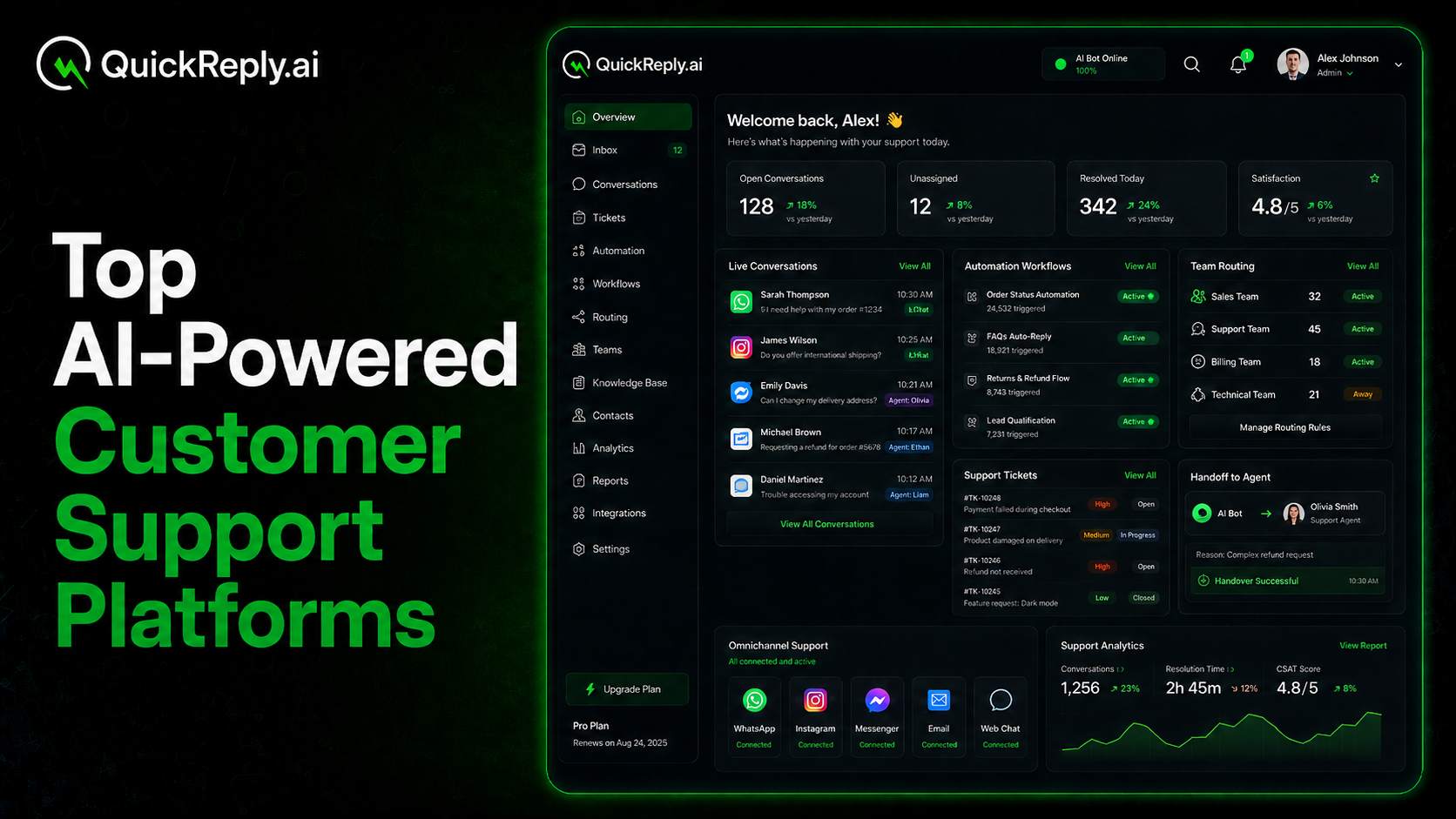
QuickReply.ai is an omnichannel customer engagement and automation platform built for ecommerce, D2C, quick commerce, healthcare, F&B, and growing consumer brands. It helps businesses manage customer conversations, automate support, run campaigns, and build personalized journeys across channels like WhatsApp, RCS, SMS, Instagram, Messenger, and website chat.

Instead of treating customer support as a single-channel activity, QuickReply.ai allows brands to connect with customers wherever they are most active. Businesses can use it to automate order updates, answer support queries, recover abandoned carts, collect reviews, send promotional campaigns, manage conversations, and drive repeat purchases from one platform.

It also supports integrations with ecommerce, logistics, payment, and CRM tools such as Shopify, WooCommerce, Shiprocket, Delhivery, Razorpay, and 2000+ apps through Zapier, making it easier for brands to connect customer conversations with real business data.

Key Features

  • AI-powered customer support across WhatsApp, RCS, SMS, Instagram, Messenger, and website chat
  • Automated order updates and delivery tracking
  • Cart recovery and customer re-engagement automation
  • AI chatbot workflows for support, sales, and lead qualification
  • Shopify, WooCommerce, logistics, payment, and CRM integrations
  • Shared team inbox for managing customer conversations
  • Broadcast and marketing automation across multiple channels
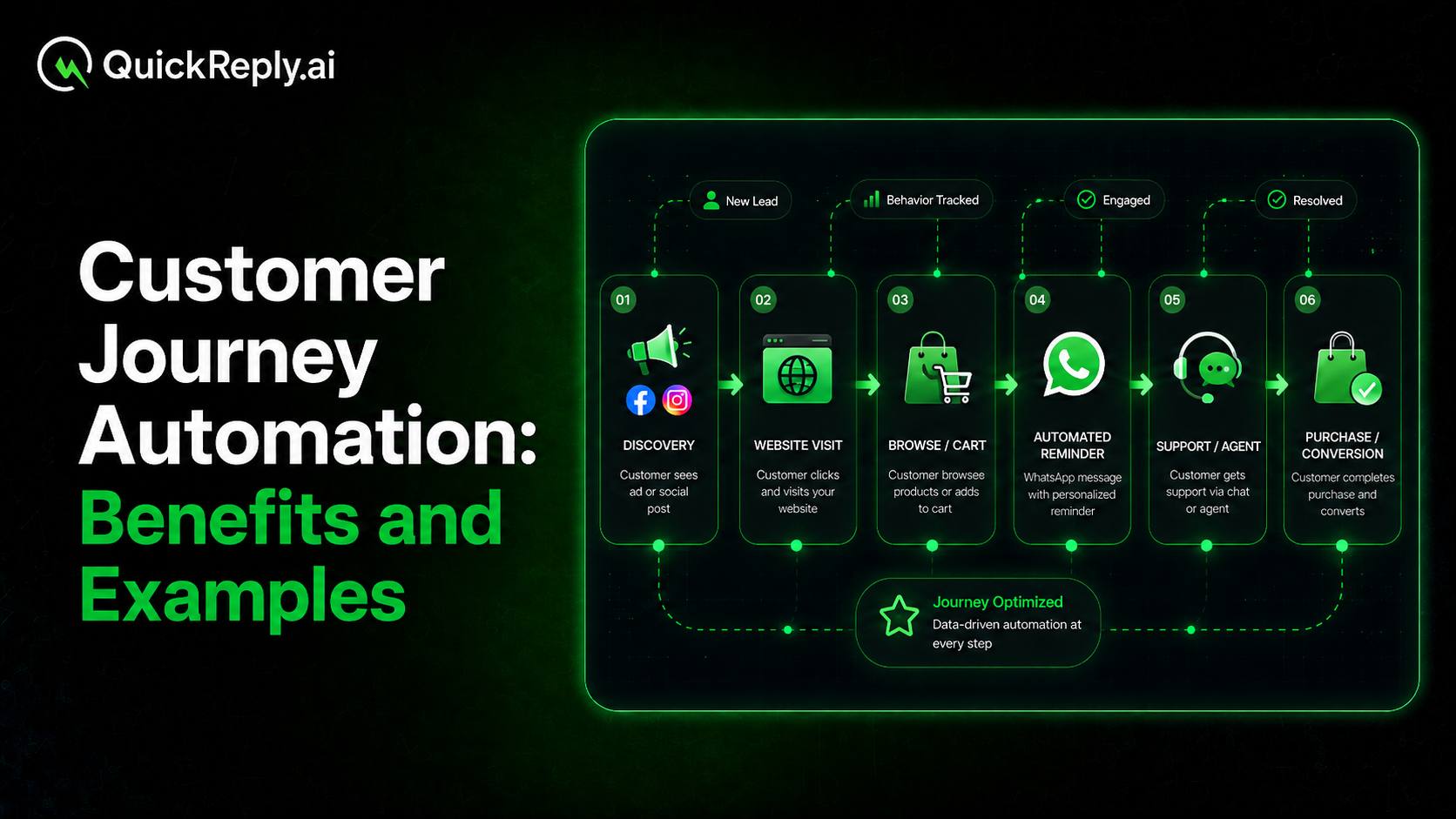
  • Customer journey automation for engagement, retention, and repeat purchases

Best For

  • Ecommerce and D2C brands
  • Quick commerce businesses
  • Healthcare, F&B, and consumer brands
  • Businesses using multiple customer communication channels
  • Teams that want AI-powered support plus marketing automation in one platform

Pros

  • Supports multiple channels beyond WhatsApp
  • Strong ecommerce and customer journey automation capabilities
  • Combines support, marketing, and retention workflows
  • Useful integrations with ecommerce, logistics, payment, and CRM tools
  • Helps brands automate conversations without losing personalization

Limitations

  • Enterprise-level ticketing teams may still need deeper helpdesk-specific workflows, depending on their setup

Pricing

Annual plan starts at $39/month/ month and custom pricing based on business requirements.

2. Freshdesk Freddy AI

GenAI Tool: Freshdesk

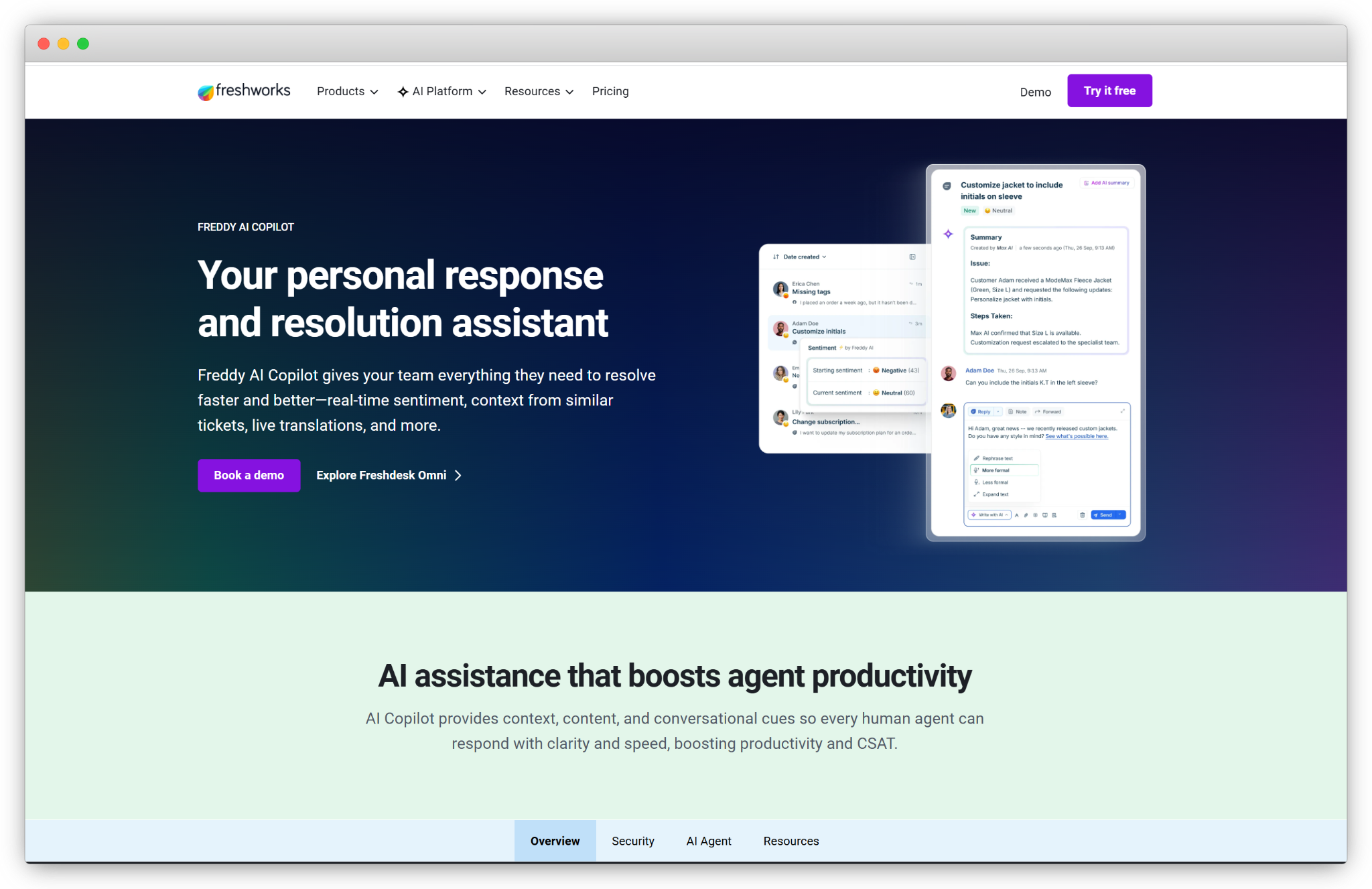
Freshdesk, now Freshworks, is a popular AI customer support platform for growing businesses and SMBs. Its AI suite, Freddy AI, helps businesses automate repetitive support tasks, suggest responses to agents, summarize tickets, and improve ticket management workflows.

Key Features

  • AI ticket routing and prioritization
  • AI-generated reply suggestions
  • Omnichannel support
  • Knowledge base automation
  • Ticket summarization
  • Live chat and email support

Best For

  • SMBs and mid-sized businesses
  • Companies looking for affordable AI support software

Pros

  • User-friendly interface
  • Affordable compared to enterprise tools
  • Good omnichannel support capabilities
  • Free plan available for small teams

Limitations

  • Advanced customization can be limited
  • Enterprise AI workflows are less advanced than Zendesk or Intercom

Pricing

Starts at $29 per agent/month, depending on plan and AI features.

3. Zendesk AI

GenAI Tool: Zendesk

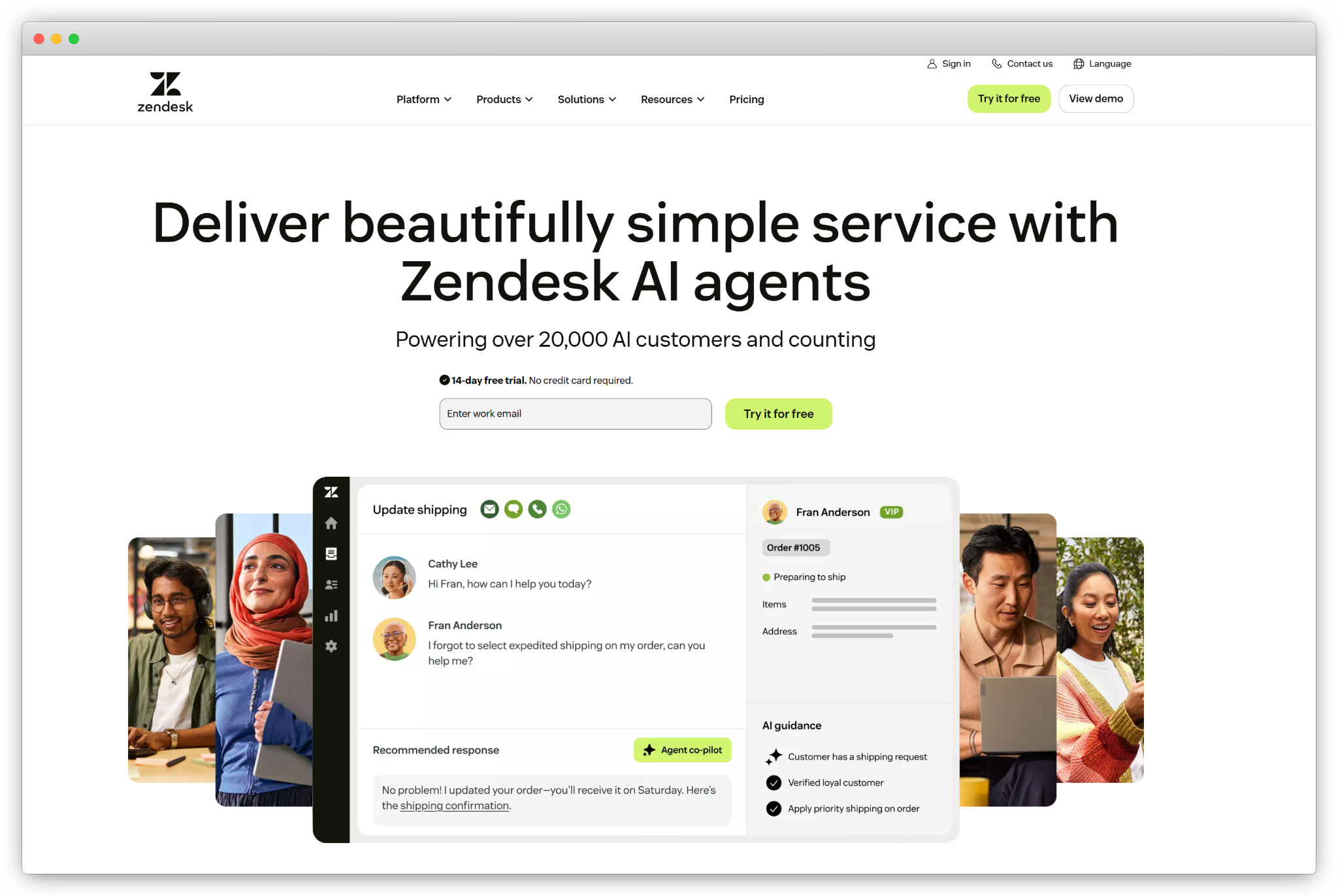
Zendesk is another enterprise customer service platform globally. Its AI capabilities help businesses automate ticket resolution, assist agents with AI-generated responses, and improve customer self-service experiences.

Key Features

  • AI-powered ticket management
  • AI agents and copilots
  • Omnichannel customer support
  • Advanced analytics and reporting
  • Knowledge base integrations.
  • Workflow automation

Best For

  • Large enterprises
  • High-volume support teams
  • Businesses needing advanced customization

Pros

  • Enterprise-grade scalability
  • Strong integration ecosystem
  • Advanced AI automation capabilities
  • Robust analytics

Limitations

  • Higher pricing compared to competitors
  • Can require longer setup and onboarding time

Pricing

Starts at $55 per agent/month for Suite Team, which allows you to automate service with AI.

4. Intercom Fin AI

GenAI Tool: Intercom

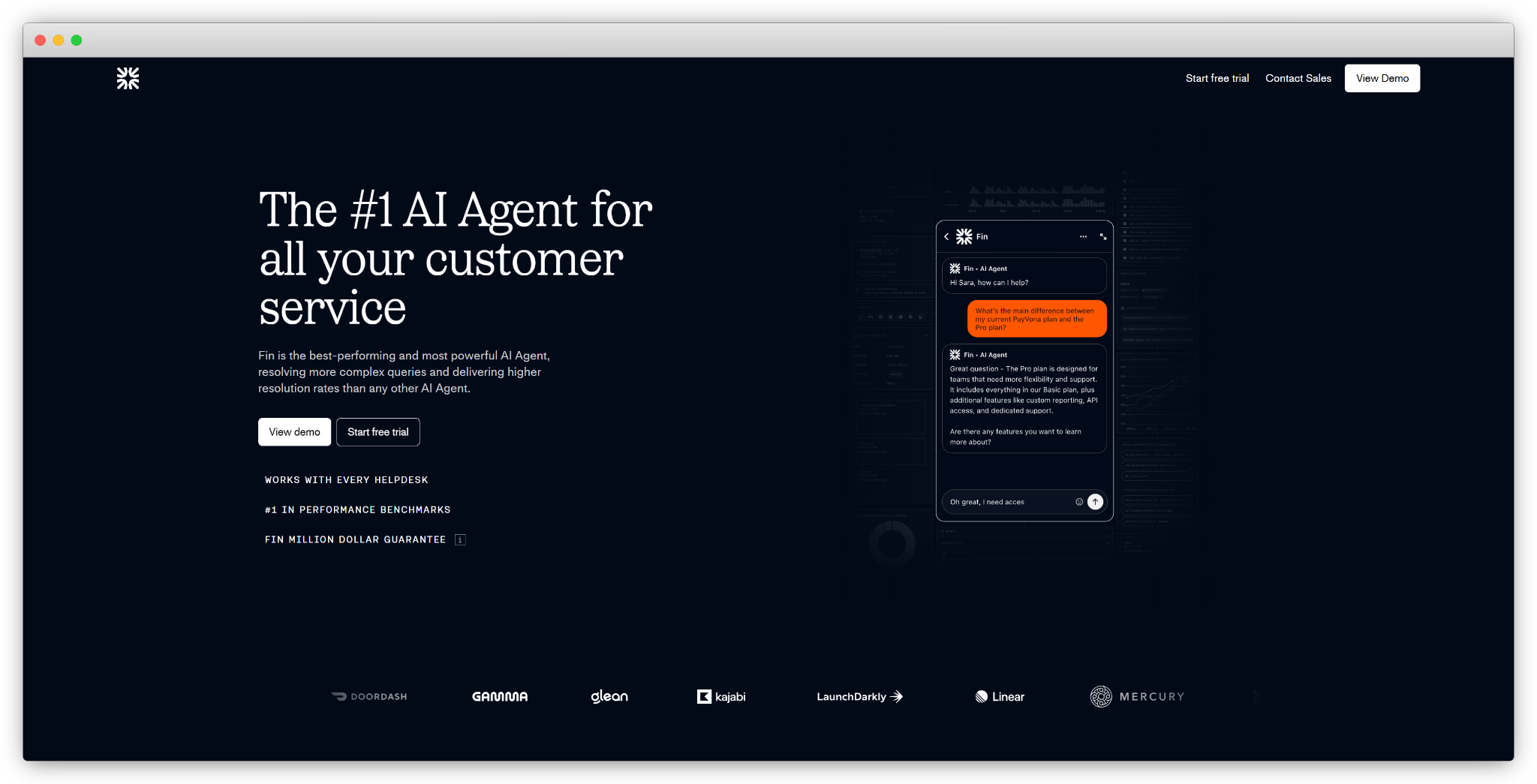
Intercom is known for a conversational and chat-first support experience. Its AI agent, Fin AI, is designed to answer customer questions using the company's knowledge bases and past conversations.

Key Features

  • AI customer support agent
  • Conversational live chat
  • AI-powered onboarding support
  • Knowledge base integration
  • Human handoff workflows
  • Proactive customer messaging

Best For

  • SaaS companies
  • Product-led growth businesses
  • Tech startups

Pros

  • Excellent conversational experience
  • Strong AI-powered onboarding workflows
  • Modern and intuitive interface
  • Effective knowledge base automation

Limitations

  • Pricing can become expensive at scale
  • Better suited for chat-first support environments

Pricing

Essential plan starts at $29/seat/month.

5. Zoho Desk AI (Zia)

GenAI Tool: Zoho Desk

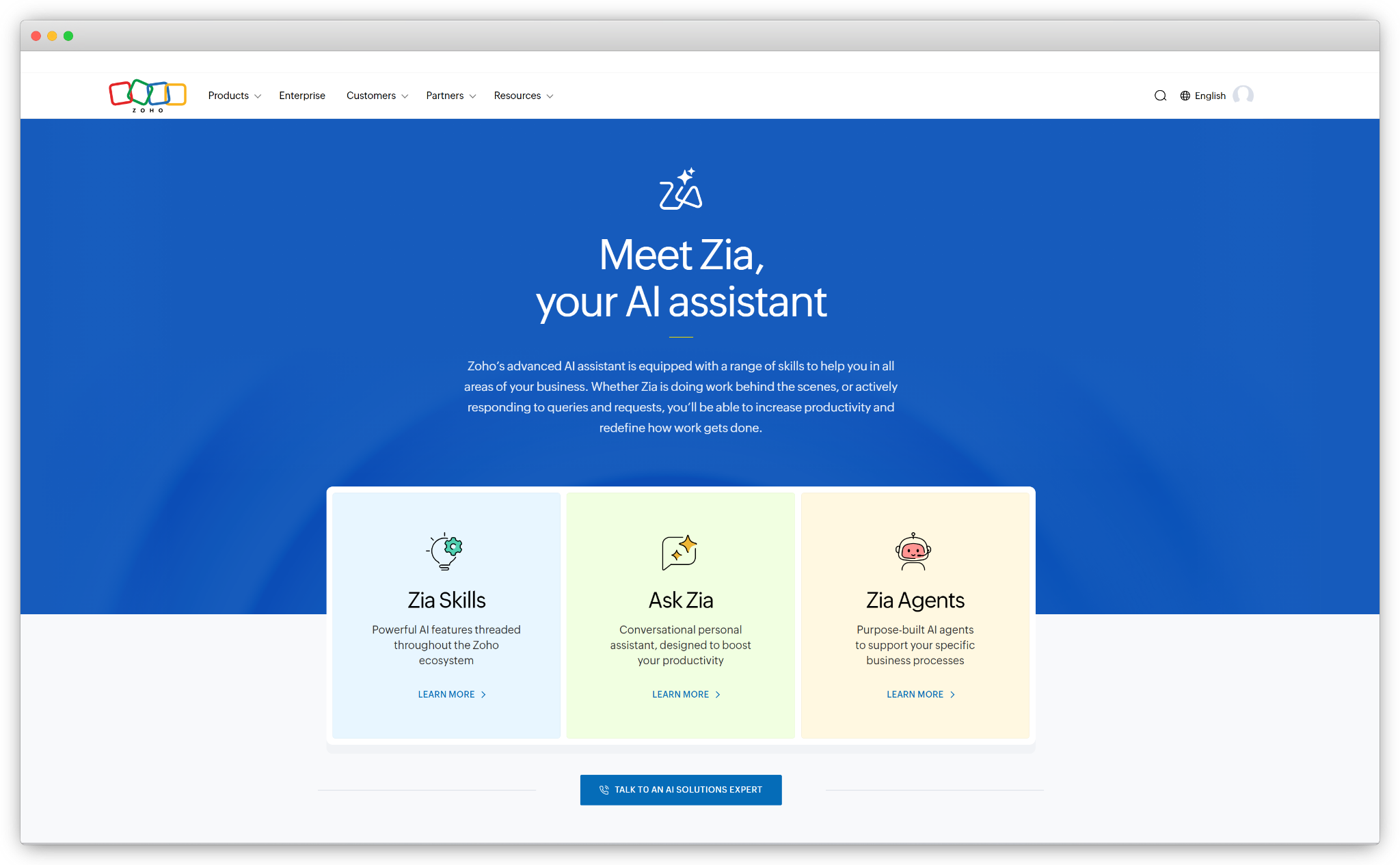
Zoho Desk uses its AI assistant, Zia, to help businesses automate support workflows, analyze tickets, and assist support agents. It is especially popular among SMBs already using the Zoho ecosystem.

Key Features

  • AI-powered ticket analysis
  • Workflow automation
  • Sentiment analysis
  • Omnichannel support
  • CRM integration
  • Knowledge base suggestions

Best For

  • SMBs
  • Businesses already using Zoho products

Pros

  • Affordable pricing
  • Strong CRM integration
  • Good for growing businesses
  • Easy adoption for Zoho users

Limitations

  • Less advanced AI capabilities compared to enterprise-focused platforms
  • Limited customization for highly complex workflows

Pricing

Starts at $7 per user/month billed annually.

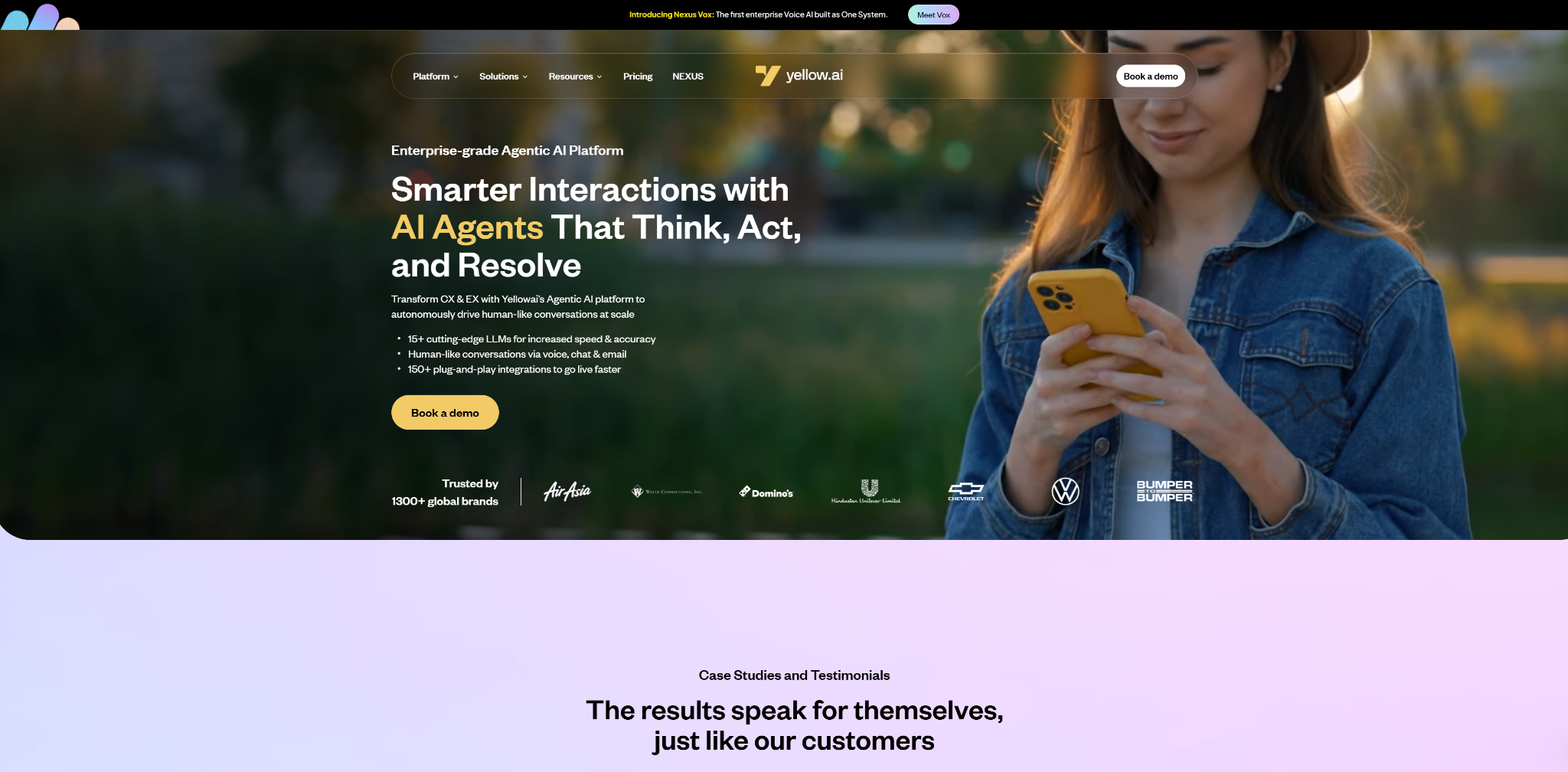
6. Yellow.ai

GenAI Tool: Yellow.ai

Yellow.ai is an enterprise conversational AI platform that supports both chat and voice automation across multiple channels.

Key Features

  • AI voice agents
  • Conversational AI chatbots
  • 150+ Integrations
  • Omnichannel automation
  • Multilingual AI support
  • Enterprise workflow automation

Best For

  • Enterprises
  • BFSI and telecom companies
  • Large-scale automation use cases

Pros

  • Strong multilingual capabilities
  • Voice and chat automation
  • Enterprise-ready infrastructure

Limitations

  • Higher implementation complexity
  • Pricing can be expensive for smaller businesses

Pricing

Custom enterprise pricing.

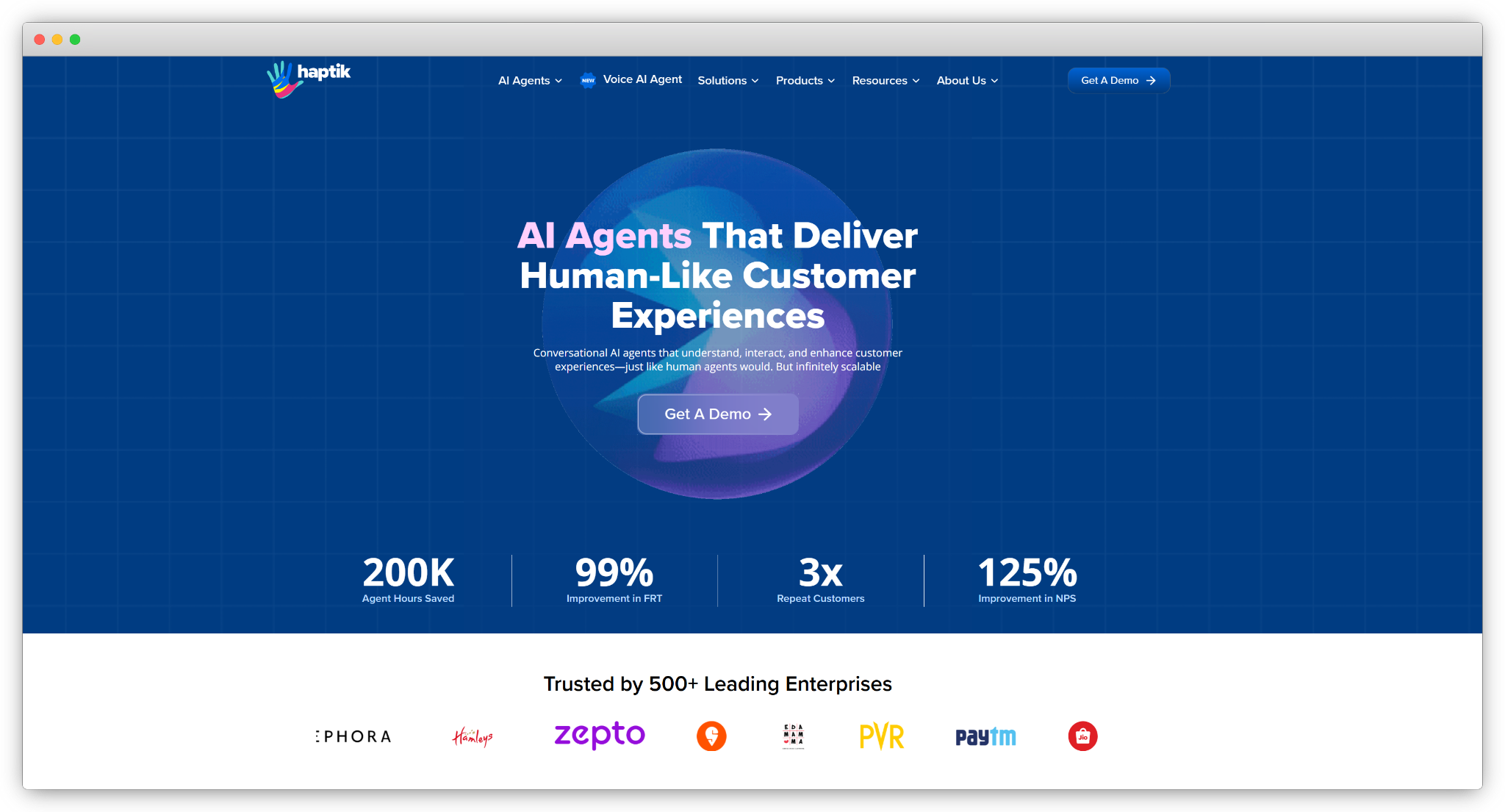
7. Haptik

GenAI Tool: Haptik

Haptik is another well-known conversational AI platform in India that focuses heavily on WhatsApp automation and enterprise customer engagement.

Key Features

Best For

  • Enterprises
  • Customer engagement teams
  • WhatsApp support automation

Pros

  • Strong presence in the Indian market
  • Good WhatsApp automation capabilities
  • Multilingual support options

Limitations

  • Enterprise-focused pricing
  • Requires implementation support for advanced workflows

Pricing

Custom pricing based on use case and scale.

Key Benefits of Generative AI for Customer Support

Businesses are adopting generative AI because it improves both customer experience and operational efficiency. Some of the major benefits include:

  1. Faster Response Times: AI agents can instantly respond to customer queries without long waiting times.
  2. 24/7 Customer Support: Businesses can offer round-the-clock assistance even outside support hours.
  3. Reduced Support Workload: AI can automate repetitive Tier-1 queries like order tracking, FAQs, refunds, appointment scheduling, and account-related questions.
  4. Personalized Conversations: Generative AI can use customer history and context to provide more relevant responses.
  5. Multilingual Customer Support: This is especially important in India, where customers often prefer interacting in regional languages.
  6. Better Scalability: Businesses can handle thousands of conversations simultaneously without significantly increasing support team size.

As AI models continue to improve, generative AI is becoming less of an optional technology and more of a core customer service requirement for modern businesses.

Real Use Cases of Generative AI for Customer Service

Businesses across industries are using AI-powered customer support tools to automate conversations, improve customer experience, and reduce manual workload. These conversations are not limited to one channel. Customers may reach out through WhatsApp, RCS, SMS, email, website chat, social media, or voice support.

Here are some common real-world use cases of generative AI for customer service.

Ecommerce and Quick Commerce: Order Tracking and Cart Recovery

Ecommerce brands receive repetitive queries around order status, delivery timelines, refunds, product availability, and payment issues. Generative AI can automate these conversations while keeping the experience personalized.

For example, if a customer asks, “Where is my order?”, the AI assistant can:

  • Check order status in real time
  • Share shipping updates
  • Estimate delivery timelines
  • Help with refund or cancellation requests
  • Recommend products based on browsing or purchase history
  • Trigger abandoned cart reminders through WhatsApp, RCS, SMS, or email

This helps brands reduce support workload, improve response speed, and increase conversions.

Banking and Fintech: Instant Account and Transaction Support

Banks and fintech companies can use generative AI to handle common customer queries related to accounts, payments, cards, loans, and security.

For example, a customer may ask:

  • “What is my account balance?”
  • “How do I reset my password?”
  • “Why did my transaction fail?”
  • “How can I increase my credit card limit?”

The AI assistant can share the right steps, verify customer details where required, guide users through password reset, explain loan or card eligibility, and escalate sensitive issues to a human agent.

Healthcare: Appointment and Patient Support

Hospitals, clinics, and healthcare providers can use AI-powered support to manage routine patient communication.

Patients can use chat, WhatsApp, SMS, or email to:

  • Book appointments
  • Reschedule consultations
  • Receive prescription reminders
  • Get test report updates
  • Ask basic service-related questions
  • Receive follow-up instructions after a visit

This reduces pressure on front-desk teams and improves patient communication.

Education: Student Query and Schedule Management

Educational institutions and edtech platforms receive large volumes of queries related to admissions, classes, fees, exams, and certificates. Generative AI can help students and parents get quick answers without waiting for admin teams.

For example, AI can help with:

  • Admission queries
  • Course eligibility questions
  • Exam schedule updates
  • Class booking or rescheduling
  • Fee payment reminders
  • Study material access
  • Communication around timetable changes

This is especially useful during admission periods, exam seasons, and batch launches.

Automotive: Test Drive Booking and Dealership Communication

Automotive brands and dealerships can use AI to manage customer enquiries across channels like WhatsApp, website chat, SMS, RCS, and email.

The AI assistant can help customers:

  • Book a test drive
  • Check vehicle availability
  • Compare models
  • Ask about pricing or offers
  • Schedule a dealership visit
  • Get service reminders
  • Receive insurance or warranty renewal updates

This helps dealerships respond faster and avoid losing leads due to delayed follow-ups.

Real Estate: Site Visits and Lead Qualification

Real estate businesses can use generative AI to qualify leads and manage property enquiries automatically.

For example, AI can help users:

  • Book a free site visit
  • Ask about property pricing
  • Check location and amenities
  • Get project brochures
  • Confirm visit timing
  • Reschedule appointments
  • Receive payment or documentation reminders

This allows real estate teams to manage more leads without depending only on manual calling.

SaaS and Technology: Product Support and Onboarding

SaaS companies can use AI-powered support to help users with onboarding, troubleshooting, and product education.

For example, if a customer asks, “How do I integrate this platform with Shopify?”, the AI assistant can:

  • Share step-by-step instructions
  • Suggest help articles
  • Check basic setup issues
  • Guide the user through configuration
  • Escalate complex issues to a support agent

This helps reduce ticket volume and improve product adoption.

Travel and Hospitality: Booking and Reservation Support

Travel companies, hotels, and hospitality brands can use AI to answer booking-related questions and support customers across chat, email, SMS, and messaging channels.

The AI assistant can help with:

  • Booking confirmations
  • Rescheduling requests
  • Cancellation policy questions
  • Room availability
  • Travel updates
  • Check-in instructions
  • Offer recommendations

This improves response time and creates a smoother customer experience before, during, and after the booking.

How to Choose the Right Gen AI Tool for Customer Service 

Choosing the right generative AI for customer support is not just about selecting the most advanced AI tool. The ideal platform should match your business goals, customer communication preferences, and support workflows. Since customer expectations in India are very different from those in many global markets, businesses should evaluate AI tools based on practical usability rather than just AI features.

Here are some of the most important factors to consider before choosing a gen AI for a customer service platform.

Choose a Platform That Supports Your Primary Communication Channels

The first step is understanding where your customers prefer to interact with your business.

For many Indian businesses, especially ecommerce, quick commerce, logistics, and D2C brands, WhatsApp, RCS, and email have become the primary customer support channel. Others may rely more on website chat, SMS, or voice support. 

Look for an AI platform that provides support for the channels your customers actively use instead of forcing them into a single communication method.

Look for Strong Multilingual and Natural Language Understanding

Indian customers often communicate using mixed-language conversations, slang, and regional phrases. A good AI support platform should be able to understand natural conversations even when customers switch between Hindi, English, or regional languages.

For example, if a customer asks:
“Mera order kab deliver hoga?” or “Where is my Order?”

The AI should automatically recognize this as an order tracking query and respond accurately without human intervention.

This becomes especially important for businesses serving customers across Tier 2 and Tier 3 cities.

Evaluate Integration Capabilities

Every business uses a different set of tools to manage customer support, sales, orders, payments, and deliveries. An ecommerce brand may use Shopify or WooCommerce, a sales-led business may use HubSpot or Salesforce, and a support-heavy team may depend on Zendesk, Freshdesk, or Zoho Desk. Similarly, logistics teams may rely on Shiprocket, Delhivery, BlueDart, or other delivery partners.

That is why the right Gen AI customer service platform should integrate smoothly with your existing tech stack instead of forcing your team to change how they work.

Ensure Smooth Human Handoff

AI can automate a large number of customer interactions, but some issues still require human support.

The platform should allow easy escalation from AI to support agents while transferring the complete conversation history and customer context. This prevents customers from repeating their problems and creates a much smoother support experience.

Check Analytics, Scalability, and Pricing

A good AI customer support platform should not only automate conversations but also help businesses measure performance and scale efficiently.

Look for features like:

  • CSAT and response-time tracking
  • AI resolution rates
  • Conversation analytics
  • Agent performance reports

At the same time, evaluate pricing carefully. Some tools may seem affordable initially but become expensive as conversation volume grows.

The best generative AI for customer support is ultimately the one that improves customer experience while fitting your business size, workflows, and long-term growth plans.

Turn 1 time visitor into repeat customer with WhatsApp marketing

Leverage the untapped growth potential of WhatsApp marketing to acquire and retain customers.

Frequently Asked Questions

What is generative AI for customer support?

Generative AI for customer support refers to AI-powered systems that can understand customer queries and generate human-like responses in real time. Unlike traditional rule-based chatbots, generative AI can handle more natural conversations, understand context, and assist customers across channels like WhatsApp, email, live chat, and social media.

How is Gen AI customer service different from traditional chatbots?

Traditional chatbots work on predefined rules and fixed workflows, which limit their ability to handle complex conversations. Generative AI tools can understand intent, process natural language, generate personalized responses, and manage more dynamic customer interactions, making the experience feel more conversational and human-like.

Can generative AI support multilingual customer service in India?

Yes, many modern generative AI customer support platforms offer multilingual capabilities, including support for Hindi and several regional Indian languages. This helps businesses provide more accessible and personalized customer experiences across diverse customer groups.

How does generative AI help reduce customer support costs?

By automating repetitive customer queries and reducing manual workload, generative AI helps businesses lower support costs, improve agent productivity, and manage larger customer volumes without significantly increasing support team size.

Is generative AI secure for handling customer conversations?

Most enterprise-grade AI customer support platforms offer security and compliance features to protect customer data. However, businesses should evaluate privacy policies, data handling practices, and compliance standards before choosing a platform.

Can generative AI replace human customer support agents?

Generative AI can automate repetitive and routine customer interactions, but human agents are still important for handling complex issues, escalations, and emotionally sensitive conversations. Most businesses use AI to assist support teams rather than fully replace them.