Top 11 RCS Messaging Providers in India (2026): Best Platforms for Bulk RCS & Automation

Copied to clipboard!
RCS messaging is gaining popularity among Indian businesses for the same reason WhatsApp chatbots became popular, i.e., brands want faster, richer, and more interactive ways to reach customers. 

Traditional SMS is still useful for basic alerts, but it is limited to plain text. RCS, on the other hand, allows businesses to send bulk messages with images, videos, product cards, carousels, suggested replies, and clickable CTA buttons directly inside the customer’s default messaging app.

For Indian businesses, this makes RCS useful for promotional campaigns, product discovery, abandoned cart recovery, order updates, appointment reminders, lead qualification, customer support, and post-purchase engagement

Instead of sending a plain text message, brands can create an app-like messaging experience without asking customers to download another app.

The comparison is not just on the SMS vs RCS level, but also on the WhatsApp vs RCS level in terms of how it enables delivery enhancement when used with WhatsApp, thus getting more business for the brand.

However, you need the right RCS messaging provider who can help you with your business objectives. Some platforms are better for API-based messaging, some fit for enterprise communication, and some offer complete automation across RCS, WhatsApp, SMS, Instagram, Messenger, and website conversations.

In this blog, we compare the top RCS messaging providers in India for 2026 and help you choose the best platform for bulk RCS messaging, RCS automation, and customer engagement for your business.

Quick Comparison: Top 11 RCS Messaging Providers 

Here is a quick comparison of the top RCS messaging providers based on automation capability, pricing approach, and the type of business they are best suited for.

Provider Automation Capability Price / Pricing Indication Best For
QuickReply.ai Advanced, supports RCS-led automation, WhatsApp-to-RCS fallback, omnichannel journeys, campaigns, chatbots, and customer engagement workflows Starts from ₹2,999/month for omnichannel messaging; RCS messaging charges ₹0.20/message D2C brands, ecommerce, education, healthcare, retail, F&B, and service businesses that want RCS with WhatsApp and omnichannel automation
Gupshup Advanced, supports conversational messaging, RCS campaigns, AI chatbots, and multi-channel customer engagement Custom / quote-based pricing Enterprises, retail brands, BFSI, conversational commerce, and support-led businesses
Infobip Advanced, strong CPaaS infrastructure with APIs, campaign tools, automation, and global messaging support Flexible pricing based on destination, carrier, message volume, and message type Large enterprises, telecom, BFSI, logistics, and global communication teams
Sinch Advanced, API-first communication platform for RCS, SMS, WhatsApp, and other messaging channels Custom / carrier-dependent pricing; RCS cost varies by market and message type Enterprises, developers, logistics, retail, and businesses needing API-first messaging infrastructure
Netcore Cloud Strong, supports RCS journeys, customer engagement automation, segmentation, and campaign workflows Custom / quote-based pricing Marketers, ecommerce brands, consumer brands, and customer engagement teams
MSG91 Basic to Moderate, supports RCS campaigns, APIs, dashboards, and developer-friendly messaging workflows India RCS plans start from ₹2,000/month; usage billed as per rate card SMBs, startups, developers, and Indian businesses looking for affordable RCS access
Route Mobile Strong, supports enterprise CPaaS, RCS APIs, SMS fallback, campaign analytics, and visual-builder integration Custom pricing based on business requirements, volume, and provider model Enterprises, BFSI, retail, telecom, and brands needing fallback-led messaging
Twilio Strong, developer-first RCS, programmable messaging, APIs, and multi-channel messaging infrastructure Starts from $0.0083/message for RCS in listed markets; destination and carrier fees may apply SaaS companies, marketplaces, developers, product teams, and tech-led businesses
Bird / MessageBird Strong, supports campaigns, journeys, inbox, AI agents, and RCS as part of multi-channel messaging RCS from $0.005/message plus passthrough charges Global brands, travel companies, ecommerce businesses, and teams needing campaigns plus inbox
Tata Communications Kaleyra Strong, enterprise CPaaS with RCS, SMS, WhatsApp, email, voice, campaign management, and workflow automation Custom/enterprise pricing Large enterprises, BFSI, telecom, retail, and businesses needing secure CPaaS infrastructure
Webex Connect / IMImobile Advanced, enterprise CPaaS and journey orchestration across RCS, SMS, WhatsApp, email, live chat, Messenger, and more Custom/enterprise pricing Large enterprises, contact centers, regulated industries, and businesses needing journey orchestration across many channels

What is RCS Messaging?

RCS stands for Rich Communication Services. It is an upgraded form of mobile messaging that improves the traditional SMS experience with rich media, interactivity, branding, and better engagement features.

With RCS Business Messaging, businesses can send messages that include:

  • Brand name and logo
  • Verified sender identity
  • Images, videos, GIFs, and PDFs
  • Rich cards and product carousels
  • Suggested replies
  • Clickable CTA buttons
  • Delivery and read receipts
  • Two-way customer conversations

For example, instead of sending a plain SMS saying “Flat 20% off. Visit our website,” a fashion brand can send an RCS message with product images, a carousel of bestsellers, a “Shop Now” button, and a “Talk to Stylist” quick reply.

This is why RCS is becoming important for businesses that want to improve customer engagement without depending only on SMS or app notifications.

Why Indian Businesses Are Adopting RCS Messaging

Indian businesses are adopting RCS because it combines the reach of native messaging with the engagement of rich media. It gives brands a better way to run campaigns, automate customer journeys, and improve conversion rates.

Here are the main reasons businesses are exploring RCS in 2026:

  1. Bulk messaging with multimedia: RCS allows brands to send promotional and transactional messages with images, videos, product cards, and carousels. This makes it more engaging than plain SMS.
  2. Better brand visibility: RCS messages can show the brand name, logo, and verified sender identity. This helps customers recognize the business and improves trust.
  3. Interactive customer journeys: With buttons and suggested replies, customers can take action directly from the message. They can shop, book, track, confirm, reply, or contact support without typing a long response.
  4. Useful for automation: RCS can be used in automated journeys such as abandoned cart recovery, product recommendations, order updates, reminders, feedback collection, and lead nurturing.
  5. Strong fit for omnichannel communication: RCS does not need to replace WhatsApp, SMS, or email. It can work along with them. For many Indian businesses, the best approach is to use RCS for rich engagement, WhatsApp for conversations and commerce, and SMS as a fallback channel.
  6. Better Delivery: RCS gives businesses an additional way to reach customers beyond WhatsApp-only campaigns. Since RCS is not dependent on WhatsApp template approvals, opt-in rules, or per-user marketing message limits, it can help reduce failed communication opportunities and improve overall campaign reach when used as part of an omnichannel strategy. 

How to Choose the Best RCS Messaging Provider in India

Before choosing an RCS provider, businesses should check more than just pricing. A good RCS platform should support both message delivery and automation.

Here are the factors to evaluate:

  1. RCS automation capabilities: Check whether the platform supports automated journeys, drip campaigns, customer segmentation, triggers, and follow-up workflows.
  2. Bulk RCS messaging: If you want to run campaigns, the provider should support high-volume sending, audience uploads, scheduling, and campaign reporting.
  3. Rich media support: The provider should support images, videos, cards, carousels, suggested replies, and CTA buttons.
  4. Two-way messaging: For customer support, lead qualification, and feedback, two-way messaging is important.
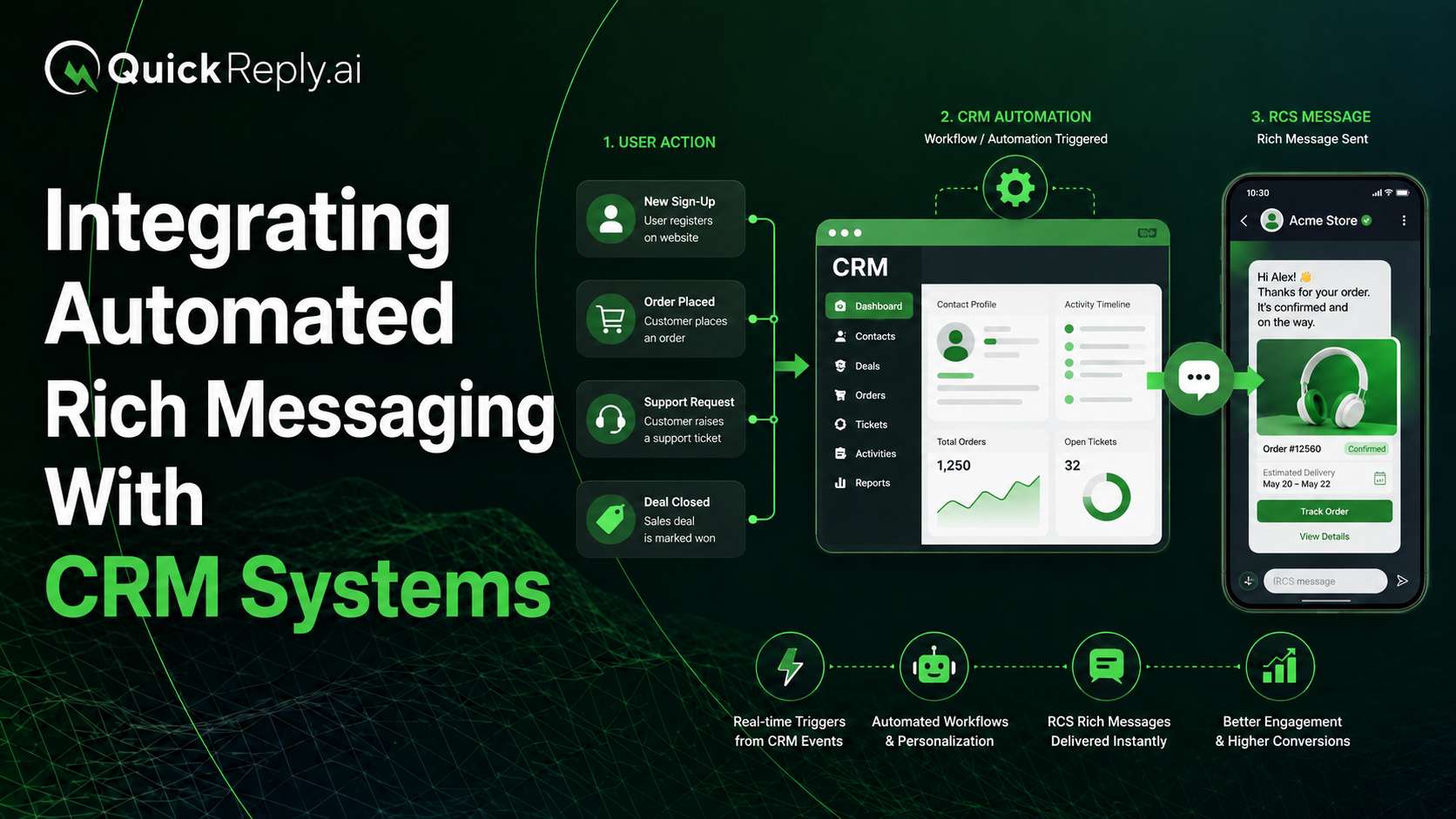
  5. API and integration support: If you want to connect RCS with Shopify, CRM, helpdesk, app, or backend systems, API support is essential.
  6. Omnichannel fallback: Not every customer may be reachable through RCS at all times. A good platform should support fallback through SMS, WhatsApp, or other channels.
  7. Analytics and tracking: Check whether the platform gives delivery status, read receipts, clicks, responses, conversions, and campaign performance reports.
  8. India-specific support: For Indian businesses, onboarding support, sender verification guidance, compliance handling, and local customer support can make implementation easier. 

Top 11 RCS Messaging Providers in India

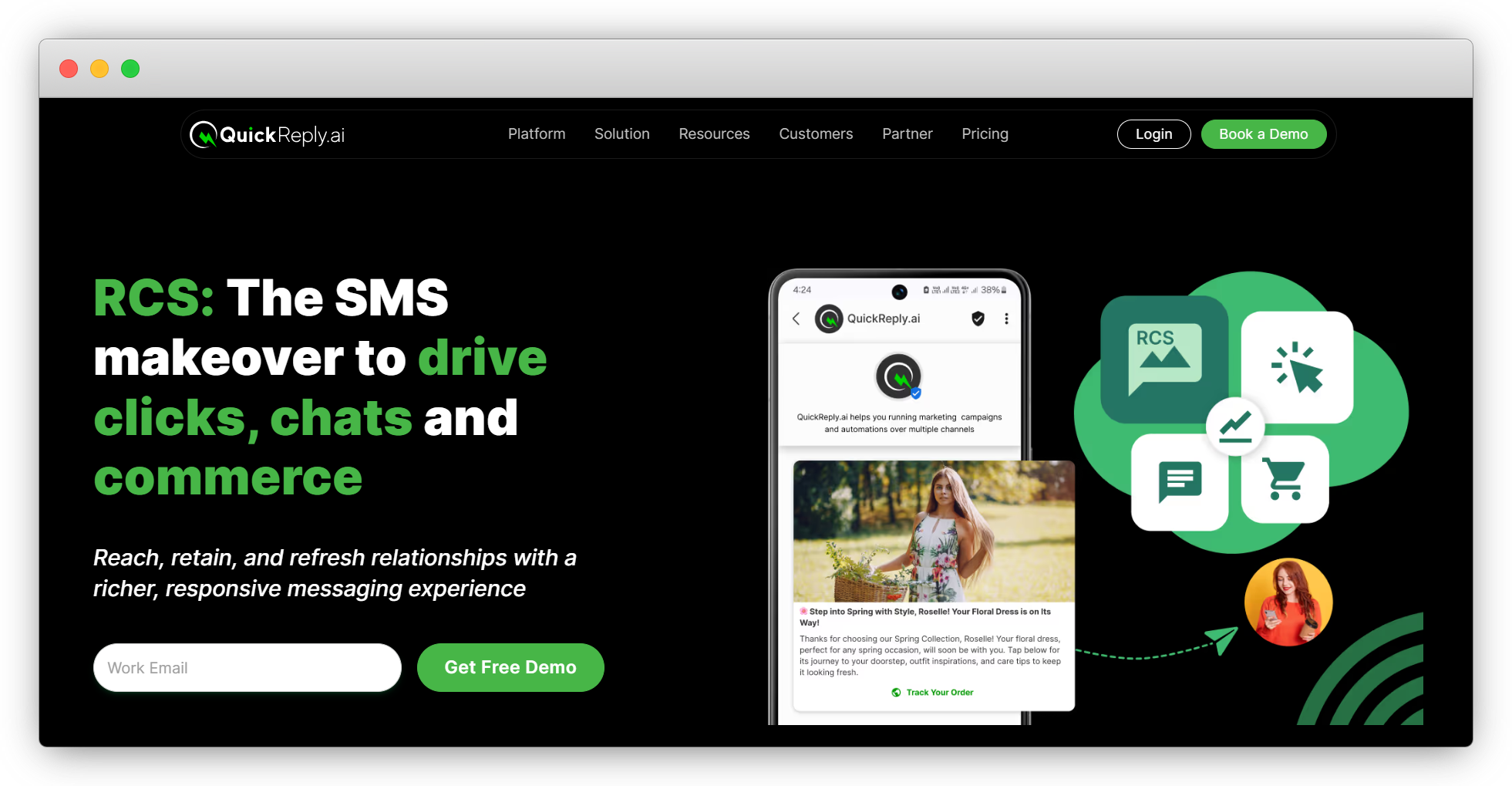
1. QuickReply.ai

QuickReply.ai

QuickReply.ai is one of the best RCS messaging and automation platforms for Indian businesses that want to go beyond plain SMS and create richer customer engagement journeys.

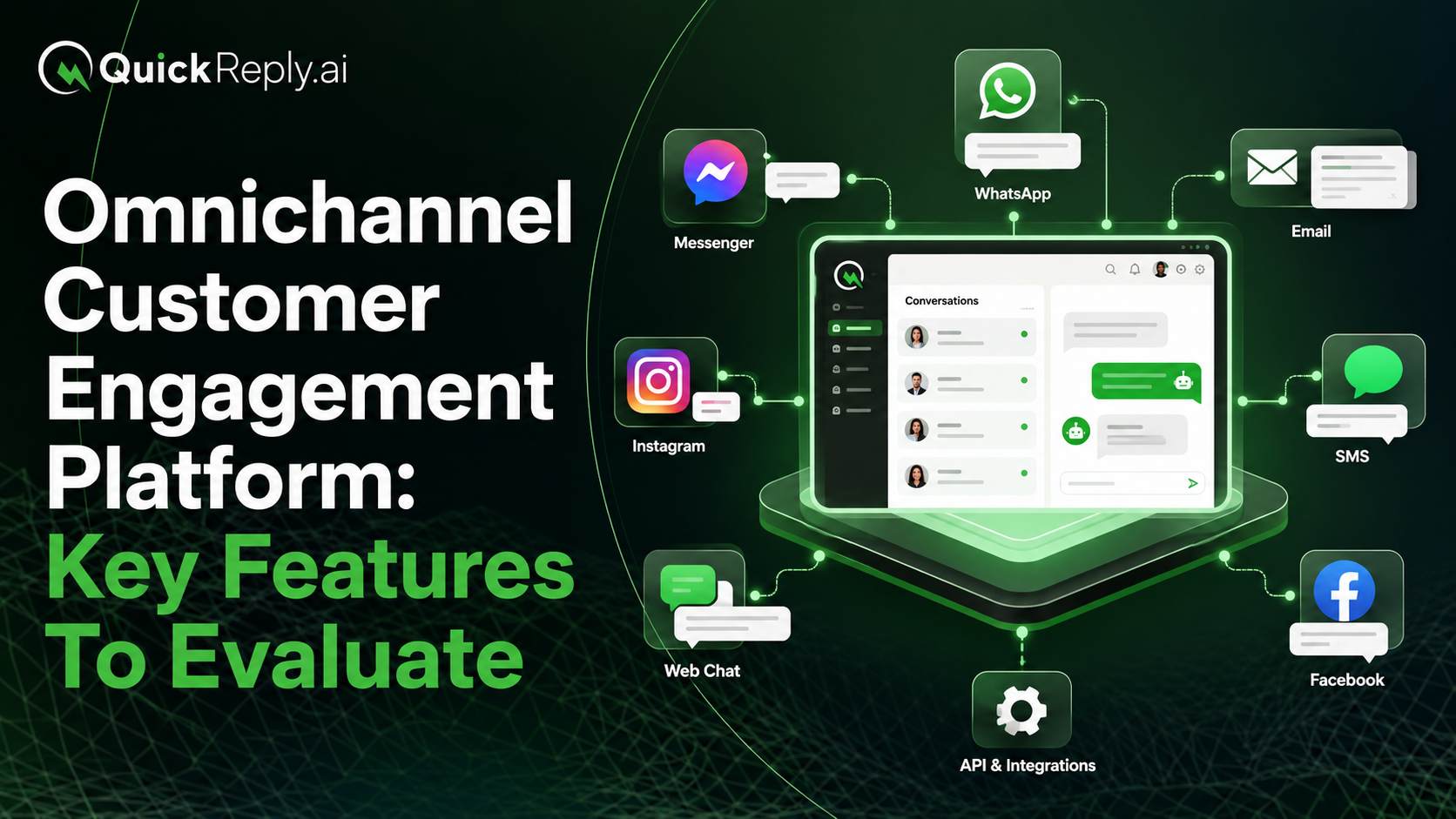
The platform supports RCS along with WhatsApp, SMS, Instagram, Messenger, and website conversations. This makes QuickReply.ai a strong choice for businesses that want to manage bulk campaigns, automated follow-ups, customer conversations, and omnichannel communication from one place.

For RCS, QuickReply.ai helps brands create interactive messaging experiences using product carousels, videos, rich media, clickable buttons, and personalized recommendations. This is especially useful for Shopify brands, e-commerce stores, D2C businesses, education companies, healthcare providers, and service-led businesses that want to improve customer engagement and conversions.

Key Features  

  • Bulk RCS messaging for campaigns and customer engagement
  • RCS automation workflows for customer journeys
  • Rich media support, including images, videos, and carousels
  • Clickable CTA buttons such as “Shop Now,” “Claim Discount,” or “Track Order”
  • Personalized recommendations based on customer behavior
  • Shopify-linked messaging use cases
  • Omnichannel automation across RCS, WhatsApp, SMS, Instagram, Messenger, and website chat
  • AI chatbot and agent handover support
  • Customer segmentation and campaign analytics
  • Suitable for promotional, transactional, and conversational engagement

Why Choose 

Choose QuickReply.ai if you want an RCS automation platform that is not limited to message delivery. It is best suited for businesses that want to run bulk RCS campaigns, automate customer journeys, and manage conversations across multiple channels from a single platform.

QuickReply.ai is especially useful for Indian e-commerce, D2C, retail, education, healthcare, and service businesses that want RCS along with WhatsApp and other customer engagement channels.

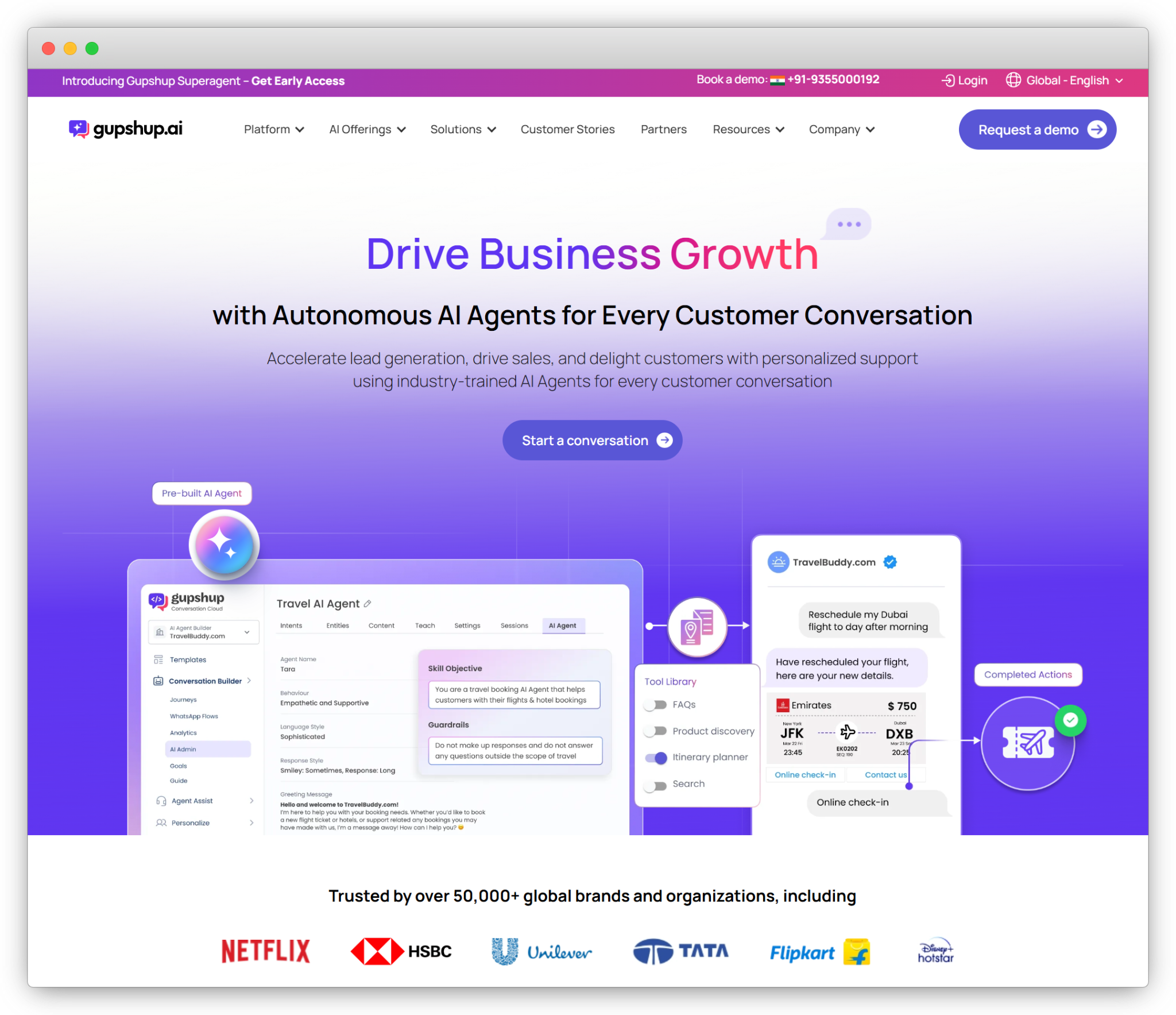
2. GupShup

Gupshup

GupShup is a conversational messaging and AI platform that offers RCS Business Messaging for brands that want rich, two-way customer communication. It is a strong option for businesses looking for APIs, conversational journeys, and customer engagement automation.

GupShup’s RCS capabilities include rich media, carousels, action buttons, and AI-led journeys. It can be used for marketing campaigns, customer support, product discovery, order tracking, and post-purchase communication.

Key Features 

  • RCS API for rich business messaging
  • Images, GIFs, videos, rich cards, carousels, and action buttons
  • Two-way customer conversations
  • AI-led journeys
  • Human agent handover
  • RCS support for customer service and post-purchase queries
  • Omnichannel messaging support
  • Campaign and engagement analytics

Why Choose

Choose GupShup if you want an established conversational messaging platform with strong API and automation capabilities. It is suitable for enterprises, D2C brands, BFSI companies, retail businesses, and customer support teams that want to use RCS for interactive customer communication.

3. Infobip

Infobip

Infobip is a global omnichannel communication platform that offers RCS Business Messaging along with SMS, WhatsApp, email, voice, and other channels. It is well-suited for large businesses that need scale, reliability, APIs, and omnichannel communication infrastructure.

Infobip supports RCS through APIs and broader omnichannel messaging tools. Businesses can use it for outbound campaigns, inbound messages, delivery reports, read receipts, capability checks, sender management, and template management.

Key Features 

  • RCS Business Messaging
  • RCS API, Messages API, and Conversations API support
  • Rich outbound messages in text, file, card, carousel, and template formats
  • Optional SMS or MMS failover
  • Delivery reports, seen reports, and message logs
  • Capability checks before sending
  • Sender and template management
  • Two-way conversations and inbound events
  • Omnichannel communication support

Why Choose 

Choose Infobip if you are an enterprise or large business that needs RCS as part of a global omnichannel communication strategy. It is suitable for BFSI, telecom, retail, travel, logistics, and high-volume messaging use cases.

4. Sinch

Sinch

Sinch offers business messaging APIs that support RCS along with SMS, MMS, WhatsApp, Facebook Messenger, and other channels. It is a strong option for enterprises that want to build messaging workflows across multiple channels using a single API layer.

Sinch’s Conversation API is useful for businesses that want automatic fallback, verified sender identities, rich media, AI chatbots, customer updates, and two-way customer service conversations.

Key Features  

  • RCS Business Messaging through Conversation API
  • Support for SMS, RCS, WhatsApp, Messenger, and other channels
  • Automatic fallback for better message delivery
  • Verified sender identities
  • Rich media and quick replies
  • AI chatbot support
  • Customer service and agent handover use cases
  • Marketing campaigns and customer update workflows

Why Choose 

Choose Sinch if your business needs an enterprise-grade messaging API with strong omnichannel coverage. It is best suited for large businesses, BFSI companies, logistics providers, retail brands, and developer-led teams that want RCS with fallback and multi-channel communication.

5. Netcore Cloud

Netcore Cloud

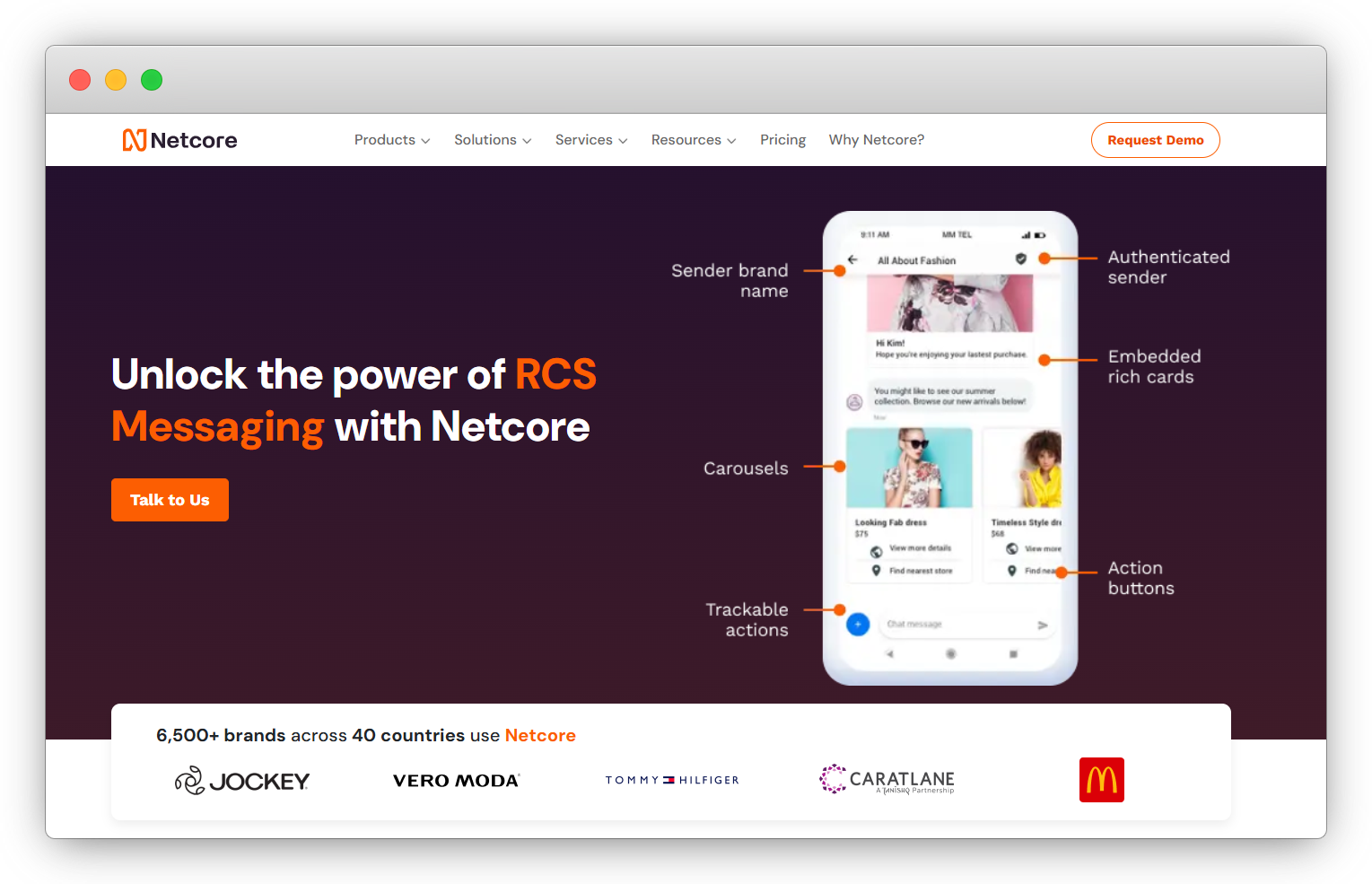
Netcore Cloud is a customer engagement and marketing automation platform that supports RCS inside its customer engagement ecosystem. It is useful for marketers who want to create RCS templates, run campaigns, and use RCS as part of broader customer journeys.

Netcore’s RCS capabilities include rich media, interactive elements, RCS templates, Google-verified RCS bots, and SMS-over-RCS fallback options. This makes it suitable for brands that already use Netcore for customer engagement and want to add RCS as another channel.

Key Features 

  • RCS templates inside Netcore CE dashboard
  • Rich media and interactive elements
  • Google-verified RCS bot setup
  • RCS integration through CPaaS
  • SMS-over-RCS upgrade option
  • Automatic fallback from RCS to SMS in supported workflows
  • Campaign and journey support
  • Suitable for promotional and transactional messaging

Why Choose  

Choose Netcore Cloud if your focus is on marketing automation, customer engagement, and lifecycle campaigns. It is suitable for e-commerce, retail, BFSI, consumer brands, and marketing teams that want to use RCS as part of a broader customer engagement platform.

6. MSG91

MSG91

MSG91 is an India-focused communication platform that offers RCS messaging and RCS API capabilities for businesses. It is a practical option for startups, SMBs, and developer-led companies that want to add RCS into their applications, CRM, or communication workflows.

MSG91 supports rich RCS conversations with branding, images, videos, carousels, and action buttons. It also provides India-specific RCS pricing, making it easier for businesses to estimate campaign costs.

Key Features 

  • RCS messaging for Indian businesses
  • RCS API access
  • Rich and interactive messages
  • Brand logo and sender identity
  • Images, videos, carousels, and action buttons
  • CRM and application integration
  • Delivery, read receipt, and response tracking
  • RCS pricing plans for India
  • Supports SMS, WhatsApp, email, voice, and other channels

Why Choose 

Choose MSG91 if you are an Indian SMB, startup, or developer-led business looking for RCS API access and transparent India-focused pricing. It is useful for businesses that want a practical way to start with RCS messaging without building complex enterprise infrastructure.

7. Route Mobile

Route Mobile

Route Mobile is a cloud communication platform that offers RCS Business Messaging for enterprises and high-volume senders. Its RCS platform supports rich media, two-way communication, personalization, chatbot integration, and SMS fallback.

Route Mobile is suitable for businesses that want to use RCS for onboarding, upsell, cross-sell, engagement, promotions, loyalty, feedback, and customer support.

Key Features  

  • RCS Business Messaging
  • Rich media messages with videos, images, audio, GIFs, and map locations
  • Branded and interactive customer communication
  • Two-way communication
  • Rich promotional campaigns
  • Product cross-selling possibilities
  • AI/ML chatbot integration
  • SMS fallback
  • API and business system integrations
  • Delivery tracking and read receipts

Why Choose

Choose Route Mobile if you are an enterprise or high-volume sender looking for CPaaS-led RCS messaging with API support, chatbot integration, fallback, and managed services.

8. Twilio

Twilio

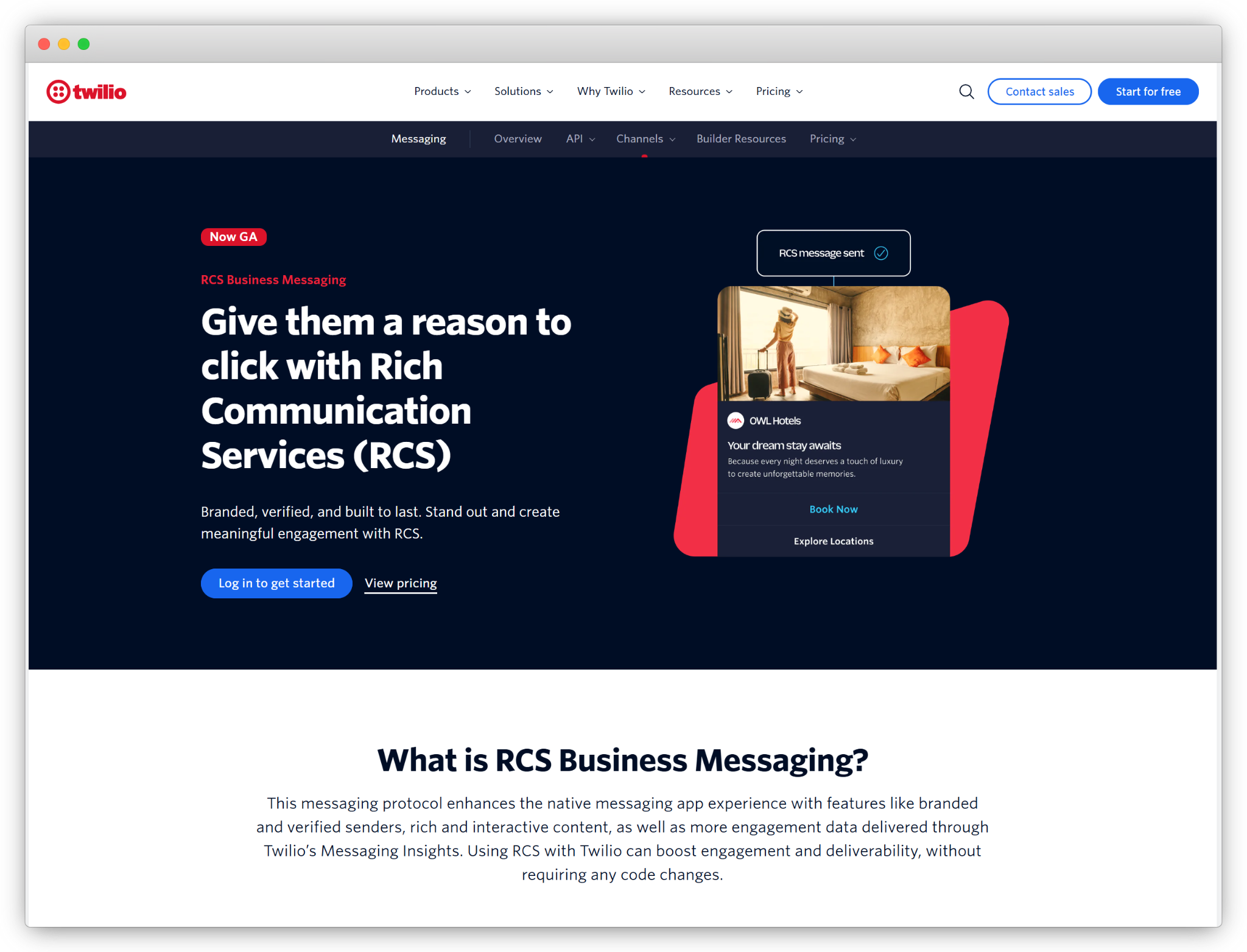
Twilio offers branded RCS messaging through its Programmable Messaging infrastructure. It is suitable for businesses and developers that already use Twilio for SMS, MMS, WhatsApp, or other communication channels and want to add RCS to their existing messaging setup.

Twilio’s RCS setup supports sender creation, branded profile configuration, fallback to SMS or MMS, opt-out handling, and integration with Messaging Services.

Key Features  

  • Branded RCS messaging
  • RCS sender setup through Twilio Console
  • SMS/MMS fallback using Messaging Services
  • RCS-first delivery when supported by the recipient’s device
  • Advanced opt-out handling
  • Programmable Messaging support
  • Developer-friendly APIs and documentation
  • Studio support for building messaging flows

Why Choose  

Choose Twilio if your business has strong developer resources and wants to add RCS into an existing API-based messaging stack. It is best suited for SaaS companies, marketplaces, technology-led businesses, and enterprises already using Twilio.

9. Bird / MessageBird

MessageBird

Bird, earlier known as MessageBird, supports Google RCS as part of its broader customer communication platform. It is useful for businesses that want to manage RCS campaigns, journeys, customer replies, and AI-assisted conversations from one ecosystem.

Bird allows businesses to send one-off RCS messages through Campaigns, build multi-step experiences through Journeys, handle replies through Inbox, and deploy AI Agents on the RCS channel.

Key Features  

  • Google RCS channel support
  • One-off RCS campaigns
  • Multi-step RCS journeys
  • Inbox support for customer replies
  • AI Agent support for automated conversations
  • Verified business name and logo
  • Delivery and read receipts
  • Omnichannel customer communication
  • Human handover through Inbox

Why Choose 

Choose Bird if you need an omnichannel messaging platform with RCS, campaigns, journeys, inbox, and AI automation. It is suitable for global businesses, travel companies, e-commerce brands, and teams that want customer conversations across multiple channels.

10. Kaleyra (Tata Communications) 

Kaleyra

Tata Communications Kaleyra offers RCS Business Messaging API capabilities for brands that want branded, interactive, and visually rich customer messaging. It is suitable for enterprises that need CPaaS infrastructure and business messaging support.

The platform supports RCS messages with buttons, quick replies, and rich media. It is useful for customer engagement, support, promotions, and interactive customer communication.

Key Features 

  • RCS Business Messaging API
  • Branded customer messaging
  • Interactive buttons and quick replies
  • Rich media support
  • Real-time customer interactions
  • CPaaS infrastructure
  • Support for customer engagement and support use cases
  • Suitable for enterprise messaging workflows

Why Choose 

Choose Tata Communications Kaleyra if you are an enterprise looking for CPaaS-led RCS messaging with branded communication, API support, and interactive customer engagement capabilities.

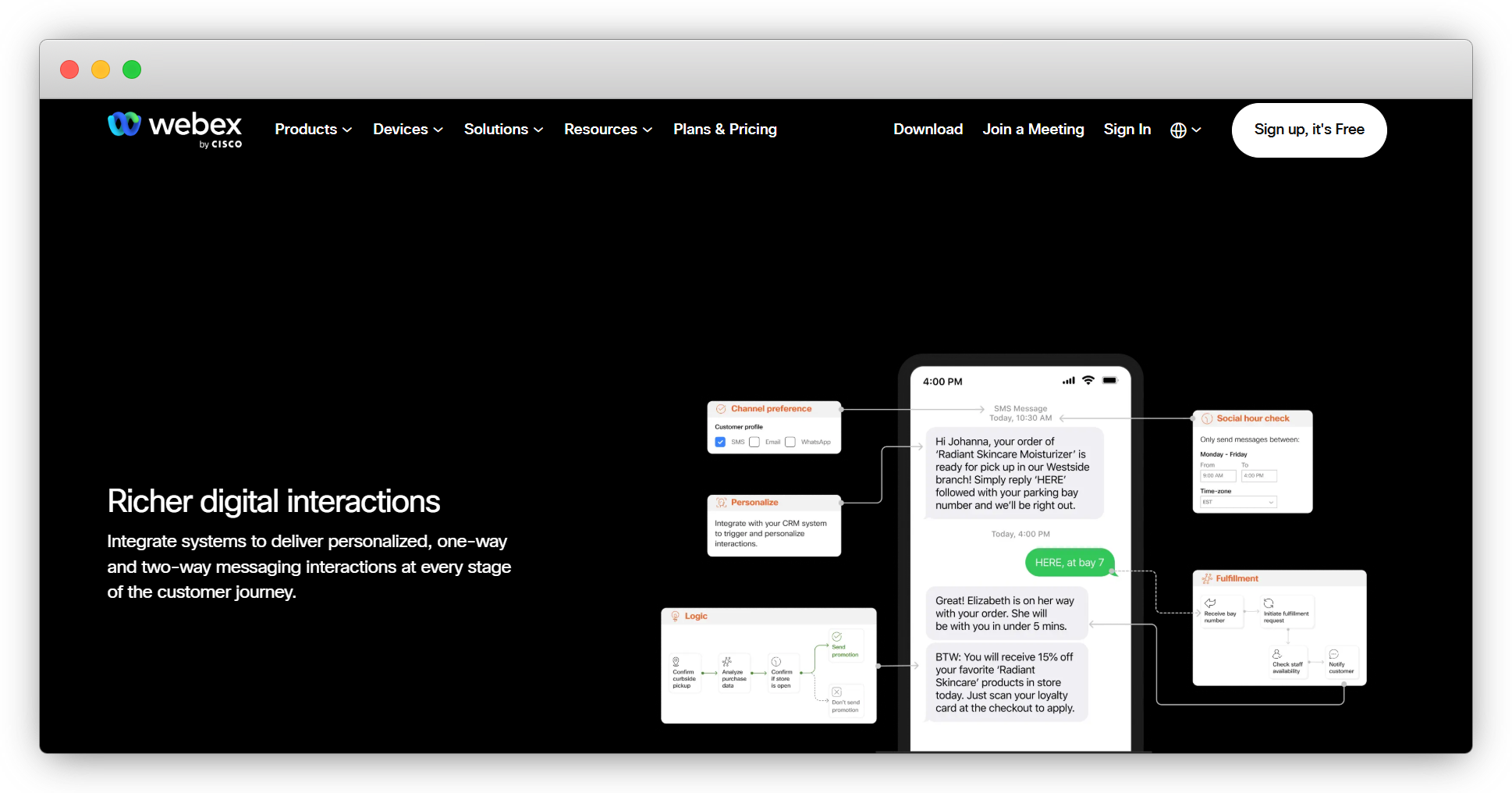
11. Webex Connect / IMImobile

Webex

IMImobile is now part of Cisco, and its customer interaction capabilities are represented through Webex Connect. Webex Connect is an enterprise CPaaS platform that supports RCS along with SMS, voice, email, WhatsApp, Facebook Messenger, Instagram, Apple Messages for Business, live chat, and other channels.

Webex Connect supports RCS through APIs and flow-based automation. It provides RCS capability lookup, RCS message nodes, rich cards, files, carousels, typing indicators, read receipts, and customer journey orchestration.

Key Features  

  • RCS APIs for programmatic messaging
  • RCS message node for flow-based automation
  • RCS capability lookup
  • Text, file/media, rich card, and carousel support
  • Typing and read indicators
  • Low-code flow orchestration
  • Two-way communication across multiple channels
  • APIs, SDKs, and webhooks
  • Support for SMS, RCS, WhatsApp, email, live chat, and more

Why Choose  

Choose Webex Connect / IMImobile if you are a large enterprise looking for a CPaaS platform with RCS, low-code automation, APIs, journey orchestration, and multi-channel customer interaction management.

RCS vs SMS vs WhatsApp: Which Should Indian Businesses Use?

RCS, SMS, and WhatsApp all have different strengths. Indian businesses should not look at them as direct replacements for each other. The better approach is to use them together based on the customer journey.

Comparison Point SMS RCS WhatsApp
Best For OTPs, urgent alerts, fallback messages, and simple notifications Rich promotional campaigns, product cards, carousels, interactive updates, offers, and branded engagement Two-way commerce, customer support, chatbot journeys, conversational selling, lead qualification, and high-intent engagement
Limitation Plain text, limited branding, and limited interactivity Availability may vary by device, operator, and region Requires WhatsApp opt-in and template approvals for business-initiated messages

When to use RCS

Use RCS when you want to send rich, branded, visual, and interactive messages. It works well for product promotions, new launches, offers, abandoned cart nudges, appointment reminders, order updates, feedback collection, and customer education.

When to use WhatsApp

Use WhatsApp when you want deeper two-way conversations, chatbot automation, customer support, commerce flows, and high-intent customer engagement.

When to use SMS

Use SMS as a reliable fallback channel for customers who may not receive RCS or WhatsApp messages. SMS is still useful for OTPs, critical alerts, and universal reach.

The best messaging strategy for Indian businesses is usually omnichannel: use RCS for rich engagement, WhatsApp for conversations, and SMS for fallback.

Why QuickReply.ai Works Well for RCS-Led Customer Engagement

RCS messaging works best when it is not treated as a standalone broadcast channel. For Indian businesses, the real value comes when RCS becomes part of a wider customer communication strategy instead of being used as just another messaging channel.

This is where QuickReply.ai becomes worth exploring.

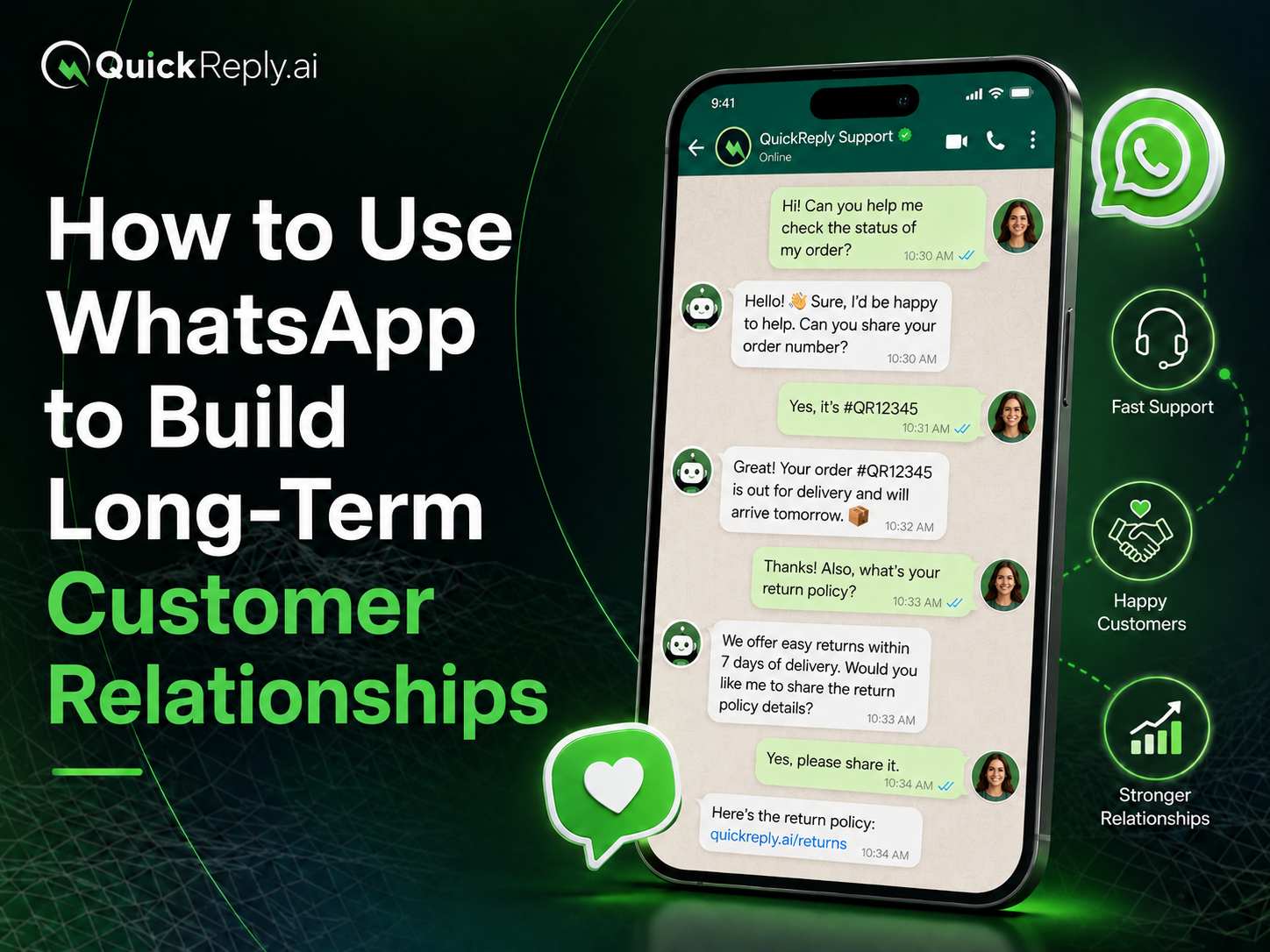
Along with RCS capabilities, QuickReply.ai also supports customer communication across WhatsApp, SMS, Instagram, Messenger, and website chat. This allows businesses to continue the customer journey even when one channel is not the best fit for a specific use case, audience segment, or delivery scenario.

One important advantage is WhatsApp-to-RCS fallback.

In many cases, businesses start customer engagement on WhatsApp because it is conversational, familiar, and highly effective for two-way communication. However, not every WhatsApp message may get delivered successfully. Delivery can be affected by factors such as customer opt-in, template approval rules, user-level marketing message limits, phone number quality, and other WhatsApp Business Platform controls.

With QuickReply.ai, businesses can fallback failed WhatsApp deliveries to RCS. This helps brands reach more customers instead of losing the communication opportunity when a WhatsApp message is not delivered.

For example, a business can use WhatsApp for conversational selling, chatbot journeys, customer support, and high-intent engagement. If a WhatsApp campaign message fails to reach a customer, the same communication can be continued through RCS with rich cards, images, buttons, carousels, and branded messaging. SMS can still be used as a final fallback for critical alerts or universal reach.

This gives businesses a more reliable omnichannel communication strategy:

  • Use WhatsApp for conversations and automation
  • Use RCS as a rich fallback and engagement channel
  • Use SMS for essential alerts and wider fallback coverage
  • Use Instagram, Messenger, and website chat for inbound customer queries

Managing these touchpoints through one platform helps teams avoid fragmented communication and gives them a more connected view of customer engagement.

QuickReply.ai is therefore a good fit for businesses that want RCS messaging with automation, but also need the flexibility to improve reach across WhatsApp, RCS, SMS, and other customer-facing channels.

Turn 1 time visitor into repeat customer with WhatsApp marketing

Leverage the untapped growth potential of WhatsApp marketing to acquire and retain customers.

Frequently Asked Questions

What is the best RCS messaging provider in India?

The best RCS messaging provider depends on your business requirements. QuickReply.ai is a strong choice for RCS automation and omnichannel engagement. Infobip, Sinch, Route Mobile, GupShup, MSG91, Twilio, Bird, Tata Communications Kaleyra, Netcore Cloud, and Webex Connect are also good options depending on your use case.

Can RCS be used for e-commerce marketing?

Yes. RCS can be used for product launches, promotional campaigns, product carousels, abandoned cart recovery, order updates, delivery tracking, cross-sell, upsell, and feedback collection.

Is RCS better than SMS?

RCS is more interactive than SMS because it supports images, videos, buttons, carousels, branding, and read receipts. However, SMS still has wider fallback reach and is useful for OTPs, alerts, and critical notifications.

Is RCS better than WhatsApp?

RCS and WhatsApp serve different purposes. RCS works inside the native messaging app and is useful for rich business messaging. WhatsApp is stronger for conversational commerce, chatbot automation, and customer support in India. Many businesses should use both channels together.

Does RCS support multimedia messages?

Yes. RCS supports rich media such as images, videos, GIFs, product cards, carousels, and interactive buttons, depending on provider and device support.

Can RCS messages be automated?

Yes. RCS messages can be automated using APIs, campaign workflows, customer journeys, chatbots, triggers, and CRM or e-commerce integrations, depending on the provider.

Does RCS support SMS fallback?

Many RCS providers support SMS fallback or recommend fallback strategies. This helps ensure that customers still receive the message if their device or carrier does not support RCS.

How much does RCS messaging cost in India?

RCS pricing depends on the provider, country, message type, rich media usage, monthly volume, and fallback rules. Some providers offer published pricing, while others provide custom pricing based on business requirements.

Which businesses should use RCS messaging?

RCS is useful for e-commerce, D2C, retail, BFSI, healthcare, education, travel, logistics, automotive, and service businesses that want richer customer engagement than SMS.