Top WhatsApp API Providers (2026): Features, Plans, and Pricing Comparison

Copied to clipboard!
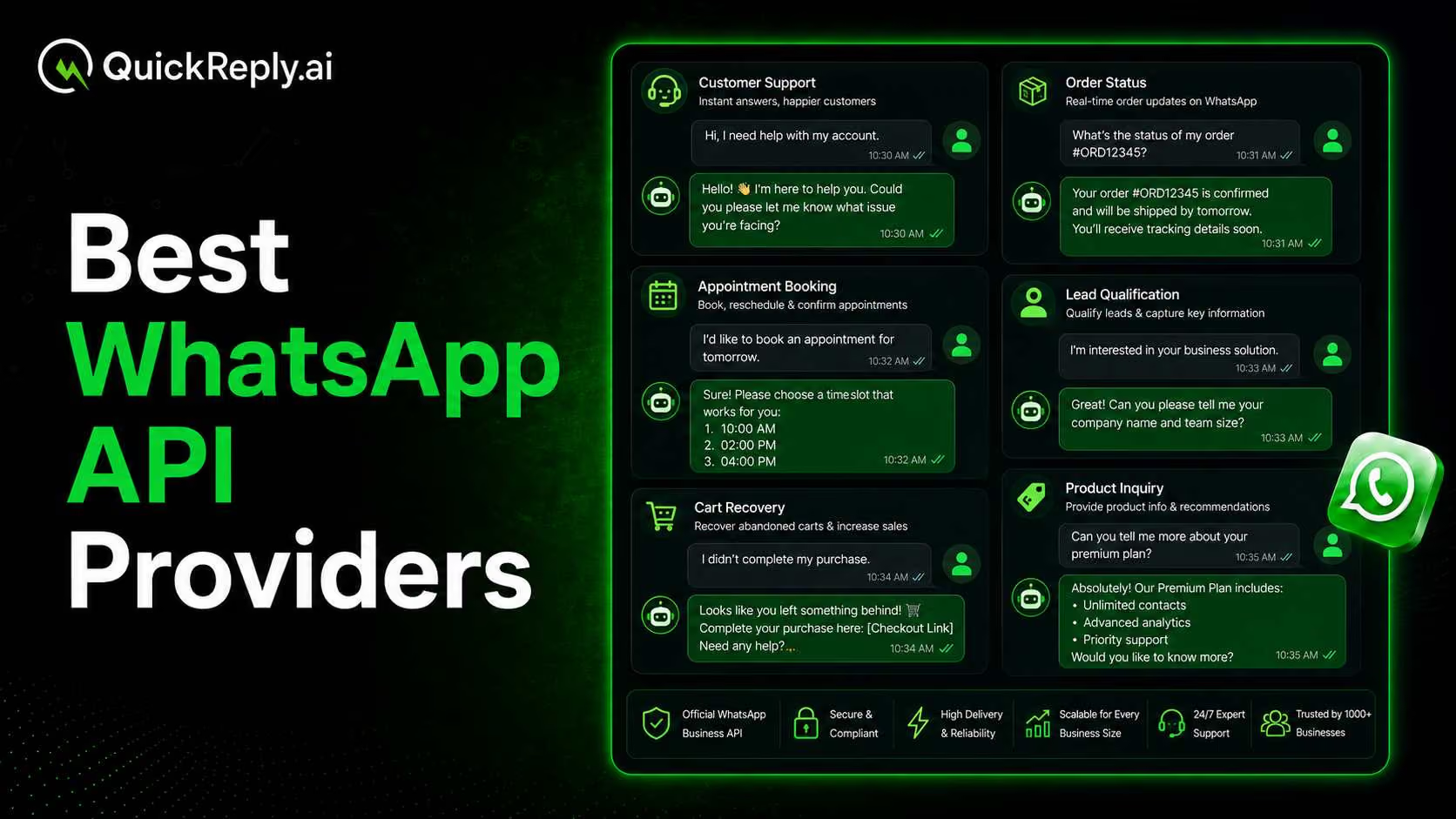
Choosing the right WhatsApp API provider is no longer just about getting access to the WhatsApp Business API.

In 2026, businesses need to compare providers on a much wider set of factors: automation, chatbot capabilities, team inbox, integrations, omnichannel support, delivery reliability, analytics, support, and, of course, pricing.

This guide compares 12 leading WhatsApp API providers based on their key features, pricing structure, best use case, and limitations, so you can choose the right platform for your business.

Quick Comparison: Best WhatsApp API Providers in 2026

Provider Best For Pricing Key Strength
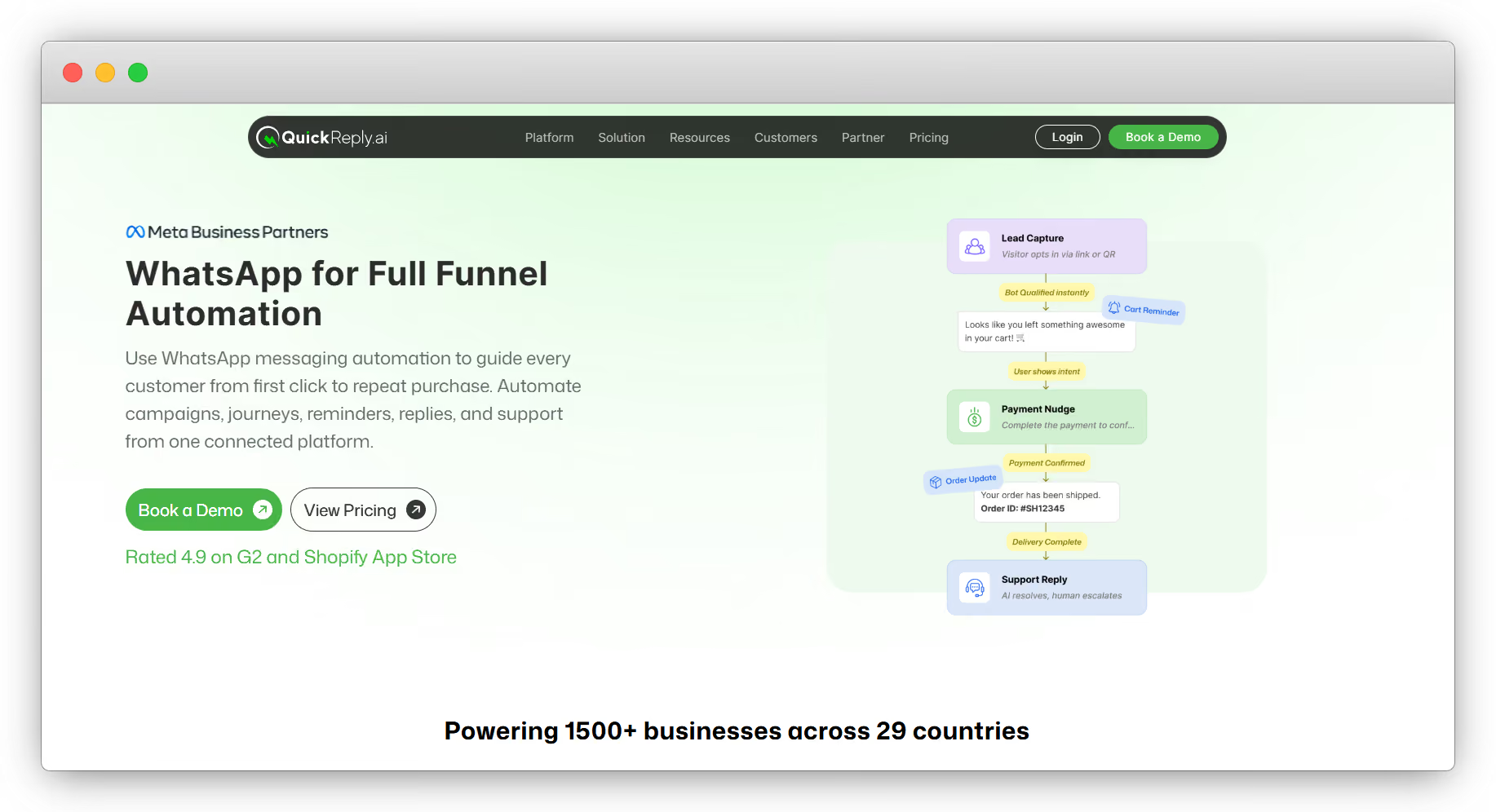
QuickReply.ai Growing brands that need WhatsApp-led omnichannel marketing, support, and customer journey automation Starts from ₹2,999/month, billed annually Automates campaigns, journeys, Gen AI chatbots, shared inbox, CRM integrations, and fallback messaging across WhatsApp, RCS, SMS, Instagram, Messenger, and website chat
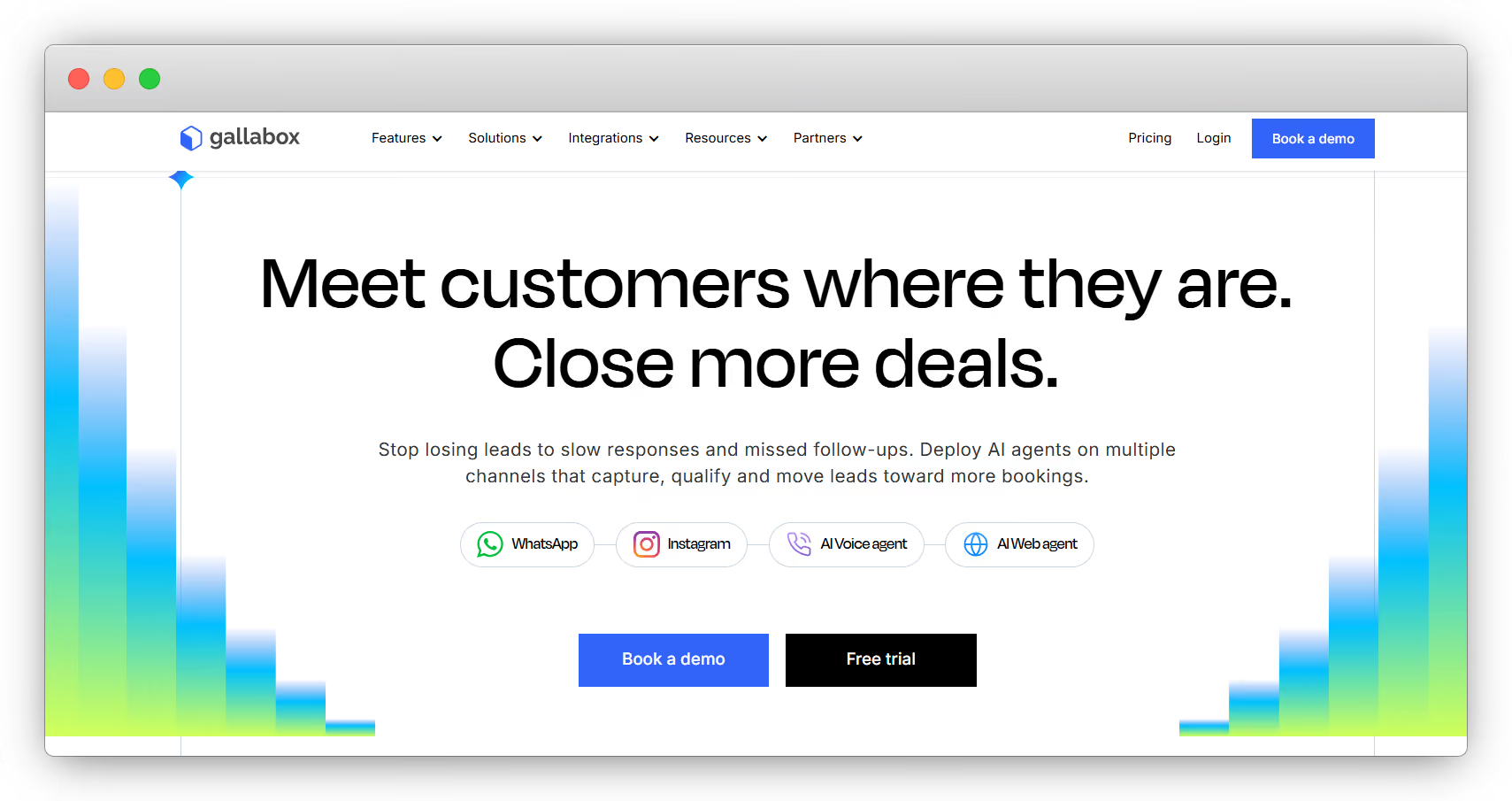
Gallabox Small and mid-sized businesses that need a shared inbox with WhatsApp automation Starts at ₹2,399/month billed annually. Custom pricing available for higher usage Combines WhatsApp team inbox, broadcasts, chatbot flows, and AI-led customer conversations
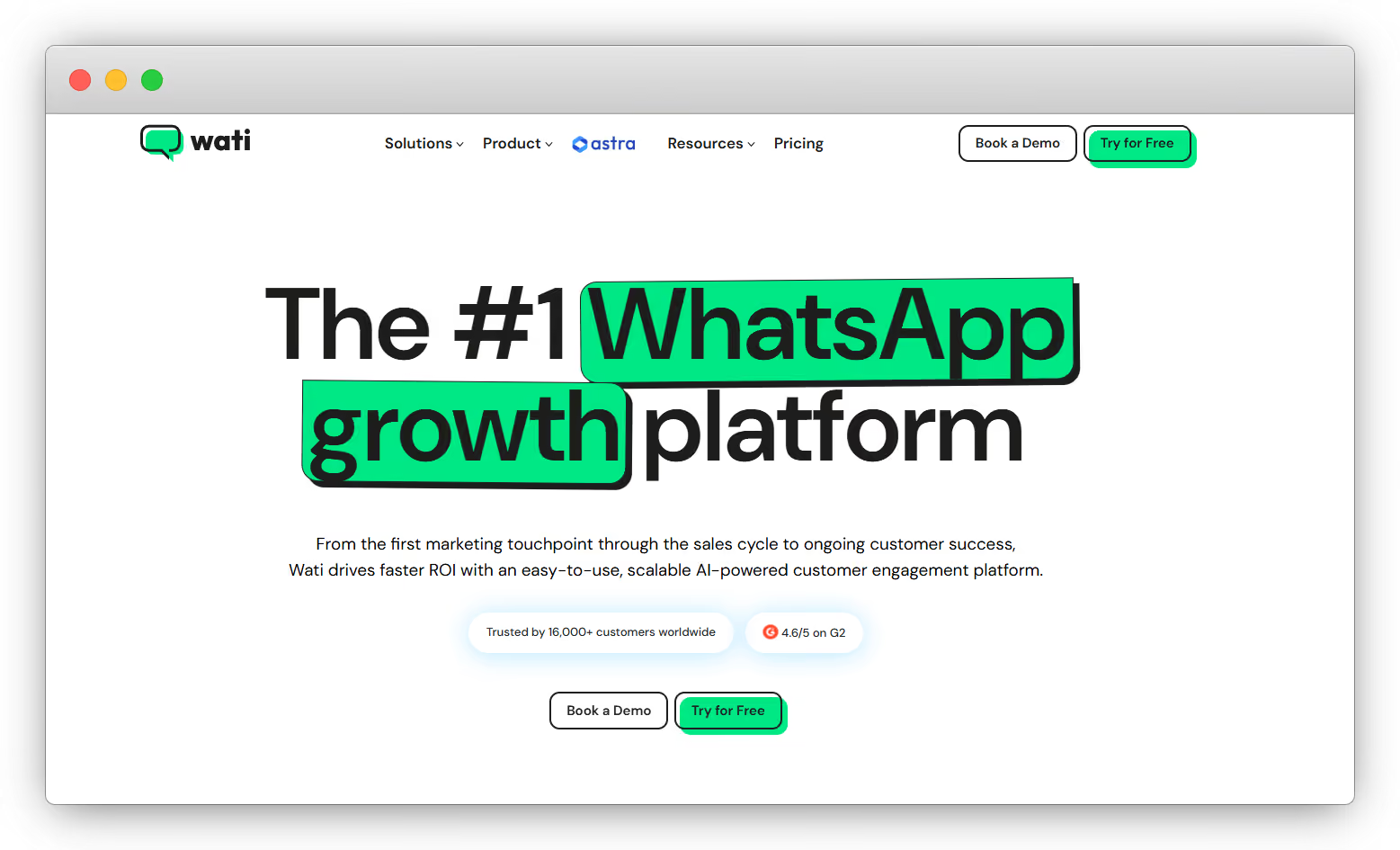
WATI SMBs that want a WhatsApp-first CRM for sales, support, and basic automation Starts at ₹2,199/month billed annually. Messaging charges extra Offers WhatsApp CRM, shared inbox, broadcasts, automation, and team collaboration
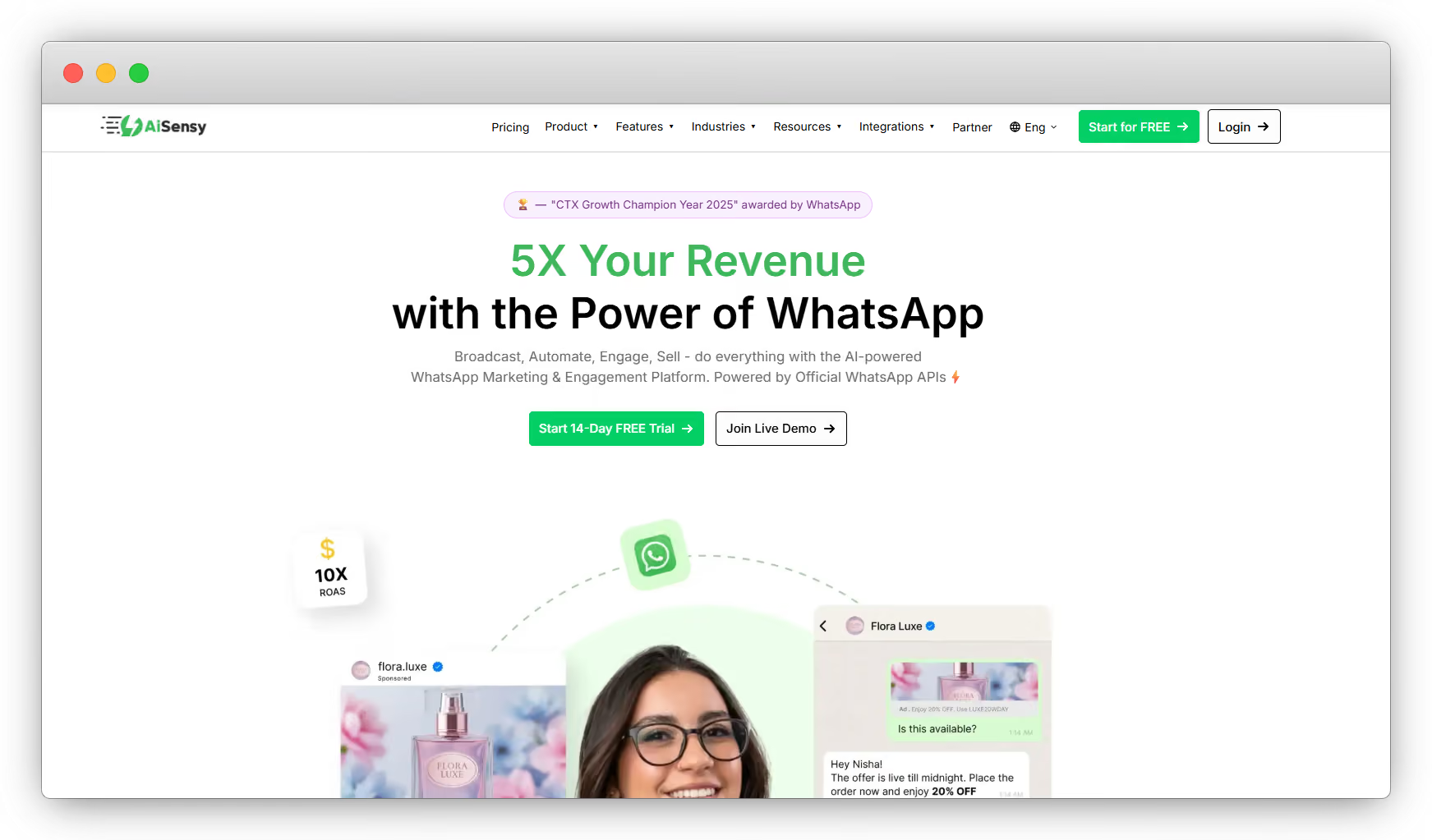
AiSensy Small businesses looking for an affordable WhatsApp marketing platform Starts from ₹1,500/month with custom pricing available for enterprise plans Provides low-cost WhatsApp broadcasts, campaigns, chatbots, and basic automation
Infobip Enterprises that need global messaging infrastructure and CPaaS capabilities Custom / usage-based pricing Supports large-scale, multi-country messaging across WhatsApp and other communication channels
360dialog Developer teams, agencies, and platforms that need direct WhatsApp API access Starts at ₹4,400 per month Provides developer-friendly WhatsApp API access, webhooks, and integration flexibility
Twilio Technical teams building custom WhatsApp messaging workflows ₹0.48 ($0.005) Twilio fee per message + Meta template message fees Offers programmable messaging APIs for WhatsApp, SMS, voice, email, and custom communication workflows
Gupshup Large businesses and enterprises building conversational AI experiences Custom pricing Enables conversational AI, automation, commerce, and support workflows across messaging channels
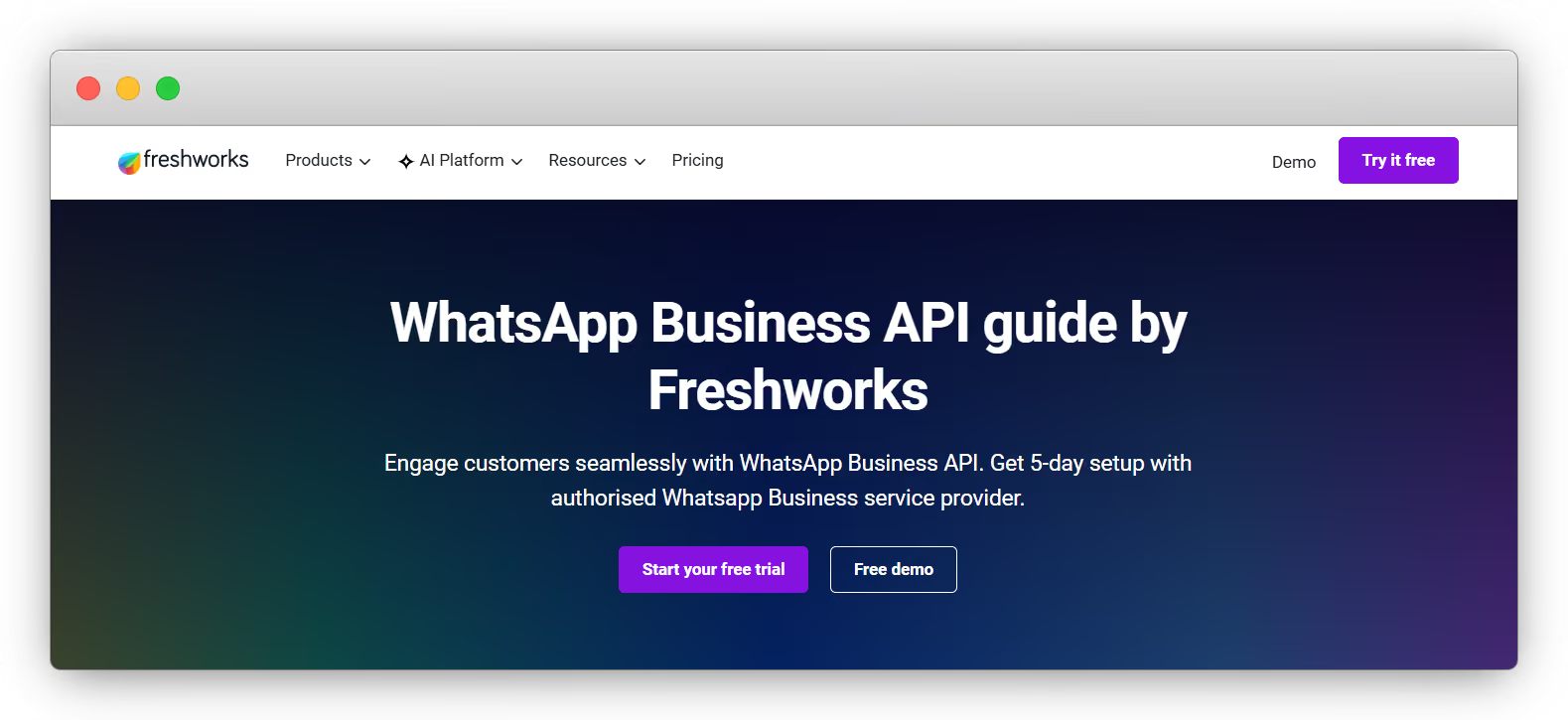
Freshworks Customer support teams already using or considering Freshworks products Starts at ₹1,499/agent/month billed annually Delivers support-first omnichannel service, live chat, automation, and helpdesk workflows
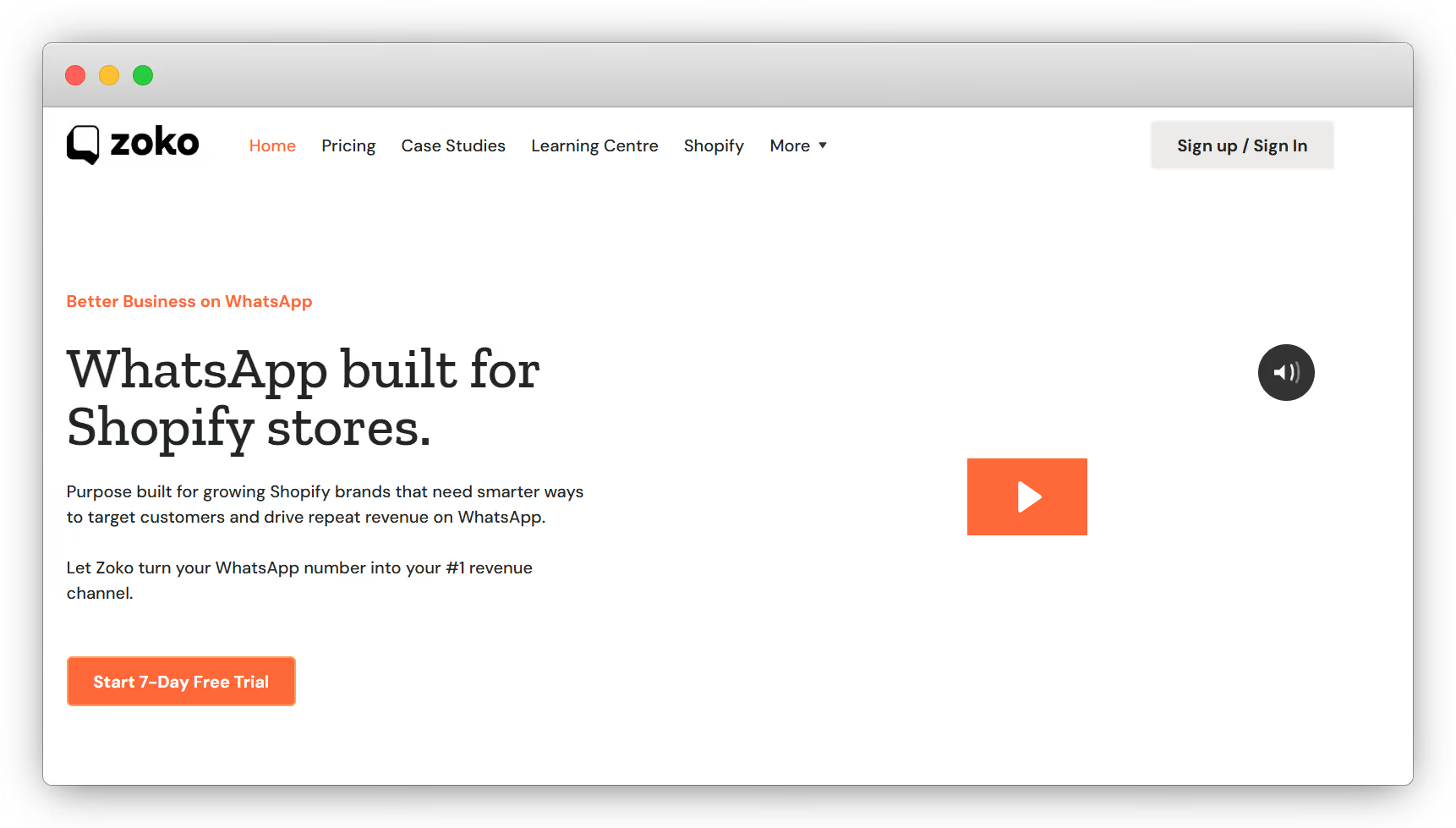
Zoko Shopify brands that want WhatsApp commerce and sales workflows The Starter plan starts at ₹3,499/month + charges Helps Shopify brands run WhatsApp commerce, broadcasts, catalog sync, shared inbox, and sales automation
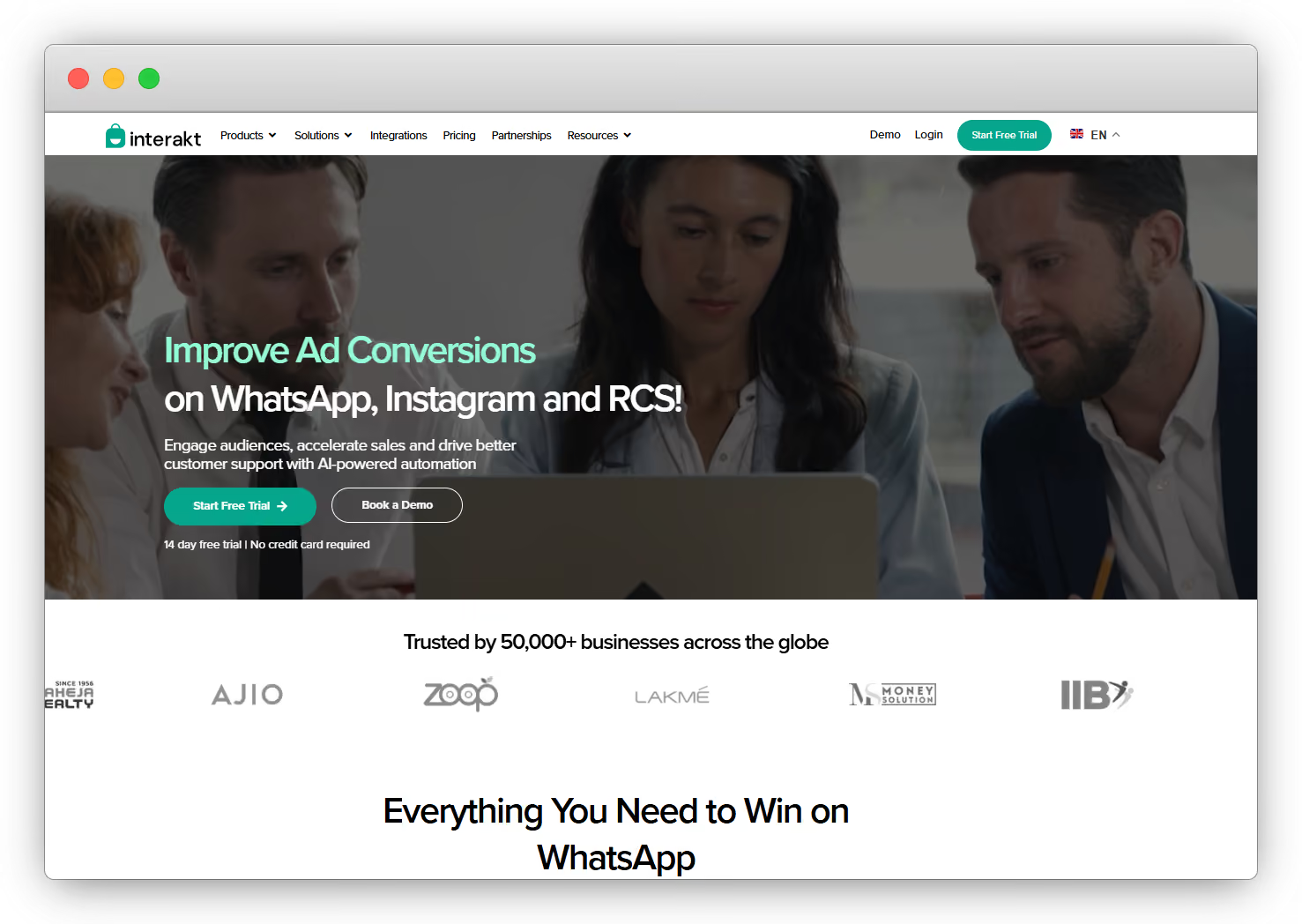
Interakt SMBs that need WhatsApp and Instagram automation for sales, marketing, and support Starts from ₹3,499/quarter + taxes Combines WhatsApp and Instagram inbox, campaigns, automation, forms, and CRM-style workflows
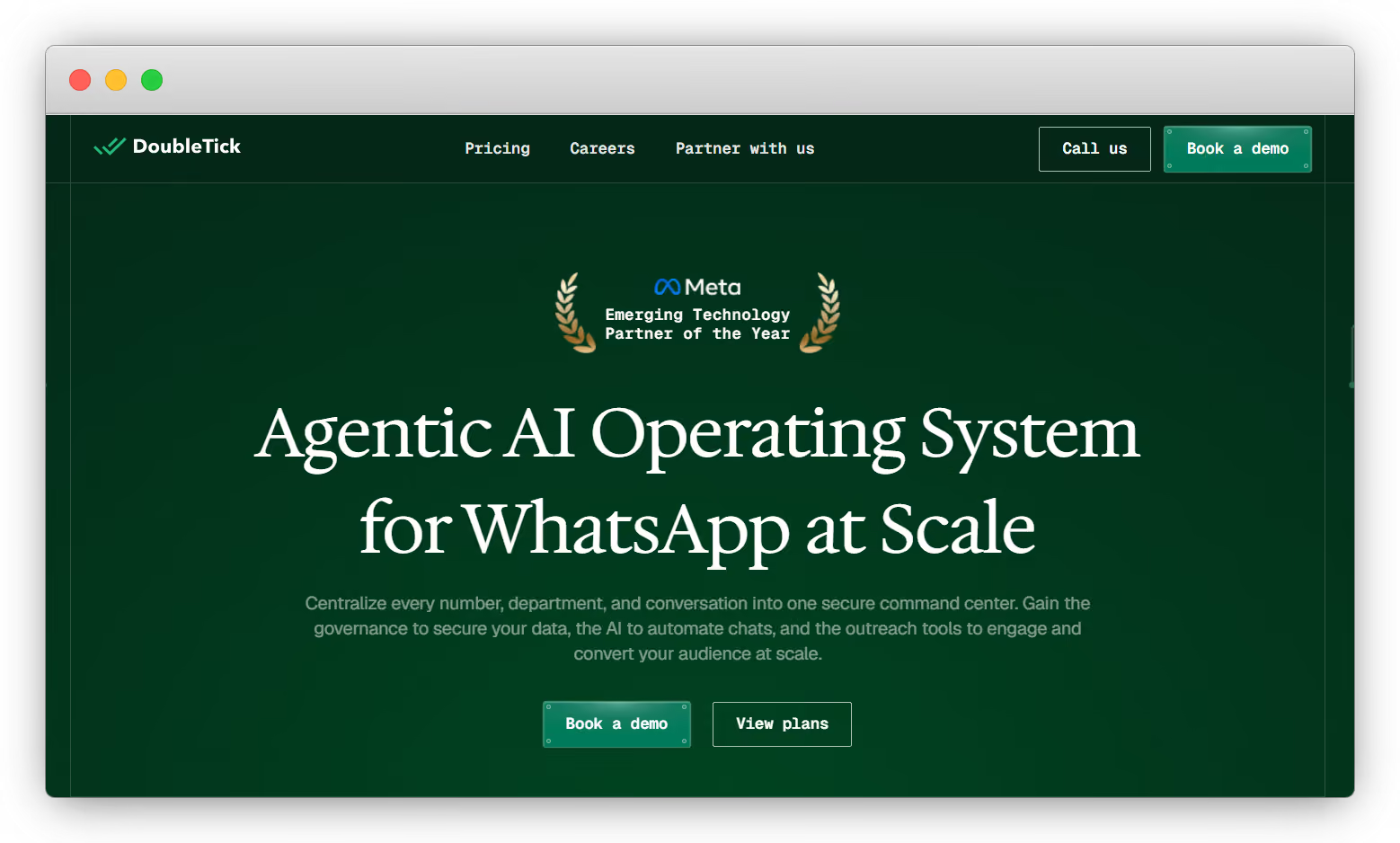
DoubleTick Sales teams that primarily use WhatsApp for lead follow-up and customer conversations Starts from ₹3,000/month billed yearly Provides WhatsApp sales inbox, bulk broadcasts, customer segmentation, simple bots, and team collaboration

Pricing changes frequently. Always check the provider’s official pricing page before considering.

What is WhatsApp Business API?

WhatsApp Business API, officially called the WhatsApp Business Platform, is Meta’s solution for businesses that want to communicate with customers on WhatsApp at scale.

Unlike the regular WhatsApp Business App, the API is not a mobile app. It connects WhatsApp with business systems such as CRM, ecommerce platforms, appointment booking tools, customer support software, marketing automation platforms, chatbots, payment systems, and team inboxes.

With WhatsApp Business API, businesses can engage customers across the full lifecycle — from acquisition and conversion to support, retention, and repeat engagement.

For ecommerce and D2C brands, this can include:

  • Recovering abandoned carts
  • Sending order confirmations and delivery updates
  • Running product campaigns and sale alerts
  • Converting COD orders to prepaid
  • Sending repeat purchase reminders
  • Sharing product recommendations
  • Managing customer support queries

For non-ecommerce businesses, this can include:

  • Capturing leads from ads, websites, and landing pages
  • Sending appointment reminders
  • Booking consultations, demos, or store visits
  • Sharing payment links and confirmations
  • Sending admission, renewal, or application updates
  • Running patient, student, or customer follow-ups
  • Automating FAQs and support conversations
  • Assigning chats to sales, support, or service teams

In simple terms, WhatsApp Business API helps businesses use WhatsApp as a structured communication channel, rather than just a manual chat tool.

Who are WhatsApp Business API Providers?

WhatsApp Business API providers are companies that help businesses access and use the WhatsApp Business Platform.

Some providers focus mainly on API access. These are useful for developer teams that want to build their own WhatsApp workflows, such as Twilio and 360dialog.

Some providers are broader CPaaS or enterprise messaging platforms. These are better suited for large businesses that need communication across multiple countries, channels, and systems. Examples include Infobip and Gupshup.

Other providers offer ready-to-use WhatsApp marketing, automation, chatbot, inbox, CRM, ecommerce, and customer engagement tools. These are more suitable for businesses that do not want to build everything from scratch. Examples include QuickReply.ai, Wati, AiSensy, Gallabox, Interakt, Zoko, Freshworks, and DoubleTick.

A good WhatsApp Business API provider typically helps across the customer lifecycle:

  • Acquisition: Click-to-WhatsApp ads, website widgets, lead forms, landing page opt-ins
  • Conversion: Product campaigns, consultation booking, payment links, cart recovery, sales follow-ups
  • Engagement: Broadcasts, drip journeys, personalized campaigns, event reminders, application updates
  • Support: Chatbots, FAQs, live agent handover, shared inbox, ticketing or CRM integrations
  • Retention: Repeat purchase reminders, renewal alerts, reactivation campaigns, and feedback collection
  • Operations: Business verification, phone number setup, template approvals, analytics, integrations, and ongoing support

For ecommerce brands, this may mean automating abandoned cart recovery, order alerts, COD confirmation, customer support, and repeat purchase journeys.

For non-ecommerce businesses, this may mean automating lead qualification, appointment booking & reminders, payment follow-ups, service updates, counselling journeys, patient follow-ups, or admission-related communication.

In simple terms, WhatsApp Business API is the infrastructure layer. A WhatsApp API provider gives businesses the software, dashboard, automation tools, integrations, and support needed to use that infrastructure effectively across the customer lifecycle.

How WhatsApp API Pricing Works in 2026

Before comparing tools, it is important to understand that WhatsApp API pricing usually has two cost layers.

The first is Meta’s WhatsApp messaging cost. Meta charges businesses on a per-message basis when a message is delivered. Pricing depends on the recipient’s country and the message category. The four categories are marketing, utility, authentication, and service.

The second is the provider’s platform fee. This may include a monthly subscription, per-message markup, agent/user charges, chatbot fees, automation limits, integration add-ons, onboarding fees, or custom support costs.

That is why the cheapest starting price is not always the cheapest final cost. A platform that starts low may become expensive if important features such as automation, chatbot flows, Shopify integration, or support are locked behind higher plans.

How We Compared These WhatsApp API Providers

We compared each provider based on:

  • WhatsApp API access
  • Broadcast and campaign features
  • No-code automation and chatbot capabilities
  • Omnichannel support
  • Ecommerce and Shopify use cases
  • Team inbox and agent management
  • Analytics and reporting
  • Pricing transparency
  • Best-fit business type

Best WhatsApp API Providers in 2026: Detailed Comparison

1. QuickReply.ai

WhatsApp API Provider: QuickReply.ai

Best for: QuickReply.ai is best for businesses that want a WhatsApp API as part of a larger omnichannel customer engagement platform.

It is especially strong for ecommerce, D2C, education, healthcare, real estate, travel, F&B, and other businesses that need automated customer journeys across multiple channels.

Key Features

QuickReply.ai supports omnichannel communication across WhatsApp, Instagram, Messenger, SMS, RCS, and Website. Its product suite includes opt-in tools, omnichannel inbox, broadcasts, payments, chatbots, journey builder, social media automation, integrations, analytics, and ads integration.

Important features include:

  • WhatsApp Business API
  • Omnichannel inbox
  • RCS, SMS, Instagram, Messenger, WhatsApp, and Website support
  • No-code chatbot builder
  • Journey automation
  • Broadcast campaigns
  • Drip campaigns
  • WhatsApp website widget
  • Welcome and exit popups
  • Product browsing and add-to-cart abandonment
  • Order alerts
  • COD confirmation
  • COD-to-prepaid journeys
  • Repeat purchase reminders
  • Cross-sell and upsell automation
  • API and payload-based personalization
  • Customer segmentation
  • Live chat and agent routing
  • Chat disposition
  • Conversion analytics
  • Engagement analytics
  • Chatbot analytics
  • Custom reports
  • CRM integrations
  • Custom third-party integrations
  • Fallback mechanism for better delivery across channels

Pricing

QuickReply.ai offers four plans based on business requirements: Starter, Standard, Plus, and Enterprise plans. The basic plan starts at ₹2,999/mo billed annually, and messaging charges extra. 

The platform also offers higher plans for growing businesses, advanced automation, WhatsApp flows, white-glove services, custom chatbot setups, CRM two-way sync, and custom integrations.

Pros

  • Strong omnichannel capabilities
  • Built for automation-heavy use cases
  • Strong fit for D2C, SMEs, and service-based industries
  • No-code chatbot and journey automation
  • Useful for marketing, support, retention, and revenue journeys
  • Fallback support across multiple channels
  • Deep campaign, conversion, and revenue attribution analytics

QuickReply.ai is a strong option for businesses that want more than WhatsApp API access. It is best suited for omnichannel automation 

2. Gallabox

WhatsApp API Provider: Gallabox

Best for: Gallabox is suitable for businesses that need WhatsApp automation, shared inbox, campaigns, and AI-powered customer conversations.

Key Features

  • WhatsApp Business API number support
  • Instagram handle and website widget support
  • Shared team inbox for customer conversations
  • Chatbot platform for automated conversations
  • Broadcast campaigns for WhatsApp outreach
  • Drip marketing journeys
  • WhatsApp Flows support
  • Click-to-WhatsApp Ads support
  • WhatsApp payments support
  • AI-led customer conversation capabilities

Pricing

Gallabox offers four plans based on business requirements: Basic, Essential, Advanced, and Enterprise. The Basic plan starts at ₹2,399/month, billed annually, with WhatsApp messaging charges billed separately. 

Gallabox also includes different user limits, AI credits, channel access, chatbot flows, integrations, and support levels across plans. Additional users, extra channels, WhatsApp conversation fees, and AI voice usage may be charged separately depending on the selected plan. 

Pros

  • Strong shared inbox capabilities
  • Supports WhatsApp, Instagram, and website widget
  • Useful campaign and automation features
  • AI and automation-focused positioning

Gallabox is a good fit for businesses that want a WhatsApp-led customer conversation platform with inbox, automation, and campaign capabilities.

3. Wati

WhatsApp API Provider: Wati

Best for: Wati is best for SMBs that want a WhatsApp-first CRM with broadcasts, shared inbox, basic automation, and team collaboration.

Key Features

  • WhatsApp messaging for sales, support, and marketing teams
  • Shared team inbox for multi-agent collaboration
  • Broadcast campaigns and campaign tools
  • Basic automation for customer conversations
  • AI-led lead qualification
  • Analytics for WhatsApp conversations and campaigns
  • Shopify-related sales and ecommerce use cases
  • Integrations with business tools

Pricing

Wati offers three main subscription plans based on business requirements: Growth, Pro, and Business. It also offers a zero-subscription, pay-as-you-go plan for businesses that only want to send bulk campaigns. The pay-as-you-go plan has a one-time starting fee of ₹999, which is returned as message credits.

The Growth plan starts at ₹2,199/month billed annually with usage limits across plans. Some features, such as Shopify integration, additional users, additional WhatsApp numbers, automation trigger add-ons, AI add-ons, and advanced support may require extra charges depending on the selected plan.

Pros

  • Popular WhatsApp-first platform
  • Good for SMB sales and support teams
  • Shared inbox and basic automation
  • Useful integrations and analytics

Wati is more WhatsApp focussed platform. It a good option for teams that want a WhatsApp-first operating system for customer conversations but lacks omnichannel communication capabilities.

4. AiSensy

WhatsApp API Provider: AiSensy

Best for: AiSensy is best for businesses looking for an simple WhatsApp marketing platform with a low starting price.

Key Features

  • WhatsApp Business API access
  • WhatsApp broadcasts and campaign management
  • Chatbot automation
  • Contact management
  • WhatsApp marketing automation
  • Integrations with Shopify and Shopify Checkouts
  • Razorpay integration for payment-related use cases
  • WebEngage and LeadSquared integrations
  • Integrately and webhook API support
  • Paid chatbot and AI agent add-ons

Pricing

AiSensy offers six different plans: Free Forever, Basic, Pro, Premium, Unlimited, and Enterprise. Its billing is prepaid, and WhatsApp Conversation Credits are recharged and managed separately. 

Chatbots and AI agents are available as separate paid add-ons. The Basic chatbot add-on starts at ₹2,500/month, while the Pro + AI agent plan starts at ₹3,500/month or ₹3,150/month when billed yearly. AiSensy also offers an Indian virtual number add-on at ₹2,000 + GST/year.

Pros

  • Low entry pricing
  • Good for WhatsApp marketing basics
  • Useful integrations
  • Suitable for small and growing businesses

AiSensy is a strong option for businesses that want to start with WhatsApp marketing at a relatively low monthly cost. But they lack omnichannel engagement, fallback delivery, and deeper ecommerce automation

5. Infobip

WhatsApp API Provider: Infobip

Best for: Infobip is best for enterprises that need global messaging infrastructure, CPaaS capabilities, compliance, and multi-country scale.

Key Features

  • Enterprise-grade WhatsApp Business Platform support
  • WhatsApp notifications and promotional messaging
  • Two-way customer conversations
  • Chatbot and automation capabilities
  • Template message management
  • Delivery tracking
  • CRM, CDP, ERP, helpdesk, and ecommerce integrations
  • Multi-country messaging infrastructure
  • Usage-based messaging for large-volume businesses

Pricing

Infobip follows a usage-based pricing model for WhatsApp Business messaging. Pricing depends on the destination country, message category, and message volume. It also offers custom packages for large-volume businesses. 

Pros

  • Strong enterprise-grade infrastructure
  • Global scale
  • Good for multi-country communication
  • Suitable for complex enterprise requirements

Infobip is a strong enterprise CPaaS option. It is a good option for large businesses that need a scalable communication infrastructure, but it is too enterprise-heavy for SMBs or ecommerce brands that mainly need ready-to-use WhatsApp marketing automation.

6. 360dialog

Best for: It is best suited for technical teams, agencies, and platforms that want to build their own WhatsApp workflows or connect the WhatsApp API with an existing product stack.

Key Features

  • Direct WhatsApp Business API access
  • Developer-first API infrastructure
  • Clean API access without a heavy marketing dashboard
  • Webhooks for custom workflow integrations
  • Documentation for technical teams
  • Sandbox testing support
  • WhatsApp number hosting
  • High-throughput messaging

It is best suited for technical teams, agencies, and platforms that want to build their own WhatsApp workflows or connect the WhatsApp API with an existing product stack.

Pricing

360dialog’s WhatsApp API pricing starts at ₹4,400/month, with Meta’s WhatsApp messaging fees added separately based on Meta’s official rate cards. 

Pros

  • Developer-friendly
  • Transparent API pricing
  • No markup on Meta fees
  • Good for agencies and technical teams

360dialog is a strong choice for API-first teams that want direct WhatsApp access and are comfortable building or connecting their own frontend tools. However, it’s not a comprehensive marketing automation platform on its own. Non-technical teams may need another frontend tool for campaigns, inbox, chatbots, analytics, and ecommerce journeys.

7. Twilio

WhatsApp API Provider: Twilio

Best for: Twilio is best for developer teams that want programmable WhatsApp messaging and broader communication APIs.

Key Features

  • Programmable WhatsApp messaging API
  • API-first communication infrastructure
  • Support for WhatsApp, SMS, voice, email, RCS, and other communication APIs
  • Custom WhatsApp workflow development
  • Strong developer documentation
  • Flexible integration with apps, CRMs, and internal systems
  • Pay-as-you-go messaging model
  • Suitable for engineering-led implementation

It is best suited for developer teams that want flexibility, strong documentation, and complete control over how WhatsApp is integrated into their apps, CRMs, or internal systems.

Pricing

Twilio follows a pay-as-you-go pricing model for WhatsApp. It charges ₹0.48 ($0.005) per WhatsApp message, inbound or outbound, in addition to Meta’s WhatsApp message fees. 

Pros

  • Strong developer ecosystem
  • Flexible API-first implementation
  • Good documentation
  • Useful for custom workflows

Twilio is not a ready-made WhatsApp marketing automation platform. Marketing, sales, or support teams may need engineering support to build campaigns, dashboards, inbox workflows, and automations.

8. Gupshup

WhatsApp API Provider: Gupshup

Best for: Gupshup is best for enterprises and large businesses looking for conversational AI, commerce, support automation, and multi-channel messaging.

Key Features

  • Enterprise conversational AI platform
  • WhatsApp messaging support
  • RCS, voice, web, mobile app, and other conversational channel support
  • Marketing automation use cases
  • Commerce automation use cases
  • Customer support automation
  • Multi-channel messaging capabilities
  • Custom conversational AI deployments

Pricing

Gupshup follows custom pricing based on business use case, messaging volume, channels, and implementation requirements. WhatsApp message charges are billed separately based on Meta’s pricing rules. 

Pros

  • Enterprise conversational AI capabilities
  • Multi-channel messaging
  • Strong automation and commerce use cases
  • Suitable for large-scale deployments

Gupshup is a strong fit for large businesses that need conversational AI and multi-channel automation at scale; however, smaller businesses may find it more enterprise-oriented than necessary.

9. Freshworks

WhatsApp API Provider: Freshworks

Best for: Freshworks is best for customer support teams already using Freshdesk, Freshchat, or other Freshworks products.

Key Features

  • Live chat for customer support teams
  • Customer service workflows
  • Digital messaging channel support
  • Omnichannel customer support
  • Freshchat support for channels such as WhatsApp, SMS, Line, and Google Business Messages, depending on plan and configuration
  • Helpdesk and support ecosystem integration
  • Automation for support operations

Pricing

Freshchat pricing starts at ₹1,499/agent/month when billed annually. Higher plans are available for advanced automation, support operations, and enterprise requirements. 

Pros

  • Strong customer support ecosystem
  • Useful if already using Freshdesk or Freshchat
  • Good for service teams
  • Omnichannel customer support capabilities

Freshworks is more support-led than marketing-led. Businesses looking for WhatsApp marketing automation, ecommerce revenue journeys, and campaign-first workflows may need a more specialized platform.

10. Zoko

WhatsApp API Provider: Zoko

Best for: Zoko is best for Shopify brands that want WhatsApp commerce, broadcasts, shared inbox, catalog sync, and ecommerce workflows.

Key Features

  • WhatsApp commerce platform for Shopify brands
  • WhatsApp broadcasts
  • Shared team inbox
  • Shopify catalog sync
  • Customer tags and segmentation
  • Click-to-WhatsApp Ads support
  • Pop-up campaigns
  • Website chat widgets
  • API and webhook support
  • Ecommerce workflows for sales and customer engagement

Pricing

Zoko’s Shopify app pricing starts at ₹3,499/month. WhatsApp Meta charges are billed separately based on Meta’s official rate card. Some add-ons are priced separately. Instagram costs approximately ₹954/month, custom flows cost approximately ₹572/flow/month, and AI agents start at approximately ₹2,386/month per AI agent. These INR values are approximate conversions from Zoko’s USD add-on pricing and may vary based on exchange rates.

Pros

  • Strong Shopify focus
  • Useful for WhatsApp commerce
  • Shared inbox and broadcasts
  • Catalog and ecommerce workflows

Zoko is a strong option for Shopify-first WhatsApp commerce. For broader omnichannel automation and fallback delivery, businesses should evaluate add-on costs for custom flows, AI bots, Instagram, and usage beyond fair-use limits.

11. Interakt

WhatsApp API Provider: Interakt

Best for: Interakt is best for SMBs and growing businesses that want WhatsApp and Instagram automation, CRM, campaigns, and support workflows.

Key Features

Interakt is a WhatsApp and Instagram automation platform for marketing, sales, and support teams. It offers WhatsApp Business API, shared team inbox, broadcasts, chatbot flows, WhatsApp forms, CTWA ads, WhatsApp commerce, campaign analytics, integrations, and AI-assisted workflows. 

Pricing

  • WhatsApp Business API access
  • Instagram automation support
  • Shared team inbox
  • Broadcast campaigns
  • Chatbot flows
  • WhatsApp forms
  • Click-to-WhatsApp Ads support
  • WhatsApp commerce capabilities
  • Campaign analytics
  • Business tool integrations
  • AI-assisted workflows

Pros

  • WhatsApp and Instagram automation
  • Unlimited agents on some plans
  • AI chatbot and forms
  • Good for SMB marketing, sales, and support

Interakt is a good SMB-friendly option for WhatsApp and Instagram automation. Businesses should confirm whether WhatsApp, Instagram, chatbot flows, campaign limits, and automation features are included in the selected plan.

12. DoubleTick

WhatsApp API Provider: DoubleTick

Best for: DoubleTick is best for WhatsApp-focused sales and support teams that need a team inbox, broadcasts, simple bots, and mobile access.

Key Features

  • WhatsApp-focused sales and support platform
  • Team inbox for customer conversations
  • Bulk WhatsApp broadcasts
  • Customer segmentation
  • Catalog sharing
  • Broadcast analytics
  • Google Sheets integration
  • Mobile and web access
  • Simple bot capabilities

Pricing

DoubleTick pricing starts at ₹3,000/month, billed yearly, for the Starter plan. The Pro plan starts at ₹4,200/month, billed yearly. Enterprise pricing is custom. 

Pros

  • WhatsApp team inbox
  • Bulk broadcasts
  • Good sales-team features
  • Mobile and web access
  • Google Sheets integration

DoubleTick is more WhatsApp-focused and may not be the best fit for businesses that need omnichannel journeys, advanced ecommerce automation, or fallback delivery across channels.

Best WhatsApp API Provider by Use Case

Use Case Best-Fit Provider
Omnichannel automation QuickReply.ai
SMEs / D2C brands and large enterprises QuickReply.ai
Shopify WhatsApp commerce QuickReply.ai / Zoko
No-code chatbot automation QuickReply.ai
Fallback delivery across channels QuickReply.ai
Direct API access 360dialog
Developer-led implementation Twilio
Enterprise CPaaS Infobip
Conversational AI at scale Gupshup / QuickReply.ai
Customer support teams Freshworks / QuickReply.ai
Low-cost WhatsApp marketing AiSensy / QuickReply.ai
WhatsApp + Instagram automation Interakt / QuickReply.ai
WhatsApp sales inbox QuickReply.ai / DoubleTick / WATI / Gallabox

Why Choose QuickReply.ai as a WhatsApp API Provider for your Business?

WhatsApp API providers are not all built for the same type of business.

Some are API-first. Some are support-first. Some are built mainly for WhatsApp broadcasts. Some are enterprise CPaaS platforms.

QuickReply.ai stands out because it combines WhatsApp API with omnichannel messaging, automation, no-code chatbots, ecommerce journeys, team inbox, customer segmentation, fallback delivery, and analytics.

For businesses that want to grow revenue through automated customer engagement across WhatsApp, RCS, SMS, Instagram, Messenger, and Website, QuickReply.ai is the strongest option in this category.

Turn 1 time visitor into repeat customer with WhatsApp marketing

Leverage the untapped growth potential of WhatsApp marketing to acquire and retain customers.

Frequently Asked Questions

Is WhatsApp API free?

The WhatsApp Business API itself does not usually have a separate Meta license fee, but businesses pay for delivered messages based on Meta’s pricing. Most providers also charge a platform fee, and some may charge markups, add-ons, or user fees.

How does WhatsApp API pricing work?

WhatsApp API pricing has two parts: Meta’s per-message charges and the provider’s platform charges. Meta charges based on message category and recipient country. Providers may charge monthly fees, user fees, automation fees, setup fees, or message markups.

What are the WhatsApp message categories?

The main WhatsApp Business Platform message categories are marketing, utility, authentication, and service. Pricing varies by category and country.

Which WhatsApp API provider supports omnichannel messaging?

QuickReply.ai supports omnichannel messaging across WhatsApp, Instagram, Messenger, SMS, RCS, and Website, making it one of the strongest options for businesses that want more than WhatsApp-only communication.

Which provider is best for no-code chatbot automation?

QuickReply.ai is a strong choice for no-code chatbot automation, especially when combined with customer journeys, ecommerce triggers, segmentation, and live agent handover.

What hidden costs should I check before choosing a WhatsApp API provider?

Check for Meta message charges, provider markup, monthly platform fee, agent/user charges, chatbot charges, automation limits, integration fees, setup fees, support fees, extra number charges, and fair-use limits.